

Reviewed · MUSEUMS
Dublin EPIC Museum Admission Ticket
EPIC The Irish Emigration Museum tells the story of why more than 10 million Irish people left the island, where they went, and how their lives shaped communities around the world. The 20 interactive galleries turn a huge subject into a clear, hands-on visit, with personal stories, music, inventions, sport, politics, and the hardships of emigration all given space.
I like the self-guided pace and the free audio guide, which lets you spend more time on the subjects that matter to you. I also like the small passport you receive at the entrance, with a stamp to collect in each gallery. The main drawback is that EPIC covers so much ground that some visitors may feel overloaded, while others may be ready to leave before reaching the final sections.
Key points to know
- Twenty galleries in Dublin’s CHQ building: Follow a clear route through Irish emigration, culture, achievement, and family stories.
- A passport makes the visit playful: Pick up a souvenir passport and collect stamps as you move through the museum.
- The free audio guide adds context: Download the app for an audio guide in nine languages.
- Plan on 90 minutes, but allow three hours: The museum works as a quick visit or a longer, thoughtful stop.
- Family history costs extra: Standard admission does not include the Irish Family History Centre or a consultation with a genealogist.
- Advance booking protects your time: The mobile ticket guarantees entry and can be cancelled free of charge up to 24 hours ahead.
What EPIC is really about
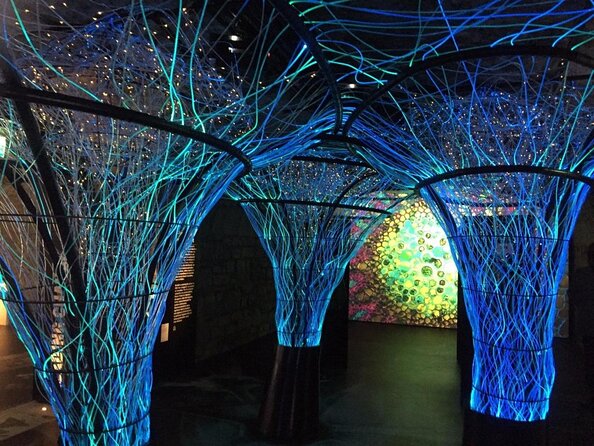
EPIC is not a conventional collection of old objects arranged behind glass. It is a modern, story-led account of Irish emigration, presented through 20 galleries in the CHQ building near the River Liffey.
The central idea is simple: Irish history did not stay in Ireland. More than 10 million people left the island over the centuries, for reasons that included hardship, opportunity, conflict, famine, religion, work, and family. The museum follows those journeys and shows how Irish people and their descendants shaped places far beyond Ireland.
That broad subject gives the museum unusual reach. One section may explain the pressures that pushed people to leave, while another looks at music, politics, sport, inventions, or famous Irish people and their descendants. You are not just reading about departure. You are also seeing what happened afterward.
I especially like that the museum connects large events to individual lives. Letters, names, accents, and family stories help the subject feel personal rather than like a list of dates. If you have Irish ancestry, those details may give you a clearer sense of what your relatives faced before and after leaving.
You do not need Irish roots to enjoy the visit. The museum is also about migration, identity, adaptation, and the way communities carry traditions into new countries. That makes it useful for anyone interested in social history, family stories, or the long effects of migration.
More Museums in Dublin
- Irish Rock ‘N’ Roll Museum Experience Dublin
★ 5.0 · 6,112 reviews - The Little Museum of Dublin Famous Guided Tour
★ 5.0 · 2,948 reviews - Giant’s Causeway with the Titanic Exhibition and the best of Northern Ireland
★ 5.0 · 1,122 reviews
Getting to the CHQ building
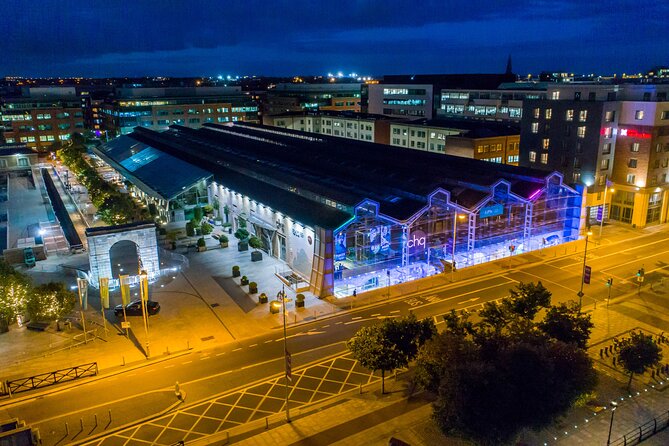
EPIC is in Dublin’s CHQ building, a short walk from O’Connell Street or Trinity College. It is near public transportation, so you can fit it into a central Dublin sightseeing day without setting aside an entire afternoon.
The location also makes the museum easy to pair with nearby stops. You can visit around a walk through central Dublin, though you should avoid squeezing it between two tightly timed activities. The normal visit takes about 1.5 hours, but the interactive displays can keep you there for two or three hours.
When you arrive, show your electronic or paper voucher at the entrance. You receive the souvenir passport there, then begin the self-guided route. The ticket is mobile-friendly, which is handy if you are keeping your Dublin plans on your phone.
Prebooking is useful because it gives you guaranteed entry. The museum is booked about 25 days ahead on average, so reserving before your trip is sensible if your schedule is tight. You can enter at your chosen time during opening hours rather than being tied to a guided group.
Beginning the journey with a museum passport
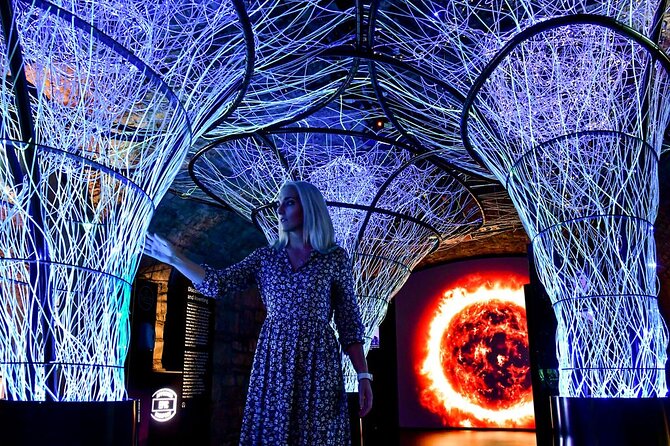
The passport is a small touch, but it gives the visit a clear purpose. Each gallery has a stamp, so children can track their progress and adults get a simple reminder to look carefully at every section.
Families tend to get the most from this feature. It turns a museum visit into a gentle challenge without making the subject childish. You can move from gallery to gallery, pause at the parts that interest you, and keep the passport as a free souvenir afterward.
The passport also helps with orientation. EPIC covers a lot of material, and the stamps give you a sense of progress through the building. If you are visiting with children, this can help maintain attention during the more serious sections.
Staff are located throughout the museum and can answer questions. That is useful when a display raises a question that the audio guide does not fully cover, or when you want help finding your way to the next gallery.
The 20-gallery route
The route moves through the experiences of Irish emigrants and the many forms of Irish influence abroad. The galleries use screens, audio, digital displays, and other interactive elements rather than relying only on written panels.
You can expect the visit to cover:
- The reasons Irish people left the island
- The hardships and hopes connected with emigration
- The destinations Irish emigrants reached
- The Great Famine and its effect on migration
- Irish people and descendants who shaped public life
- Irish contributions to music, sport, inventions, and culture
- Family names and personal stories linked to the Irish diaspora
- Modern connections between Ireland and the estimated 70 million people worldwide who claim Irish ancestry
The museum’s design helps you move through the subject in stages. That flow is one of its strengths. You are not left to decide which room to visit next or how the story fits together.
At the same time, the amount of information can be a drawback. A person who wants a quick overview can finish in roughly 90 minutes, but anyone who reads every panel and tries each display may need three hours. If you have children or mixed interests in your group, agree in advance that you do not all need to spend the same amount of time in every gallery.
Some displays use audio at the same time as nearby screens. This can be exciting, but it may also feel noisy when several sections are active at once. If you prefer quiet museums, use the audio guide selectively and move on when a room feels too busy.
A few more Dublin half-days to weigh up
- Dublin to Cliffs of Moher, including Wild Atlantic Way and Galway
★ 5.0 · 23,331 reviews - From Dublin: Cliffs of Moher, Burren & Galway City Day Tour
★ 4.8 · 18,888 reviews - Dublin: Guinness Storehouse Entry Ticket
★ 4.6 · 16,863 reviews - Dublin to Cliffs of Moher, Burren, Wild Atlantic Way, Galway Tour
★ 5.0 · 12,924 reviews
Why the audio guide is worth using
The free app provides an audio guide in nine languages and is available for iPhone and Android. I recommend downloading it if you want more than a quick look at the displays.
Audio helps explain how the individual galleries fit together. It can also make the museum easier to follow when you are less familiar with Irish history or do not want to read every panel. One practical tip is to use the audio in the galleries that interest you most rather than trying to listen to everything.
If you cannot download the app, audio guide devices are available in nine languages for an additional €2. That small fee may be worthwhile if your phone battery is low, your data connection is limited, or you simply prefer a separate device.
The audio is not essential for enjoying EPIC. The museum is designed to work without it, and many displays are clear on their own. Still, it adds helpful background and is particularly useful for first-time visitors who want more context.
The parts that may move you most
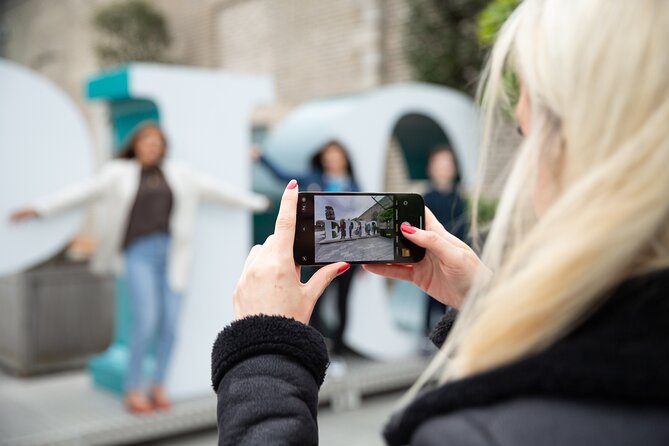
EPIC is at its best when it connects a broad subject to ordinary lives. The story of Irish emigration includes sacrifice and loss, but it also includes adventure, achievement, family continuity, and cultural exchange.
You will encounter the reasons people left and the difficult conditions they faced. The tone is serious at times, especially when the galleries deal with famine, poverty, separation, and survival. The museum does not treat emigration as one single event with one simple cause.
That balance matters. Irish migration happened across different periods and for different reasons. The galleries help you understand that an ancestor who left in the 1850s may have had a very different experience from someone who left in a later period for work or opportunity.
The museum also gives attention to successful Irish people and descendants around the world. Music, sport, political life, inventions, and public achievements broaden the story beyond suffering. That makes the final impression more complete: Irish emigrants did not simply leave home, they built new lives and influenced the places where they settled.
If your family left Ireland around the time of the Great Famine, EPIC can provide useful context for that departure. You may not find your own ancestor in the standard museum galleries, but you can better understand the pressures and choices that shaped the period.
EPIC compared with a traditional museum
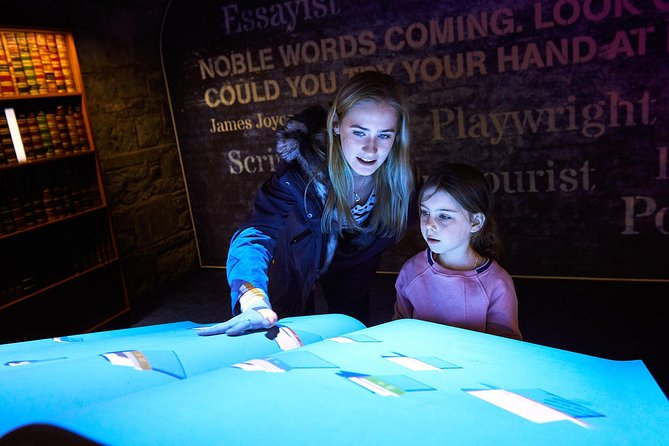
I would not choose EPIC if you are looking for a quiet room of original paintings, historic furniture, or archaeological objects. Its strength is presentation, interaction, and storytelling.
The technology keeps the subject moving. Digital walls, recorded voices, and interactive displays make it easier to stay focused, especially if you are not normally a museum person. Children have something to do, and adults can follow the historical points behind the activity.
There is a tradeoff. A modern display can sometimes feel less substantial than a room filled with original artifacts. One person may find the visual displays too basic or boring, while another will appreciate how quickly the museum explains a complicated subject.
I think EPIC works best when you approach it as an introduction and a personal reflection point, not as the final word on every part of Irish history. It gives you a wide view and many starting points for further reading or family research.
How long should you allow?
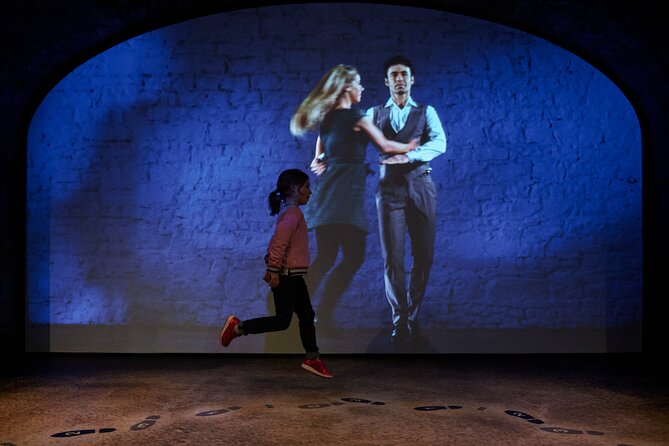
The suggested visit takes about 1.5 hours. That is enough for a steady walk through all 20 galleries, with time to try several interactive features and collect your stamps.
Allow closer to three hours if you want to listen to the audio guide, read carefully, stop for family photos, and explore the displays at an unhurried pace. Some sections may hold your attention far longer than others. The sports material, for example, may be a highlight for one person and easy to skip for another.
A flexible schedule is best. The self-guided format means you can set your own pace, and the museum has restrooms and a place to get a snack. One especially useful feature is the possibility of returning the next day if you are unable to finish the visit on the same day. Confirm this arrangement with staff when you arrive, since your ticket conditions may apply.
EPIC can also work well on the day you arrive in Dublin. The route keeps you moving, gives you an immediate introduction to Ireland, and does not require you to join a group at a fixed time.
Is the $25.40 ticket good value?
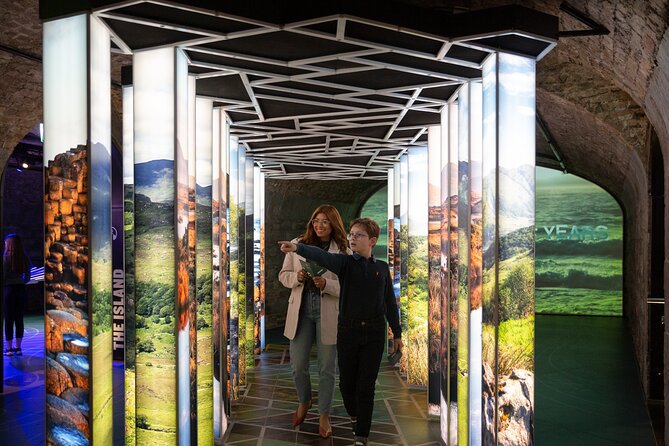
At $25.40 per person, the ticket is not the cheapest museum admission in Dublin. Its value depends on how much of the experience you use.
For a 90-minute visit, the price is reasonable if you enjoy interactive museums and want a structured introduction to Irish emigration. For a two or three-hour visit, it becomes a stronger value, especially since the mobile ticket, souvenir passport, and app-based audio guide are included.
You are also paying for convenience. Prebooking guarantees entry and lets you fit the museum into a busy Dublin day. If you would otherwise spend time waiting or risk missing out, that certainty has practical value.
The Irish Family History Centre is not included. If you want research into your own ancestors, plan for an extra admission fee and possible consultation with a professional genealogist. That service can be worthwhile for people with specific family questions, but it is separate from the standard EPIC visit.
Practical details before you go
Your confirmation arrives when you book, and you can show the voucher electronically or on paper. Children must be accompanied by an adult, and service animals are allowed.
Most people can take part, and the building is near public transportation. Since exact opening hours are not supplied here, check the current schedule before choosing your arrival time.
The cancellation policy is generous if your plans change. You can receive a full refund if you cancel at least 24 hours before the experience start time. Cancellations or changes made within 24 hours are not accepted for a refund, and the cut-off uses Dublin local time.
Who should book EPIC?
I would recommend EPIC to you if you have Irish ancestry, enjoy family research, or want a clear introduction to Irish emigration. It is also a good choice for families because the passport stamps give children a reason to keep moving through the galleries.
You do not need to be a serious museum fan. The interactive format can hold the attention of people who usually tire quickly in historical buildings. The self-guided setup also suits groups with different interests.
I would be more cautious if you want original artifacts, a short ten-minute visit, or a very quiet setting. The museum covers a large subject, and the mix of screens and audio can feel like too much in places.
Should you book the Dublin EPIC Museum ticket?
Book it if you want to understand Irish emigration through personal stories, modern displays, and a flexible route. It is especially worthwhile if you have Irish family connections, but the subject reaches far beyond genealogy.
Go with at least 90 minutes in your schedule, and use the audio guide for extra context. If you have the time, plan for two or three hours so you can choose your favorite galleries instead of rushing through them. The extra genealogy centre may be the right next step if you have names, dates, or family questions you want to investigate.
For a modern, interactive introduction to Ireland’s global story, EPIC earns its place on a Dublin itinerary. Just know what you are booking: a technology-led museum with a wide scope, not a traditional collection of historic objects.
FAQ
Where is EPIC The Irish Emigration Museum?
The museum is in Dublin’s CHQ building, a short walk from O’Connell Street or Trinity College. It is also near public transportation.
How long does the EPIC Museum visit take?
The usual visit takes about 1.5 hours. You can spend up to three hours if you listen to the audio guide, explore the displays carefully, and move at a slower pace.
Can I enter EPIC at any time?
You can visit at your chosen time during the museum’s opening hours. Check the current opening schedule before you go.
Is the audio guide included?
Yes. A free app for iPhone and Android provides an audio guide in nine languages. If you cannot download the app, audio guide devices are available in nine languages for an additional €2.
Is the Irish Family History Centre included in the ticket?
No. Entry to the Irish Family History Centre is not included with standard EPIC admission. You can pay an extra admission fee and schedule a consultation with a professional genealogist.
Can I cancel the ticket for a refund?
Yes. You can cancel at least 24 hours before the experience start time for a full refund. Cancellations or changes made less than 24 hours before the start time are not refunded or accepted.
Just added around Dublin
- Women Of Ireland: Trailblazers & Pioneers★ 5.0 · 4 reviews
- Full Day Private Wicklow Tour★ 5.0 · 12 reviews
- Wicklow Mountains & Glendalough Luxury Private Day Tour★ 5.0 · 23 reviews
- Wicklow tour of Glendalough★ 4.5 · 8 reviews
- Premium Irish Whiskey Tasting Hosted by Local Dublin Expert★ 5.0 · 77 reviews
- Whiskey Tasting Tour of Dublin★ 5.0 · 117 reviews
- Dublin To Kilkenny Castle Waterford Crystal Private Car – Day Tour★ 5.0 · 8 reviews
- Historical Walking Tour of Dublin★ 5.0 · 50 reviews
Museums, compared.
The Little Museum of Dublin Famous Guided Tour
Read our review →
Giant’s Causeway with the Titanic Exhibition and the best of Northern Ireland
Read our review →


Irish Whiskey Museum: Whiskey Blending Experience
Read our review →
Irish Whiskey Museum Blending Tour with Tastings
Read our review →
Browse the lists this tour appears in