
Reviewed · BOYNE VALLEY & NEWGRANGE TOURS
Dublin to Newgrange, Monasterboice Small Group Guided Tours
Newgrange is the star here: a 5,000-year-old passage tomb built with such care that winter-solstice sunlight reaches its inner chamber. You get inside the monument, not just a distant view, then add Monasterboice’s carved Celtic crosses and the Battle of the Boyne site in one long day.
I like the round-trip minibus ride from central Dublin and the way guides such as Matt and Kevin keep the road time useful with stories and practical instructions. I also like the small vehicle, which is easier to manage than a full-size coach. The trade-off is time: eight hours is a lot, and the final two stops may feel less exciting after Newgrange.
Key points at a glance
- Enter Newgrange itself: Admission to Newgrange and Brú na Bóinne is included, with a reconstruction of the winter-solstice light effect.
- Travel in a small minibus: The vehicle holds no more than 29 people, though some passengers may still find a group of 25 or so larger than expected.
- See three very different periods of Irish history: Neolithic engineering, a 17th-century political battle, and an early medieval monastic site.
- Expect a seasonal itinerary: Knowth may replace the Battle of the Boyne stop or appear alongside Newgrange from March through October, depending on site access and the day’s plan.
- Plan for outdoor conditions: Rain gear and climate-appropriate clothing matter, especially at Monasterboice and the open grounds around Newgrange.
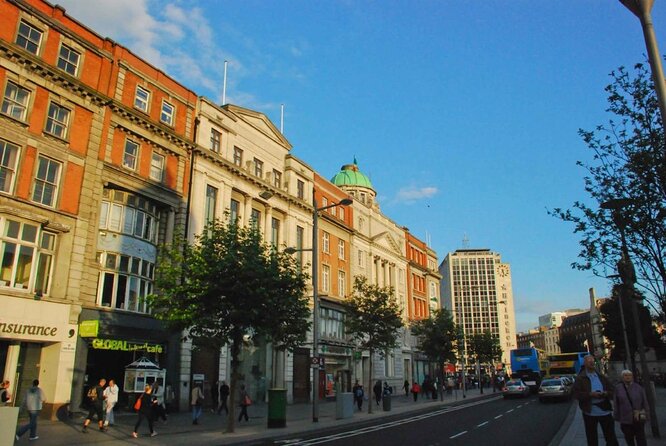
- Meet at the Molly Malone statue: The tour begins at 9 a.m. on Suffolk Street and returns there after roughly eight hours.
Why Newgrange is worth a day from Dublin
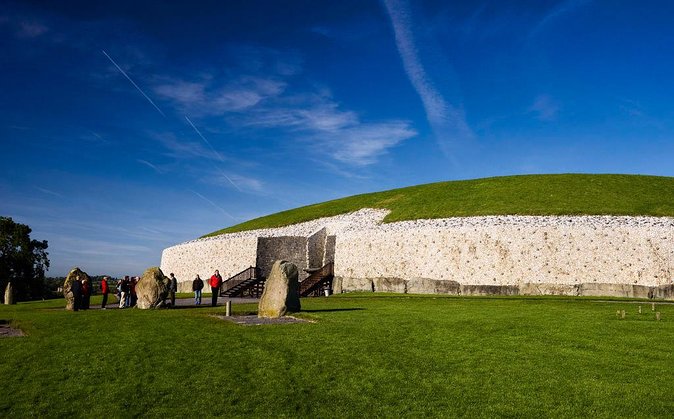
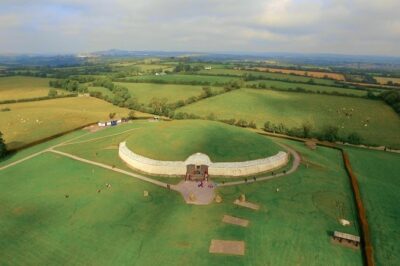
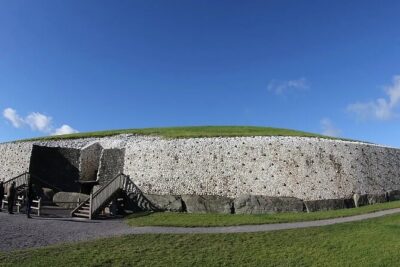
Newgrange is not simply an old stone mound. It is a carefully planned passage tomb and ceremonial site, built thousands of years ago by Neolithic people who understood construction, stonework, and the movement of the sun. Its main passage points toward the rising sun at the winter solstice.
That alignment gives the visit a human quality. You are looking at an ancient building made for a specific annual event, not an accidental pile of stones. The tomb also predates Stonehenge and the Egyptian pyramids, a useful reminder that complex societies were shaping monumental places in Ireland long before the familiar names of the ancient world.
The visit normally includes access to the Newgrange monument and the Brú na Bóinne visitor operation. Inside, the passage is narrow and the chamber is enclosed. The solstice demonstration shows how sunlight can reach the chamber at midwinter, giving you a clear sense of the design even if you are not visiting during the actual solstice.
You have about three hours at Newgrange, which is the right amount of time for the main visit, orientation, and movement through the site. The experience is structured rather than free-form, so listen carefully to instructions about meeting points and wristbands. One of the best practical features of this stop is that the local site guides explain what you are about to see, while your tour guide handles the wider schedule.
More Boyne Valley and Newgrange trips:
- Celtic Boyne Valley & Ancient Sites Day Tour From Dublin
★ 4.5 · 865 reviews - Dublin: Boyne Valley with Newgrange and Bru Na Boinne Entry
★ 4.7 · 635 reviews - From Dublin: Celtic Boyne Valley and Ancient Sites Tour
★ 4.5 · 618 reviews
Meeting at the Molly Malone statue
The day begins at the Molly Malone statue on Suffolk Street, Dublin 2, at 9 a.m. Hotel pickup and drop-off are not included, so you need to reach the statue on your own and arrive with time to spare.
This is not the place to cut things close. One passenger described arriving only two minutes after the meeting time and finding the vehicle already preparing to leave. That is an avoidable problem. The tour returns to the same meeting point, so you can plan the rest of your Dublin day from there.
The first meeting takes only about 10 minutes, followed by the drive into County Meath and the Boyne Valley. The countryside becomes part of the experience, with ancient monuments scattered through one of Ireland’s key prehistoric areas. Guides vary, but Matt, Kevin, and Richard have each received particular praise for clear commentary, good humor, and keeping people informed about the order of the day.
That last point matters. This is a site-heavy outing with several timed visits. A guide who tells you where to go next, how much time you have, and what to expect at Newgrange can make the day feel calm instead of hurried.
Three hours at Newgrange and Brú na Bóinne
Newgrange gets the largest block of time because it is the main reason to book this tour. Admission is included, which is important because the site is not a simple roadside stop. You are paying for access to a protected archaeological area, transport from Dublin, and the chance to enter the monument.
The passage tomb is the visual center of the visit, but the setting gives it more meaning. The Boyne Valley contains a group of ancient monuments, and the surrounding fields help you understand that Newgrange was part of a larger ceremonial area. The visit is not limited to taking a photograph of the mound. You learn how the passage and chamber work, and you see the solstice effect recreated inside.
The interior may be challenging for anyone uncomfortable with narrow spaces. The tour information says most people can participate, but it does not promise special access arrangements. If you need to ask about mobility or the passage itself, contact the operator before booking.
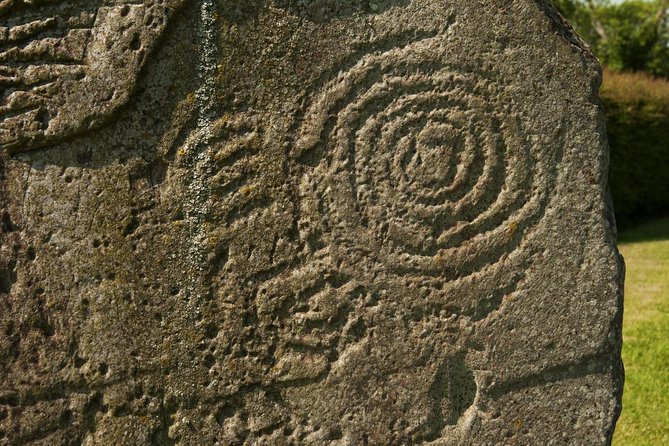
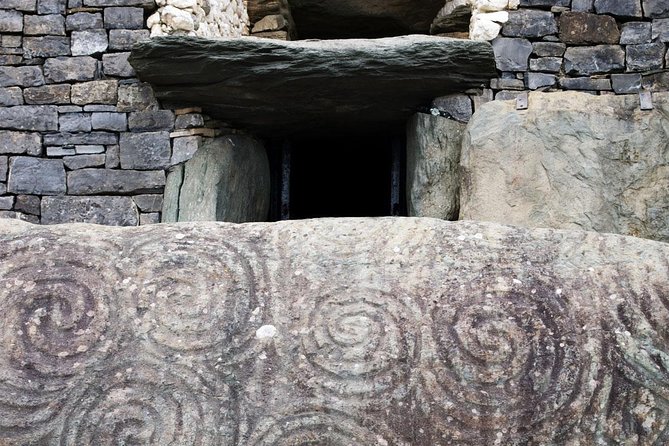
Bring a camera, but do not let photography become the whole visit. The carved entrance stone, the passage, and the chamber are the parts to pay attention to. The site can feel spiritual even if you approach it mainly as an archaeology stop. A good guide gives the monument enough context without talking over the local presentation.
The visitor facilities include a snack bar, though food quality may not suit everyone. Since food and drinks are not included, you should budget for your own meal or snacks. The supplied details do not specify a dedicated lunch stop, so carry something practical rather than depending entirely on the café.
Knowth, seasonal changes, and the value of flexibility
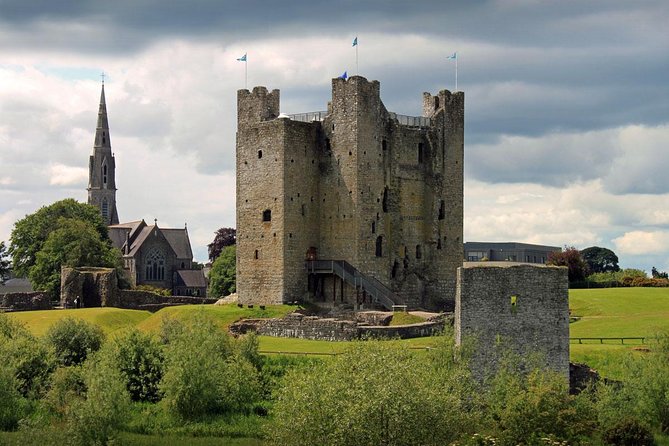
The advertised route includes the Oldbridge Estate and Battle of the Boyne Visitors Centre after Newgrange, but the plan can change with the season and site availability. From March through October, Knowth may be added to the Brú na Bóinne visit. In winter, Knowth may not be open.
This is worth understanding before you book. Knowth is a major attraction for anyone most interested in prehistoric Ireland, and some departures have used it instead of the Battle of the Boyne site. Other days have included Mellifont Abbey as an extra stop on the way to Monasterboice. These changes are not a guarantee, so treat them as possible adjustments rather than promised inclusions.
I see this flexibility as a potential advantage if your guide explains the reason clearly and uses the time well. It can also disappoint you if you booked specifically for the battlefield and find the route has changed. Ask about the expected schedule when you meet the guide, especially if Knowth is your priority.
The tour provider is Hilltoptreks, and the vehicle is a small, comfortable minibus rather than a 50-seat coach. The maximum is 29 people. That is smaller and more personal than a large bus, but small group is a relative term. If you imagine a private van with six or eight people, a near-full minibus will not meet that expectation.
A few more Dublin half-days to weigh up
- Dublin to Cliffs of Moher, including Wild Atlantic Way and Galway
★ 5.0 · 23,331 reviews - From Dublin: Cliffs of Moher, Burren & Galway City Day Tour
★ 4.8 · 18,888 reviews - Dublin: Guinness Storehouse Entry Ticket
★ 4.6 · 16,863 reviews - Dublin to Cliffs of Moher, Burren, Wild Atlantic Way, Galway Tour
★ 5.0 · 12,924 reviews
Understanding the Battle of the Boyne at Oldbridge
The Oldbridge Estate presents the Battle of the Boyne, fought in 1690. This was a struggle for the English throne between the Catholic James II and William of Orange, the Protestant king of Holland. Its outcome affected Ireland, Britain, and wider European politics.
The battle also helps explain why July 12 remains important to the Loyalist community in Northern Ireland. The event is tied to the displacement of Irish Catholic communities and the weakening of Gaelic culture across the island. It is a politically charged subject, so the quality and care of the explanation matter.
At Oldbridge, you may choose the self-guided visitor experience, with payment at the entrance. The tour description allows about an hour and a half at this stop, but admission is not included in the package. That makes it less straightforward than Newgrange, where entrance is included.
For me, this stop will appeal most if you want political and military context alongside ancient sites. If your main interest is prehistoric archaeology, it may feel like a slower middle chapter in the day. Some itineraries replace or shorten it to make room for Knowth, which can be a better match for an archaeology-focused outing.
Monasterboice and Ireland’s finest high crosses
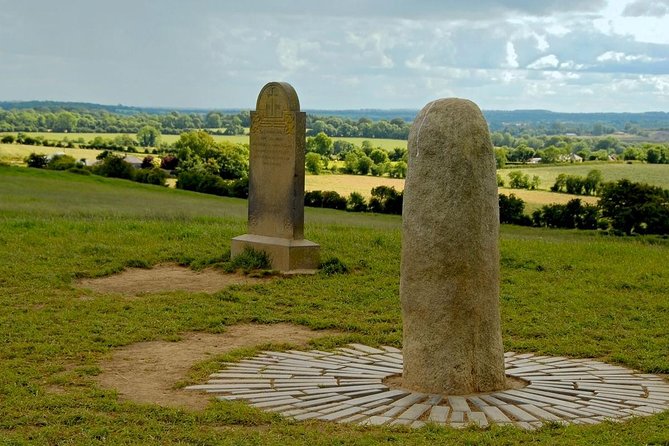
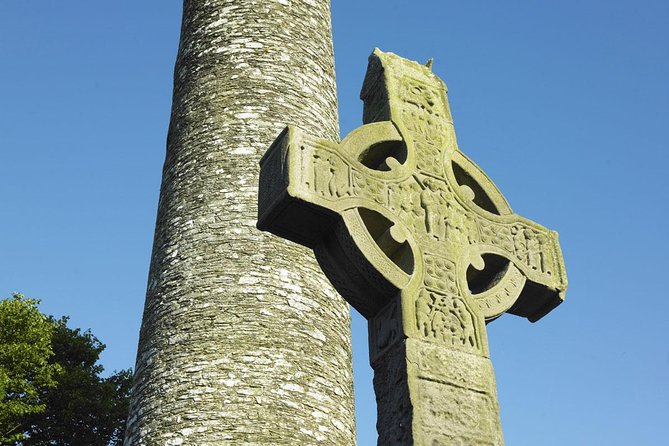
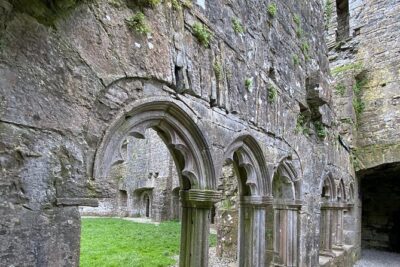
Monasterboice, or Mainistir Bhuithe, was founded by St. Buithe in the fifth century. The surviving site includes two church ruins, a round tower, and three famous high crosses. It is an open monastic setting, so sturdy shoes and rain protection are useful.
The round tower is about 28 meters tall and remains in good condition. It was probably built soon after 968 and was damaged by fire in 1098. These details give the tower a place in time, but its shape is what first catches your eye: a tall stone landmark rising above the old cemetery and church remains.
The three high crosses date from the 10th century and show scenes from the Bible. Muiredach’s High Cross is about 5.5 meters high and is often regarded as Ireland’s finest. It was named for Muiredach mac Domhnaill, an abbot who died in 923.
You get about 40 minutes here. That is enough to walk among the ruins, study the carvings, and take photographs, but not enough for a slow archaeological survey. The site is quiet and atmospheric, though some people may find it modest after the scale and drama of Newgrange. I would treat it as a strong final stop, not the main reason to book the trip.
What the guide can add to the day
The driver-guide has a major effect on this experience. Matt is repeatedly praised for mixing facts, humor, and clear planning. Kevin is also singled out for keeping the group engaged and giving useful information on the journey. Richard is described as both driver and guide, with a well-organized approach.
That does not mean every departure will have the same style. One account describes a guide who gave little commentary and left the group to find the next guides on its own. Another raised concerns about an inaccurate and offensive explanation of the Famine. The operator responded that its guides are local guides rather than professional historians.
That is a fair expectation to set. You are booking a guided day trip, not a university seminar. Still, sensitive subjects deserve care, and you should expect the guide to explain the schedule and site arrangements clearly. The strongest guides on this route turn driving time into useful context and make changes to the itinerary easy to understand.
The best practical habit is to stay close during transitions. At Newgrange, listen for directions about where to go and when to return. A little attention at the beginning prevents confusion later.
Is $102.79 good value?
At $102.79 per person, this is not a cheap Dublin outing, but the price covers round-trip transport, a small minibus, a guide, and entrance to Newgrange and Brú na Bóinne. For a visitor without a car, that combination has real value. Reaching Newgrange, the Boyne Valley, and Monasterboice independently would require more planning and several transport connections.
The value is strongest if you want a full day of variety. You receive a major prehistoric monument, a political and military site, and an early Christian monastic complex. The price is less attractive if you only want Newgrange and would prefer to return to Dublin quickly, since the tour lasts about eight hours and the final stops may feel secondary.
Food and drinks are extra. Hotel pickup and drop-off are also excluded, so add the cost and time of reaching Suffolk Street. Free cancellation is available up to 24 hours before the 9 a.m. start. If bad weather cancels the trip, you can be offered another date or a full refund.
Who should book this Boyne Valley trip?
I would choose this tour if you are staying in Dublin without a car and want Newgrange handled in one organized day. It is especially suitable for solo visitors, couples, and small groups who want transport and site planning taken care of.
It also works well for people who like ancient history but do not want an entire day devoted to one monument. The mix of Newgrange, Oldbridge, and Monasterboice gives you three distinct windows into Ireland’s past.
Think twice if you dislike fixed schedules, outdoor walking, or group travel. A minibus holding up to 29 people is more manageable than a large coach, but it is not a private tour. You also need to accept that the route may change, especially around Knowth and Oldbridge.
Wear weatherproof clothing. Rain gear is specifically recommended, and climate-appropriate outerwear can make a major difference. Bring a camera, water, and food that will carry you through the day, since lunch is not included.
Should you book it?
Book this tour if Newgrange is high on your Dublin wish list, you do not have a car, and you want to add two more important sites without arranging the transport yourself. The included entry to Newgrange and the chance to see the solstice chamber effect make the central visit worthwhile.
I would book with realistic expectations. The group may be close to 29 people, guides vary in presentation, and the day can be changed to include Knowth or Mellifont Abbey instead of the published Oldbridge plan. Arrive early at the Molly Malone statue, bring rain gear, and confirm the day’s route with your guide.
For most visitors, the combination of access, transport, and a full Boyne Valley day makes the $102.79 reasonable. Newgrange is the anchor, and Monasterboice is a fine final chapter. Just remember that this is an efficient day trip, not a leisurely private outing.
FAQ
Where does the tour begin and end?
The tour begins at the Molly Malone statue on Suffolk Street, Dublin 2, at 9 a.m. It ends back at the same meeting point.
How long does the tour last?
The experience lasts approximately eight hours.
Is admission to Newgrange included?
Yes. Transportation, the guide, and entrance to Newgrange and Brú na Bóinne are included.
Is food included?
No. Food and drinks are not included, so you should plan to bring or buy your own refreshments.
Can the itinerary change?
Yes. Depending on the season and site access, Knowth may be included, especially from March through October. Some departures may visit Mellifont Abbey, while the Battle of the Boyne stop may be changed or omitted.
What happens if the tour is canceled?
If poor weather or an insufficient number of bookings causes cancellation, you will be offered another date or experience, or a full refund. You can also cancel for a full refund up to 24 hours before the start time.
Just added around Dublin
- Women Of Ireland: Trailblazers & Pioneers★ 5.0 · 4 reviews
- Wicklow tour of Glendalough★ 4.5 · 8 reviews
- Full Day Private Wicklow Tour★ 5.0 · 12 reviews
- Wicklow Mountains & Glendalough Luxury Private Day Tour★ 5.0 · 23 reviews
- Premium Irish Whiskey Tasting Hosted by Local Dublin Expert★ 5.0 · 77 reviews
- Whiskey Tasting Tour of Dublin★ 5.0 · 117 reviews
- Dublin To Kilkenny Castle Waterford Crystal Private Car – Day Tour★ 5.0 · 8 reviews
- Historical Walking Tour of Dublin★ 5.0 · 50 reviews
Boyne Valley & Newgrange Tours, compared.
Celtic Boyne Valley & Ancient Sites Day Tour From Dublin
Read our review →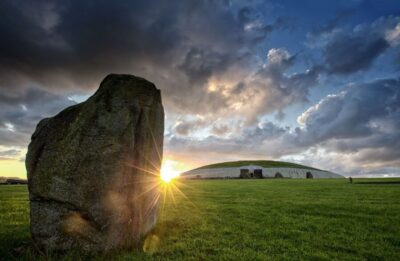
Boyne Valley with Newgrange and Bru Na Boinne Entry
Read our review →
6 hour Half-Day Award Winning Private Tour of the Boyne Valley
Read our review →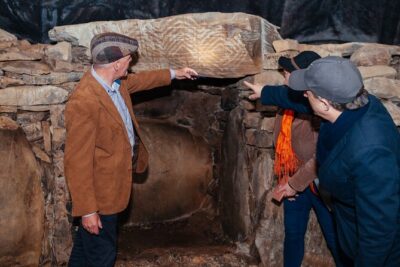
Full-Day Irelands Ancient Boyne Valley Private Guided Tour
Read our review →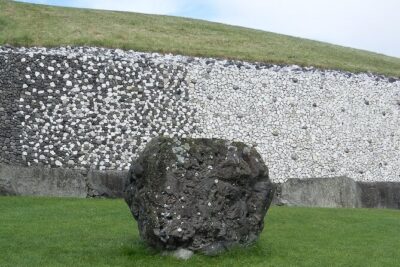
Private Tour from Dublin: Hill of Tara Trim Castle, Celtic sites
Read our review →Browse the lists this tour appears in