
Reviewed · SKIP THE LINE
Irish National Stud & Gardens Skip the line Entrance
The Irish National Stud gives you a rare look at a working thoroughbred breeding farm open to the public. You can see stallions, mares, foals, and retired champions such as Hurricane Fly, Beef or Salmon, and Faugheen, then move from horse breeding to beautifully planned gardens.
I like the mix of horse culture and horticulture, since you are not left with a single-purpose attraction. I also like the freedom to spend as little as an hour or as much as seven, with a guided stud tour plus time to explore at your own pace.
The main caution is simple: you may not see many horses on the day, and some stables can be empty. The gardens and racehorse display help fill the visit, but horse lovers should keep expectations realistic.
Key points to know before you go
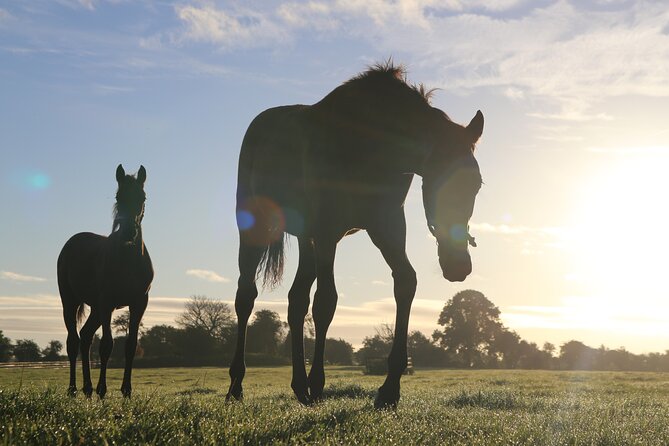
- See retired racing stars: The Living Legends team includes Hurricane Fly, Beef or Salmon, and Faugheen.
- Explore an interactive racehorse display: The Irish Racehorse Experience explains the world of breeding, training, and racing in a hands-on format.
- Visit two very different gardens: The Japanese Gardens offer formal beauty, while St Fiachra’s Garden follows Celtic themes.
- Allow one to seven hours: You can make this a short stop or give the grounds a relaxed half-day visit.
- Plan your transport from Kildare: The stud is about three miles from Kildare train station, with no bus service to the entrance.
- Book with flexibility: Free cancellation is available up to 24 hours before the start time.
Why this horse farm makes a good Dublin side trip
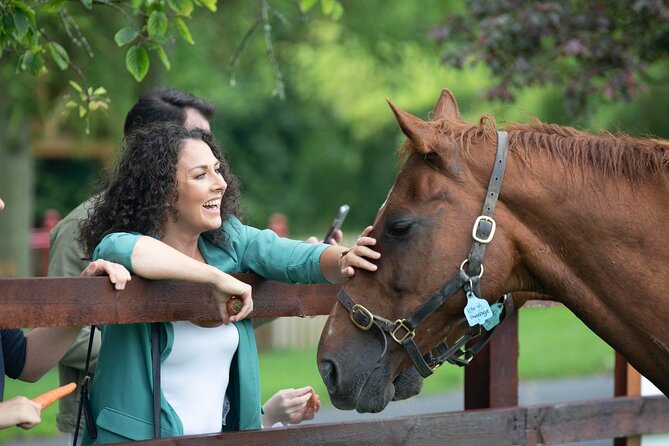
About 40 minutes from Dublin, the Irish National Stud offers a change of pace from museums, churches, and city streets. You trade urban sightseeing for open grounds, breeding stables, gardens, and the unusual chance to see a major thoroughbred operation from the public side.
This is not simply a place to admire horses over a fence. The stud has produced some of Europe’s finest racehorses since the early 1900s, so the visit connects modern breeding with Ireland’s long racing tradition. You get a sense of why the country’s horse industry matters, even if you know little about racing before you arrive.
I would not treat this as a standard farm visit. The attraction combines a public tour, an indoor or interactive racehorse presentation, and two gardens. That mix makes it useful for a group with different interests. One person can focus on racing, another on plants and design, and a child can get more from the interactive elements than from a long historical talk.
The entrance price is listed at $22.98 per person. I consider that fair if you use the full visit, including the public tour, the Irish Racehorse Experience, and both gardens. It is less convincing if you arrive only to take a quick walk and happen to see a few horses.
A few more Dublin half-days to weigh up
- Dublin to Cliffs of Moher, including Wild Atlantic Way and Galway
★ 5.0 · 23,331 reviews - From Dublin: Cliffs of Moher, Burren & Galway City Day Tour
★ 4.8 · 18,888 reviews - Dublin: Guinness Storehouse Entry Ticket
★ 4.6 · 16,863 reviews
The public tour brings the breeding farm into focus
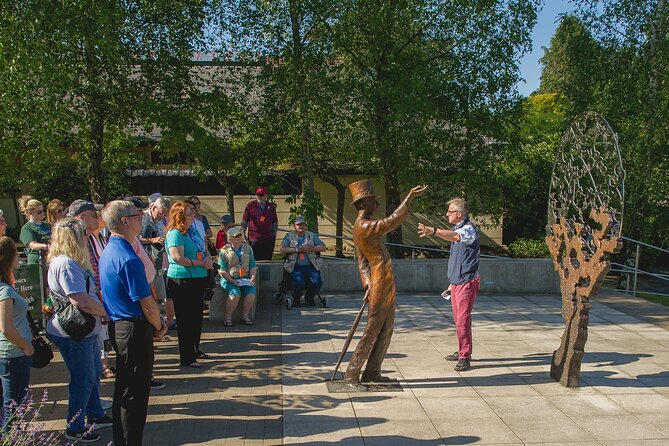
The guided public tour is the heart of the visit. You will see the working side of the stud, including stallions, mares, and foals, along with the retired racing stars cared for as part of the Living Legends team.
A good guide can make a major difference here. One guide was described as engaging and well informed about the stud, the breeding process, and the horses’ history. That matters because stables and paddocks can look quiet without explanation. The guide gives meaning to what you are seeing, from the role of a stallion to the care of a retired champion.
You should expect the tour to be informative rather than a guaranteed close-up animal encounter. Horses follow their own schedules, and the number visible can vary. Some visitors have found empty stables and few horses during their walk, so avoid booking this with the assumption that every famous name will be on display.
The best approach is to view the tour as a chance to understand how a breeding farm works. If you get a good look at a mare and foal or one of the racing stars, that is an added pleasure. If the horses are out of sight, the gardens and racehorse display become more important.
Meeting Hurricane Fly and the Living Legends
The retired racehorses are a special part of the experience. Hurricane Fly, Beef or Salmon, and Faugheen are named members of the Living Legends team, giving you a connection to horses that were once major figures on the track.
For racing fans, these names may be the main reason to visit. Seeing a retired champion in a peaceful farm setting can feel very different from watching a race on television. You are looking at the animal beyond the speed, noise, and competition.
Still, the attraction cannot promise that every horse will be visible during your visit. That is the practical limit of any farm open to the public. The provided experience information names the horses, but it does not promise scheduled viewing times, feeding sessions, or special access.
If you are not familiar with Irish racing, the guide and racehorse display should help explain why these horses matter. I would pay attention to the stories rather than rush from stable to stable. The value comes from seeing the horses as part of the wider breeding and racing system.
The Irish Racehorse Experience explains more than a stable tour
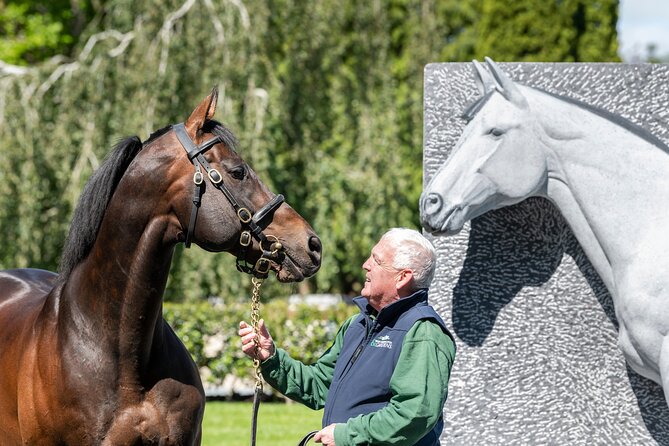
The Irish Racehorse Experience is included with admission, and it adds useful context to the outdoor tour. Instead of only seeing the finished athlete, you learn about the world that creates and supports a racehorse.
This interactive activity is particularly useful if you are new to horse racing. A stable tour can show you the animals, but an interactive display can explain breeding, development, racing, and the place of the horse in Irish culture. It gives younger visitors something active to do and gives adults a clearer picture of the business behind the sport.
I would make sure you include all three main parts of the visit: the Stud Farm Tour, the Racehorse Experience, and the Japanese Gardens. The admission covers them together, so skipping one leaves value on the table.
The activity also helps on a quiet horse day. If the stables are not full or the animals are resting, you still have a substantial part of the attraction that does not depend on seeing a particular horse at a particular moment.
Same corner of Ireland, a completely different day out:
- Dublin to Cliffs of Moher, Burren, Wild Atlantic Way, Galway Tour
★ 5.0 · 12,924 reviews - Dublin to Belfast Black Cab, Dunluce Castle and Giant’s Causeway
★ 5.0 · 7,954 reviews - Kilkenny, Wicklow Mountains & Glendalough Day Tour from Dublin
★ 5.0 · 7,897 reviews - From Dublin: Wicklow Mountains, Glendalough & Kilkenny Tour
★ 4.8 · 6,235 reviews
The Japanese Gardens deserve unhurried time
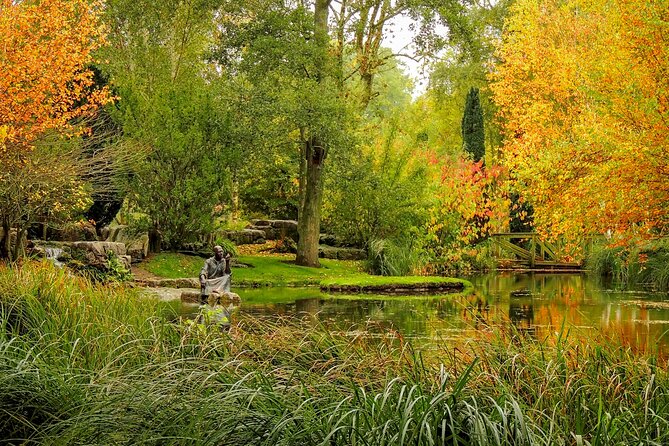
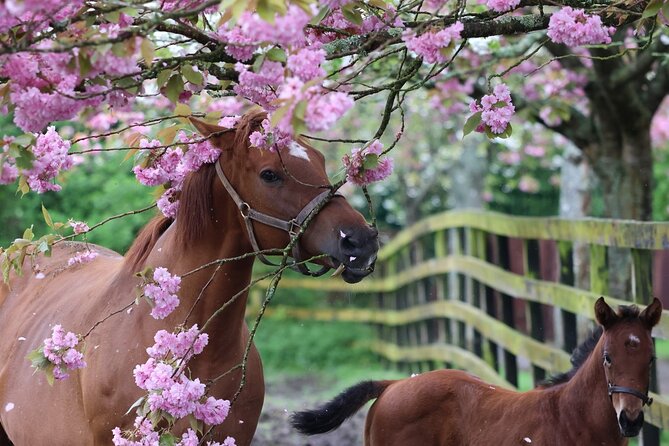
The Japanese Gardens are one of the strongest reasons to visit, even if you have only a passing interest in racing. They offer a carefully planned setting that feels quite separate from the working farm.
I like the contrast. After hearing about breeding and racing, you move into a garden designed around quiet views and ordered planting. The change gives your visit a slower rhythm, and it makes the attraction more than a stop for horse enthusiasts.
The gardens are described as stunning and immaculately kept, which matches their role as a major part of the visit rather than a small extra beside the stables. You should allow time to walk without treating this section as a quick corridor between activities.
The supplied details do not list the garden’s individual paths, plants, or features, so I would not arrive with a fixed checklist. Instead, use this as the place to pause, take photographs, and enjoy the design. If someone in your group is less interested in racing, this is likely to be their favorite section.
St Fiachra’s Garden adds a Celtic counterpoint
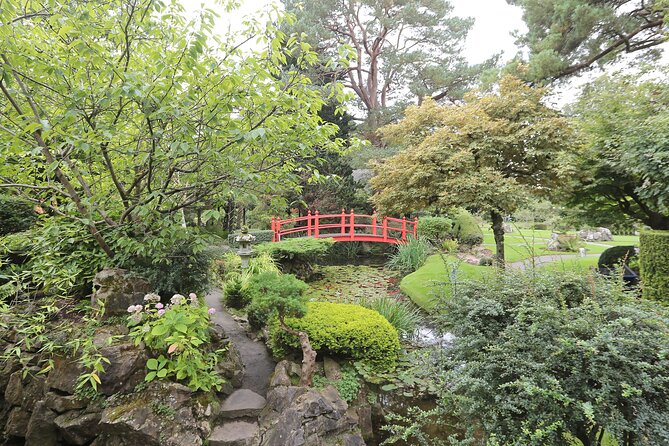
St Fiachra’s Garden gives you a second garden experience with a Celtic theme. Its inclusion is important because it prevents the visit from feeling like a single-style garden attraction.
Together, the Japanese Gardens and St Fiachra’s Garden show two different ways of shaping nature into a visitor experience. The Japanese setting offers one mood, while the Celtic theme gives the grounds a more distinctly Irish identity.
You will want to see both, even if one garden immediately appeals more to you. The attraction covers a large 850-acre property of rolling green hills, so the gardens also help you appreciate the setting beyond the stable buildings.
The visit is best paced rather than rushed. The advertised duration ranges from one to seven hours, which tells you how flexible the day can be. If you are fitting the stud into a busy Dublin itinerary, you can make a shorter visit. If you want the gardens, tour, and interactive display to feel worthwhile, plan several hours.
Getting there from Dublin and Kildare
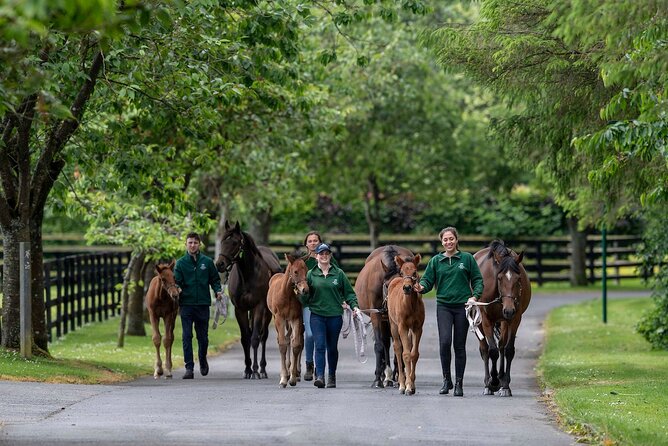
The stud is about 40 minutes from Dublin, making it practical as a day trip or half-day outing. The exact travel method is not specified in the experience details, so you should check your route before setting off rather than assume that public transport takes you directly to the entrance.
The Kildare train station connection needs special attention. There is no bus from the station to the stud, and the entrance is about three miles away. That is a long walk for many people, especially if you are visiting with children or planning to spend several hours on your feet.
A taxi from Kildare station cost one visitor €13, and the driver was professional jockey Declan Shea. That is a memorable local touch, but the fare and driver will vary. The useful point is to budget for a taxi if you arrive by train, rather than discovering the missing bus service at the station.
The mobile ticket is convenient, and confirmation arrives at booking. Skip-the-line entry should help you avoid spending time at the entrance, but it does not remove the need to plan the journey or guarantee that the guided tour begins immediately after arrival.
How much time should you allow?
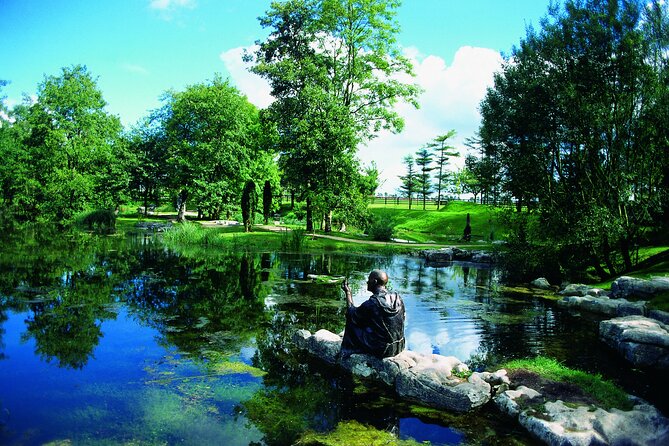
The official estimate is one to seven hours, a wide range that reflects the way the attraction works. You can see the main features in a short visit, but the full experience asks you to slow down.
For a quick stop, focus on the public tour, the Irish Racehorse Experience, and a walk through the Japanese Gardens. That gives you the central horse and garden elements without trying to cover every corner of the grounds.
For a more relaxed visit, add St Fiachra’s Garden and leave time between activities. The grounds cover 850 acres, so this is not a compact city attraction where you can see everything in 45 minutes.
I would choose the longer visit if you have a strong interest in horses, racing, gardens, or photography. Families may also prefer extra time, since different members can enjoy different parts at their own pace. If you are mainly looking for a famous horse photo, the shorter end of the range may be enough, provided the animals are visible.
Who will enjoy this experience most?
You are likely to get the most from the Irish National Stud if you have an interest in horse racing or breeding. The public tour explains the farm, and the retired champions add a personal connection to the sport.
Garden lovers should also take this seriously. The Japanese Gardens are a major attraction in their own right, and St Fiachra’s Garden offers a separate Celtic style. You do not need to know racing terms to enjoy the grounds.
Families can benefit from the range of activities. The interactive racehorse display gives younger visitors a change from walking, while the horses and gardens offer plenty of variety. Since most people can participate and service animals are allowed, the experience suits a broad audience, though the supplied details do not provide a full mobility assessment of every path.
I would be less enthusiastic if you want a highly controlled animal encounter, a guaranteed viewing schedule, or a tour devoted only to famous racehorses. The number of visible horses can be limited, and empty stables are possible.
Is the $22.98 admission good value?
At $22.98 per person, the price makes sense when you use the complete package. Your admission includes the Irish Racehorse Experience, the public tour, a guide, and access to both gardens.
The value is strongest because the attraction serves several interests at once. You are paying for more than a short stable visit. You get an educational element, a guided look at the stud, retired racing stars when available to view, and extensive garden space.
The price feels weaker if you treat the visit as a quick walk past empty stables. That is why I would plan around the full program and allow enough time to see all three main activities.
Skip-the-line entry adds convenience, especially if you are working within a tight schedule. It does not change the content of the visit, but it can help you spend your time on the stud and gardens instead of at the entrance.
Booking, cancellation, and practical details
You receive confirmation at the time of booking, and the ticket is mobile, so you do not need a printed voucher based on the supplied details. The experience is offered in English.
Free cancellation is available if you cancel at least 24 hours before the start time. If you cancel later or make changes within that 24-hour window, you will not receive a refund.
The attraction is near public transportation, but the last stretch from Kildare station has no bus and may require a taxi. Service animals are allowed, and most people can take part. Since the experience can last up to seven hours, wear comfortable shoes and plan your energy around walking, though the available information does not specify the exact accessibility of every route.
Should you book the Irish National Stud?
Book it if you want a day out that combines Irish racing culture with gardens, especially if you can give it several hours. The Japanese Gardens, St Fiachra’s Garden, and interactive racehorse display mean you still have a worthwhile visit if the horses are quiet or a few stables are empty.
Horse racing fans should make time for the Living Legends and the breeding tour. Garden lovers may find the Japanese Gardens the highlight. Families and mixed-interest groups benefit from having several different activities in one place.
I would skip it only if your schedule is too tight for the journey, or if you require guaranteed close access to a large number of horses. For everyone else, $22.98 is a reasonable price for the full visit, provided you see the stud tour, racehorse experience, and both gardens rather than rushing through one section.
FAQ
Where is the Irish National Stud and Gardens?
The Irish National Stud and Gardens is in Ireland, about 40 minutes from Dublin.
How long does the visit take?
The experience can last from about one hour to seven hours, depending on how much time you spend on the tour, racehorse display, and gardens.
What is included with admission?
Admission includes the Irish Racehorse Experience, the public tour, a guide, and access to the Japanese Gardens and St Fiachra’s Garden.
Which horses can I see?
The stud has stallions, mares, foals, and retired racing stars including Hurricane Fly, Beef or Salmon, and Faugheen. The number of horses visible can vary, and some stables may be empty.
Is the Irish Racehorse Experience included?
Yes. The Irish Racehorse Experience is included in the admission ticket.
Can I reach the stud by public transportation?
The attraction is near public transportation, but there is no bus from Kildare train station to the stud. The stud is about three miles from the station, and a taxi may be needed.
Is the ticket available on a mobile phone?
Yes. The experience includes a mobile ticket.
Can I cancel for a refund?
Yes, if you cancel at least 24 hours before the experience start time. Cancellations or changes made less than 24 hours before the start time are not refunded.
Just added around Dublin
- Women Of Ireland: Trailblazers & Pioneers★ 5.0 · 4 reviews
- Full Day Private Wicklow Tour★ 5.0 · 12 reviews
- Wicklow Mountains & Glendalough Luxury Private Day Tour★ 5.0 · 23 reviews
- Wicklow tour of Glendalough★ 4.5 · 8 reviews
- Premium Irish Whiskey Tasting Hosted by Local Dublin Expert★ 5.0 · 77 reviews
- Whiskey Tasting Tour of Dublin★ 5.0 · 117 reviews
- Dublin To Kilkenny Castle Waterford Crystal Private Car – Day Tour★ 5.0 · 8 reviews
- Historical Walking Tour of Dublin★ 5.0 · 50 reviews
Skip the Line, compared.
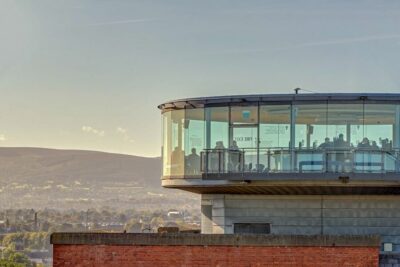
Skip-the-Line Guinness and Jameson Whiskey Tour
Read our review →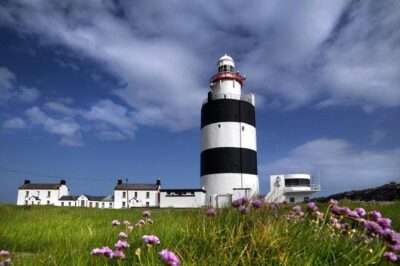
Skip the Line: Hook Lighthouse Entrance Ticket and Guided Tour
Read our review →
Skip the Line: The National Wax Museum Admission Ticket
Read our review →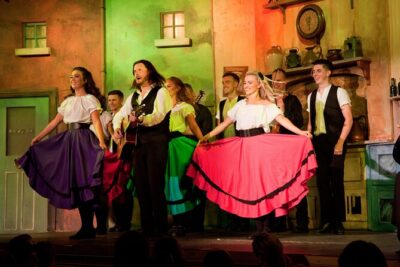
Skip the Line: Irish Night Show Including 4-Course Dinner Ticket
Read our review →
Skip the Line: Bunratty Castle and Folk Park Admission Ticket
Read our review →

Skip-the-line Book of Kells & Old Town Private Tour
Read our review →
Skip-the-line St. Patrick’s Cathedral and Dublin City Tour
Read our review →Browse the lists this tour appears in