
Reviewed · MUSEUMS
Dublin: Irish Famine Exhibition Entry Ticket
The Irish Potato Famine was not simply a story of failed crops. This self-guided Dublin exhibition asks how more than a million people could die from starvation and disease while Ireland still had food available. Its short films, original documents, and step-by-step displays keep the subject clear without turning it into a lecture.
I like two things right away: the exhibition is concise and easy to follow, and it uses real objects rather than relying only on modern text panels. The personal letters, old newspapers, and iron soup pot give the disaster a human scale. The main drawback is its location inside a shopping centre, which feels practical rather than atmospheric, and the display may feel small if you expect a large museum.
Key points to know before you go
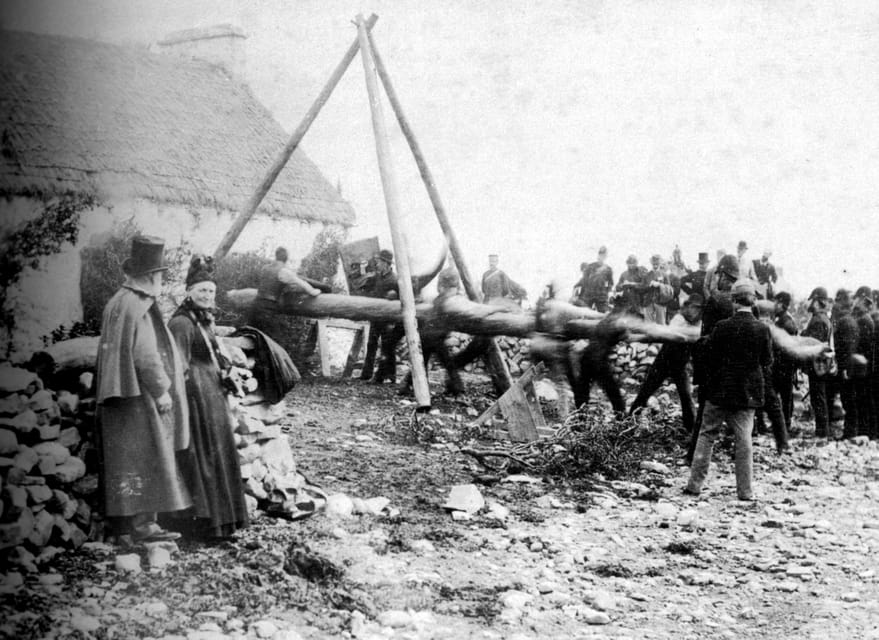
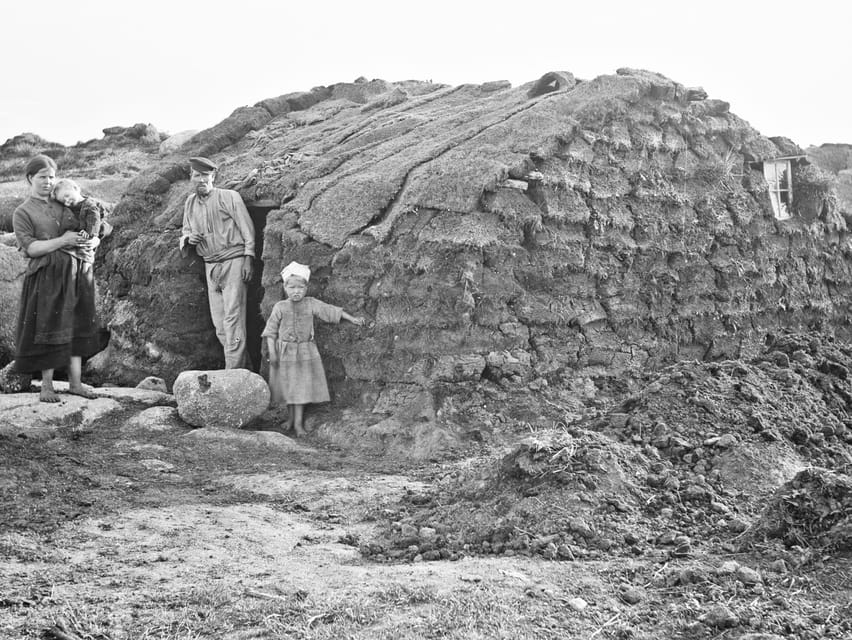
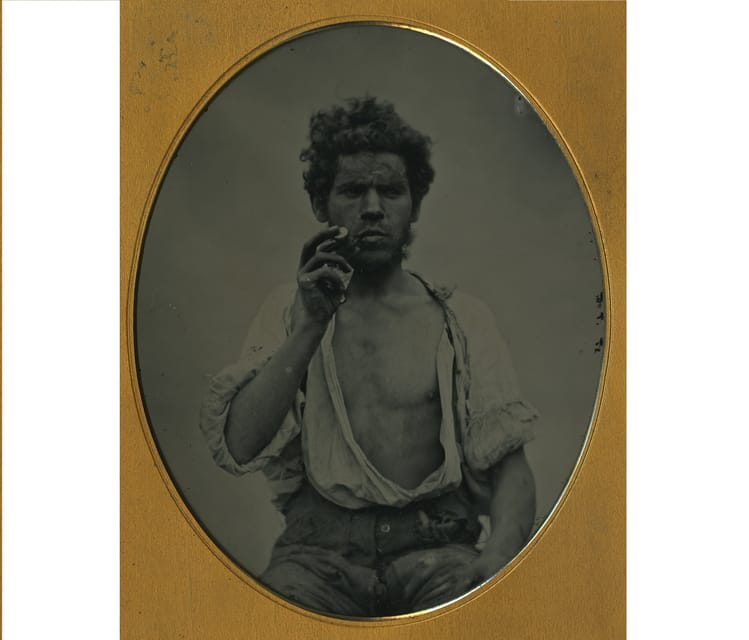
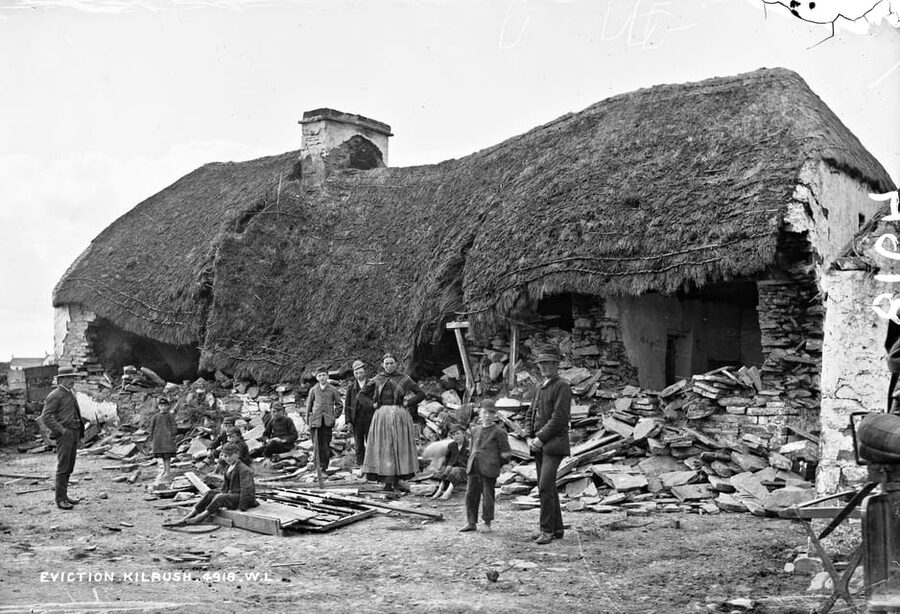
- Rare 19th-century photographs show Ireland during the period in unusually direct detail.
- Original letters and newspapers bring individual fear, hardship, and public reporting into the story.
- A 15-minute overview film gives you a useful introduction before or after the written displays.
- The visit takes about one hour, with benches in each room and seating for the film.
- Entry costs $16 per person, and your ticket remains valid for 180 days.
- The exhibition is open daily from noon to 6 p.m. on the second floor of Stephens Green Shopping Centre.
Why this small exhibition matters

The Irish Potato Famine, also called the Great Famine, was the worst disaster in Ireland’s modern history. From 1845 into the early 1850s, potato blight destroyed the main food source for much of the rural population. More than a million people died, many from starvation and disease, while millions more left Ireland.
The word famine can be politically loaded here. Ireland was part of the British Empire, then one of the wealthiest powers in the world, and food continued to exist in the country during the crisis. That fact raises the central question of the exhibition: how did policy, poverty, land ownership, eviction, disease, and access to food combine to create such a vast human catastrophe?
I appreciate that the exhibition puts this question near the center. You are not simply shown a failed potato crop and sent on your way. The displays explain the wider system step by step, helping you connect the crop failure to workhouses, evictions, overcrowding, disease, and mass emigration.
This is a serious subject, and the exhibition does not soften it. At the same time, the material is arranged in plain language. You do not need a background in Irish history to understand what is happening.
More Museums in Dublin
- Irish Rock ‘N’ Roll Museum Experience Dublin
★ 5.0 · 6,112 reviews - The Little Museum of Dublin Famous Guided Tour
★ 5.0 · 2,948 reviews - Dublin EPIC Museum Admission Ticket
★ 4.5 · 1,729 reviews
Finding Unit 200b at Stephens Green
The exhibition is in Unit 200b on the top floor of Stephens Green Shopping Centre. If you enter through the main entrance from Grafton Street, look for the elevator about 20 metres inside on the right. Take it to the second floor, then turn left.
If you enter from the car park, the unit is at the opposite end of the shopping centre. This is worth noting because the setting can make the attraction easy to miss. You are not walking into a large, clearly marked museum building. Give yourself a few extra minutes to find the correct floor and unit.
The location is convenient if you are already around Grafton Street or St. Stephen’s Green. You can combine the visit with shopping, lunch, or a walk through central Dublin. The tradeoff is atmosphere. The exhibition itself deals with rural poverty, forced evictions, hunger, and migration, but the surrounding shopping centre is bright and commercial.
That contrast may feel awkward. I see it as a practical location rather than part of the experience. Go for the content, not the building.
Beginning with the 15-minute film
A 15-minute overview film gives you a compact introduction to the main events. It is a useful first step if you are unfamiliar with the Famine, since it lays out the basic sequence before you read the more detailed panels.
You can also watch it after walking through the rooms. If you prefer to begin with the objects and storyboards, save the film until the end and use it as a recap. Seating is provided for the film, so you are not expected to stand through the entire presentation.
The film is especially useful for visitors with limited time. It cannot cover every political and social detail, but it gives you the framework needed to understand the rest of the exhibition. I would not treat it as a substitute for the rooms, since the original letters, newspaper articles, photographs, and artifacts add details that a short film cannot provide.
Following the story room by room
The main display is arranged across several rooms. You move through storyboards that reveal the story in an easy-to-follow sequence, rather than being asked to piece together scattered facts.
The first sections establish the dependence on the potato and the damage caused by crop failure. From there, the exhibition moves toward the wider effects: hunger, disease, workhouses, evictions, and departure from Ireland. This structure matters because it shows that the disaster was not one single event. It developed through a chain of decisions and conditions.
The storyboards are the backbone of the visit. They give you enough information to understand the scale of the crisis without requiring a long museum session. One published assessment describes the visit as taking about an hour at a self-guided pace, with a good amount of information delivered in that time. That matches the format well: you can read carefully, pause when something catches your attention, and move on when you have had enough.
Each room has a bench. That small detail makes a difference. The subject is heavy, and you may want a quiet moment before continuing. The seating also helps if you are visiting with someone who cannot remain standing for long.
A few more Dublin half-days to weigh up
- Dublin to Cliffs of Moher, including Wild Atlantic Way and Galway
★ 5.0 · 23,331 reviews - From Dublin: Cliffs of Moher, Burren & Galway City Day Tour
★ 4.8 · 18,888 reviews - Dublin: Guinness Storehouse Entry Ticket
★ 4.6 · 16,863 reviews - Dublin to Cliffs of Moher, Burren, Wild Atlantic Way, Galway Tour
★ 5.0 · 12,924 reviews
Workhouses, evictions, and disease
The exhibition gives particular attention to the conditions that made hunger so deadly. Workhouses were intended as a form of poor relief, but they became overcrowded during the crisis. Disease spread easily among people weakened by hunger and living in poor conditions.
Evictions form another major part of the story. Many tenants could not pay rent after losing their crops and income. Removal from a small holding meant losing not only a home, but often the means to grow food and support a family.
The displays also explain the role of so-called coffin ships, the vessels used by people fleeing Ireland for new lives abroad. The name itself reflects the danger of the journey, as overcrowding, poor sanitation, and illness could turn the crossing into another deadly stage of the crisis.
I find these sections important because they show what happened after the potato failed. Starvation did not occur in isolation. Housing, land ownership, relief policy, transport, disease, and emigration all shaped the outcome.
Seeing the original photographs and documents
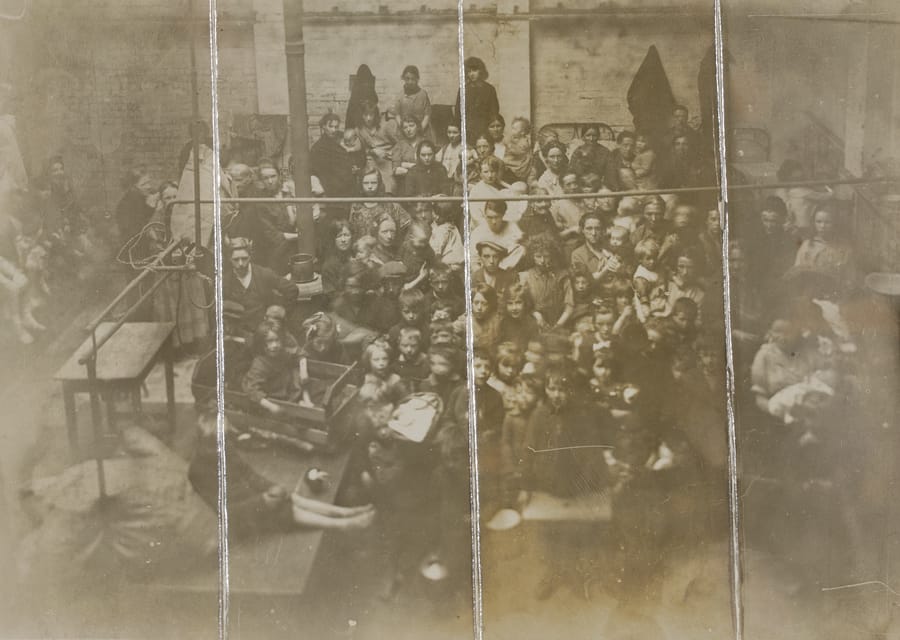
The rare 19th-century photographs are among the most valuable parts of the exhibition. Photography was still a relatively new medium, so these images offer a direct visual record of Ireland during the period and its aftermath.
Photographs can never show everything, but they help you move beyond dates and population figures. Faces, clothing, buildings, and living conditions make the scale of hardship easier to grasp. The images also remind you that this was a modern historical event, not some distant medieval episode.
Two original newspaper articles are displayed. They provide contemporary accounts of the catastrophe and show how the crisis was described at the time. I like the chance to see the actual printed material, rather than only a typed transcription.
Two personal letters add an even more intimate angle. One was written by a tenant to his landlord. The other was written by a father to his son. These documents connect large political and economic forces to ordinary relationships. A newspaper reports a disaster; a letter shows how that disaster affected a particular family.
The letters may be the most affecting objects in the exhibition because they leave room for you to imagine the pressure behind the words. You are looking at communication between real people dealing with rent, survival, separation, and uncertainty.
The cast-iron soup pot
An original cast-iron soup pot is also on display. It is a simple object, but it helps explain the daily reality of famine relief.
Soup kitchens and charitable food distribution became part of the response to hunger. A large iron pot suggests the scale and plainness of that effort: food prepared in bulk, served to people who had few other options. The pot is not a dramatic artifact, but that is part of its value. It represents the practical struggle to feed people in a crisis that official systems had failed to prevent.
When you see it alongside the letters and photographs, the object helps turn the story from an abstract debate into a question of food, shelter, and survival.
How long should you allow?
Plan on at least one hour. That is enough for a steady, self-guided visit through the storyboards, the film, and the original material.
You can move faster if you mainly want the overview. You will need longer if you read every panel closely or pause over the photographs and letters. Since the ticket is valid for 180 days, you have flexibility when planning your Dublin schedule, though you still need to check availability for starting times.
The exhibition is open every day from 12 p.m. to 6 p.m. That makes it easy to fit into an afternoon, but it is not an early-morning attraction. If you have a full day of sightseeing, place it after your morning activities or use it as a thoughtful break from shopping and city walking.
The one-hour format is a strength for many people. You get a focused historical experience without giving up half a day. If you want a large archive, many galleries, or hours of academic detail, this will probably feel limited.
What the $16 ticket gives you
At $16 per person, this is reasonably priced for a focused historical exhibition, especially if you value original material and a clear presentation. You are paying for entry to the exhibition, the film, and access to the written displays and artifacts.
The ticket does not include the book or USB stick available at reception. Those are optional purchases, so you can decide after seeing the exhibition whether you want a take-home version of the material.
The USB includes the storyboards in film format with mood music, along with the 15-minute overview film. That may appeal to you if you want to revisit the material later or share it with someone who cannot attend. I would treat it as an optional extra, not part of the basic value calculation.
The exhibition also provides a translation manual in French, German, and Italian. The supplied information lists French twice, so it is safest to confirm the available language options at reception if that matters to you.
Who should visit this exhibition?
I would recommend it to you if you want a clear introduction to the Irish Potato Famine before visiting other Irish historical sites. It also works well for anyone interested in migration, British imperial policy, poverty, public relief, or the history of Ireland’s large overseas population.
Families with older children may find the short film and real objects easier to follow than a long museum gallery. The subject includes starvation, disease, eviction, and death, so parents should decide whether the material suits their children.
This is also a good choice for visitors with a limited schedule. You can see the main displays in roughly an hour, sit when needed, and return to central Dublin immediately afterward.
I would be less likely to recommend it if you are searching for an atmospheric historic building or a large museum collection. The exhibition is in a shopping centre, and the presentation is compact. Its strength is clarity and focus, not scale.
The exhibition is wheelchair accessible. Since seating is provided in every room and for the film, it is also a relatively manageable visit for anyone who needs regular rest stops.
Practical booking advice
You can reserve now and pay later, which is useful if your Dublin schedule is still shifting. Cancellation is free up to 24 hours in advance for a full refund.
Because admission remains valid for 180 days, the ticket offers more flexibility than a fixed-date attraction. You still need to check availability and starting times before you go, and you should remember the daily opening hours of noon to 6 p.m.
The exhibition ends where it begins, so there is no transport or separate return journey to arrange. The main planning task is simply finding Unit 200b on the second floor.
Should you book the Irish Famine Exhibition?
Book it if you want a compact, serious, and accessible introduction to one of Ireland’s defining tragedies. The original letters, newspapers, photographs, and soup pot give the subject weight, while the short film and orderly storyboards keep the visit manageable.
The $16 price makes sense for an hour of focused history, especially if you appreciate real documents more than elaborate displays. Go with realistic expectations: this is a small exhibition in a shopping centre, not a grand national museum.
I would set aside at least an hour, read the personal letters carefully, and use the film to connect the individual stories to the wider crisis. For many visitors, that combination will be enough to make the Famine feel less like a paragraph in a textbook and more like a human event with consequences that still shape Ireland.
FAQ
Where is the Irish Famine Exhibition located?
It is in Unit 200b on the second floor of Stephens Green Shopping Centre in Dublin. From the Grafton Street entrance, take the elevator about 20 metres inside on the right to the second floor, then turn left.
How much does admission cost?
The entry ticket costs $16 per person.
How long is the ticket valid?
The ticket is valid for 180 days. You should check availability for starting times before visiting.
How long does the exhibition take?
You should allow at least one hour. The visit is self-guided, so the exact time depends on how closely you read the displays and view the photographs and documents.
What are the opening hours?
The exhibition is open every day from 12 p.m. to 6 p.m.
What can I see inside?
You can see storyboards, films, rare 19th-century photographs, two original newspaper articles, two personal letters, and an original cast-iron soup pot. A 15-minute overview film is also available to watch with seating.
Is the exhibition wheelchair accessible?
Yes, the activity is wheelchair accessible.
Can I cancel the booking?
Yes. You can cancel up to 24 hours in advance for a full refund. You can also reserve now and pay later.
Just added around Dublin
- Women Of Ireland: Trailblazers & Pioneers★ 5.0 · 4 reviews
- Wicklow tour of Glendalough★ 4.5 · 8 reviews
- Full Day Private Wicklow Tour★ 5.0 · 12 reviews
- Wicklow Mountains & Glendalough Luxury Private Day Tour★ 5.0 · 23 reviews
- Premium Irish Whiskey Tasting Hosted by Local Dublin Expert★ 5.0 · 77 reviews
- Whiskey Tasting Tour of Dublin★ 5.0 · 117 reviews
- Dublin To Kilkenny Castle Waterford Crystal Private Car – Day Tour★ 5.0 · 8 reviews
- Historical Walking Tour of Dublin★ 5.0 · 50 reviews
Museums, compared.
The Little Museum of Dublin Famous Guided Tour
Read our review →

Giant’s Causeway with the Titanic Exhibition and the best of Northern Ireland
Read our review →

Irish Whiskey Museum: Whiskey Blending Experience
Read our review →
Irish Whiskey Museum Blending Tour with Tastings
Read our review →Browse the lists this tour appears in