
Reviewed · CRUISES & BOAT TOURS
Dublin: River Liffey Sightseeing Cruise
Dublin’s story makes better sense from the River Liffey. From your seat on the water, the city’s bridges, Custom House, Docklands, and old riverfront come together in one quick, entertaining lesson. Guides such as Gerry, Jerry, Lucy, and Peter have been praised for mixing solid history with Irish humor.
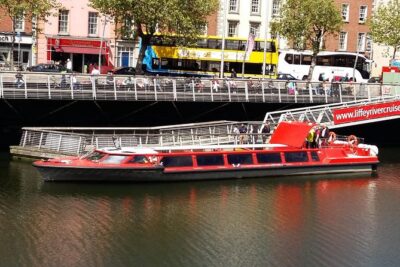
I like the friendly local commentary, which covers everything from the Vikings and Oliver Cromwell to reclaimed land beneath Trinity College and the Spire. I also like the small all-weather boat, with space for 48 passengers, because it gives you a close view of the river without the scale of a large sightseeing vessel.
The main drawback is the short 45-minute running time. It is enough for an introduction, but the cruise can feel over just as the stories get going. Tides may also change what the boat can reach, and there are no toilets onboard.
Key points to know before you go
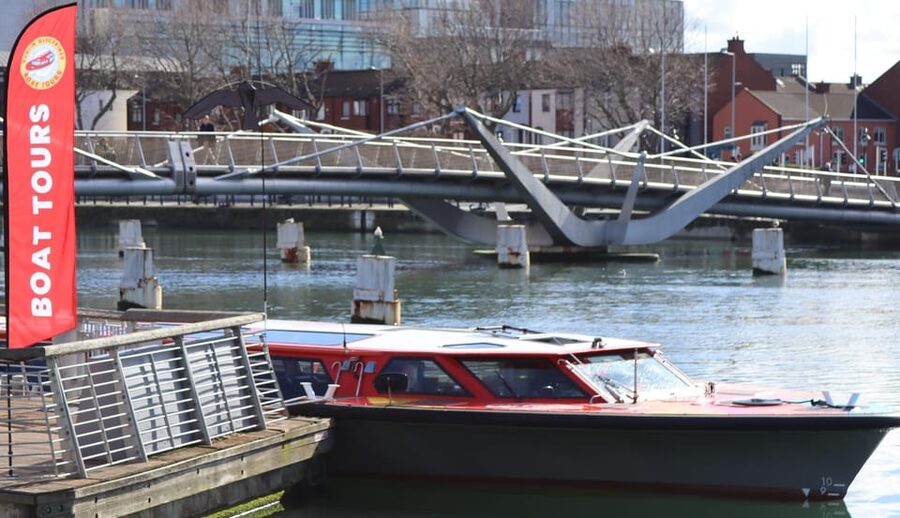
- The cruise leaves from Custom House Quay: Find the pontoon on the north side of the Liffey, beside the Sean O’Casey Footbridge and opposite the CHQ building.
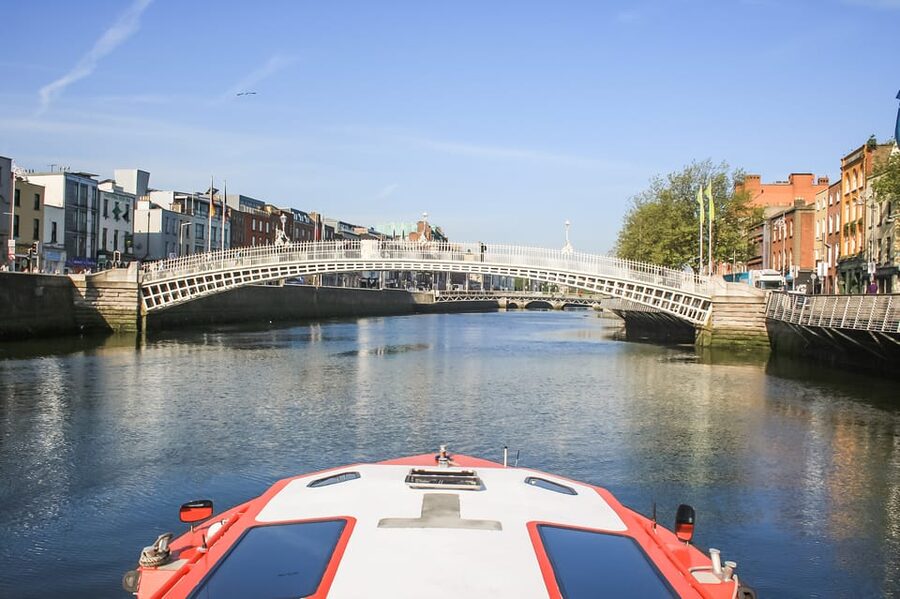
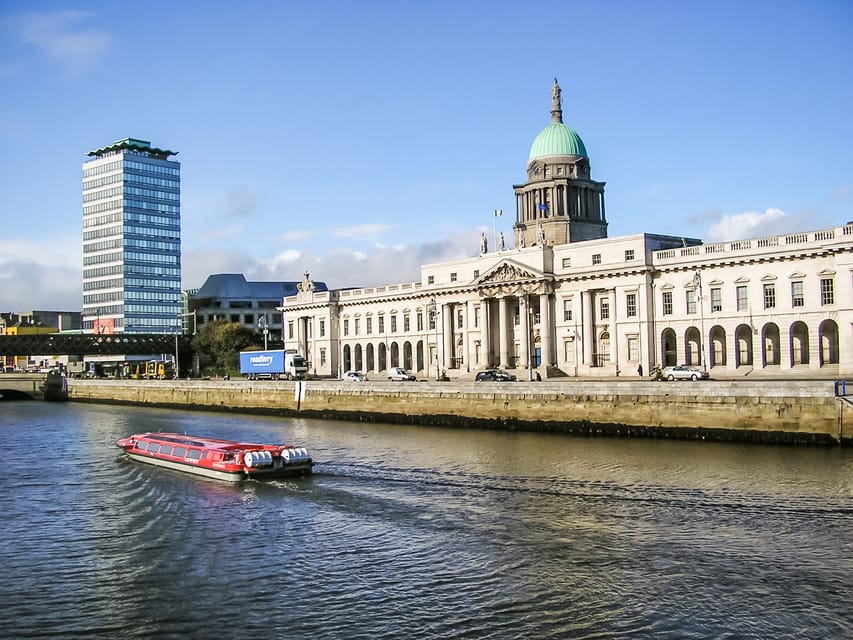
- The route links old and new Dublin: Look for the Ha’penny Bridge, Custom House, Jeanie Johnston, Docklands, and the approach to Dublin Port.
- The guide makes the difference: Commentary is live and in English, with guides known for humor, local pride, and clear storytelling.
- High tide changes the feel of the trip: Bridges can seem remarkably close to the roof of the boat, and parts of the route may change.
- It costs $23 per person: That is fair value if you want a compact city introduction rather than a full-day outing.
- You return to the same pontoon: Allow extra time to arrive 10 minutes early, then continue sightseeing from the central riverfront.
Why the Liffey is the right place to begin
Dublin can feel like a collection of separate districts when you walk it. The Liffey ties them together. On this cruise, you see the north and south sides of the city from a single moving viewpoint, with bridges acting as markers between different chapters of Dublin’s past.
The guide begins with the river itself and the arrival of the Vikings more than 1,000 years ago. That gives the trip a useful starting point. You are not simply looking at buildings. You are learning why a settlement grew here, how the river shaped trade, and how Dublin later changed as its port and canals developed.
This is especially handy on your first day in town. You get a quick sense of where the Custom House, Docklands, central bridges, and port sit in relation to one another. Afterward, walking around Dublin becomes easier because you have already seen the city from the middle.
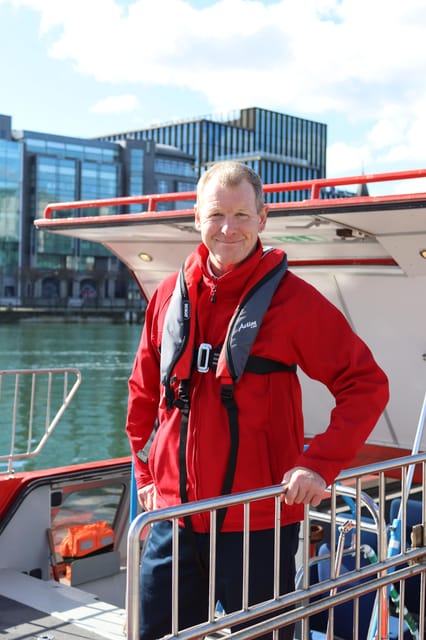
The experience is also more personal than a recorded audio tour. The guide speaks directly to the group, adds jokes, and can adjust the pace. Several guides, including Gerry, Jerry, Peter, Tony, and Lucy, have been singled out for warmth and storytelling. The exact guide depends on the sailing, but the format is consistent: one crew member handles the boat while another leads the commentary.
More Boat Trips in Dublin
- Dublin Sightseeing Cruise on River Liffey with Local Guide
★ 4.5 · 927 reviews - Dublin: Howth Coastal Boat Tour
★ 4.7 · 644 reviews - Dublin: Howth Cliffs and Lighthouse Cruise
★ 4.4 · 441 reviews
Finding the pontoon beside the Sean O’Casey Footbridge
All cruises depart from and return to the pontoon on Custom House Quay. It is on the north side of the river, opposite the CHQ building, near the Sean O’Casey Footbridge.
This is a practical meeting point for central Dublin, but you should not leave it until the last minute. Arrive 10 minutes before departure to check in and receive instructions from the crew. The boat leaves from the riverfront, not from a regular street-level ticket office, so give yourself time to spot the pontoon.
There is no hotel pickup or drop-off. You make your own way to the quay and return there after the 45-minute trip. That makes this easy to pair with other central sights. You might cruise before visiting the Custom House, or use it as a break after walking around the north side of the city.
The crew advises using nearby public toilets before boarding, since there are no toilets on the boat. This is a small point, but it matters on a short schedule, especially if you are traveling with children or anyone who needs regular facilities.
A close look at Dublin’s bridges and riverfront
Once underway, the boat gives you a lower and more unusual view of the city. Bridges that look familiar from the pavement take on a different character from beneath them.
The Ha’penny Bridge is one of the main sights. Its shape is easy to recognize, but seeing it from the river explains its role as a crossing between the two sides of Dublin. The guide also tells the story behind the bridge, adding context that you would miss by simply walking across it.
The Custom House is another major point of interest. James Gandon’s building is one of Dublin’s great architectural landmarks, and the water gives you a broad view of its river-facing side. The commentary places it within the growth of Dublin during the 18th and 19th centuries, when the city’s riverfront became increasingly important.
At high tide, passing under the bridges can feel surprisingly close. Gerry and Mark have been praised for handling a high-tide sailing when the boat seemed almost level with the bridge undersides. That close clearance is part of the fun, but it also explains why tidal conditions can affect the route.
The boat is all-weather, so rain does not automatically end the outing. Still, your view and comfort will depend on the weather. On a fine day, you get a clean look at the riverfront. In poor weather, the commentary carries more of the experience, and the covered boat lets you keep sightseeing without standing exposed on the quay.
Jeanie Johnston, Docklands, and the city’s newer face
The cruise continues toward Dublin Docklands, where the city’s older port functions meet newer development. From the water, this area makes sense as a working river district first and a modern neighborhood second.
You sail past the Jeanie Johnston, a replica famine ship and one of the river’s most recognizable sights. Even if you plan to visit it separately, the view from the boat gives you a useful first look at its size and position along the quays.
Docklands also helps explain Dublin’s more recent changes. The commentary follows the riverfront from its period of decline through redevelopment. That contrast is one of the strongest parts of the cruise. You see historic structures, port infrastructure, and newer buildings in the same short stretch of water.
The trip heads toward the point described as where the city meets the sea, at the edge of Dublin Port. This gives the cruise a broader sense of place. The Liffey is not just a decorative waterway in the city center. It connects Dublin directly to the bay, shipping routes, and the wider maritime story of Ireland.
The precise extent of the route depends on availability and tidal conditions. If the selected time cannot operate as planned, the operator may contact you to arrange another sailing. Parts of the journey can also be adjusted when the tide makes certain sections difficult.
A few more Dublin half-days to weigh up
- Dublin to Cliffs of Moher, including Wild Atlantic Way and Galway
★ 5.0 · 23,331 reviews - From Dublin: Cliffs of Moher, Burren & Galway City Day Tour
★ 4.8 · 18,888 reviews - Dublin: Guinness Storehouse Entry Ticket
★ 4.6 · 16,863 reviews - Dublin to Cliffs of Moher, Burren, Wild Atlantic Way, Galway Tour
★ 5.0 · 12,924 reviews
Stories that turn a short cruise into a history lesson
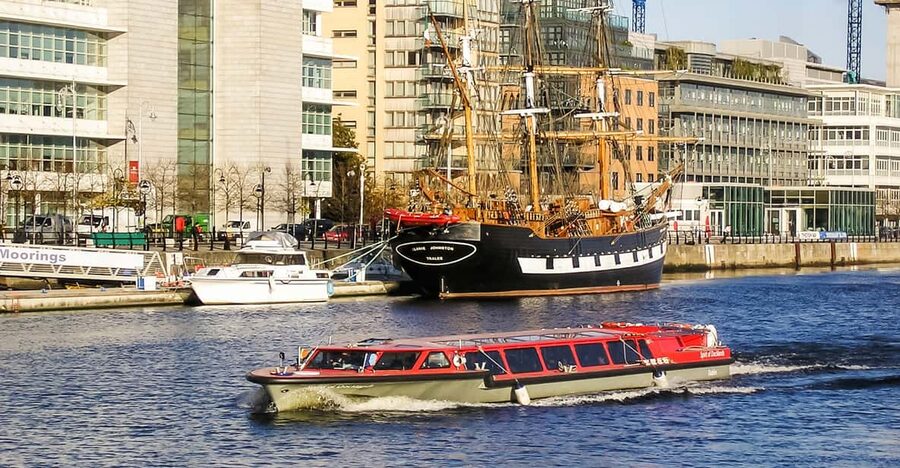
The history is wide-ranging for a 45-minute trip. You hear about the Viking arrival, Dublin’s growth in the 18th and 19th centuries, later decline, and Docklands redevelopment. The guide also follows the story of Dublin’s Royal and Grand Canals.
One of the more unusual details concerns Oliver Cromwell, who landed here in 1649. Another concerns Captain William Bligh, better known for the mutiny on the Bounty, who surveyed Dublin Bay in 1800. These details prevent the commentary from becoming a simple list of buildings.
The guide also explains how much of modern Dublin sits on reclaimed land. Trinity College and the Spire on O’Connell Street are among the places linked to this changing ground beneath the city. That is the kind of detail that improves your later walks. Instead of seeing the Spire as an isolated landmark, you understand it as part of a city repeatedly reshaped by water, engineering, and expansion.
The best guides keep this information moving. Lucy has been praised for giving plenty of detail without overloading the group, while Peter has been described as a natural storyteller. You can expect different personalities depending on the day, but the strongest commentary combines facts with local tales and a bit of urban folklore.
What the 48-passenger boat feels like
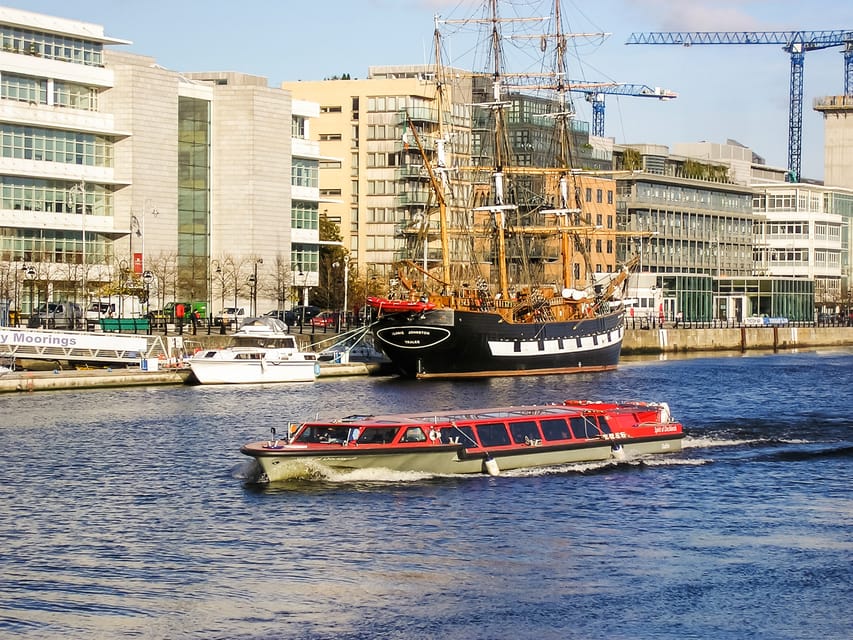
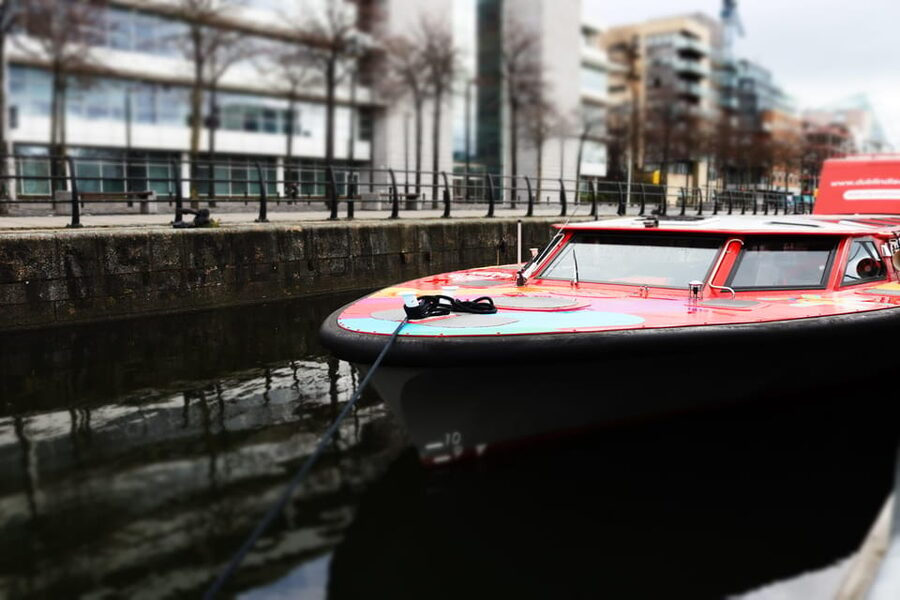
This is a compact river boat with room for 48 passengers. That size gives you a closer connection to the river than a large vessel, and the crew can speak to the whole group without the experience feeling impersonal.
The boat is wheelchair accessible, which makes this a practical way to see the riverfront if a long walking route is difficult. You should still check the exact arrangements when booking if you have specific mobility needs, since the supplied information confirms accessibility but does not give further boarding details.
A few practical limits are worth keeping in mind. There are no onboard toilets, and there is no hotel transport. The cruise is also live and group-based, so your ability to hear the guide depends partly on the behavior of people around you. Loud conversation can make parts of the commentary hard to catch.
That is a real consideration because the guide is the main reason to book this outing. If you want quiet sightseeing with no narration, this may feel less suitable. If you enjoy a social trip with jokes, questions, and a local voice, the group setting works well.
Is $23 good value for 45 minutes?
At $23 per person, this is not the cheapest way to look at Dublin. But the price is reasonable for a short, guided activity in the city center, especially if you value orientation and local commentary.
You are paying for more than a boat ride. The cruise gives you a compact explanation of Dublin’s river, bridges, port, canals, reclaimed land, and Docklands. It also saves you from covering the same ground on foot while trying to read signs or piece together the city’s layout yourself.
The limitation is the duration. Forty-five minutes goes quickly, and some passengers wish it lasted longer. You should think of it as an introduction, not a full afternoon attraction. If your schedule is tight, the short length is an advantage. If you want a slow cruise with lots of time for photographs, it may feel rushed.
I consider it strongest for first-time visitors, families, and anyone who likes to begin a city visit with a guided overview. It also works well on a rainy day because the boat operates in all weather, though the best views naturally come with better conditions.
Timing, tides, and the best way to plan your day
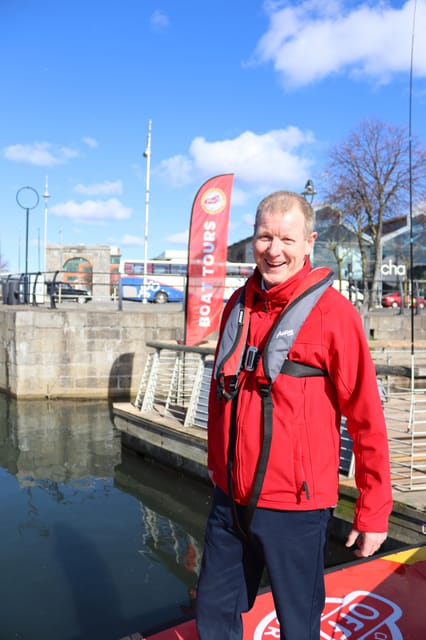
Cruise times vary, so you need to check availability for the date you want. Every booking is subject to availability and tidal conditions. If there is a problem with the selected date or time, the operator will contact you about another sailing.
Tides matter more here than they do on many city boat trips. High water can make the bridges feel very close and may limit which parts of the route are practical. The crew is upfront about this and may tell you what the tide allows before departure.
I would place the cruise early in your Dublin visit. The riverfront orientation helps you plan walks to the Custom House, Jeanie Johnston, O’Connell Street, and Docklands. It is also a good choice when the weather is uncertain, since you can spend 45 minutes indoors while still seeing the city.
Booking is flexible: you can reserve now and pay later, and cancellation is free up to 24 hours before the cruise for a full refund. Those terms are useful when your Dublin schedule is still changing.
Who will enjoy this cruise most?
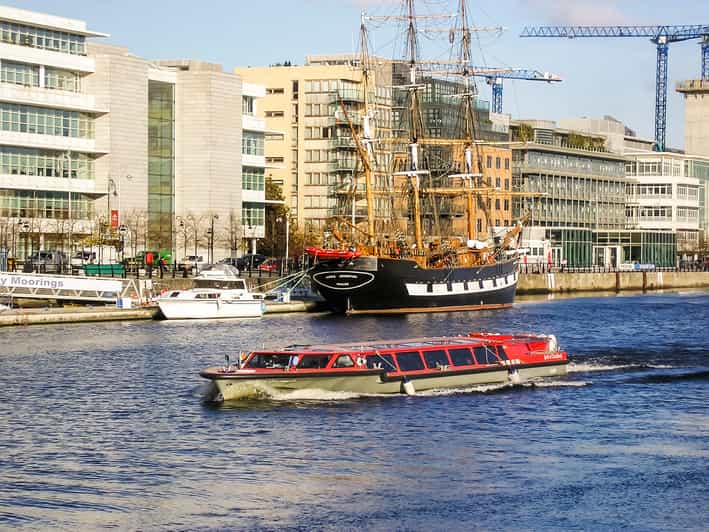
You are a good match for this experience if you like history delivered in a relaxed, conversational way. The strongest part is the combination of views and narration. You see a landmark, then hear why it matters.
Families should find the short duration manageable, and the entertaining guides help keep the history from feeling like a classroom lecture. The boat’s 48-passenger capacity also avoids the scale of a large sightseeing ship.
It suits repeat visitors too. You may already know the Ha’penny Bridge or Custom House from street level, but the river changes your angle and connects familiar sights to the port and Docklands.
You may want to skip it if you dislike live group commentary, need toilet access during short activities, or want a long, quiet cruise. The 45-minute format leaves little time for lingering, and loud passengers can make the narration harder to hear.
Should you book the River Liffey cruise?
I would book it as a compact introduction to Dublin, especially at the start of a city break. The price is fair, the meeting point is central, and the combination of bridges, port views, Docklands, and local stories gives you useful context quickly.
Go in expecting a lively 45-minute tour, not a full river excursion. Arrive early, use the toilets across the road, and keep an open mind about tide-related route changes. If you want Dublin explained by a local guide while you see it from a fresh angle, this is a sensible addition to your itinerary.
FAQ
How long is the Dublin River Liffey sightseeing cruise?
The cruise lasts 45 minutes.
How much does the cruise cost?
The listed price is $23 per person.
Where does the cruise depart?
It leaves from the operator’s pontoon on the north side of the River Liffey, on Custom House Quay. The pontoon is beside the Sean O’Casey Footbridge, opposite the CHQ building.
Where does the cruise finish?
The boat returns to the same pontoon at Custom House Quay.
How early should I arrive?
Arrive 10 minutes before your booked departure time to check in and receive instructions from the crew.
What language is the tour conducted in?
The tour has a live guide and is conducted in English.
Is the boat wheelchair accessible?
Yes, the activity is listed as wheelchair accessible.
Are hotel pickup and drop-off included?
No. You must make your own way to the pontoon, and the activity ends there after the cruise.
Can the route change because of the tide?
Yes. Bookings are subject to tidal conditions, and parts of the trip may change. If there is a problem with your selected sailing, the operator will contact you about an alternative time or date.
Just added around Dublin
- Women Of Ireland: Trailblazers & Pioneers★ 5.0 · 4 reviews
- Wicklow tour of Glendalough★ 4.5 · 8 reviews
- Full Day Private Wicklow Tour★ 5.0 · 12 reviews
- Wicklow Mountains & Glendalough Luxury Private Day Tour★ 5.0 · 23 reviews
- Premium Irish Whiskey Tasting Hosted by Local Dublin Expert★ 5.0 · 77 reviews
- Whiskey Tasting Tour of Dublin★ 5.0 · 117 reviews
- Dublin To Kilkenny Castle Waterford Crystal Private Car – Day Tour★ 5.0 · 8 reviews
- Historical Walking Tour of Dublin★ 5.0 · 50 reviews
Cruises & Boat Tours, compared.
Galway to Inisheer Aran Islands, Cliffs of Moher and Boat Trip
Read our review →
Aran Islands and Cliffs of Moher Tour & Cruise
Read our review →
Dublin Sightseeing Cruise on River Liffey with Local Guide
Read our review →
Browse the lists this tour appears in