
Reviewed · HISTORICAL TOURS
Historic Cork Delicious Donut Adventure by Underground Donut Tour
Cork’s center is compact, walkable, and full of stories, and this tour gives you a sweet reason to explore it on foot. You’ll move from old market streets and riverfront trading ground to the Opera House, Rory Gallagher’s statue, and St. Patrick Street, with fresh donuts and baked treats breaking up the history.
I like the mix of food and local stories, especially the way the walk reaches places you might pass without understanding. I also like the guides’ personal touch. Paddy, Chloe, Rachel, Marinna, Julian, and Marysol have all been singled out for making the tour friendly, clear, and fun. The main drawback is the price: at $65 per person, this is costly if you mainly want donuts, and two hours can be a lot of sweet food.
Key points to know before booking
- Four food stops may be part of the route, with treats ranging from vegan baked goods and French pastries to American-style donuts and Brazilian mini churros.
- The walk covers central Cork, including the English Market, Cork Opera House, Coal Quay, Washington Street, and St. Patrick Street.
- Guides make a major difference, and Paddy, Chloe, Rachel, Marysol, Marinna, and Julian have all received especially warm praise.
- The group is capped at 20 people, giving you a better chance to hear the guide than on a large city tour.
- The tour begins at Cameron Bakery and ends at Cafe Mexicana, so you can plan your Cork sightseeing around those two locations.
- Come hungry, but not excessively so. Several generous tastings can leave even children ready to stop eating before the tour ends.
Why this Cork food walk works
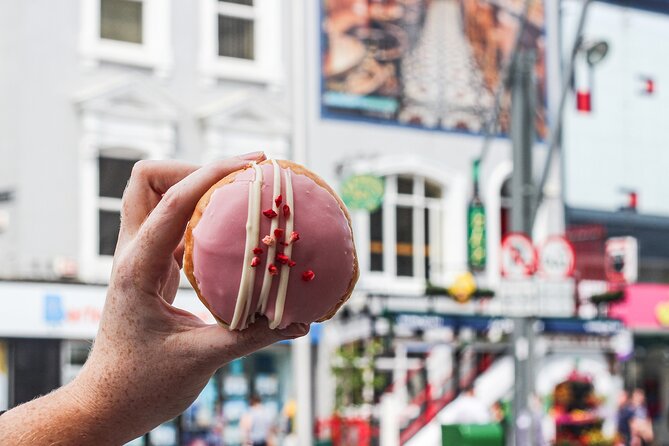
This is not simply a pastry crawl. The food gives the route a clear rhythm, while the guide fills in the story of Cork around it. You walk, pause for a landmark, hear about the city, then stop for something sweet. That pattern keeps the experience moving and works well for families who might lose interest during a standard history walk.
Cork’s center has layers from different periods, and the route touches several of them. You’ll hear about river trade, medieval food markets, religious and political change, local music, architecture, and the city’s more recent past. The tour is broad rather than academic. If you want a detailed study of Irish history, this will feel light. If you want a friendly introduction before exploring on your own, it fits nicely.
The tour is offered in English, uses a mobile ticket, and lasts about two hours. A maximum of 20 people keeps it fairly manageable, though the experience will still depend on how large your actual group is and how easily everyone moves between stops.
More Historical Tours in Cork
- Cork: Guided Historical Walking Tour
★ 4.7 · 310 reviews - The Queenstown Story @ Cobh Heritage Centre , Great Stories of Emigration.
★ 4.5 · 181 reviews - Visit 16 Sites Key Historical Sites And Experience Cobh Rebel Tours
★ 5.0 · 167 reviews
Starting at Cameron Bakery on Parnell Place
The meeting point is Cameron Bakery at 25 Parnell Place. This gives you a useful first taste before the walking portion gets underway. It also means you should arrive with enough room for food, since the treats continue at several points along the route.
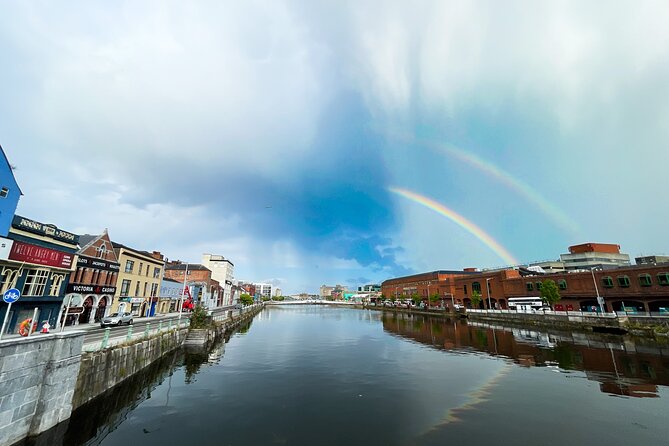
The first stop is the nearby Merchants Quay Shopping Centre area. Today, it is a modern part of Cork, but the guide uses it to explain how the rivers and quays once supported trade. Boats moved cargo through the city, including casks of Cork butter, which had a strong reputation.
This opening story helps you see the shopping center differently. Instead of treating it as a place to hurry through, you begin to picture Cork as a working port where goods, people, and money moved along the river. The stop lasts about 15 minutes and is more about orientation than sightseeing.
Cork Opera House and the Shandon Bells
At Emmet Place, the route pauses outside Cork Opera House. The guide explains the building’s story and points toward the famous Shandon Bells, one of Cork’s best-known landmarks.
This is one of the more useful stops for first-time visitors because Cork’s buildings do not all belong to one neat style or period. The guide also points out two attractive Queen Anne houses, including one now used by Starbucks. That small detail gives the stop a pleasant local contrast: old architecture remains part of everyday Cork life rather than sitting apart from it.
You will not go inside the Opera House as part of the stated tour. The value here is the explanation and the view of the surrounding area. If you want to visit the Shandon Bells or see a performance, treat this walking tour as an introduction and make a separate plan.
The English Market and Cork’s food identity
The English Market is one of the tour’s headline sights and one of Cork’s most worthwhile central stops. It is among Europe’s oldest covered markets, and its stalls help explain why food matters so much to the city’s identity.
The market adds substance to a donut-focused outing. You are not just eating sweets in random shops. You are walking through a city where food trading has long been part of daily life. The market can also help you place the smaller bakeries and food businesses visited during the tour within a wider Cork tradition.
The exact timing inside the market can vary, so do not count on having a long independent shopping period. If you want to browse stalls at your own pace, return later. The tour is designed to keep moving.
A few more Cork half-days to weigh up
- From Cork: Ring of Kerry Guided Day Trip
★ 4.3 · 1,284 reviews - Cliffs of Moher and More: Full-Day Tour from Cork
★ 4.4 · 879 reviews - Cork Midleton DistilleryJameson Experience & Whiskey Tasting
★ 5.0 · 681 reviews - Ring of Kerry Day Tour from Cork: Including Killarney National Park
★ 4.5 · 663 reviews
Rory Gallagher’s Cork connection
The Rory Gallagher Memorial Sculpture honors the Cork-born rock and blues guitarist. The guide pauses here to explain Gallagher’s connection to the city, and you have time to take photographs beside the bronze figure.
This is a welcome change of pace from churches, courts, and market buildings. It also shows that Cork’s cultural story is not limited to old stone and political events. Local music is part of the city’s modern identity, and Gallagher gives the guide an easy way to connect Cork with a figure known well beyond Ireland.
Music fans will get the most from this stop, but you do not need to know Gallagher’s work in advance. The guide provides the basic context, and the sculpture makes a good photo stop.
Coal Quay and medieval Cork
The Coal Quay stop takes you into the heart of medieval Cork. Here, the guide points out where Irish residents once bought food and explains the city’s coat of arms.
The coat of arms appears on a wall near the location of one of the old towers of the Queen’s Castle. This is the kind of detail that can disappear into the modern city if you do not know where to look. The stop shows how much of Cork’s past survives in fragments, street alignments, walls, and names rather than in one preserved historic district.
Plan on about 15 minutes here. It is a short explanation, not a full archaeological tour. I like it as a reminder to keep looking above shopfronts and around corners as you continue walking.
Washington Street’s buildings and churches

Washington Street brings together several architectural and civic sights. The route takes in Cork Courthouse, Reardons Emporium, and St. Augustine’s Church.
The appeal is variety. You get a courthouse, a commercial building, and a church in a short stretch, with the guide explaining what makes each worth noticing. This part of the walk is especially useful if you tend to see city streets as a blur of façades. A good guide helps you separate the periods and purposes behind them.
The historical coverage can be more general than detailed. One family found that some facts were repeated and wished for a wider range of stories. That is a fair caution: the route follows a set structure, so the depth may depend on the guide and on how many questions the group asks.
St. Patrick Street and the final treats
The last walking section follows St. Patrick Street, Cork’s main modern shopping street. Here, you see a mix of architectural styles and hear about the Huguenot burial ground located in the center of the city.
This is a fitting final stretch because it brings the tour back to present-day Cork. After the old quays, medieval market area, and historic buildings, you finish among shops, traffic, and daily city life. The Huguenot burial ground is the sort of compact historical detail that makes the street more interesting once you know it is there.
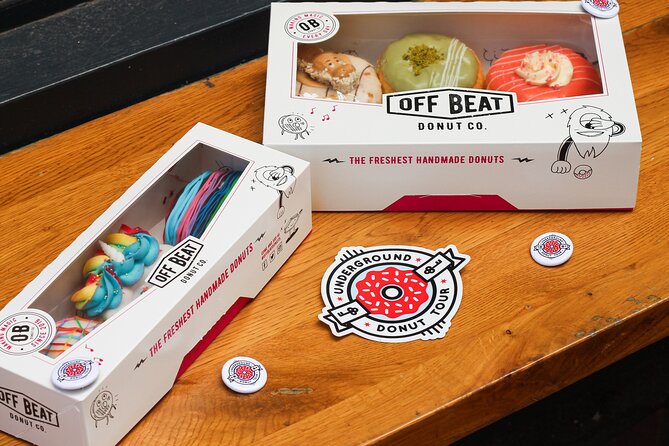
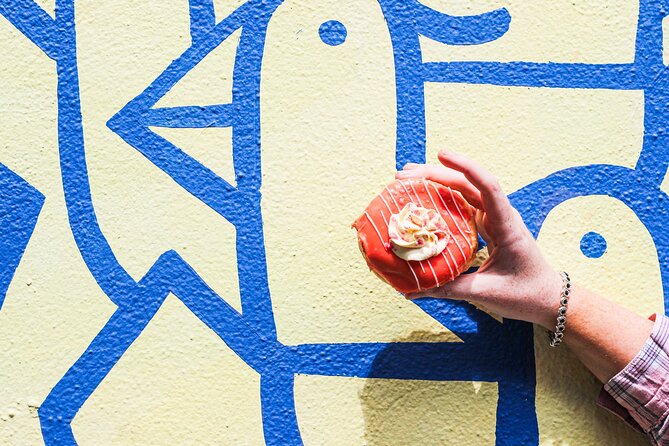
The tour ends at Cafe Mexicana on Carey’s Lane. The listed itinerary describes it as the final stop, but the precise food offerings may vary. Past routes have included stops such as Dolce Bun, Cameron’s, Offbeat, and a Brazilian bakery, with examples including vegan pastries, French croissants, decorated donuts, pistachio donuts, and filled mini churros. Think of these as useful indications of the food range, not a guaranteed menu for every departure.
What the donut stops are really like
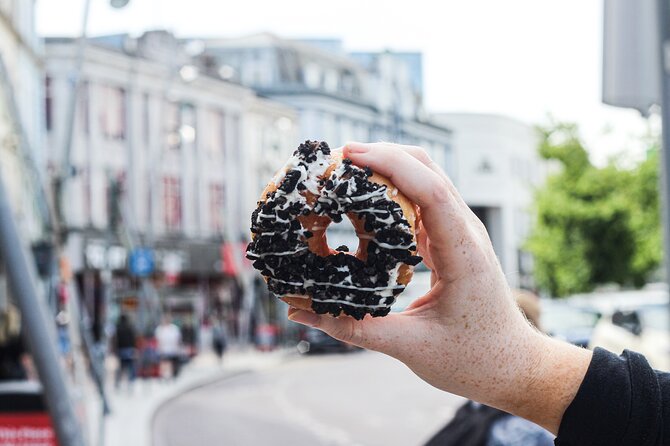
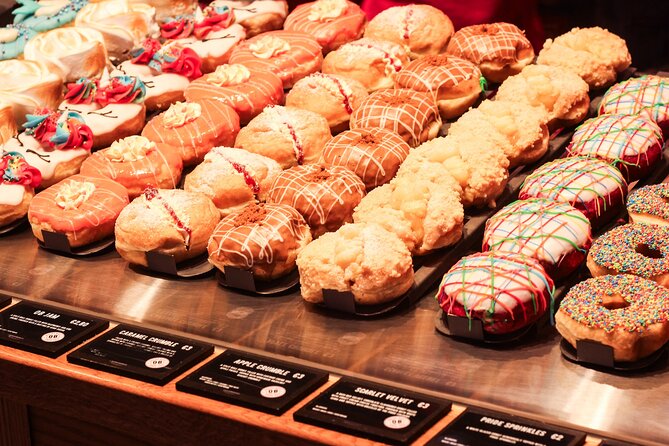
The food is generous. One route included four different donut or bakery stops, with enough leftovers for breakfast the next day. That sounds ideal for a serious sweet tooth, but it can be too much for some people, particularly children.
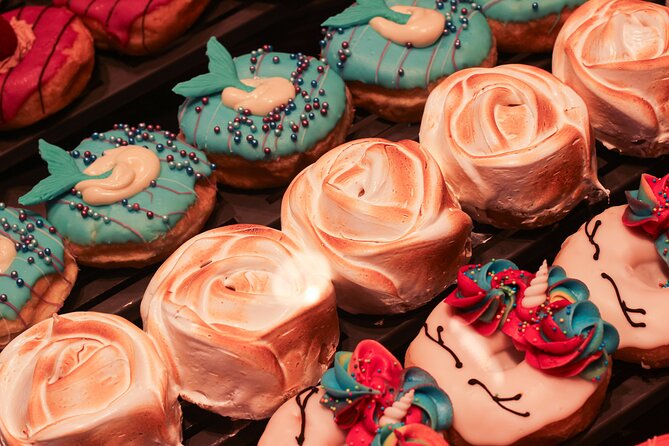
The variety is one of the strongest parts. You may encounter more than one style of baked treat rather than a repeated serving of the same donut. A vegan bakery, French-run bakery, conventional donut shop, and Brazilian bakery can create a small food tour within the city walk.
Fresh preparation is another attraction. The tour description says you can watch donuts being made before your eyes, which adds a little theater to the tasting. Still, expectations matter. The food is the main event for some people, while others may find the donuts only fine and not worth the full price by themselves.
I suggest eating a light breakfast beforehand, not arriving completely empty. That gives you flexibility if the first stop offers more than expected. If you are with children, sharing portions can help prevent the sugar overload that may hit near the final stop.
The guides can shape the whole experience
The strongest praise centers on the guides. Paddy is described as personable and entertaining, with a talent for bringing old Cork to life. He even walked one participant toward the train station afterward to help with a departure, though you should not assume that extra service is part of every tour.
Chloe has been praised for her patience, humor, and care with older visitors who had mobility concerns. Rachel has been noted for adding extra details, including small historical Easter eggs. Marysol has been described as especially strong on Cork and Irish history, including the Irish Revolution and the later conflict involving the IRA and the British government.
Marinna and Julian have also been praised for their friendly, easy manner. These names matter because the tour is intimate enough for the guide to shape the mood. A lively guide can turn a short explanation about a building into a memorable story. A less engaging presentation can make the fixed route feel repetitive.
The guide may not always be Irish or originally from Cork. One guide was a Houston transplant who had built good knowledge of the city but could not offer the same personal Irish historical background as a local guide. If local roots are essential to you, ask about the guide when booking if that is possible. The tour can still provide useful Cork context, but personal connection varies.
Price, pace, and practical value
At $65 per person, this is not a budget breakfast. You are paying for several tastings, a two-hour guided walk, and the convenience of combining food with sightseeing. The value is strongest if you would otherwise pay for both a separate city walk and several bakery stops.
For a family of five, the total cost rises quickly. Children may enjoy the novelty, the sculpture, and the sweet stops, but not every child will want a full serving at each location. Consider the price against your family’s appetite and interest in guided history.
The walk is not recommended for people with significant mobility issues. Most people can participate, and service animals are allowed, but this is a moving city tour with multiple stops. If someone in your group needs extra time, contact the operator before booking. A guide may be able to help, as Chloe did for one group, but that should not replace checking your own needs.
The tour requires good weather. If poor weather causes cancellation, you are offered another date or a full refund. You can cancel for a full refund up to 24 hours before the start time, but changes or cancellations inside that window are not accepted.
Who should book this tour
I would choose it for a first visit to Cork when you want a quick orientation without committing to a long formal history tour. It also suits couples who like bakeries, families who need a food-based incentive to walk, and anyone who prefers seeing a city through everyday streets rather than from a bus.
It is less suitable if you want a serious food tasting, a deep study of Irish history, or a small artisan-only bakery experience. The city stories are broad, the route follows a set structure, and the quantity of food may be more important than fine tasting detail.
Book well ahead if your dates are fixed. This experience is often reserved about 45 days in advance, which suggests that popular departures can fill. Check the start and end points carefully, especially if you are arriving by train or planning another timed activity afterward.
Should you book the Historic Cork Delicious Donut Adventure?
Book it if you want a friendly introduction to central Cork with plenty of sweets. The best part is the combination: you see the English Market, quays, historic streets, music memorials, and major buildings while a guide adds stories you might miss alone.
Skip it if $65 feels too high for breakfast and you would rather choose your own bakeries. Also think twice if your group tires easily, dislikes sugary food, or wants a highly detailed history tour.
For most visitors, the smart choice is to arrive moderately hungry, wear comfortable shoes, and treat the donuts as the route’s playful bonus rather than its only purpose. The city walk is what gives the experience its lasting value.
FAQ
How long does the Cork donut tour last?
The tour lasts approximately two hours.
Where does the tour begin?
It begins at Cameron Bakery, 25 Parnell Place, Centre, Cork, T12 VH29, Ireland.
Where does the tour finish?
The tour finishes at Cafe Mexicana on Carey’s Lane in central Cork.
Does the tour visit the English Market?
Yes. Visiting the English Market is one of the highlighted parts of the experience. It is one of Europe’s oldest covered markets.
What food is included?
Breakfast donuts are included. Past food stops have included different types of baked goods, such as vegan pastries, French croissants, decorated donuts, pistachio donuts, and Brazilian mini churros, but the exact selection may vary.
Is the tour suitable for children?
Most people can participate, and the tour is designed to keep children engaged with a mix of city sights, stories, and treats. The amount of sweet food may be more than some children want.
What happens if the weather is poor?
The experience requires good weather. If it is canceled because of poor weather, you can choose another date or receive a full refund. Free cancellation is available up to 24 hours before the start time.
Just added around Cork
- Full-Day Private Whispers of Kerry Emerald Dreams Tour from Cork★ 5.0 · 6 reviews
- Wild Coast Bike and EBike Tour in Kinsale Cork Ireland★ 5.0 · 12 reviews
- Fota House, Arboretum & Gardens Admission Ticket★ 5.0 · 67 reviews
- Kinsale and West Cork Classic Private Tour in modern a/c minibus★ 5.0 · 4 reviews
- Blarney,Cork City,Kinsale,Ultimate Private Guided Minibus Tour.★ 5.0 · 6 reviews
- Private Tour: Classic Cork Tour visiting Blarney Castle & Kinsale★ 5.0 · 8 reviews
- Toe Head Clifftop Hike in West Cork★ 5.0 · 48 reviews
- Paint a Metal Miniature★ 5.0 · 33 reviews
Historical Tours, compared.
Dublin Historical Centre Food Tour with 8 Food Tastings & Drinks
Read our review →
Historical 2-Hour Guided Walking Tour of Dublin
Read our review →
Dublin to Cork, Blarney Castle & Cóbh Heritage Centre by train
Read our review →
Jeanie Johnston Tall Ship Irish Famine History Tour
Read our review →
Deliciously Dublin: The Artisan Donut Walking & History Tour
Read our review →Browse the lists this tour appears in