
Reviewed · THE BURREN TOURS
Aran Knitting, History and Heritage in the Burren
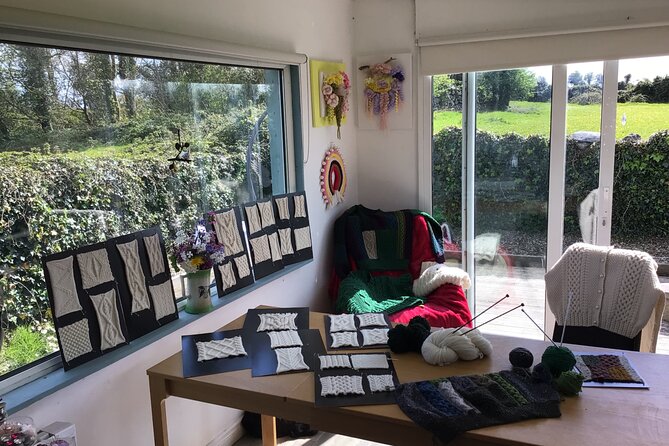
Aran knitting makes the most sense when you meet it at its source, in a small farm studio beside a 1,000-year-old fairy fort. Stephanie, a fourth-generation farmer at Faerie Fort farm, explains how Aran patterns developed, what different cable stitches mean, and how wool choices affect the finished sweater. You then try a prepared cable pattern yourself.
I like the personal scale of this experience and the fact that it joins craft with place. I also like the food: smoked salmon on homemade brown bread, traditional Irish porter cake, and tea or coffee turn a knitting lesson into a relaxed visit. The main consideration is simple: if you do not knit, the hands-on part may feel less exciting, though Stephanie works patiently with beginners.
Key points to know before you book
- A working family farm: Stephanie welcomes you at Faerie Fort farm, where her family has farmed for four generations.
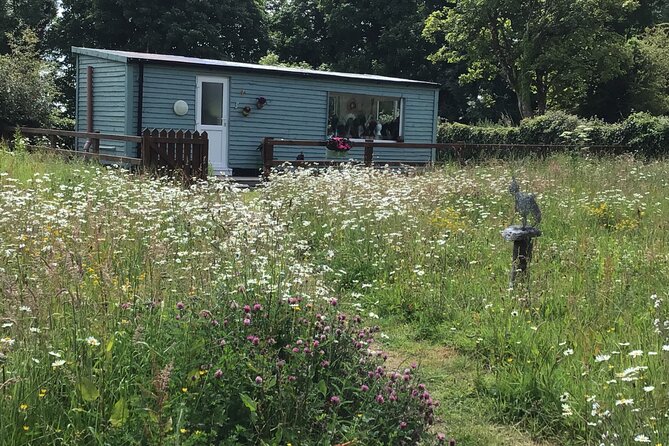
- A rare setting: The garden studio sits beside a 1,000-year-old fairy fort and behind a 209-year-old thatched cottage.
- Aran patterns explained: You learn about cable and stitch designs, the types of wool used, and the ideas traditionally linked with different patterns.
- You make something yourself: The practical lesson uses a prepared cable pattern, so you can try the technique during the visit.
- Food is part of the experience: Homemade brown bread with smoked salmon, porter cake, coffee, tea, and herbal teas are served.
- Private and unrushed: Only your group takes part, and the activity lasts about two hours.
A fairy fort, a thatched cottage, and a family farm
The setting does much of the work here. You meet at Crannagh, County Galway, at Faerie Fort farm. The garden studio is behind the family’s thatched cottage and beside a fairy fort said to be 1,000 years old.
That combination matters. You are not learning Aran knitting in a generic craft room or a large retail shop. The lesson takes place in the same rural setting where Stephanie lives and works. She begins with the heritage of the area and her own connection to the farm, giving the knitting lesson a clear sense of place.
The cottage is described as 209 years old, while Stephanie identifies herself as a fourth-generation farmer. Those details give you useful context without turning the visit into a formal history lecture. You get a short introduction to the land, the family, and the local traditions before moving on to wool and stitches.
The fairy fort is another distinctive touch. These old ring forts are part of Irish folklore and rural memory, and having one beside the studio adds a strong local element to the visit. The information provided does not promise a separate walking tour of the fort, so you should think of it as part of the setting rather than a scheduled stop with a full archaeological explanation.
More Historical Tours in Galway
- Galway: Dark History Guided City Walking Tour
★ 4.8 · 236 reviews - The Dark History Tour of Galway City
★ 5.0 · 146 reviews - Galway City on Foot with Seán: Stories, History, Local Tips, Chat and More..
★ 5.0 · 64 reviews
What you learn about Aran knitting
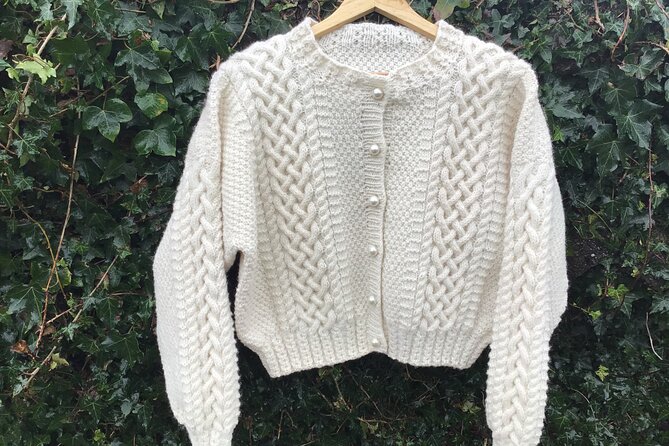
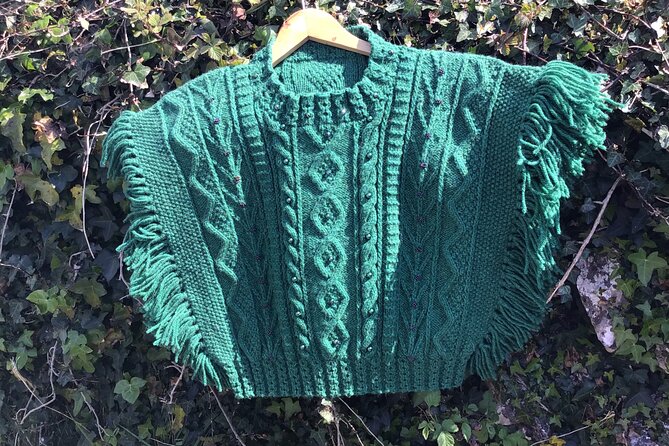
Stephanie explains the origins of Aran knitting and introduces the main types of wool available. This is useful because Aran sweaters can look simple from a distance, but their texture comes from careful choices in yarn, structure, and stitch.
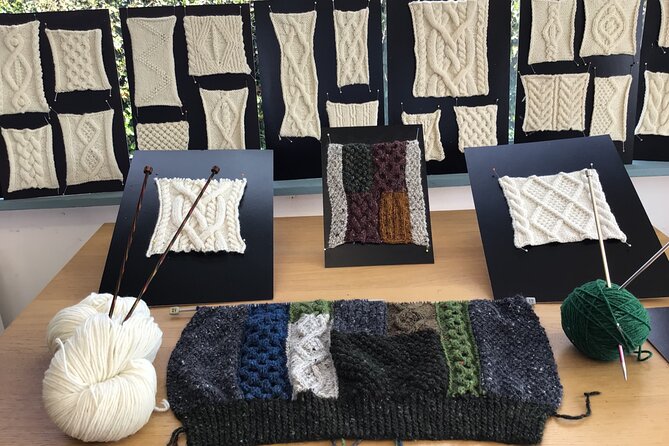
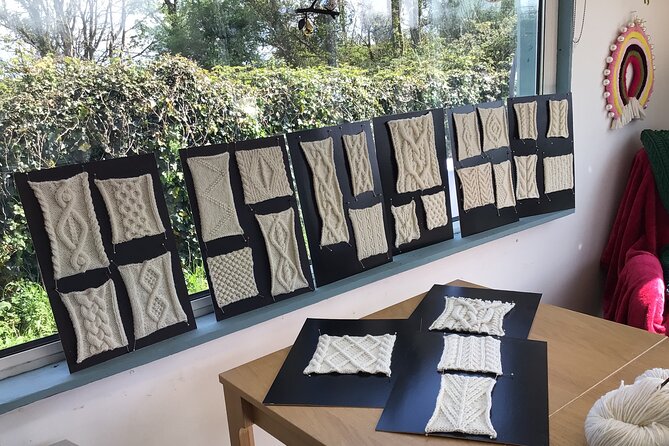
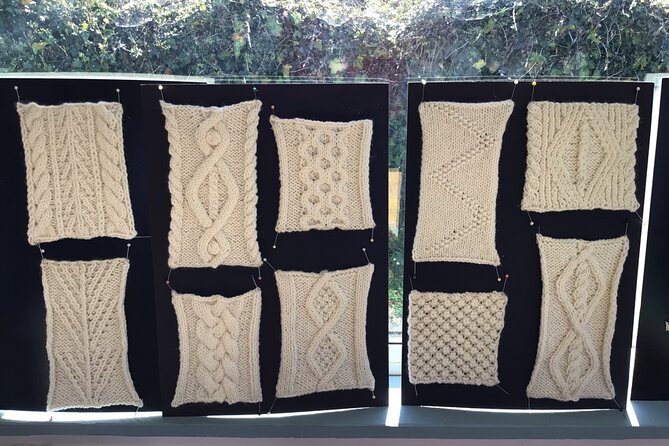
You learn how cable patterns are formed and how different stitches can carry meanings or associations. The lesson includes examples of several cable and stitch patterns, allowing you to see the differences before you begin knitting.
I like this order. You first see the finished ideas, then hear the background, and only after that try the technique. It helps you understand why a sweater has a particular texture instead of treating the cable as mere decoration.
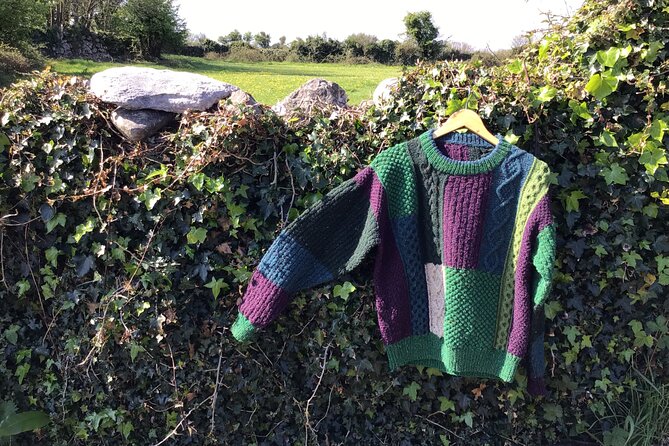
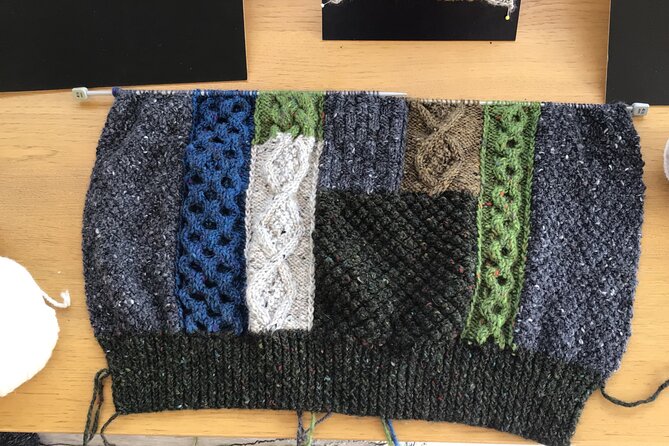
Stephanie also discusses how you could design your own sweater. That part should appeal to anyone who already knits or who has an unfinished project in mind. You are not simply copying one small sample without context. You are shown how individual stitch patterns can become part of a larger design.
Still, keep the scope in mind. This is a two-hour activity, not a full course in sweater construction. You can expect an introduction to the patterns and a chance to practice a prepared cable design. You should not book it expecting to complete an entire Aran sweater during the visit.
The hands-on knitting lesson
After the explanation, you work on a prepared cable pattern. That practical section is the heart of the experience.
If you already knit, the lesson gives you a chance to focus on Aran-specific patterns and to ask about design choices. Stephanie has examples of cable and stitch work available, and the supplied pattern gives you something clear to follow rather than leaving you to guess where to begin.
If you are new to knitting, the experience can still work. One member of a recent private group had never knitted before, and Stephanie gave that person one-on-one help while also advising the rest of the group. That detail is important: beginners are not expected to arrive with a finished skill set.
The pace also appears to be flexible. The activity is private, so only your group participates. You are not working through a fixed public class with strangers or trying to keep up with a large room. The experience is described as unrushed, which should make it easier to ask questions and repeat a stitch when needed.
You will want to pay attention during the demonstration. Cable knitting can be fiddly, and a prepared pattern still requires concentration. If you have limited hand mobility or simply do not enjoy close manual work, the history, farm setting, and food may be more appealing than the knitting itself.
Stephanie provides the patterns for you to use, giving the lesson value beyond the two hours. You leave with a reference for trying the technique again, rather than only a memory of watching someone else knit.
Food served in the garden studio
The refreshments are more than a quick cup of tea. Stephanie serves smoked salmon on homemade brown bread, traditional Irish porter cake, coffee, tea, and herbal teas at your convenience.
That menu fits the setting well. Brown bread and smoked salmon make a substantial savory bite, while porter cake gives you a traditional sweet taste alongside your drink. The food also creates natural pauses in the knitting lesson. You can look at the examples, talk with Stephanie, and take a break from counting stitches.
The food is included as part of the visit, but the available information does not give a separate menu choice, portion size, or information about dietary substitutions. If you have an allergy or a strict dietary need, ask before booking rather than assuming the refreshments can be changed.
I especially like that the meal is homemade. It adds to the sense that you are being welcomed into a family place, not simply processed through an activity. The food is not the main reason to book, but it makes the two-hour visit feel more rounded and generous.
More trips across the Burren:
- From Galway: Full-Day Cliffs of Moher & Burren Guided Tour
★ 4.8 · 2,815 reviews - Cliffs of Moher & the Burren Tour from Galway
★ 5.0 · 1,913 reviews - From Galway: Cliffs of Moher and The Burren Guided Day Trip
★ 4.7 · 1,770 reviews - Caherconnell Fort & Sheepdog Demonstrations
★ 5.0 · 645 reviews
Why the private format matters
This is a private activity, so only your own group takes part. That changes the tone considerably.
You can ask basic questions without feeling self-conscious. A confident knitter can ask about designing a sweater, while a beginner can request help with the first cable pattern. The group can also spend more time on the parts it finds most interesting, within the roughly two-hour visit.
Private does not mean fully customized in every detail. The core plan remains the same: an introduction to the farm and local heritage, an explanation of Aran knitting and wool, examples of stitches, a prepared cable pattern, and refreshments. But the small scale should make the experience feel more like a visit with a local maker than a standard class.
This format is best for couples, families, or a small group with mixed experience. A knitter can focus on technique while a companion enjoys the setting and history. Since most people book about 31 days ahead, planning early is sensible if your dates in Galway are fixed.
Is $78.27 a fair price?
The listed price is $78.27 per person for about two hours. That is not a bargain if you measure the experience only by the amount of knitting you take home.
The value improves when you count the full visit. You receive personal instruction from Stephanie, an introduction to Aran wool and stitch traditions, access to prepared patterns and examples, time in a family farm setting, and homemade food and drinks. The private format also gives you direct attention that a large group workshop may not provide.
I would compare it with the cost of a standard craft class, but not only on the basis of class length. The distinctive setting and local connection are a major part of what you are paying for. You are also paying for the chance to learn about the cultural background of Aran knitting from someone who lives on a long-established farm and continues to practice the craft.
For a serious knitter, the price is easier to justify because the instruction and design discussion are central. For someone who only wants a quick souvenir activity, it may feel high. The food, the private setting, and the farm visit make it stronger value for someone who wants a personal cultural experience rather than a short demonstration.
Who will enjoy this most
I would recommend this experience to:
- Knitters at different levels: Experienced knitters can study cable patterns, while beginners can receive patient help.
- Craft-focused visitors: You get a practical activity and a pattern to continue working with afterward.
- People interested in rural Ireland: The farm, thatched cottage, fairy fort, and family background give the lesson a strong local setting.
- Small private groups: Your own party takes part, which allows a quieter and more flexible pace.
- Food-minded visitors: The homemade brown bread, smoked salmon, porter cake, and hot drinks add real appeal.
- Anyone seeking a slower Galway outing: The experience is a calm change from a packed sightseeing schedule.
It may be less suitable if you want a fast, highly structured attraction with several stops. The activity returns to the same meeting point, and the supplied details do not describe transport between sights or a wider tour of County Galway.
Practical details for your visit
The meeting point is Crannagh, County Galway, H91 KVY6, Ireland. The activity ends back there, so you should plan your day around reaching the farm and leaving from the same location.
The duration is approximately two hours. That is enough time for the welcome and local background, the Aran knitting explanation, pattern examples, hands-on practice, and food. It is also short enough to pair with other plans in the area, though you should avoid scheduling something immediately afterward if you want to enjoy the conversation without watching the clock.
You receive confirmation at the time of booking. The ticket is mobile, which means you can use the booking on your phone rather than needing a printed copy.
Service animals are allowed, and most people can participate. The activity is private, so you should still consider the needs of everyone in your own group before booking, especially if someone finds sustained knitting difficult. The information does not give detailed mobility notes for the studio or farm, so ask the operator directly if you need specific access information.
Free cancellation is available if you cancel at least 24 hours before the local start time. Changes or cancellations made inside that 24-hour window are not accepted for a refund. That policy gives you some flexibility, but it is worth checking your Galway plans before the cut-off.
What makes this more than a knitting class
The strongest feature is the way several small elements reinforce one another. Aran knitting is connected to the farm setting, the farm is connected to Stephanie’s family, and the food helps the visit feel personal rather than purely instructional.
You also get a useful correction to the idea that an Aran sweater is just a thick wool garment with attractive cables. Stephanie explains the stitch patterns, their meanings, and the choices involved in creating a sweater. That gives you a better eye for the craft when you see Aran knitwear elsewhere in Ireland.
The visit also leaves room for conversation. Stephanie is described as welcoming, accommodating, and patient, with ongoing knitting and craft projects in her studio. Those details suggest that you will see knitting as an active part of her life, not just a topic prepared for an occasional class.
That personal connection is hard to reproduce in a shop or museum. It is also why the experience depends so much on your interest in people and process. If you prefer grand monuments, dramatic scenery, or a busy schedule, this may feel too quiet. If you enjoy learning one skill from someone who uses it regularly, the slower pace is a benefit.
Should you book Aran Knitting, History and Heritage in the Burren?
Book it if you want a small, personal Galway experience built around Aran knitting, rural heritage, and homemade food. It is especially worthwhile for knitters, beginners who want patient help, and anyone who values meeting a local host in her own working setting.
Think twice if you are not interested in crafts or if your schedule cannot spare two relaxed hours at the farm. The price is not aimed at a quick activity, but it is reasonable for private instruction, food, patterns, and a distinctive historic setting.
For the right visitor, this is less about producing a perfect knitted sample and more about understanding how a familiar Irish tradition is made, explained, and passed on. That is a good reason to reserve ahead, especially since the experience is often booked about a month before the visit.
FAQ
Where does the Aran knitting experience take place?
It takes place at Faerie Fort farm in Crannagh, County Galway, Ireland. The meeting address is H91 KVY6.
How long does the activity last?
The experience lasts approximately two hours.
Where does the activity finish?
It ends back at the meeting point in Crannagh, County Galway.
Who leads the experience?
Stephanie leads the experience. She is a fourth-generation farmer at Faerie Fort farm and teaches Aran knitting and stitch patterns.
What will I learn about Aran knitting?
You will learn about the origins of Aran knitting, different types of wool, and the meanings associated with a variety of cable and stitch patterns.
Do I get to knit during the activity?
Yes. You can knit a prepared cable pattern during the hands-on part of the experience.
Is food included?
Yes. Smoked salmon on homemade brown bread, traditional Irish porter cake, tea, coffee, and herbal teas are served.
Is this a private activity?
Yes. Only your group participates in the activity.
What is the cancellation policy?
You can cancel at least 24 hours before the local start time for a full refund. Cancellations or changes made less than 24 hours before the start time are not accepted for a refund.
Just added around Galway
- City Sightseeing Galway Hop-On Hop-Off Bus Tour★ 4.0 · 134 reviews
- Cliffs of Moher, Aran Island & Burren tour from Galway. Guided.★ 4.5 · 65 reviews
- Abalone farm tour and tasting with coastal seaweed walk. Guided. 2 hours★ 5.0 · 4 reviews
- Guided Tour of Aillwee Cave and Visit to the Birds of Prey Centre★ 4.0 · 14 reviews
- Aran Island, Cliffs of Moher & Cruise tour from Galway. Guided.★ 5.0 · 137 reviews
- History & cultural tour of Inishmore, Aran Islands. Galway. Private. 2 ½ hours★ 3.5 · 13 reviews
- Oyster Farm and Tasting Experience★ 4.5 · 33 reviews
- Food, heritage & cultural tour Inishmore, Aran Islands. Guided.★ 4.5 · 15 reviews
The Burren Tours, compared.
Cliffs of Moher, Burren & Galway City Day Tour
Read our review →
Dublin to Cliffs of Moher, Burren, Wild Atlantic Way, Galway Tour
Read our review →
Cliffs of Moher, Doolin, Burren, and Galway Day Trip
Read our review →
Full-Day Cliffs of Moher & Burren Guided Tour
Read our review →
Cliffs of Moher, Burren and Galway Day Tour from Dublin
Read our review →
Cliffs of Moher & the Burren Tour from Galway
Read our review →
Cliffs of Moher and The Burren Guided Day Trip
Read our review →
Dublin to Bunratty Castle, Cliffs of Moher, Burren Galway by Rail
Read our review →Browse the lists this tour appears in