Reviewed · SAFARI
Bog Safari Hike
An Irish bog is far more than wet ground underfoot. On this two-hour hike near Ballyannon, you’ll trace peatland history, hear local myths, see an ancient monastic site, and learn how turf cutting still connects the bog to daily life. Guide Sharon leads the walk in a friendly, chatty way, with time to look closely rather than hurry from one stop to the next.
I like the small group limit of 12 and the wide views across Inishowen and West Donegal. I also like that this is not just a scenic walk: it explains Irish culture, traditional fuel, rare bog life, climate concerns, and green energy in one compact outing. The main caution is practical: you need moderate fitness, and poor weather can force a change of date or cancellation.
Key points to know before you book
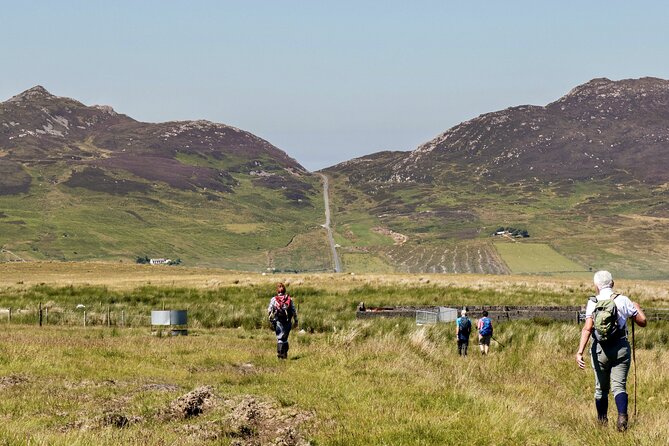
- A real working bog: You’ll learn about traditional turf cutting and may see local people using the bog in the course of everyday life.
- A guide-led walk: Sharon guides the route and adds local stories, myths, and practical context at each stage.
- Atlantic views without the crowds: The hike reaches broad outlooks over Inishowen and West Donegal along the Wild Atlantic Way.
- More than a nature walk: Peat formation, biodiversity, climate change, an ancient monastic site, and green energy all form part of the outing.
- A small, personal group: The maximum is 12 people, which gives you a better chance to ask questions and keep the pace manageable.
- Good value for curious hikers: At $50.60 per person, the price covers a guided two-hour experience, but not lunch.
Why a Donegal bog deserves your time
Many visitors come to Ireland looking for cliffs, castles, and green fields. This hike offers something less polished and, in some ways, more revealing: a peatland that has helped shape local work, fuel, stories, and attitudes toward the natural world.
A bog may look quiet at first. Your guide helps you read it. You’ll learn how peat formed over long stretches of time, how the ground holds water and plant matter, and why these places matter in the climate discussion. The point is not simply to look at unusual plants. It is to understand why a seemingly empty stretch of ground has such weight in Irish life.
I like this approach because it puts nature and culture side by side. The walk does not treat the bog as a museum piece. Traditional turf cutting remains part of the story, and the outing also looks at green energy in action. That contrast gives you a more honest picture of rural Donegal than a quick photo stop can provide.
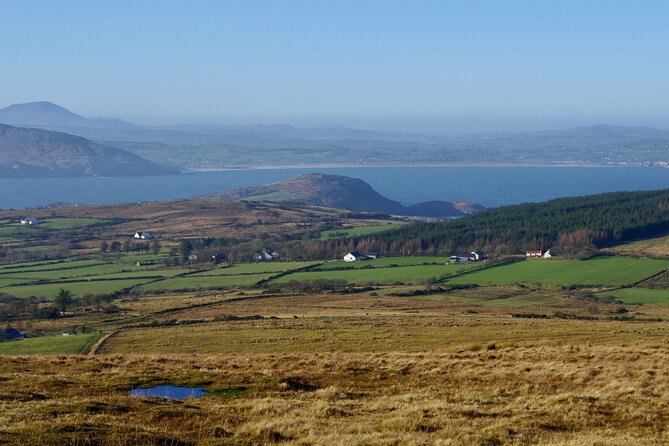
The setting also helps. You’ll be walking along the Wild Atlantic Way, with views across Inishowen and West Donegal. These are not framed viewpoints reached by coach. You earn the outlook by following the route on foot, then get time to take in the distance.
A few more Donegal half-days to weigh up
- Oakfield Park Day Pass and Train Ride
★ 4.5 · 104 reviews - Donegal Coast One Day Self-Guided E-Bike Tour
★ 5.0 · 66 reviews - Slieve League cliffs cruise. Donegal. Guided. 1 ¾ hours.
★ 4.5 · 61 reviews
Starting at Ballyannon and finding your footing
The meeting point is at Ballyannon in County Donegal, identified by the Plus Code 5GV4+H8. The hike ends back at the same place, so you do not need to arrange a pickup from a separate finishing point.
The format is simple. You meet your guide, set off on foot, and spend about two hours moving through the bog and its surrounding ground. Since the walk is guided from start to finish, you are not expected to work out the route or interpret the site alone.
That matters here. Bog terrain can be hard to read, and the most interesting parts are often not obvious. A guide can explain why a patch of ground matters, connect a site to local tradition, and point out details you might pass without noticing.
The pace is likely to feel more like a walking conversation than a strenuous trek, but do not treat it as a gentle pavement stroll. The participation notes call for moderate physical fitness, and the description also refers to moderate to challenging exercise. Wear suitable walking clothes and shoes, and be ready for conditions that may change with the weather.
Reading the bog through peat, myth, and work
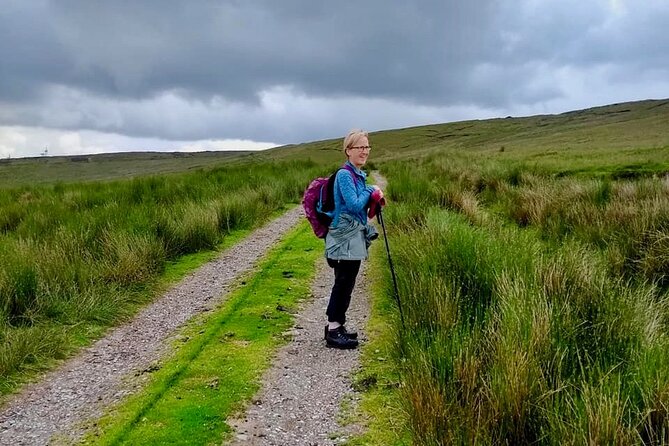
The first part of the outing focuses on how the bog came to be. Peatlands form slowly, and that long process gives the place a sense of time that is different from the usual Irish sights. You are not just looking at a patch of countryside. You are learning how water, plants, and years of accumulation shaped the ground beneath you.
Sharon’s style, as described in the experience details, is warm and conversational. That is a good match for this subject. A formal lecture would miss the point. The bog’s meaning comes through stories, practical examples, and the links between the ground and the people who live near it.
Expect myths and legends to share the walk with facts. Irish bogs have long held a place in local storytelling, and these stories help explain how people have viewed the terrain. They also make the walk easier to remember. You may forget a technical detail about peat formation, but a local tale tied to the bog can stay with you.
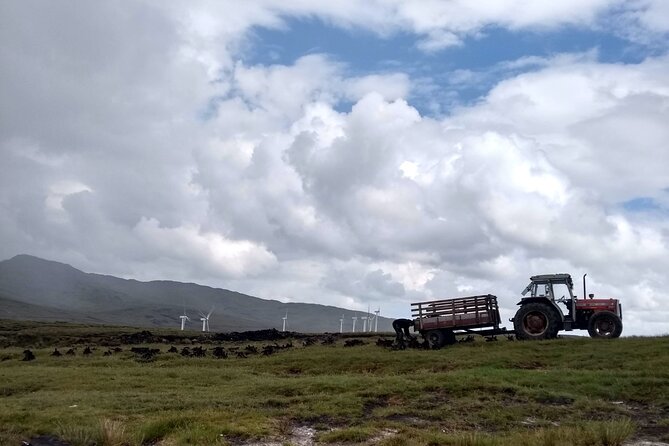
Traditional turf cutting is another key part of the experience. Turf, or peat cut for fuel, is not a decorative bit of folklore. It has been part of household life in Ireland, and the walk explains that connection. One especially useful detail from the experience is the chance to see how the bog still fits into the daily lives of local people, rather than viewing it only as a preserved natural area.
That balance is one of the strongest reasons to choose this outing. You get the old and the current at the same time: ancient ground, old customs, present-day work, and new energy questions.
An ancient monastic site in an open setting
The route includes an ancient monastic site. No detailed description of the remains is provided, so you should not book this expecting a major ruin complex or a full archaeological tour. The value is in seeing a place of religious and historical importance within the same bog setting.
This is where a local guide makes a real difference. A bare site can be easy to overlook, especially if you are expecting dramatic stonework. Sharon can provide the context that turns a quiet stop into part of the wider story of Donegal.
The setting also changes how you see the site. Instead of moving from a town to a church ruin and then back to a road, you encounter it as part of an older rural world. The bog, the monastic presence, local stories, and modern land use all occupy the same broad area.
For me, that is more interesting than a polished attraction with a large visitor center. It asks you to pay attention. You should also keep your expectations in check: this is a walking experience with cultural stops, not a dedicated monastery tour.
More walks and hill days near Donegal:
- From Dublin: Game of Thrones Winterfell Locations Trek
★ 5.0 · 814 reviews - Dublin Coastal Hike, Pints & Puppies Adventure
★ 5.0 · 647 reviews - Cliffs Of Moher Hiking Tour from Doolin – Small Group
★ 5.0 · 324 reviews - Dublin Coastal Hike with Howth Adventures
★ 5.0 · 289 reviews
Biodiversity, climate concerns, and green energy
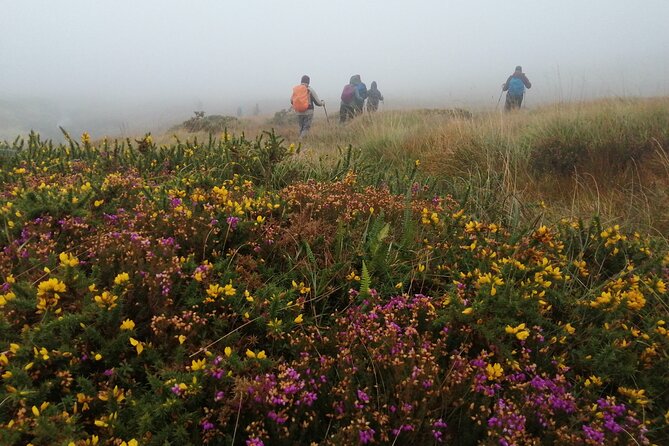
The hike also turns toward the bog’s role in the natural world. You’ll look at its biodiversity and learn why peatlands matter in the fight against climate change. That makes the walk timely without turning it into a classroom exercise.
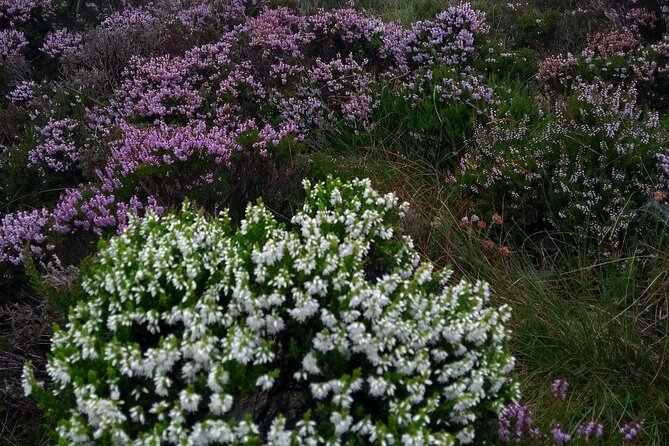
Bogs support a distinct range of plant and animal life, and their wet conditions set them apart from ordinary farmland or woodland. The guide’s job is to help you see these differences and understand why the habitat matters.
The climate discussion adds another layer. Peatlands are tied to carbon storage and water, so their care has consequences beyond the immediate area. The experience does not present the bog as a simple good-versus-bad issue. Traditional turf cutting, conservation, local needs, and modern energy all sit in the same conversation.
You’ll also see green energy in action during the walk. The supplied details do not specify the technology or exact installation, so I would not book this expecting a particular type of facility. Still, the combination is useful: you can consider older ways of using the land alongside newer attempts to produce energy.
This is a strong feature for anyone who wants a walk with substance. You are not merely collecting a scenic view. You are learning why the ground matters, how people have used it, and why its future is being discussed.
Wide views along the Wild Atlantic Way
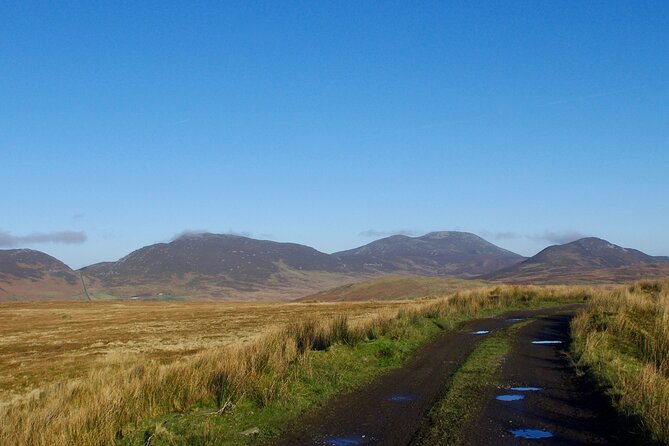
The scenery is a major reward. The route provides panoramic views across the Wild Atlantic Way of Inishowen and West Donegal, giving you a broad sense of the area rather than a single framed vista.
The phrase far from the tourist crowds fits the appeal here. This is not presented as a packed attraction with timed entry and a line for the best photo. With no more than 12 people, you have a better chance to stop, listen, and take in the view without feeling rushed.
The outlook also gives the bog context. From close up, peatland can seem contained and almost private. From a higher point, you begin to see how it fits into the wider Donegal setting and the Atlantic edge.
Weather will affect this part of the experience. On a clear day, the views should be a highlight. On a wet or windy day, the walk may feel more demanding and the distant outlook may be less rewarding. The operator requires good weather, so a poor forecast can lead to another date or a full refund.
What Sharon adds to the walk
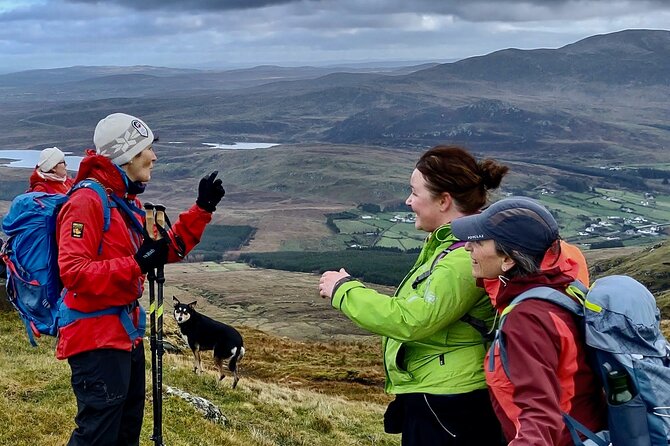
A guide is essential on this experience, and Sharon’s approach sounds like a strong fit for the route. She shares local wisdom, information, and lore in a relaxed, approachable way rather than delivering a stiff speech.
That style matters because the walk covers several subjects. You move from geology and ecology to religion, folklore, traditional work, and energy. A guide who can connect those subjects in ordinary conversation will make the two hours feel varied.
The personal scale helps too. The small group makes it easier to ask about turf cutting, local stories, the monastic site, or the plants and animals around you. If the group is smaller than the 12-person maximum, you may get even more individual attention. One described outing had only one participant, allowing for a very personal pace and conversation.
You should not assume that every departure will be private. The advertised maximum is 12, and group size can vary. Still, this is much more intimate than a large coach excursion or a broad public walking tour.
Is $50.60 a fair price?
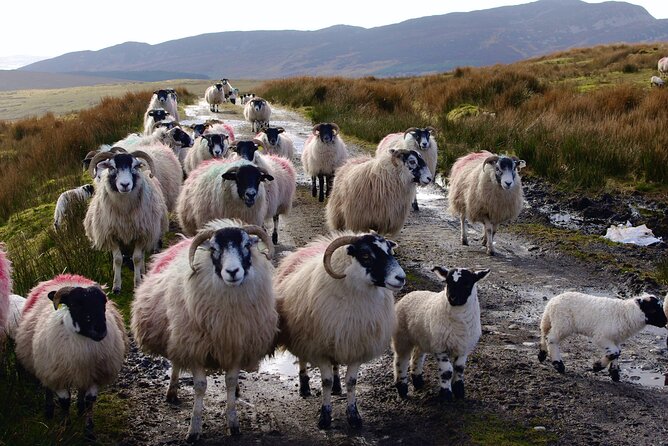
At $50.60 per person, this is not the cheapest way to spend two hours outdoors in Donegal. You could walk in the area on your own for less, assuming you know where to go and what you are looking at.
The value comes from the interpretation. Your fee pays for a guided route through a distinctive peatland, local stories, cultural background, environmental context, and views that are difficult to understand fully without someone leading the way.
I would consider the price fair if you enjoy learning while you walk. It is especially good value for someone who wants a local perspective rather than another self-guided stop on a busy touring route. The small group limit also adds value, since you are paying for attention and conversation, not only access to open ground.
Lunch is not included. It can be arranged for an extra charge by contacting the provider directly. That is worth planning for, since the hike lasts about two hours and returns to the starting point, but no meal is part of the standard price.
Who should book this Donegal hike?
I’d recommend it to you if you enjoy:
- Local culture tied to real places, not just sightseeing from a bus
- Short guided hikes with plenty of explanation
- Folklore, old religious sites, and traditional rural life
- Environmental subjects such as peatlands, biodiversity, and climate change
- Smaller groups and direct contact with a guide
- Broad Atlantic views away from crowded attractions
It suits a curious adult or older child who can manage moderate walking. The provider asks you to disclose medical conditions that could affect participation in moderate to challenging exercise. Service animals are allowed.
I would think twice if your main goal is a long, strenuous mountain hike, a major archaeological ruin, or a fully indoor activity protected from rain. This is a compact cultural nature walk, and its quality depends partly on your interest in the story behind the ground.
Private groups and exclusive bookings can be adjusted to suit individual needs. If you are arranging a family group, club, or special outing, contact Solas Ireland Walks and Hikes before booking to discuss changes.
Booking, weather, and cancellation details
You receive confirmation when you book, and the ticket is mobile, so there is no need to print anything unless you prefer a paper copy. The experience is offered in English.
You can cancel for a full refund up to 24 hours before the start time. Changes or cancellations made inside that 24-hour window are not accepted for a refund.
The hike requires good weather and a minimum number of people. If bad weather or low enrollment cancels the outing, you’ll be offered another date or experience, or you can receive a full refund. Cutoff times follow local time in Ireland.
Should you book the Bog Safari Hike?
Book it if you want to understand a less obvious part of Ireland. The strongest features are Sharon’s friendly, personal guiding style, the chance to see a working cultural tradition, and the way the walk connects peat, folklore, faith, wildlife, climate concerns, and green energy.
The main decision is not the two-hour length. It is your interest in the subject. If you want a quick scenic stop with little walking, this may feel too involved. If you like places that reward attention, the $50.60 price buys a thoughtful and unusual view of Donegal, far beyond the standard postcard route.
FAQ
Where does the Bog Safari Hike start?
The hike starts at Ballyannon in County Donegal, Ireland. The meeting point is identified by the Plus Code 5GV4+H8.
Where does the hike finish?
The activity ends back at the same meeting point in Ballyannon.
How long does the experience last?
The guided hike lasts approximately two hours.
How many people can join the hike?
The group has a maximum of 12 people.
Is lunch included?
No. Lunch is not included in the standard price, but it can be provided for an additional charge if you contact the provider directly.
What happens if the weather is poor?
Because the hike requires good weather, a cancellation caused by poor conditions gives you the option of another date or a full refund.
More Safari in Donegal
- Exhilarating Rib experience – Dingle sea safari
★ 5.0 · 1,349 reviews - Dublin Bay Seal Kayaking Safari at Dalkey
★ 5.0 · 380 reviews - Howth Safari Hiking Tour
★ 5.0 · 279 reviews - Dingle: Sea Safari by RIB Boat
★ 4.8 · 94 reviews
Just added around Donegal
- 2 Hour Walking Tour in Slieve League Ireland★ 5.0 · 9 reviews
- Mysteries of Inishowen private day tour★ 4.5 · 24 reviews
- Inishowen Peninsula Tour★ 5.0 · 31 reviews
- Electric Bike Donegal: Must-Do Half-Day Adventure!★ 5.0 · 20 reviews
- DAY TOUR: Highlights of Derry and Donegal★ 5.0 · 8 reviews
- Glenveagh National Park and Gaeltacht Tour★ 5.0 · 22 reviews
- DAY TOUR: Highlights Of South Donegal★ 5.0 · 18 reviews
- DONEGAL DAY TOUR: Coast and Castles★ 5.0 · 6 reviews