Reviewed · DUBLIN TOURS
Dark Dublin: Torture, Murder & Mystery
Dublin’s darker past comes alive on this evening walk, where torture, murder, grave robbery, and cannibalism replace the usual sightseeing script. You move from Barnardo Square through Dublin Castle, the cathedral quarter, and old churchyards before finishing in Smithfield.
I like two things here: the route links famous sights with odd corners you might miss on your own, and the best guides, including Cillian, Killian, Michael, Kim, and Mikayla, bring real energy and humor to grim material. The main drawback is simple: you do not enter any of the churches or Dublin Castle, and street noise can sometimes make a story hard to hear.
Key points to know before you book
- Torture at Dublin Castle: Hear about punishment in the Lower Courtyard and the Devil’s Half Acre in the Upper Courtyard.
- Dark stories at famous landmarks: St Patrick’s Cathedral and Christ Church Cathedral are viewed from outside, with their less cheerful pasts explained.
- A route beyond the usual center: The walk continues through St Audoen’s, St Michan’s, and Smithfield.
- Strong storytelling matters: Guides such as Cillian, Killian, Michael, and Kim are praised for lively delivery and a light touch.
- Easy evening timing: The tour begins at 5:30 pm and lasts about two hours.
- Good value for a walking tour: At $23.22 per person, you get an in-person guide and a focused look at Dublin’s darker past without paying for transport or admissions.
Dublin after dark, without the usual postcard filter
This is not a ghost bus ride or a theatrical haunted house. It is a walking tour through central Dublin, using real places and old stories to show how harsh city life could be.
You will hear about punishment, murder, body snatching, executions, cannibalism, and strange local legends. Some tales are grim. Others are so bizarre that they feel almost comic. The tone depends partly on your guide, but the strongest guides use humor to make difficult subjects easier to hear without turning the whole walk into a joke.
The route begins in the historic south side of the city. That matters because you still see major landmarks, just from a different angle. Dublin Castle, St Patrick’s Cathedral, Christ Church Cathedral, and the medieval church area all appear along the way.
This is also a useful choice if you have already seen the standard sights or want a second look at them. You may never think of a cathedral, old city wall, or quiet square in quite the same way after hearing what happened nearby.
A few more Dublin half-days to weigh up
- Dublin to Cliffs of Moher, including Wild Atlantic Way and Galway
★ 5.0 · 23,331 reviews - From Dublin: Cliffs of Moher, Burren & Galway City Day Tour
★ 4.8 · 18,888 reviews - Dublin: Guinness Storehouse Entry Ticket
★ 4.6 · 16,863 reviews
Meeting at Barnardo Square at 5:30 pm
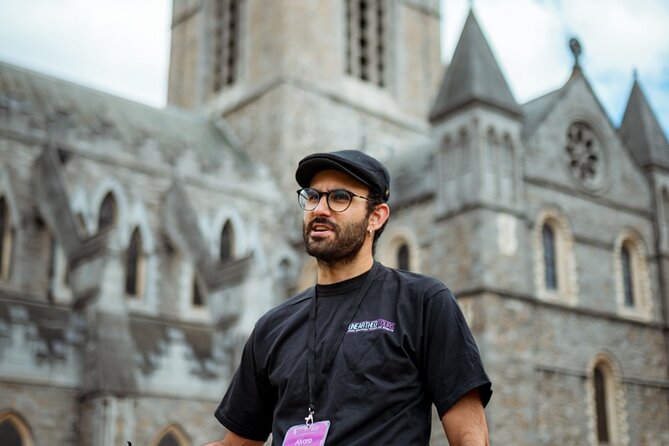
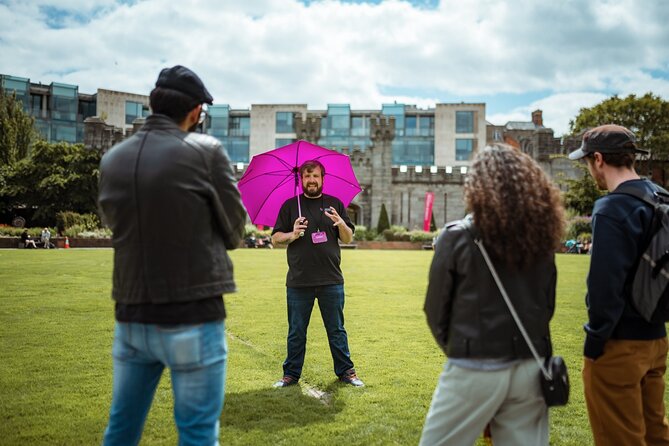
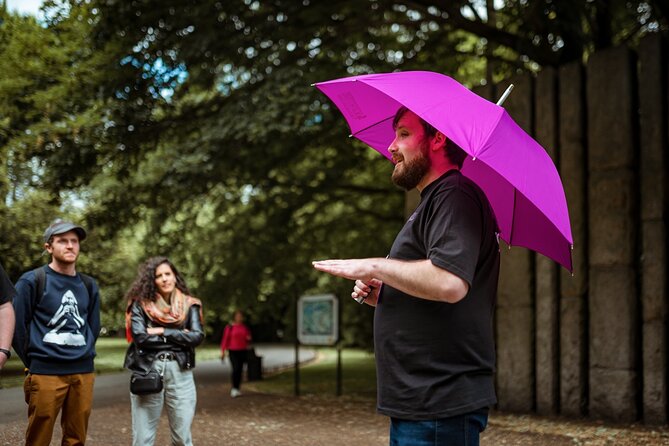
The starting point is Barnardo Square on Dame Street, beside City Hall and opposite the Olympia Theatre. It is a small, central meeting place, and guides can be identified by their purple umbrellas.
That is a practical detail worth remembering. Dame Street is easy to reach from many central parts of Dublin, and the location is much simpler than meeting at a large, crowded monument. Arrive a few minutes early so you can find the guide, settle in, and use the toilet or buy a snack before setting off. One guide was especially helpful about reminding the group to handle those needs before the walk began.
The tour is offered in English, uses an in-person guide, and has a maximum of 30 people. That is not a private walk, but it is still a manageable group size for moving through narrow streets and gathering around a guide.
Wear shoes suited to walking on city streets. The walk is described as easy, but one section moves at a fairly brisk pace, so tell the guide if someone in your group needs a slower rhythm.
Dublin Castle and the Devil’s Half Acre
The first major stop is Dublin Castle, where the guide spends time in the Lower Courtyard discussing torture and punishment.
You do not go inside the castle. Instead, the courtyard becomes the setting for stories about the ways authorities dealt with criminals and suspected enemies. The location gives those stories more force than a talk in a hotel lounge would. You are standing in the same complex where power was exercised for centuries, even if the tour does not take you through the interior rooms.
The group then moves to the Upper Courtyard and hears about the Devil’s Half Acre. The name alone hints at the sort of material ahead, but the value is in learning how the castle’s spaces fit into Dublin’s political and social past.
This is one of the better parts of the walk for anyone who wants a dark-history tour with a real connection to place. You are not just hearing a list of crimes. You are seeing the courtyards and streets where the city’s old institutions operated.
The 40 Steps and a story you will not find in a standard guidebook
The stop known as the 40 Steps brings the tour into stranger territory, including stories of cannibalism.
This is the kind of material that sets the walk apart from a regular city tour. It is not meant for everyone, especially if you dislike graphic or disturbing subjects. The name of the experience is quite clear about the content, so you should expect unsettling tales rather than mild folklore.
The guide’s delivery makes a big difference here. Cillian, Killian, and other guides have been praised for keeping the tone lively, while still treating the stories as part of Dublin’s past. A strong storyteller can let a grim detail land, then use a quick bit of humor to keep the group from becoming weighed down.
Street tours have limits, though. Traffic, pedestrians, and nearby conversations can interrupt a story. If you are interested in every detail, stay close to the guide and avoid walking at the back of the group.
Same corner of Ireland, a completely different day out:
- Dublin to Cliffs of Moher, Burren, Wild Atlantic Way, Galway Tour
★ 5.0 · 12,924 reviews - Dublin to Belfast Black Cab, Dunluce Castle and Giant’s Causeway
★ 5.0 · 7,954 reviews - Kilkenny, Wicklow Mountains & Glendalough Day Tour from Dublin
★ 5.0 · 7,897 reviews - From Dublin: Wicklow Mountains, Glendalough & Kilkenny Tour
★ 4.8 · 6,235 reviews
St Patrick’s Cathedral and the world of Jonathan Swift
The walk continues to the grounds of St Patrick’s Cathedral, one of Dublin’s best-known landmarks.
The guide does not take you inside the church. You will hear the story from outside and in the cathedral grounds, so this stop is more about context than architecture. If you want to see the interior, plan a separate visit and pay the required admission.
Jonathan Swift is the main figure connected with this stop. Most people know Swift as the author of Gulliver’s Travels, but the tour places him within Dublin’s darker and stranger historical setting. The story adds a human thread to the route and helps break up the tales of anonymous criminals and old punishments.
I like this change of pace. A dark walk works best when it includes personalities and social history, not only blood and spectacle. St Patrick’s also gives you a chance to pause, take in the setting, and get your bearings before the route continues.
Christ Church Cathedral and Dublin’s hidden layers
Christ Church Cathedral comes next, again viewed from outside.
The guide explains the lesser-known stories connected with this extraordinary church and the surrounding area. You get the building’s history through spoken detail rather than an interior visit, so the stop will appeal most if you enjoy historical storytelling more than formal sightseeing.
Christ Church sits in one of Dublin’s oldest parts, and its surroundings help explain why this area has so many tales of violence, religion, crime, and punishment. The cathedral is not treated as a decorative backdrop. It becomes evidence of how long Dublin has been shaped by faith, law, power, and conflict.
If this is your first time in Dublin, the stop also helps you connect several important landmarks into one walk. You see the castle, the two cathedrals, and the old church district in a single evening, while the guide supplies a very different thread between them.
St Audoen’s Church, grave robbers, and the Black Pig
At St Audoen’s Church, the tour turns toward grave robbery and attacks linked with the Black Pig.
You do not enter the church, but the exterior and surrounding area provide a fitting setting for stories about stolen bodies. Grave robbing was not simply a spooky practice. It was tied to the demand for bodies, fear of burial, and the ways medicine and crime could overlap in earlier times.
That gives this section more substance than a basic ghost story. You hear about a real social fear, then see the old religious setting where concerns about death and burial carried enormous weight.
The reference to the Black Pig adds a folklore element. This mix of documented events and local legend is typical of the walk. You should not expect every tale to have the same level of historical certainty, but you can expect the guide to move between fact, rumor, and old belief.
St Michan’s Church and Billy in the Bowl
The route then reaches St Michan’s Church, where the guide discusses Billy in the Bowl and more recent dark events.
Again, the tour stays outside. That is important if you are hoping to see St Michan’s famous interior or its preserved remains. This experience does not replace a proper church visit, but it may persuade you to return later for one.
The stories here widen the time frame. The tour is not limited to medieval legends or the distant past. The mention of more recent events gives the final part of the walk a sharper edge and reminds you that Dublin’s dark stories did not end centuries ago.
The area around St Michan’s also feels different from the grander spaces near the castle and cathedrals. That change makes the route feel like a walk through several versions of Dublin, not one carefully polished historic quarter.
Finishing in Smithfield Square with a local murder
The final stop is Smithfield Square, where the guide ends with a story about a local murderer.
The square is a public space, not an attraction with an admission gate. That makes the ending easy. You can continue into Smithfield after the tour, find food, or make your own way back toward central Dublin.
Ending here works well because the tour gradually moves away from the most familiar landmarks. You begin near City Hall and Dublin Castle, pass the cathedrals and old churches, then finish in an area many first-time visitors may not have reached yet.
The route also gives you a useful orientation lesson. You see how close several of Dublin’s historic districts are to one another, and you finish with a better sense of the city west of the main shopping streets.
What the $23.22 price really buys you
At $23.22 per person, this is fairly priced for a two-hour guided walk. You are paying mainly for the guide’s research, timing, and storytelling, not for transport or entry to a major attraction.
That distinction matters. The tour includes an in-person guide and the walk itself, but it does not include private transportation, dinner, or admission to Dublin Castle, St Patrick’s Cathedral, Christ Church, or St Michan’s Church.
I see the value in the route rather than in the number of included attractions. You cover several important places and hear material you would be unlikely to find in a normal guidebook. If you want interiors, museum displays, or a formal castle visit, spend the money on separate admissions instead.
Group discounts may also be available, which could make the price more appealing for friends or family groups. The maximum group size is 30, so this is best understood as a small-to-medium public walk rather than a private experience.
The guides make or break the evening
The tour’s strongest feature is its human delivery. Names associated with particularly lively tours include Cillian, Killian, Michael, Kim, Mikayla, Stephen, John, and Ciarán.
You may not receive a particular guide, so it is wise to judge the experience by its format rather than expecting one specific person. Still, the guide has a major effect on a tour built around stories. The best guides keep the group focused, answer questions, use humor carefully, and make the dark material feel like part of Dublin’s social past.
Michaela and Mikayla have been praised for warmth and fun. Michael is noted for friendly, engaging delivery, while Stephen is remembered as a strong storyteller. Cillian and Killian bring a lively sense of humor and clear enthusiasm for the subject.
There is one fair warning: one guide received criticism for a flatter delivery, and another group found the pace a little quick. That is normal for a public walking tour, but it means you should stay alert, remain near the guide, and ask questions when there is a pause.
Who should book Dark Dublin
I would choose this walk if you enjoy true crime, old legends, unusual social history, or the sort of facts that make you see familiar buildings differently.
It is especially suited to:
- History fans who want more than dates and royal names
- True crime enthusiasts who are comfortable with grim subjects
- Repeat Dublin visitors looking for a different route
- October visitors seeking a spooky evening without a theatrical show
- Small groups who want a shared activity at a modest price
I would think twice if you want a gentle ghost walk, a relaxed pace, or access to historic interiors. The subject matter includes torture, murder, grave robbing, and cannibalism. Some stories are graphic, and the atmosphere can be serious even when the guide adds humor.
Most people can take part, service animals are allowed, and the route is near public transportation. The experience is in English, so you should be comfortable following a spoken story while walking through areas with normal city noise.
Timing, weather, and cancellation details
The tour starts at 5:30 pm and lasts about two hours. Evening timing gives the walk a suitable mood, but Dublin weather can change quickly, so bring practical outdoor clothing and shoes.
The meeting point is Barnardo Square, and the tour ends at 7 Smithfield in Smithfield Square. There is no return transport, which is not a problem if you are comfortable continuing on foot or using public transportation afterward.
Free cancellation is available up to 24 hours before the start time for a full refund. Changes or cancellations within 24 hours are not accepted for a refund. The tour also requires a minimum number of participants, so if the operator cancels for that reason, you are offered another date or experience, or a full refund.
Should you book this Dublin walking tour?
Book it if you want real Dublin places with unsettling stories attached, and if the idea of hearing about torture, body snatching, murder, and old legends sounds more interesting than a standard introduction to the city.
The route is well chosen, the price is reasonable, and two hours is long enough to cover a lot without taking over your evening. Just remember that it is an outdoor storytelling walk, not a series of indoor visits. Stay near the guide, expect some street noise, and come ready for material that is genuinely dark.
FAQ
How much does Dark Dublin: Torture, Murder & Mystery cost?
The listed price is $23.22 per person. Group discounts are available.
How long does the tour last?
The walk lasts approximately two hours.
What time does the tour begin?
The tour starts at 5:30 pm local time.
Where does the tour meet?
The meeting point is Barnardo Square on Dame Street, Dublin 8, beside City Hall and opposite the Olympia Theatre. Guides are visible with purple umbrellas.
Where does the tour finish?
The walk finishes in Smithfield Square at 7 Smithfield, Dublin.
Does the tour enter Dublin Castle or the churches?
No. You visit the courtyards or grounds and hear stories about Dublin Castle, St Patrick’s Cathedral, Christ Church Cathedral, St Audoen’s Church, and St Michan’s Church, but you do not enter the buildings.
How large is the group?
The experience has a maximum of 30 participants. It includes an in-person guide and is offered as a small-group experience.
Can I cancel for a refund?
Yes. You can cancel at least 24 hours before the start time for a full refund. Cancellations or changes made within 24 hours are not refunded.
Just added around Dublin
- Women Of Ireland: Trailblazers & Pioneers★ 5.0 · 4 reviews
- Full Day Private Wicklow Tour★ 5.0 · 12 reviews
- Wicklow Mountains & Glendalough Luxury Private Day Tour★ 5.0 · 23 reviews
- Wicklow tour of Glendalough★ 4.5 · 8 reviews
- Premium Irish Whiskey Tasting Hosted by Local Dublin Expert★ 5.0 · 77 reviews
- Whiskey Tasting Tour of Dublin★ 5.0 · 117 reviews
- Dublin To Kilkenny Castle Waterford Crystal Private Car – Day Tour★ 5.0 · 8 reviews
- Semi-Private (8people max) 2.5 Hr Dublin Walking Tour★ 5.0 · 69 reviews
Dublin Tours, compared.
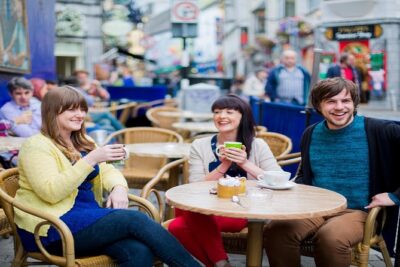
Dublin to Cliffs of Moher, including Wild Atlantic Way and Galway
Read our review →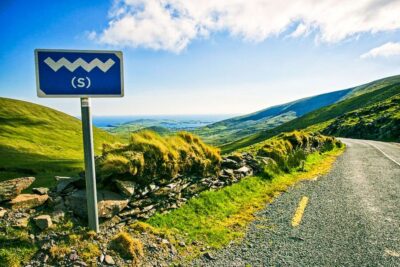
Cliffs of Moher, Burren & Galway City Day Tour
Read our review →

Dublin to Cliffs of Moher, Burren, Wild Atlantic Way, Galway Tour
Read our review →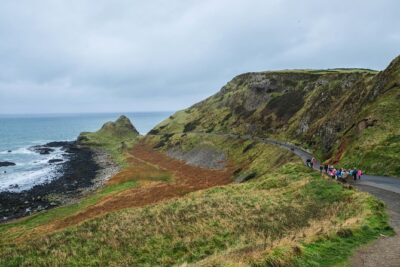
Dublin to Belfast Black Cab, Dunluce Castle and Giant’s Causeway
Read our review →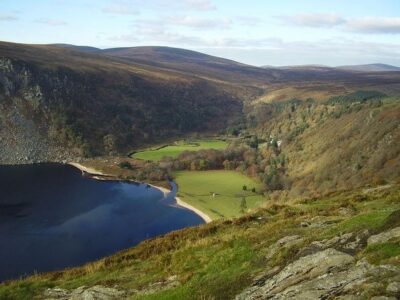
Kilkenny, Wicklow Mountains & Glendalough Day Tour from Dublin
Read our review →
Wicklow Mountains, Glendalough & Kilkenny Tour
Read our review →