
Reviewed · HISTORICAL TOURS
Private Ennis Essential History Tour with Dr Jane O’Brien
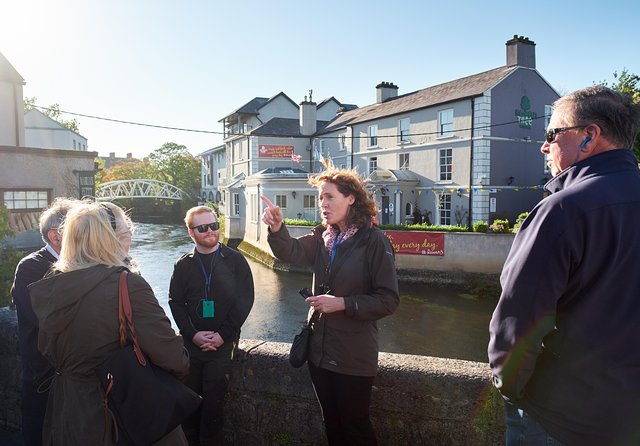
Ennis comes alive when you hear the stories behind its lanes, market spaces, old buildings, and churchyards. Dr Jane O’Brien uses historical sources to turn a short walk into a clear account of how this Clare market town grew from a medieval settlement into a place shaped by faith, famine, politics, trade, and family life.
I like the small private format, which lets your group of up to six keep close to the guide and ask questions. I also like the route’s range: you see a Franciscan friary, an old timber-framed house, famine-era lanes, a market square, and a Catholic cathedral in about 70 minutes. The main consideration is the brisk pace. Eleven stops in a little over an hour means each place receives only about five minutes, so this is an introduction rather than a full visit to every site.
Key points to know before you book
- Source-based storytelling: Dr Jane O’Brien uses historical records to explain real people, daily life, punishment, religion, and political change.
- A true walking overview: The route covers 11 central Ennis stops, so comfortable shoes matter.
- Private for up to six: The $270.32 group price works best when shared by a family or small party.
- Listening help is available: Jane can use an amplification device if hearing the commentary outdoors may be difficult.
- Strong choice for first-time visitors: You get a quick sense of how Ennis fits into County Clare history before exploring on your own.
- Food is not part of this version: Snacks and local tastings belong to the separate Gourmet History Tour.
Why Ennis works so well as a walking-history lesson
Ennis is compact enough to cross on foot, yet its streets carry several different chapters of Irish history. The route links medieval beginnings, the Franciscan order, Catholic political action, the Great Famine, local markets, British rule, and the growth of modern town life.
That mix is the great strength of this experience. Instead of looking only at grand monuments, you spend time in narrow bow-ways, by a shopfront, beside a market sculpture, and near buildings connected with orphanage and industrial-school life. These are the places where the town’s past feels close to ordinary people.
Jane’s role matters here. The tour is built around explanation, not simply naming buildings and dates. You hear why a lane was built, how a market worked, and what old records reveal about crime and punishment. The result is useful if you want more than a quick photograph of Ennis Friary.
The tour lasts approximately one hour and 10 minutes. That is long enough to get your bearings and short enough to fit before lunch, after arrival in town, or alongside another Clare activity. You will be on your feet for most of it, and the short stops keep the walk moving.
More Private Tours in County Clare
- Shannon Airport to Galway City, Private Chauffeur Service
★ 5.0 · 21 reviews - Private Ennis Dark History Tour with Dr Jane O’Brien (1-6 people)
★ 5.0 · 13 reviews - Shannon Airport to Cork, Private Chauffeur Service
★ 5.0 · 9 reviews
Starting beside Clare Museum and the medieval town
Meet at the Ennis Tourist Information Centre on Arthur’s Row, off O’Connell Street. The first stop is beside Clare Museum, on the former site of the Convent building used by the Sisters of Mercy.
Jane begins with the town’s medieval origins. Ennis developed in the 13th century, and this opening gives you the basic map for everything that follows. You learn to see the town as more than a pleasant shopping centre. Its streets grew around religious institutions, trade, local power, and the River Fergus.
The stop is brief, only about five minutes, so do not expect a museum visit as part of the tour. The value comes from the setting and the opening explanation. If you have just arrived in Ennis, this is a helpful way to place the town within County Clare.
Daniel O’Connell and the politics of Catholic emancipation
The route then reaches the Daniel O’Connell Monument in central Ennis. This is tied to one of the major political milestones covered on the walk: Catholic Emancipation.
The monument gives Jane a fixed point from which to explain the struggle for Catholic political rights and the importance of Ennis in that movement. The site also hosted major public events, so the stop connects national politics with a local town centre.
I particularly like this part of the route because it shows how a monument can work as a history prompt. You do not simply learn who O’Connell was. You get a sense of how public spaces became places for political action and shared memory.
Again, the time here is short. If political history is your main reason for booking, you may want to ask questions as Jane speaks or arrange extra reading for later.
Bow-ways, Franciscan friars, and the River Fergus
At Abbey Street, the group enters one of Ennis’s atmospheric bow-ways. These small lanes once connected the main streets with poorer tenement areas.
This is one of the most useful parts of the walk because the setting itself makes the social story easier to grasp. Grand streets tell only part of a town’s past. A narrow passage leading toward crowded housing gives you a better sense of how different classes lived close together but under very different conditions.
The route continues to Ennis Friary, also called the Old Ennis Abbey, dating from around the 1280s. Here Jane explains the Franciscan friars and their part in the town’s growth. You also get a view toward the River Fergus, which flows through Ennis, along with memorials linked to the 1916 uprising against British rule.
This stop packs in several subjects: medieval religious life, the physical geography of the town, and modern Irish nationalism. The view is a welcome pause, but the main point is the connection between the friary and Ennis itself.
A few more County Clare half-days to weigh up
- Dublin: Cliffs of Moher, Doolin, Burren, and Galway Day Trip
★ 4.5 · 2,851 reviews - From Doolin: Cliffs of Moher Boat Tour
★ 4.4 · 279 reviews - Public Ennis Walking Tour with Local Expert Dr Jane O’Brien
★ 5.0 · 262 reviews - Galway: Cliffs Cruise, Aran Islands & Connemara Day Tour
★ 4.7 · 111 reviews
Francis Street and the O’Brien connection
Francis Street is described as the oldest street in Ennis. It leads toward the former palace of the O’Brien Kings, the family connected with the town’s foundation.
For anyone with an O’Brien family connection, this section may carry extra meaning. One person who took the tour had the surname Ennis in the family and valued seeing the place tied to that name. You do not need a family link to enjoy the stop, but genealogy-minded visitors may find Jane’s local focus especially worthwhile.
The route also visits the friary, originally built in the 1850s, where you can see stained-glass windows and experience a quieter atmosphere. This is a change from the political and social subjects earlier in the walk.
Because the tour moves quickly, the visit is not a long architectural inspection. Think of it as a guided introduction to the building, its religious setting, and its place in the town’s story.
Arthur’s Row and difficult institutional memories
Back near the old convent building, Jane discusses the orphanage and industrial school that once occupied the site. The subject turns to the archived experiences of children who lived there.
This is among the more serious sections of the walk. It adds a necessary reminder that local history is not only about kings, churches, monuments, and political milestones. Institutions that once presented themselves as charitable could also leave painful memories behind.
Jane’s use of archived experiences gives this stop a human focus. You are not asked to admire the building without asking what happened inside it. If you are travelling with children, or if difficult social history is not what you want from a short walking tour, keep that tone in mind before booking.
McParland House and the feel of an older shop street
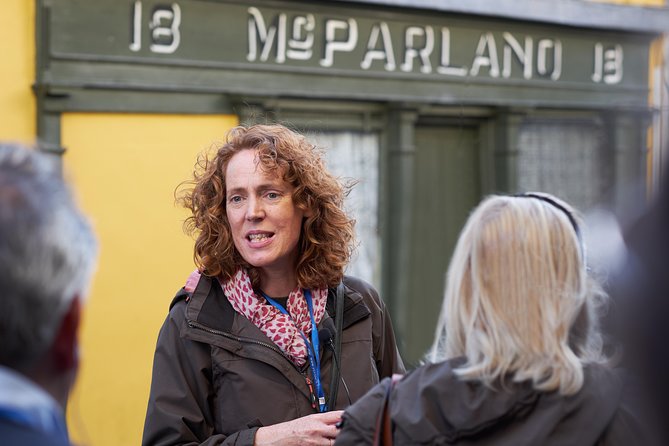
On Parnell Street, you stop at McParland House, dating from around 1620. It is described as the only known surviving timber-framed house in Ireland and the oldest house in Ennis to remain in continuous use without major structural changes.
The original shopfront and half-door are the details to watch. They make the building feel less like a preserved display and more like part of a working street. This is the sort of stop that benefits from a guide because the important features could be easy to miss while walking past.
You will not be entering every building on the route, and the stop lasts about five minutes. Still, Jane’s explanation helps you read the frontage, age, and use of the house in a way a standard town walk might not.
Chapel Lane and the Great Famine
Near Chapel Lane market, Jane points out a building that was once a church built in 1735 during the penal times. The lane also opens a discussion of overcrowding during the Great Famine and the damage the famine caused in Ennis.
This is a powerful shift from a single building to the wider life of the town. Markets, churches, housing, and hunger were closely connected. A lane that may now seem like a simple shortcut once held far more people and far more hardship.
The tour does not promise a long famine lecture, and the schedule allows only a few minutes here. What you receive is a local frame for a national disaster. That can be more useful than a broad textbook account if you plan to visit other famine sites in Ireland.
Market Place, trade, matchmaking, and faction fighting
Ennis served as County Clare’s main market town for hundreds of years. At Market Place, Jane explains how people came to buy and sell livestock and produce, but also to meet, socialize, arrange matches, and sometimes take part in faction fighting.
That combination makes the market stop one of the liveliest parts of the route. A market day was not just an economic event. It was a social calendar, a place to see people, settle matters, and build relationships. It could also become rough and dangerous.
The market-day sculpture now marks the site, and Jane explains its meaning. This is a good example of how the tour reads modern public art alongside older records and customs.
If you enjoy stories about daily life, this may be your favorite section. It moves away from famous names and focuses on how a town actually worked.
Barrack Street and the old Gallows Green
At Barrack Street, the route reaches the former Gallows Green. Jane uses the Ennis corporation manuscript from 1660 to discuss crimes and punishments recorded in the town.
Some of the punishments may shock modern sensibilities. That is the point of the stop. Old legal records reveal what authorities feared, how public order was enforced, and how differently justice could be applied in the past.
This section may appeal most to readers who enjoy social and legal history. It is also a reminder that a pleasant modern street can have a grim earlier role. The commentary is likely to stay focused because the whole stop takes only about five minutes, but the source gives the story a firm local basis.
Cathedral of Saints Peter and Paul, the usual finish
The final major stop is the Cathedral of Saints Peter and Paul, the main Catholic church for the region. Construction took place between 1830 and 1870.
The cathedral sits opposite the Old Ground Hotel, once the site of the town jail. The hotel also incorporates a tower house dating to the 1500s that has a haunted reputation. That pairing gives Jane one last chance to connect religion, imprisonment, older defensive buildings, and modern town life.
The tour usually finishes here. You can choose to visit the cathedral or return toward the starting point at your own pace using O’Connell Street, the main pedestrian shopping street.
The supplied meeting information also lists the activity as ending back at the meeting point. To avoid confusion, confirm the finish with Jane when you arrive, especially if you have a tight onward schedule. The cathedral is only the usual final history stop, not necessarily the place where your formal tour arrangements end.
What the private price buys you
The price is $270.32 per group of up to six people. For one or two people, that is a fairly high cost for a 70-minute walk. For a full group of six, it works out to about $45 per person, which is more reasonable for a private guide and a tailored pace.
You are paying for interpretation and access to Jane’s local subject knowledge rather than entry tickets. All listed stops are free, so the value depends on how much you want the stories explained as you walk.
This format suits families, friends, and small groups with a shared interest in Ennis. You avoid being folded into a large party, and you can ask about a surname, a building, or a particular period. If you prefer to wander silently or only want a quick orientation, a self-guided walk will cost less.
The tour is booked, on average, well ahead of time, around 48 days in advance. That suggests you should not leave it until the last moment if the date matters to you.
Pace, sound, and practical comfort
You will cover the centre of Ennis on foot, with roughly five minutes at each of 11 stops. Wear shoes suited to walking and expect the experience to feel active rather than seated. The route is useful for building a first mental map of town, but it is not designed for lingering inside each site.
Jane can use an amplification device to make listening easier. That is worth requesting or confirming if anyone in your group has difficulty hearing outdoor commentary.
The tour is offered in English. Service animals are allowed, public transport is nearby, and most people can participate. It is a private activity, so only your group takes part.
There are no stated admission charges for the stops. Gratuities are not required, though they are appreciated. Snacks and local tastings are linked with the separate Gourmet History Tour, so do not expect food on this Essential History version.
Who should book this Ennis walk?
I would choose this tour if you want a fast but thoughtful introduction to Ennis. It suits first-time visitors, families interested in local stories, people tracing Irish surnames, and anyone who prefers real streets and buildings to a long museum visit.
It is also a good choice before exploring County Clare more widely. After the walk, you will better understand the town’s Catholic past, market role, famine experience, and connection to Irish political change.
I would hesitate if you want a slow architectural tour, a food experience, or extended time inside the friary and cathedral. The route covers a lot, and each stop is short. Its strength is the range of subjects and Jane’s storytelling, not detailed examination of every site.
Should you book Private Ennis Essential History Tour?
Book it if you value clear local storytelling and want a private introduction to Ennis in just over an hour. The best parts are the overlooked details: bow-ways leading to poorer housing, a half-door on an old shopfront, the market’s social role, and records of punishment from 1660.
The price makes the most sense for a group of four to six. Solo visitors and couples may find it costly, but the private setting and chance to ask Jane about family connections can justify the expense.
You can cancel for a full refund up to 24 hours before the start time. Last-minute cancellations and changes are not accepted for a refund. If your schedule is firm, this is a practical, focused way to meet Ennis through its streets rather than simply pass through it.
FAQ
How long does the Private Ennis Essential History Tour last?
The tour lasts approximately one hour and 10 minutes.
How many people can join the private tour?
The price covers one private group of up to six people.
What language is the tour offered in?
The tour is offered in English.
Where does the tour begin?
The meeting point is the Ennis Tourist Information Centre at Arthur’s Row, O’Connell Street, Clonroad Beg, Ennis, County Clare, V95 RX78, Ireland.
Which places do you visit?
The route includes Clare Museum, the Daniel O’Connell Monument, Abbey Street, Ennis Friary, Francis Street, Arthur’s Row, McParland House on Parnell Street, Chapel Lane, Market Place, Barrack Street, and the Cathedral of Saints Peter and Paul.
Is admission to the stops included?
There is no admission charge listed for the stops on this walking tour.
Can the guide help with hearing outdoors?
Yes. Dr Jane O’Brien can use an amplification device for easier listening.
Is food included?
The Essential History Tour does not list food tastings as included. Snacks and local food tastings are offered on the separate Gourmet History Tour.
Is the tour accessible by public transport?
The meeting area is near public transportation, and most people can participate. Service animals are allowed.
What is the cancellation policy?
You can cancel at least 24 hours before the start time for a full refund. Cancellations or changes made less than 24 hours before the start time are not refunded or accepted.
More Historical Tours in County Clare
- Dublin Historical Centre Food Tour with 8 Food Tastings & Drinks
★ 5.0 · 1,718 reviews - 2-Hour Historical Walking Tour from Dublin
★ 5.0 · 875 reviews - Historical 2-Hour Guided Walking Tour of Dublin
★ 4.7 · 865 reviews - Dublin to Cork, Blarney Castle & Cóbh Heritage Centre by train
★ 4.5 · 510 reviews
Just added around County Clare
- Cliffs of Moher & Bunratty Castle Day Tour★ 5.0 · 9 reviews
- Cliffs of Moher and The Burren day trip★ 5.0 · 12 reviews
- Private Cliffs of Moher Tour Small Group from Ennis, Ireland★ 5.0 · 6 reviews
- From Doolin: Cliffs of Moher Guided Coastal Walk★ 5.0 · 35 reviews
- From Doolin: Day Trip to Inisheer with Bike or Bus Tour★ 4.9 · 35 reviews
- Doolin Cave Tour: Experience Europe’s Largest Stalactite★ 4.8 · 72 reviews
- Ballyvaughan: Aillwee Burren Experience Entry Ticket★ 4.9 · 11 reviews
- Private Ennis Dark History Tour with Dr Jane O’Brien (1-6 people)★ 5.0 · 13 reviews
Historical Tours, compared.

Dublin Historical Centre Food Tour with 8 Food Tastings & Drinks
Read our review →
Historical 2-Hour Guided Walking Tour of Dublin
Read our review →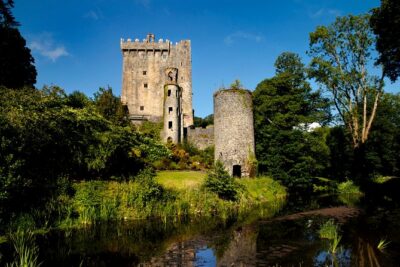
Dublin to Cork, Blarney Castle & Cóbh Heritage Centre by train
Read our review →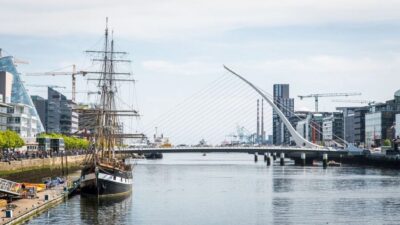
Jeanie Johnston Tall Ship Irish Famine History Tour
Read our review →

Deliciously Dublin: The Artisan Donut Walking & History Tour
Read our review →Browse the lists this tour appears in