

Reviewed · SELF-GUIDED TOURS IN DUBLIN
St Patrick’s Cathedral: Self-Guided Cathedral Admission
Saint Patrick’s Cathedral gives you more than a quick look inside an old church. Built in 1220 beside the well linked by tradition to Saint Patrick’s baptisms, it brings together Irish religion, politics, literature, music, and daily life under one Gothic roof. The audio guide lets you set your own pace, which matters in a building with this much to notice.
I like two things especially: Jonathan Swift’s personal connection to the cathedral, and the hands-on Discovery Space, where touchscreens, choir recordings, and brass rubbing make the past easier to grasp. The included audio guide is available in English, French, German, Italian, Spanish, and Irish. The main drawback is that the cathedral can feel crowded at popular times, and some visitors may want a printed guide to the stained glass and building works.
Key points
- Jonathan Swift’s grave and memorials: See where the author of Gulliver’s Travels served as dean from 1713 to 1745.
- A 1220 Gothic cathedral: Admire the stonework, stained glass, and the window showing Saint Patrick’s life in 39 scenes.
- The Door of Reconciliation: Learn the story behind the Irish expression to chance your arm.
- Discovery Space technology: Use touchscreens, listen to choir samples on iPads, and make a brass rubbing.
- Flexible self-guided visit: Follow the audio tour in your own order and stay as long as you like during the valid day.
- Optional human help: Guided tours may also be offered at set times, with guides such as David and Anna praised for their clear explanations.
Why Saint Patrick’s Cathedral matters in Dublin
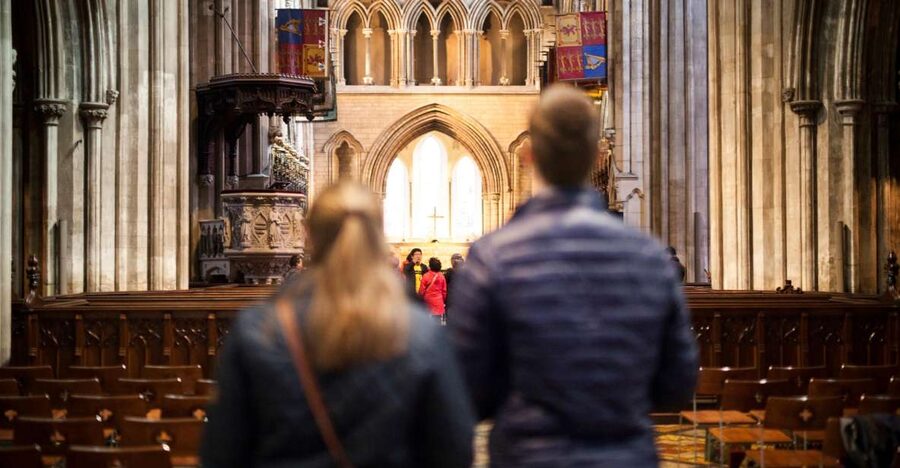
Saint Patrick’s Cathedral is the largest cathedral in Ireland and the National Cathedral of the Church of Ireland. It has been tied to Dublin’s religious and civic life for more than 800 years, making it a useful place to connect the city’s past with the present.
The cathedral was built in honor of Ireland’s patron saint. It sits beside the famous well where tradition says Saint Patrick baptized converts during his visit to Dublin. You will not simply be looking at an attractive medieval building. You will be standing in a place connected to worship, pilgrimage, literature, music, and national identity.
That wider story is one of the best reasons to visit. The cathedral reflects Ireland’s changing religious and political past, while also welcoming people who come for architecture, family history, literature, or quiet reflection. You can approach it as a place of worship, a historic monument, or both.
The attraction remains an active church. Sung services are held twice daily from Sunday through Friday. During your visit, you may find choir activity or another service taking place, so keep the setting in mind. This is not a theme park version of the past. It is a working cathedral where sightseeing shares space with worship.
More Self-Guided Tours in Dublin
- Christ Church Cathedral Entrance Ticket & Self-Guided Tour
★ 4.6 · 773 reviews - Dublin Ghost Hunt Exploration Game and Tour
★ 4.0 · 34 reviews - Private Dublin Treasure Hunt Self Guided Tour
★ 4.5 · 14 reviews
Entering the cathedral and getting oriented
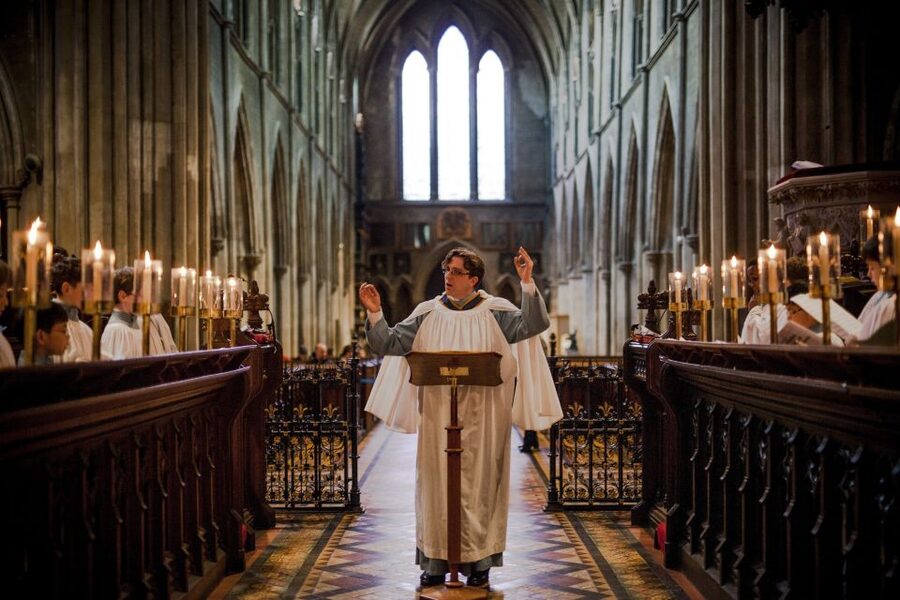
Your visit begins at Saint Patrick’s Cathedral itself, and the activity ends at the same meeting point. Admission is self-guided, with the audio guide included in the $12 per-person price.
The self-guided format is a good match for Dublin sightseeing. You do not need to keep up with a group or wait for a guide before moving to the next display. You can pause at a window, return to a memorial, or skip an audio stop if it does not interest you.
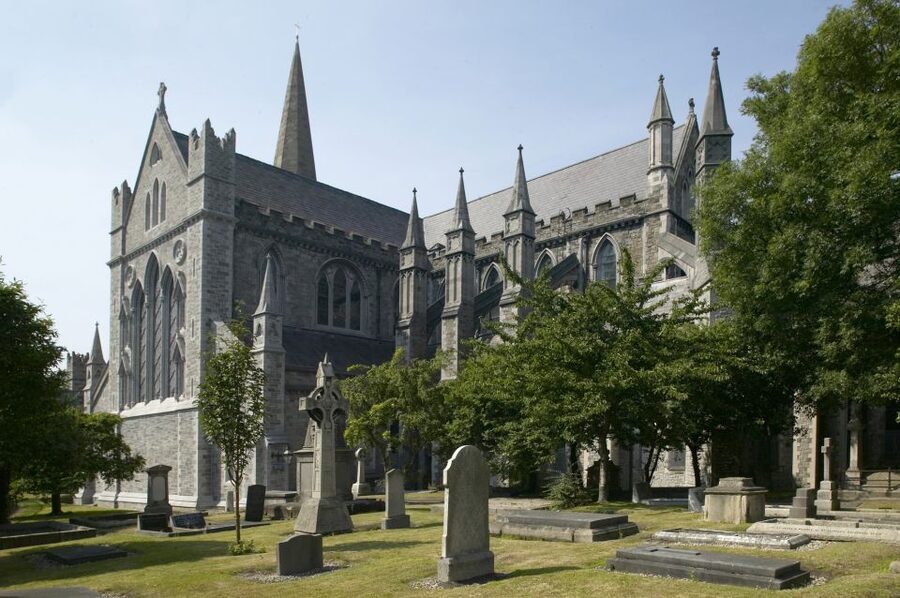
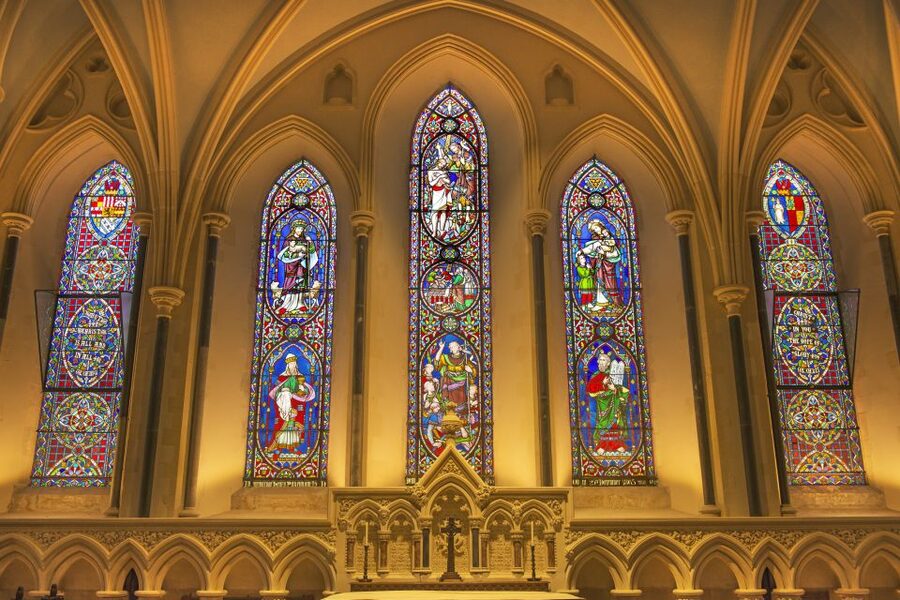
The cathedral is large enough that a quick circuit can leave you feeling you missed something. I would begin with a slow look at the main interior before starting every audio point. Notice the height of the space, the Gothic forms, the stone surfaces, and the colored light from the windows.
Then use the guide to give those details a place in the story. The audio equipment is described as easy to use and informative, and the language choices are unusually helpful for an attraction in Dublin. You can choose English, French, German, Italian, Spanish, or Irish.
Bring your own wired headphones if you have them. Some visitors found it easier to listen that way, or by connecting their own headphones to the device. The supplied handheld guides work well, but personal headphones can make the experience more comfortable and less distracting.
Jonathan Swift’s Dublin home in spirit
The cathedral’s strongest literary connection is Jonathan Swift, author of Gulliver’s Travels and dean here from 1713 to 1745. He is buried at Saint Patrick’s, and the cathedral displays objects connected with his life and work.
This changes the way you read the building. Swift was not simply a famous name added to an information panel. He held an important church position here for more than three decades, while also writing one of the best-known works in English literature.
I like this part of the visit because it links a real person to the institution. The cathedral becomes more than a collection of arches and memorials. You begin to picture the building as a place where a writer worked, preached, argued, and took part in Dublin’s public life.
If you enjoy literature, allow extra time for the Swift material. If you are mainly interested in architecture, do not rush past it. It is one of the clearest examples of how Saint Patrick’s connects Irish cultural life with its religious past.
Gothic architecture and the 39-image Saint Patrick window
The cathedral’s architecture provides the main visual experience. You will see Gothic design, carefully worked stone, and stained glass that rewards a slow look.
The window showing the life of Saint Patrick in 39 images is a particular highlight. Instead of offering one large, hard-to-read scene, it presents the saint’s story as a sequence. The audio guide can help you understand what you are seeing, but take time to examine the panels yourself.
Stained glass can be frustrating in a busy church. People move through your view, and the light changes during the day. You may also wish for a printed booklet devoted to the windows and the cathedral’s construction. That material is not part of the stated admission, so if you want to study the art in detail, use the audio stops carefully and take notes.
The stonework deserves equal attention. One part of the pleasure is simply noticing the workmanship: carved surfaces, Gothic shapes, memorial details, and the way the structure directs your eye upward. I would not treat the cathedral as a place to rush through for a few photographs.
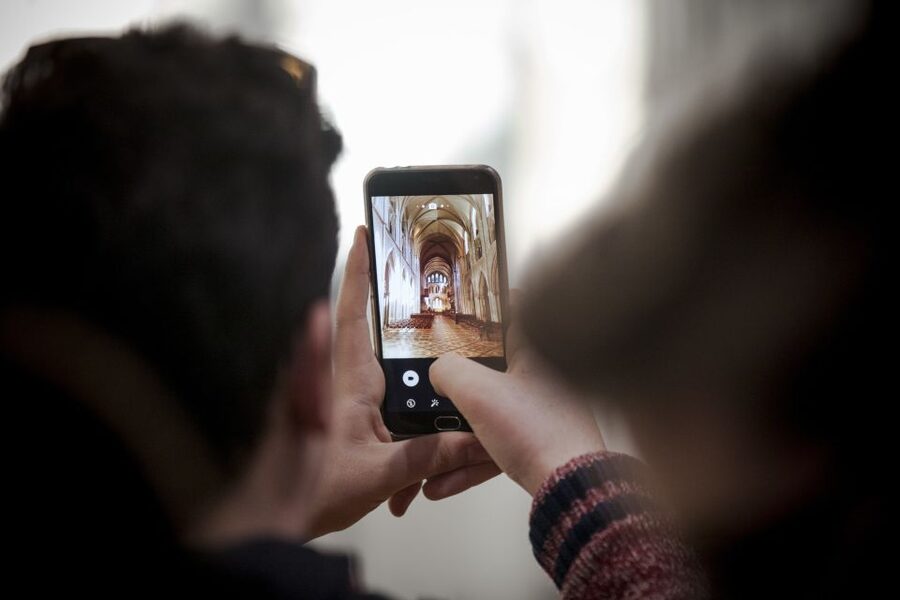
Photography can be tempting because there are attractive views around the interior. Still, the building’s quiet character is part of the experience. Move gently, keep your voice low, and remember that people may be there for prayer or a service.
A few more Dublin half-days to weigh up
- Dublin to Cliffs of Moher, including Wild Atlantic Way and Galway
★ 5.0 · 23,331 reviews - From Dublin: Cliffs of Moher, Burren & Galway City Day Tour
★ 4.8 · 18,888 reviews - Dublin: Guinness Storehouse Entry Ticket
★ 4.6 · 16,863 reviews - Dublin to Cliffs of Moher, Burren, Wild Atlantic Way, Galway Tour
★ 5.0 · 12,924 reviews
The Door of Reconciliation and a useful Irish phrase
The Door of Reconciliation is one of the cathedral’s most memorable individual objects. Its story is connected with the Irish expression to chance your arm, giving a small piece of language a very specific place in Irish history.
This is exactly the sort of detail that makes a self-guided visit worthwhile. You are not just hearing broad facts about medieval Ireland. You are learning how an event associated with this building entered everyday speech.
Look for the door and listen to the explanation rather than treating it as another piece of old wood. The audio guide gives context that would be easy to miss if you were walking through without commentary.
I find these small stories especially useful when visiting historic buildings. A large cathedral can blur into a series of dates and names. One memorable object, tied to a phrase you may still hear in Ireland, gives the building a human scale.
The Discovery Space makes the past easier to handle
The Discovery Space is the most family-friendly part of the visit. It uses iPads, touchscreens, choir samples, and hands-on activities to explain the cathedral’s long story.
You can use the touchscreens to explore the building’s development and history. The iPads include samples of the cathedral choir, adding sound to a place that is usually experienced through stone and glass. The brass rubbing activity gives children and adults something practical to do instead of only reading panels.
This space is useful even if you are traveling without children. Medieval church buildings can be difficult to interpret, especially when you do not know what you are looking at. Interactive material can explain details more directly than a long wall of text.
For families, the Discovery Space can break up the visit. Children may be more willing to spend time inside the cathedral when the experience includes an activity. Under-18s must be accompanied by a parent or guardian, so plan to stay with younger members of your group.
How the audio guide shapes your visit

The audio guide is included with admission and is one of the clearest reasons this experience offers good value. It provides background at specific points, but you remain in control of the order and pace.
You do not have to listen to every stop. You can focus on Jonathan Swift, the stained glass, the Door of Reconciliation, or the cathedral’s architecture. If your attention fades, simply continue looking and return to the guide when something catches your eye.
The commentary is available in six languages, including Irish. That makes the visit easier for international families and groups with different language needs.
Some people prefer a live guide, and guided tours may be available at set times. The timing is not as flexible as the self-guided option, though. A group may begin shortly after you arrive, or you may miss one by a few minutes. If a live tour is running, guides such as David and Anna have been praised for answering questions and explaining the building with warmth.
I would choose the audio guide if you want freedom. Choose a live tour if you prefer a clear route and the chance to ask questions. You can also start with the self-guided visit and speak with staff or guides around the cathedral when you need clarification.
Time, crowds, and the best way to look around
The admission is valid for one day, with starting times shown when you check availability. The activity itself is not described as a fixed-length tour, which is a benefit here. You can make the visit short if your Dublin schedule is tight, or stay longer for the audio stops and Discovery Space.
I would allow at least an hour if you want more than a quick look. Add time if you enjoy stained glass, want to hear several audio sections, or are visiting with children who will use the interactive displays.
Early afternoon can be busy. A Monday around 1 p.m. in June was described as crowded, though still manageable. That is a useful distinction. You may share the interior with many people, but the space can still be enjoyable if you move patiently.
Crowds matter most when you want uninterrupted views of the windows or a quiet moment near the memorials. If your schedule allows, checking the available starting times and choosing a less popular period should make the visit calmer. Services and choir activity can also affect the atmosphere, so accept that the cathedral’s religious role comes first.
The cathedral has an on-site toilet, located in a transportable building outside rather than inside the historic structure. That is a practical convenience during a longer visit, especially for families.
Accessibility and booking flexibility
The cathedral is listed as wheelchair accessible. That makes it a practical option for many Dublin visitors, though historic interiors can still require patience around other people and fixed displays.
Admission costs $12 per person. For that price, you receive entry, the audio guide, access to the Discovery Space, and the freedom to explore without being tied to a short group schedule. I consider that fair value if you have an interest in architecture, Irish culture, religion, or Jonathan Swift.
The value is weaker if you plan to rush in for ten minutes and leave. The cathedral rewards attention, especially when you use the audio guide and examine the windows. Think of the ticket as paying for both the building and the interpretation that helps you understand it.
You can reserve now and pay later, which is useful when your Dublin plan may shift. Cancellation is free up to 24 hours before the visit for a full refund. Under-18s must be accompanied by a parent or guardian.
Who will enjoy Saint Patrick’s Cathedral most
I would recommend this visit to:
- Architecture fans, especially people who enjoy Gothic buildings, carved stone, and stained glass.
- Literature lovers, because Jonathan Swift’s grave and cathedral connection add a strong personal story.
- Families, thanks to the Discovery Space and brass rubbing activity.
- Independent sightseers, who prefer an audio guide and the freedom to set their own pace.
- Visitors interested in Irish identity, since the cathedral connects religion, language, music, politics, and national history.
- People seeking a quiet pause, provided they choose a less crowded time and respect ongoing worship.
You may want to skip it if your Dublin visit is already packed with churches and historic interiors, or if you dislike audio-guided sightseeing. The cathedral is beautiful, but its meaning becomes much clearer when you spend time with the explanations.
Should you book this self-guided admission?
Book it if you want a flexible, informative visit to one of Dublin’s most important buildings. The $12 price is reasonable because it includes the audio guide, several language options, and the Discovery Space rather than just bare admission.
I especially recommend it for a first visit to Dublin when you want context, not only photographs. Start with the architecture, then use the guide to find Jonathan Swift, the Door of Reconciliation, the Saint Patrick window, and the interactive displays.
Choose the self-guided option when you value independence. If you prefer a live explanation, check whether a guided tour is running during your visit. Either way, give the cathedral more than a hurried glance. Its best details are the ones that connect the stone building to real people, familiar words, music, and centuries of Irish life.
FAQ
Where does the Saint Patrick’s Cathedral visit start and end?
The visit starts at Saint Patrick’s Cathedral and ends back at the same meeting point.
How much does admission cost?
The listed price is $12 per person.
Is an audio guide included?
Yes. Audio guides are included with admission and are available in English, French, German, Italian, Spanish, and Irish.
How long is the visit?
The admission is valid for one day, and the activity does not specify a fixed visit length. You can check availability for starting times and explore at your own pace.
Is Saint Patrick’s Cathedral wheelchair accessible?
Yes. The activity is listed as wheelchair accessible.
Can I cancel the booking?
Yes. You can cancel up to 24 hours in advance for a full refund. You can also reserve now and pay later.
Just added around Dublin
- Women Of Ireland: Trailblazers & Pioneers★ 5.0 · 4 reviews
- Wicklow Mountains & Glendalough Luxury Private Day Tour★ 5.0 · 23 reviews
- Wicklow tour of Glendalough★ 4.5 · 8 reviews
- Full Day Private Wicklow Tour★ 5.0 · 12 reviews
- Premium Irish Whiskey Tasting Hosted by Local Dublin Expert★ 5.0 · 77 reviews
- Whiskey Tasting Tour of Dublin★ 5.0 · 117 reviews
- Dublin To Kilkenny Castle Waterford Crystal Private Car – Day Tour★ 5.0 · 8 reviews
- Historical Walking Tour of Dublin★ 5.0 · 50 reviews
Self-Guided Tours in Dublin, compared.
Christ Church Cathedral Entrance Ticket & Self-Guided Tour
Read our review →
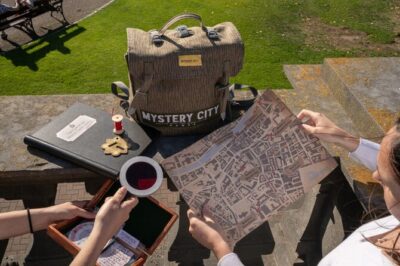

Dublin Self-Guided Murder Mystery Tour by Temple Bar
Read our review →
Dublin Old Town: Famous Pubs Exploration Game and Tour
Read our review →
A Self-Guided Stroll Along Dún Laoghaire’s East Pier
Read our review →

The Dublin Incident: Alien, Whiskey & Clues Exploration Game
Read our review →Browse the lists this tour appears in