
Reviewed · HIKING TOURS IN DUBLIN
Trek the Tombs and Trails in the Dublin Mountains
The most unusual part of this Dublin outing is not the mountain walk itself, but the way ancient tombs appear along ordinary country paths above the city. You travel by local bus into the foothills, then walk from a remote mountain village to prehistoric burial sites, a rocky viewpoint, and a forest cafe.
I like the small maximum of eight people, which gives your guide room to explain the sites and adjust the pace. I also like the mix of Irish archaeology, broad bay views, and simple rural stops, rather than a day spent only on city streets.
The main thing to consider is the seven-hour length and moderate fitness requirement. This is a proper mountain walk, not a short sightseeing stroll, and the experience depends on suitable weather. Lunch and drinks at the end are optional extras.
Key things to know before you book
- Two very different ancient burial sites: See a wedge tomb dating from the second millennium B.C. and a later stone circle burial place.
- A real mountain outing from Dublin: The route includes ridges, forest paths, back roads, and exposed viewpoints.
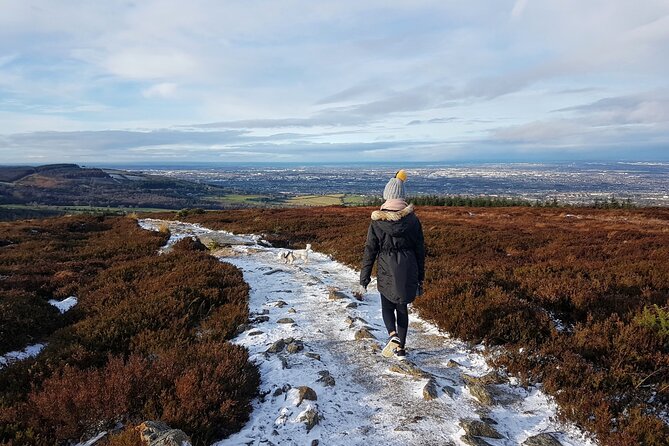
- Excellent views for the effort: Look north toward Dublin and the bay, then south toward Wicklow.
- Seasonal wild berries: When conditions allow, you can pick berries to eat on the walk or use later for jam or a tart.
- Small-group guiding: The tour accepts no more than eight people, a useful size for a walking route.
- Transport is part of the plan: A bus pass takes you to the trailhead and returns you to Dundrum by another route.
Why this walk feels different from a standard Dublin tour
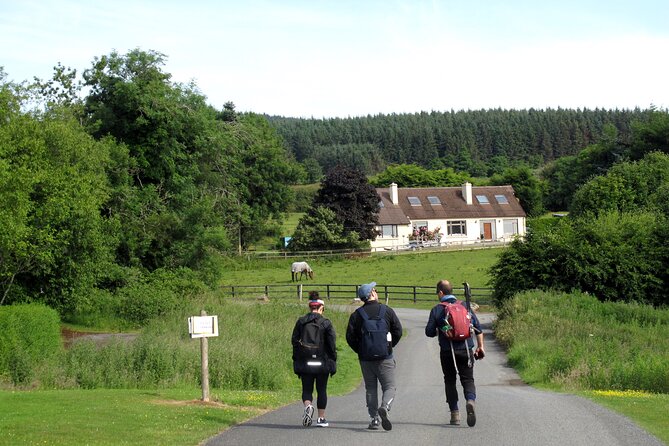
Dublin is easy to explore on foot, but the city can make Ireland feel smaller than it is. This outing takes you into the foothills beyond the urban core, where the pace changes quickly. A local bus carries you through the backroads toward a remote mountain village, then the day continues on foot.
That bus ride matters. You do not need to arrange a rental car, work out rural bus connections, or worry about returning from a one-way trail. The transport is built into the day, and the return bus uses a different route that is described as equally attractive.
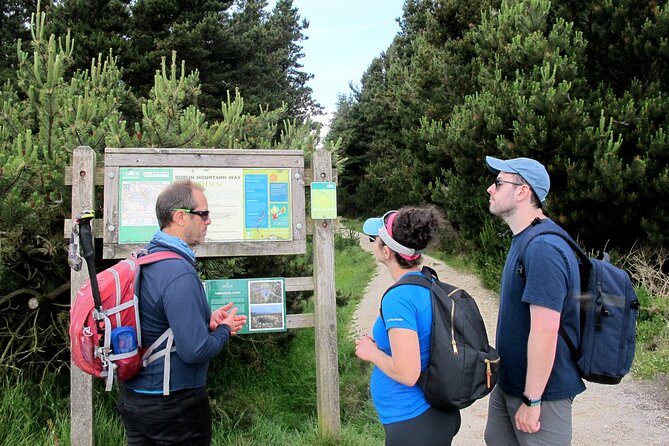
The route combines several kinds of walking. You follow a winding mountain path, join the Dublin Mountains Way, cross a ridge, descend through an evergreen forest, and finish on a rural road. None of these elements alone would make a full-day outing, but together they create a satisfying day outside the city.
Your group can include no more than eight people. That is small enough for a guide to speak naturally while walking, answer questions, and keep an eye on the group without turning the hike into a large procession. Ben is named as one guide associated with the experience, and his focus on Irish history was a major part of one particularly positive account of the outing.
More Hiking Tours in Dublin
- From Dublin: Game of Thrones Winterfell Locations Trek
★ 5.0 · 814 reviews - Dublin Coastal Hike, Pints & Puppies Adventure
★ 5.0 · 647 reviews - Dublin Coastal Hike with Howth Adventures
★ 5.0 · 289 reviews
From Dundrum to Glencullen by local bus
The meeting point is outside the Luas station in Dundrum, Dublin. From there, the group takes a local bus through the Dublin foothills toward Glencullen.
This is a practical start for anyone staying in Dublin. You meet at a clear public transport point rather than trying to find a remote trailhead. The bus also gives you a gradual transition from city to countryside. By the time you reach the mountain village, the day feels far removed from central Dublin.
Glencullen is the first named stop. From here, the hike follows a meandering path into the hills. The route is not described as a technical climb, but you should expect uneven ground, slopes, and a substantial amount of walking. Good shoes and clothing suited to changing Irish weather are sensible choices.
The experience is conducted in English. Since the group is small, you should have a fair chance to ask about the places you pass, rather than simply following a guide from one stop to the next.
The first tomb and Ireland’s prehistoric past
The first major site is an ancient wedge tomb dating from the second millennium B.C. Its form is part of what makes it interesting. This is not a grand stone monument with a polished visitor center. It is an old burial structure encountered along a mountain route, with its setting helping you understand how isolated the site can feel.
A guide can add the context that stonework alone cannot provide. The walk is designed around the tomb’s history, so you are not merely stopping for a photograph. You learn about its purpose and place in Ireland’s prehistoric past while standing in the same upland setting where the burial was made.
You should keep your expectations realistic. The attraction here is atmosphere, age, and setting, not a large excavated complex with extensive displays. If you prefer archaeological sites with signs, museums, and reconstructed buildings, this may feel spare. If you like old places that remain part of the countryside, the simplicity is a strength.
This is one of the best reasons to choose the tour over a general mountain walk. You get exercise and views, but also a clear theme that links the route together.
Dublin Bay from a mountaintop rock
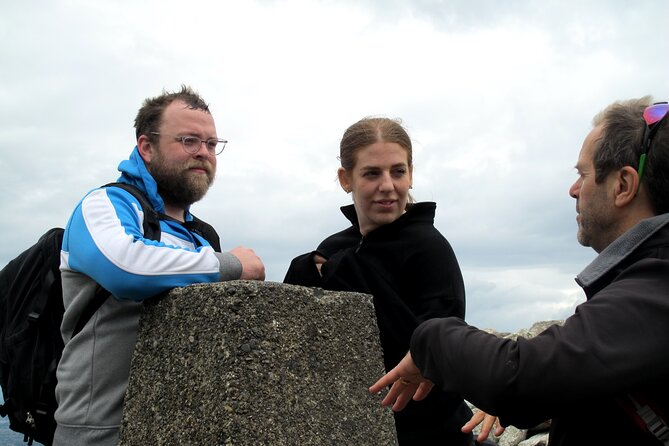
The trail continues along the Dublin Mountains Way to a popular viewpoint. From a mountaintop rock, you can look across Dublin and the bay area.
The view is a useful reward after the first section of walking. You see the city from above, with its coastal setting laid out in a way that is difficult to grasp from street level. The exact conditions will depend on the day, of course. Clear weather will give you the strongest views, while cloud or mist may reduce the distance you can see.
At this point, you also encounter a never excavated cairn tomb and a triangulation pillar. The combination is pleasingly odd: one object belongs to prehistoric burial, while the other is a more recent surveying marker. Together they show how the mountaintop has served different purposes across time.
The rock viewpoint may not suit everyone. If you are uncomfortable with exposed high points, take care and follow the guide’s directions. The tour description does not provide detailed information about railings or paved access, so you should treat this as a natural mountain viewpoint rather than a formal observation platform.
A few more Dublin half-days to weigh up
- Dublin to Cliffs of Moher, including Wild Atlantic Way and Galway
★ 5.0 · 23,331 reviews - From Dublin: Cliffs of Moher, Burren & Galway City Day Tour
★ 4.8 · 18,888 reviews - Dublin: Guinness Storehouse Entry Ticket
★ 4.6 · 16,863 reviews - Dublin to Cliffs of Moher, Burren, Wild Atlantic Way, Galway Tour
★ 5.0 · 12,924 reviews
Picking berries when the season allows
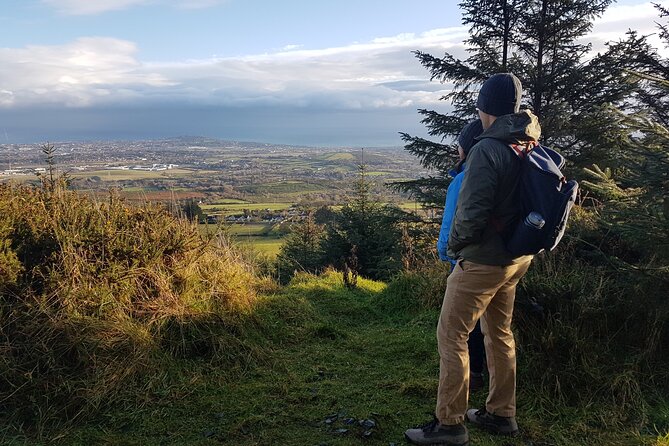
Seasonal wild berries add a small, hands-on detail to the walk. If berries are available, you can pick some to eat as you go or save them for jam or a tart later.
This is not the main reason to book the tour, and it is not guaranteed. Berry picking depends on the season and what is growing along the route. Still, it gives the outing a simple connection to the countryside. You are not only looking at the hills. You may also taste something gathered there.
Use the guide’s direction about what is suitable to pick. The supplied details do not identify the berry varieties or promise a particular harvest, so think of this as a possible extra rather than part of the fixed itinerary.
The ridge between Dublin and Wicklow
After the viewpoint, the route continues along a ridge. Dublin lies to the north, while Wicklow is visible to the south.
This section is likely to be one of the most rewarding parts of the walk for anyone who enjoys open views. The direction changes, and so does the feel of the day. Instead of looking only back toward the city, you gain a wider sense of the mountain country south of Dublin.
The ridge also explains why weather matters. Open mountain paths can feel very different in wind, rain, or low cloud than they do on a bright day. The activity requires good weather, and the operator may cancel for poor conditions, offering another date or a full refund. That policy is useful, but it also tells you that the route is not intended as an all-weather city excursion.
You should be comfortable with a moderate level of physical activity. The tour does not provide a distance figure, walking speed, or detailed elevation profile, so you cannot judge the exact effort from mileage alone. A seven-hour outing with mountain paths, a ridge, forest trails, and a rural road requires more stamina than a casual park walk.
Tibradden and the second burial site
The next named stop is Tibradden, where you visit a second ancient burial place. This site is a stone circle and is linked to the man for whom the mountaintop is named.
The contrast with the wedge tomb makes the day more interesting. You are not looking at two identical monuments. The first is a wedge-shaped burial structure from the second millennium B.C.; the second is an ancient stone circle with its own local association and story.
The wording of the experience describes this as the burial place of the man for whom the mountain top is named. That gives the site a strong connection to the place itself. Rather than treating the mountain as a nameless backdrop, the tour links the name, the stones, and the local tradition.
Again, this is a countryside archaeology experience rather than a major museum visit. The sites are valued for their setting and age, and the guide’s explanations are central. One account specifically praised Ben’s ability to explain Irish history, which is worth keeping in mind if historical background is a key reason for booking.
Down through the evergreen forest
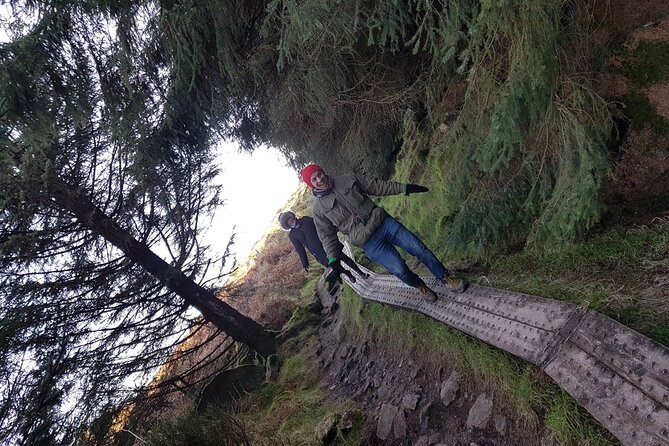
From the second tomb, the trail winds downhill through an evergreen forest. This changes the rhythm of the day after the open ridge.
A forest descent can be easier on the eyes and more sheltered than the mountaintop sections, but downhill walking still requires care on uneven paths. You will want shoes with a firm grip. The details provided do not promise paved trails, step-free access, or a particular surface, so plan for a natural walking route.
The descent eventually reaches a rural back road. This final walking section helps connect the mountains with the small-scale food and drink stop at the end. It is not just a return to the bus. You finish in a place where you can sit down and mark the end of the hike.
Lunch or a pint at The Hazel House
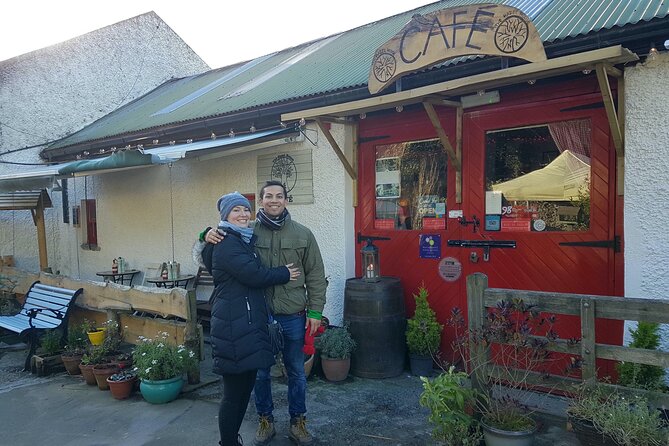
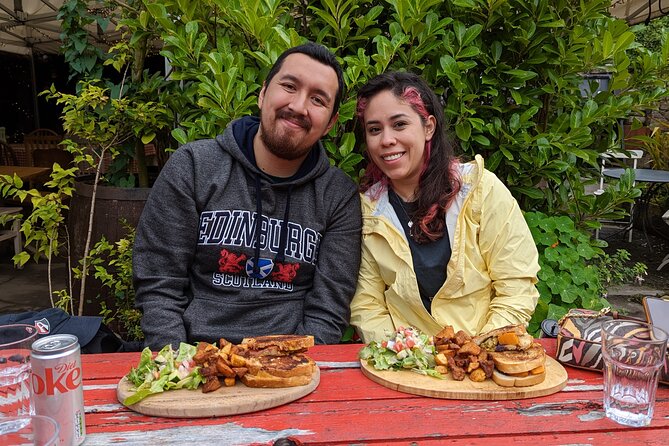
The final named stop is The Hazel House, described as a quaint, rustic cafe and restaurant. You have the option of ordering lunch made with local produce and cuisine, or enjoying a well-earned pint in a country pub.
Neither lunch nor alcoholic drinks are included in the tour price. That is important when judging the total cost. You should budget separately if you want the meal or pub stop, and you may want to carry your own water and any snacks needed during the walk.
The stop gives the day a pleasant local finish. After several hours outside, a cafe meal or pub drink can feel more satisfying than another formal attraction. It also means you have a choice: eat a proper meal, have a drink, or simply finish the outing without adding to your costs.
The supplied information does not list a set menu, meal price, or guaranteed seating arrangement. Treat the food stop as an option rather than a prepaid part of the experience.
Is $180.44 a fair price?
At $180.44 per person, this is not a cheap way to spend a day in Dublin. The value depends on what you would otherwise need to arrange yourself.
The price covers about seven hours, a guide, the small-group format, transport to the trailhead, and the return bus. It also packages together two archaeological sites, mountain views, and a rural food stop. If you tried to recreate the day independently, you would need to research the walking route, locate the tombs, plan public transport in both directions, and manage a one-way route through the hills.
The small group is the strongest part of the value. A maximum of eight people is more personal than a large coach trip, especially on a walking route where explanations can be difficult to hear. You are paying for a planned route and interpretation, not simply a bus ticket.
The price is harder to justify if you mainly want a short view over Dublin or do not care about archaeology. Independent walkers who already know the Dublin Mountains and can handle transport on their own may prefer to spend less. For you, the tour makes the most sense when convenience, local history, and a guided day outdoors all matter.
Group discounts may be available, so check the booking details if you are not traveling alone. The tour also offers a mobile ticket, which keeps the practical side simple.
Who should book this Dublin Mountains hike?
I would choose this experience if you want to leave Dublin’s center and spend a full day walking without renting a car. It suits people who enjoy old monuments, open views, local buses, and an unhurried end at a cafe or pub.
It is also a good choice if you want a guide to connect separate sights into one story. The tombs, ridge, pillar, berries, forest, and food stop could feel disconnected on your own. Here, they form a day with a clear beginning, middle, and finish.
You should think twice if you want a low-effort excursion. The tour requires moderate physical fitness, lasts around seven hours, and depends on good weather. It is also not ideal if you need detailed accessibility information, since the available details do not confirm accessible trail surfaces or facilities.
The rating is 5 from 14 reviews, with a 100 percent recommendation rate. The strongest praise focuses on the gorgeous hike, the tombs, the views, and the guide’s Irish history explanations. Those are the parts I would use to judge the tour, not the optional lunch or drink at the end.
Practical details for a smoother day
Meet outside Dundrum Luas station. The activity ends back at the same meeting point after the return bus.
Wear footwear suitable for mountain paths and bring clothing for changing weather. The route includes open areas, forest, and back roads, so comfort matters more than dressing for a city tour. Since lunch is not included, carry enough water and food for your own needs, even if you plan to eat at the cafe or pub afterward.
The tour is offered in English and allows service animals. It is near public transport at the start, and the included bus pass covers transport to the hike and back after the walk.
Free cancellation is available up to 24 hours before the start time for a full refund. Changes or cancellations inside that period are not accepted for a refund. If poor weather forces cancellation, you can choose another date or receive a full refund.
Should you book Trek the Tombs and Trails?
Book it if you want a guided mountain day with real archaeological interest, not just a scenic walk. The two burial sites give the outing a strong purpose, while the Dublin and Wicklow views keep the walking visually rewarding.
The best fit is an active visitor who appreciates local stories, small groups, and a simple country finish. The main cautions are the price, the seven-hour commitment, moderate exertion, and weather dependence. If those suit you, this is a thoughtful way to see a side of Dublin that most city itineraries miss.
FAQ
Where does the tour start?
It starts outside the Luas station in Dundrum, Dublin, Ireland.
Where does the tour end?
The activity ends back at the Dundrum meeting point after the return bus journey.
How long does the experience last?
The tour lasts approximately seven hours.
How many people can join the group?
The maximum group size is eight people.
What language is the tour offered in?
The tour is offered in English.
What transport is included?
A bus pass is included for transport to the start of the hike and for the return journey after the walk.
Are lunch and drinks included?
No. Lunch at the rustic cafe or restaurant and alcoholic drinks at a country pub are optional and cost extra.
Does the hike require good physical fitness?
Yes. Participants should have a moderate level of physical fitness for the mountain paths, ridge, forest route, and rural back road.
What happens if bad weather cancels the tour?
If poor weather causes cancellation, you will be offered a different date or a full refund.
More Hiking Tours near Dublin
- Howth Safari Hiking Tour
★ 5.0 · 279 reviews - Dublin: Howth Coastal Hiking Tour
★ 4.9 · 116 reviews - Howth Hiking Trail from Dublin: Mythology and Legend
★ 5.0 · 77 reviews - Dublin: Howth Safari Hiking Tour
★ 5.0 · 70 reviews
Just added around Dublin
- Women Of Ireland: Trailblazers & Pioneers★ 5.0 · 4 reviews
- Full Day Private Wicklow Tour★ 5.0 · 12 reviews
- Wicklow Mountains & Glendalough Luxury Private Day Tour★ 5.0 · 23 reviews
- Wicklow tour of Glendalough★ 4.5 · 8 reviews
- Premium Irish Whiskey Tasting Hosted by Local Dublin Expert★ 5.0 · 77 reviews
- Whiskey Tasting Tour of Dublin★ 5.0 · 117 reviews
- Dublin To Kilkenny Castle Waterford Crystal Private Car – Day Tour★ 5.0 · 8 reviews
- Historical Walking Tour of Dublin★ 5.0 · 50 reviews
Hiking Tours in Dublin, compared.
Howth Hiking Trail from Dublin: Mythology and Legend
Read our review →

Browse the lists this tour appears in