
Reviewed · HISTORICAL TOURS
Cork: Guided Historical Walking Tour
Cork’s most surprising sight is often under your feet. This 75-minute walking tour follows the route of waterways now hidden beneath the city streets, linking Cork’s trading past with its churches, bridges, markets, and old boat entrances. It is a brisk way to understand why the city looks and feels the way it does.
I like the local storytelling, especially when guides such as Noel, Mary, Gerard, Jarrod, Catherine, and Aiden add personal knowledge to the facts. I also like the route’s useful finish at the English Market, where you can continue exploring on your own. The main consideration is pace: you cover a lot in just over an hour, and Cork’s weather can make outdoor listening less comfortable.
Key points about Cork’s historical walk
- Buried waterways: Follow the line of the river beneath Cork’s curved main street.
- Maritime Cork: Learn how trade, boats, rivers, and overseas links shaped the city.
- Many major sights: Pass Cork Opera House, Shandon, Grand Parade, St Fin Barre’s Cathedral, Elizabeth Fort, and the English Market.
- Local voices: Guides including Noel, Mary, Gerard, Jarrod, Catherine, and Aiden are known for clear storytelling and personal Cork connections.
- Good first-day activity: The route helps you get your bearings before choosing where to return.
- Simple logistics: Meet at the Cork Tourist Information Centre, arrive 10 minutes early, and finish at the same starting point.
Why Cork makes sense on foot
Cork is compact in the centre, but it is not always easy to read at first glance. Streets curve, bridges appear at odd angles, and the River Lee splits around the central area. A guide helps you see the pattern instead of simply walking past attractive buildings.
The route explains Cork as a port and trading centre with links to Ireland, Europe, and the wider Atlantic world. That context gives the architecture more meaning. A street is not just a street when it follows an old channel, and a doorway is not just a doorway when it once allowed boats to reach a warehouse.
I would take this tour near the start of a stay in Cork. It gives you a useful mental map, and several stops are worth revisiting later. One person who took the walk used it to plan extra stops, which is exactly how I think a good city tour should work.
The tour is conducted in English, and the activity is listed as wheelchair accessible. You will be outdoors for the full route, so wear weather-appropriate clothing. The walk goes ahead in rain or shine, and Cork is not a place where you should trust a dry-looking morning to last.
More Historical Tours in Cork
- Historic Cork Delicious Donut Adventure by Underground Donut Tour
★ 5.0 · 232 reviews - The Queenstown Story @ Cobh Heritage Centre , Great Stories of Emigration.
★ 4.5 · 181 reviews - Visit 16 Sites Key Historical Sites And Experience Cobh Rebel Tours
★ 5.0 · 167 reviews
From the Tourist Information Centre to Cork Opera House
Meet at the Cork Tourist Information Centre 10 minutes before the start. The activity returns to this same point, which keeps the logistics easy, especially if you are fitting the walk between a train, a meal, or another city visit.
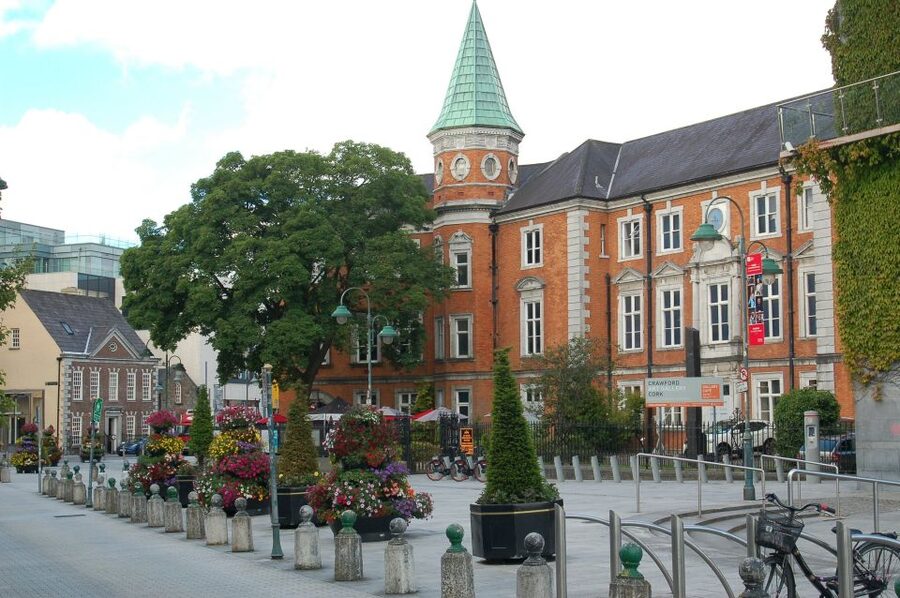
The opening section introduces Cork’s shape and its connection to water. You follow the curved main street while learning that the river once ran beneath the route. This is one of the strongest details on the tour because it changes how you see the city centre. You are not simply crossing a commercial street. You are walking along a former watercourse that helped define Cork.
Cork Opera House is one of the key early landmarks. From here, the guide points across the river toward Shandon Church, where the red and white brick bell tower and clock faces give the skyline one of its clearest markers.
You do not need a long lecture to appreciate Shandon. Its unusual tower is easy to spot, and the guide’s explanation places it within the wider story of Cork’s buildings and waterways. The stop also gives you a sense of how close the city’s major sights are to one another.
The city centre can be noisy. Mary, one of the guides, used minor amplification so her group could hear her over the traffic and street sounds. That is a practical advantage, not a small one. Historical detail is wasted if you cannot catch it.
Careys Lane and the Huguenot cemetery
The walk continues along Careys Lane to the Huguenot cemetery. This is a quieter and more reflective stop than the broad streets and grand buildings elsewhere on the route.
The cemetery points to Cork’s long pattern of arrivals and movement. The tour also touches on refugees and people who crossed borders in search of a new life. That gives Cork’s past a human scale. You are not hearing only about merchants and civic leaders. You are also hearing about people who came from elsewhere and helped shape the city.
This is the kind of stop that can be easy to miss if you explore without a guide. It is not necessarily a large or dramatic attraction, but its value comes from the story attached to it. I like that the walk includes such places alongside the more familiar monuments.
Coal Quay, Cornmarket Street, and Grand Parade
From Careys Lane, the route heads toward the Coal Quay and Cornmarket Street. These names preserve the memory of Cork’s working and trading life, even as the city around them has changed.
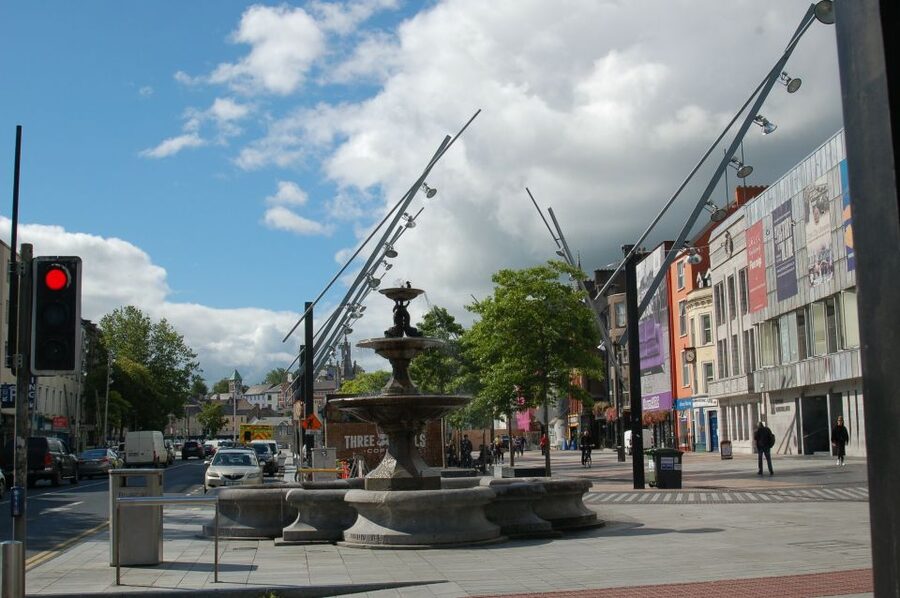
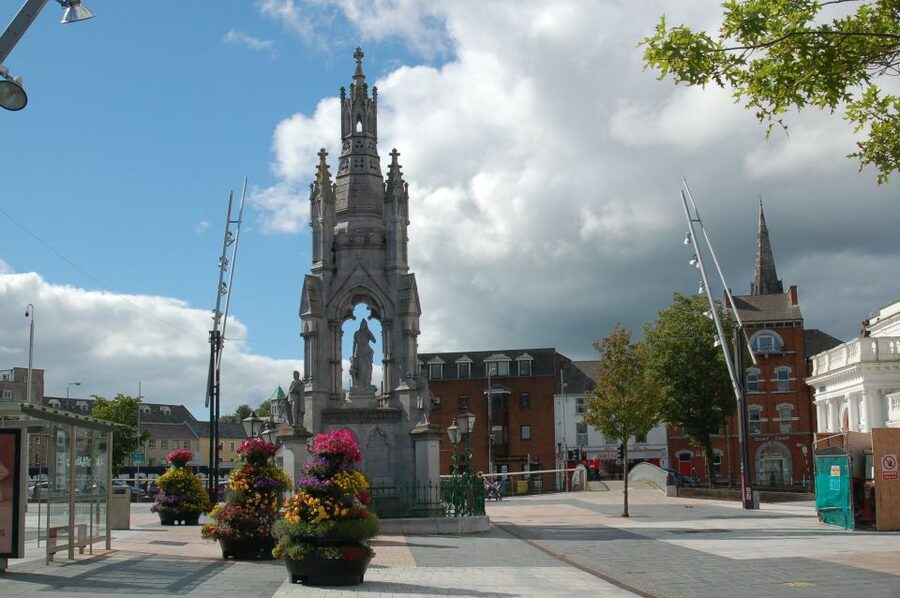
The route then reaches Grand Parade, described as Cork’s widest street. Here, you see Bishop Lucy Park, the Berwick fountain, and the National Memorial. This section gives you more room to take in the city, and it helps connect smaller historical details with Cork’s civic centre.
Grand Parade is also a useful orientation point. It links several parts of the central area, so you can return later without feeling lost. The guide’s job here is not simply to identify monuments. It is to show how public spaces, trade routes, churches, and waterways fit together.
The tour moves at a steady pace. That suits most people who want a broad introduction, but it leaves little time for extended photographs or long visits inside individual sites. Think of the activity as a guided overview, not a series of full museum stops.
More Walking Tours in Cork
- Titanic Trail Guided Walking Tour Cobh
★ 5.0 · 253 reviews - The Titanic Trail: 1-Hour Guided Walking Tour of Cobh
★ 4.8 · 78 reviews - Cork Instagram Photography Walking Tour
★ 5.0 · 54 reviews - Cobh: Guided Historic Walking Tour
★ 4.6 · 32 reviews
Nano Nagle and the footbridge named for her
One of the more personal sections focuses on Nano Nagle and her work bringing education to poor communities. You hear about her while standing on a footbridge named in her honour.
This stop adds social history to the city walk. Cork’s story is not only about commerce, churches, and shipping. It also includes people who worked to improve daily life for those with the fewest resources. Nano Nagle’s story helps balance the focus on buildings and trade.
I find stops like this especially useful because they explain why a name on a bridge matters. Without the background, you might cross it and never ask who Nano Nagle was. With the story, the bridge becomes part of the city’s memory.
The tour’s best guides use such moments to connect facts with people. Noel is frequently praised for his storytelling and personal experience of Cork, while Mary is described as friendly, passionate, and easy to hear. The exact guide is not guaranteed, but the format clearly depends on a local voice rather than a recorded script.
St Fin Barre’s Cathedral and the South Gate Bridge
Next comes St Fin Barre’s Cathedral, one of Cork’s major landmarks. The cathedral gives the walk a strong architectural pause after the narrower lanes and commercial streets.
The guide places it within the city’s wider development, helping you understand why religious buildings remain so important to Cork’s identity. The tour does not function as a cathedral admission visit, so you should not expect a long interior examination. Its value here is the exterior setting and the story that connects it to the rest of the route.
The walk also reaches South Gate Bridge. Bridges are central to understanding Cork, and this one reinforces the city’s relationship with the river. You begin to see that Cork’s streets and buildings are arranged around water, even where modern paving hides the original channels.
This part of the route is good for visitors who want context before exploring alone. You may return later to spend more time at the cathedral or nearby streets, but the guided visit gives you a reason to do so.
Elizabeth Fort and Cork’s defensive past
Elizabeth Fort adds another layer to the walk. Here, the focus shifts from trade and education to defence and the city’s strategic position.
The fort helps explain why Cork mattered beyond its immediate neighbourhood. A port city tied to European and transatlantic trade needed protection, and its military sites formed part of that larger story. You get a clearer sense of Cork as a place shaped by movement, commerce, and conflict.
The route does not promise a full fort visit or an extended tour of its grounds. That is important when setting expectations. You are seeing the fort as one stop in a connected city story, not spending the afternoon there.
Still, its inclusion makes the itinerary feel well rounded. You move from hidden river channels to markets, churches, civic spaces, education, and defence. In 75 minutes, that is a lot of ground.
South Mall’s former boat entrances
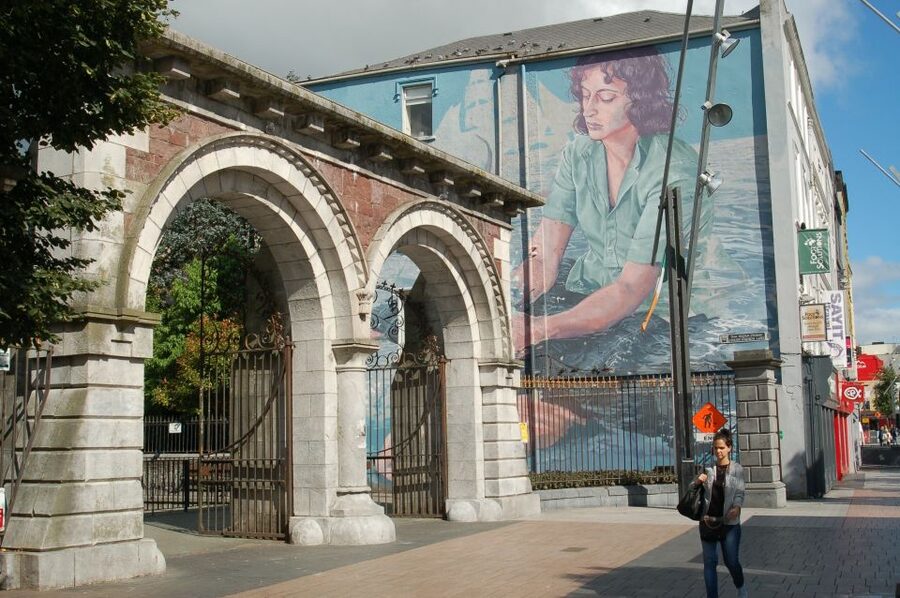
The walk then enters South Mall, now the city’s main business quarter. Look closely here. The guide points out remnants of former boathouse entrances built into the streetscape.
This is perhaps the most telling detail on the route. Modern offices and paved streets can hide Cork’s older relationship with the river, but these entrances offer physical clues. They show how buildings once connected directly with the water and how trade shaped the city block by block.
I would pay close attention during this section because the features are easy to overlook. They are not grand monuments with large signs. You need the guide to point them out and explain what you are seeing.
The boathouse entrances also bring the tour back to its main idea: Cork’s waterways are not gone from the story just because they are hidden from view. They remain in the shape of streets, buildings, and small architectural traces.
Finishing at the English Market
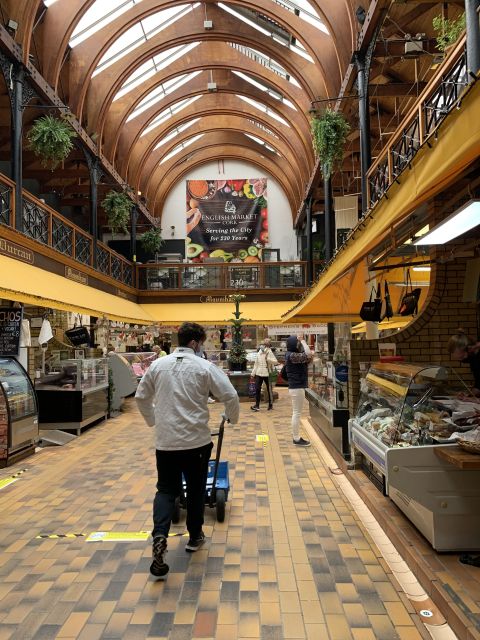
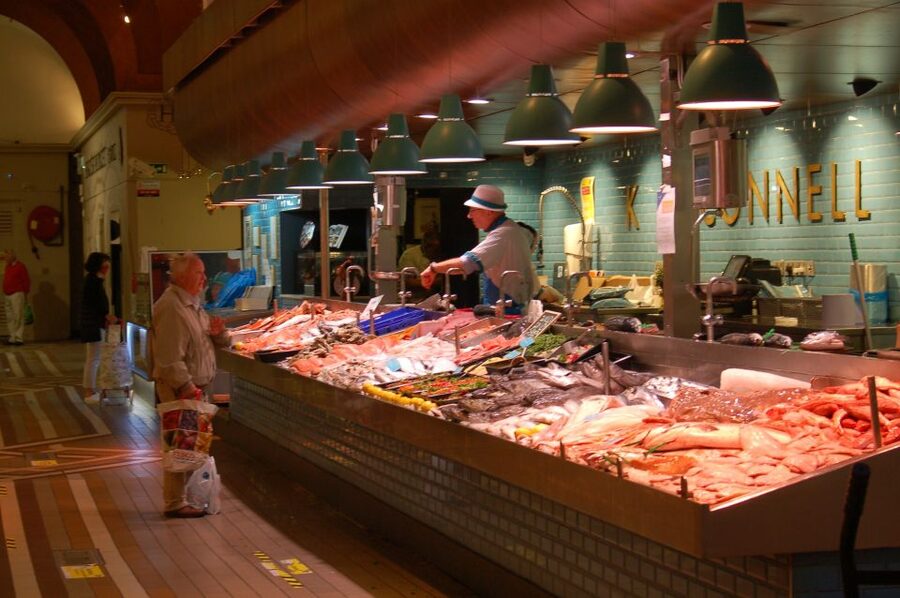
The walk ends on Princes Street at the main entrance to the English Market. This is a smart finish because you can continue your Cork visit without another transfer.
The market is a natural place to pause after the tour, but food and drinks are not included. The activity is strictly a city walk, so plan to buy your own snack or meal if you want one afterward.
Ending here also gives you a practical next step. You can explore the market, return to a landmark that caught your eye, or use the route to plan the rest of your day. One guide described the market as the final sightseeing point, and I agree that it works well as a handoff from guided history to independent wandering.
Guides, group size, and listening conditions
The guide is the heart of this activity. Names associated with the walks include Noel, Mary O’Sullivan, Gerard or Ger, Jarrod, Catherine, and Aiden. You may be assigned a different guide, but the strongest pattern is clear: expect a local person who mixes dates and places with personal stories.
Groups can be around 20 people, though some departures may be smaller. A group of that size is still manageable, but city noise matters. A headset microphone has been used on some walks, and that can make a real difference near traffic or crowded streets.
The best reason to choose this tour is not simply the number of landmarks. It is the way a local guide can answer questions and explain odd details, from the buried river route to the bulky street lights that puzzle people as they walk around Cork.
The format suits you if you like history delivered through stories rather than a formal lecture. It also works well for families and first-time visitors, provided everyone is comfortable walking outdoors for 75 minutes.
Is 26 dollars good value?
At $26 per person, the tour is reasonably priced for a guided introduction to central Cork. You are paying for a local guide, a carefully connected route, and useful orientation rather than admission to a major attraction.
The value is strongest if you are new to Cork or have limited time. In one short outing, you see or learn about the opera house, Shandon, the Huguenot cemetery, Coal Quay, Cornmarket Street, Grand Parade, Bishop Lucy Park, the Berwick fountain, the National Memorial, Nano Nagle’s bridge, St Fin Barre’s Cathedral, South Gate Bridge, Elizabeth Fort, South Mall, and the English Market.
The tradeoff is depth. You will not have time for long stops, full interior visits, or a slow photography walk. If you already know Cork well, the price may feel less useful unless you want local stories and fresh context.
I see it as a good-value first look, especially because you can use the route to decide where to spend more time later. The tour itself does not include hotel pickup, drop-off, food, or drinks, so budget for those separately.
Practical details before you book
The starting point is the Cork Tourist Information Centre. Arrive 10 minutes early so you are ready when the group leaves. The tour finishes back at the meeting point, which makes it easy to collect your bearings without arranging transport.
Wear weather-appropriate clothing and prepare for rain. The walk operates in all weather, and the information says to treat it as a rain-or-shine activity. Comfortable walking shoes are sensible, though the supplied details do not specify a particular footwear requirement.
The activity is listed as wheelchair accessible. It is led in English, with no other language option stated.
There is conflicting cancellation information. The booking details say you can cancel up to 24 hours in advance for a full refund and can reserve now while paying later, but the same information also calls the tour non-refundable. Check the exact terms shown for your selected date before confirming.
Who should book the Cork walking tour?
I would book this if you want a quick, story-led introduction to Cork, especially at the beginning of your stay. It is also a good fit for anyone who enjoys noticing small clues, such as former boat entrances, rather than visiting only the city’s headline sights.
You should also consider it if you like having a local guide explain Cork’s maritime links, refugee stories, social work, religious buildings, and street layout in one connected walk. The guides’ humour, personal memories, and clear delivery add something a map cannot.
I would skip it if you want a slow architectural tour, substantial time inside each attraction, or a food-focused outing. The pace is efficient, and the weather can affect comfort.
For most first-time visitors, I think the tour earns its place in a Cork itinerary. It shows you the city’s hidden structure, introduces several major sights, and leaves you at the English Market with plenty of time to continue exploring.
FAQ
How long does the Cork historical walking tour last?
The tour lasts 75 minutes. Starting times vary, so check availability for your chosen date.
Where does the tour start?
Meet at the Cork Tourist Information Centre. You should arrive 10 minutes before the activity begins.
Where does the tour finish?
The walk ends back at the Cork Tourist Information Centre, the same place where it starts.
Is the tour conducted in English?
Yes. The live guide leads the tour in English.
Is the walking tour wheelchair accessible?
Yes, the activity is listed as wheelchair accessible.
What should I bring?
Bring weather-appropriate clothing. The tour operates rain or shine, and food and drinks are not included.
Just added around Cork
- Full-Day Private Whispers of Kerry Emerald Dreams Tour from Cork★ 5.0 · 6 reviews
- Kinsale and West Cork Classic Private Tour in modern a/c minibus★ 5.0 · 4 reviews
- Wild Coast Bike and EBike Tour in Kinsale Cork Ireland★ 5.0 · 12 reviews
- Fota House, Arboretum & Gardens Admission Ticket★ 5.0 · 67 reviews
- Blarney,Cork City,Kinsale,Ultimate Private Guided Minibus Tour.★ 5.0 · 6 reviews
- Private Tour: Classic Cork Tour visiting Blarney Castle & Kinsale★ 5.0 · 8 reviews
- Toe Head Clifftop Hike in West Cork★ 5.0 · 48 reviews
- Paint a Metal Miniature★ 5.0 · 33 reviews
Historical Tours, compared.

Dublin Historical Centre Food Tour with 8 Food Tastings & Drinks
Read our review →

Historical 2-Hour Guided Walking Tour of Dublin
Read our review →
Dublin to Cork, Blarney Castle & Cóbh Heritage Centre by train
Read our review →
Jeanie Johnston Tall Ship Irish Famine History Tour
Read our review →

Deliciously Dublin: The Artisan Donut Walking & History Tour
Read our review →Browse the lists this tour appears in