
Reviewed · WALKING TOURS
Small Group-Dublin Walking Tours
Dublin’s story comes together nicely on this two-hour city-center walk. Damian McGrath links Viking beginnings, the 1916 Easter Rising, Irish writers, parliament, music, shopping streets, and old churches into one compact route. The tour begins at the Chester Beatty Library behind Dublin Castle and ends near Powerscourt Townhouse Centre.
I like the small group limit of eight, which gives you room to ask questions and lets Damian adjust the pace and discussion. I also like the musical touches and short skits, which turn a parade of buildings into something easier to remember. The main consideration is pace: you cover a lot of ground in two hours, often on cobblestones, with only brief stops at most sights.
Key points to know before booking
- Start at Dublin Castle and finish near Grafton Street, making this useful on your first day.
- Damian McGrath leads the walk with history, music, humor, and room for personal questions.
- The group is capped at eight people, giving the tour a more personal feel.
- You see ten major stops, including Christ Church Cathedral, Temple Bar, Trinity College, and St Stephen’s Green.
- The tour stays outdoors, so wear comfortable shoes and do not expect admission to the interiors of the main landmarks.
- The $60.47 price buys orientation and storytelling, not a long museum visit or a full-day excursion.
Why this short Dublin walk works well
I see this tour as an introduction to Dublin rather than a deep examination of any one sight. In roughly two hours, you move from the city’s medieval core to the River Liffey, across the main shopping district, and through the government and Georgian quarters.
That range is the tour’s strength. You learn how Dublin began around the meeting of the River Liffey and the River Poddle, hear about Viking settlement, and then move forward through church history, trade, rebellion, literature, politics, and everyday city life.
Damian’s approach adds personality. Music is matched to the places you pass, and the tour can include short performances or skits. That is especially helpful if you are traveling with children or if a standard list of dates and names makes your eyes glaze over.
The route also gives you a useful map of central Dublin. Afterward, you will know where Temple Bar, Trinity College, Grafton Street, St Stephen’s Green, and the main civic buildings sit in relation to one another.
The trade-off is detail. Ten stops in two hours means that most locations receive about ten minutes, with slightly longer pauses at Temple Bar and St Stephen’s Green. You get the story and the setting, then move on. If you want to tour Dublin Castle or Christ Church Cathedral inside, plan separate visits.
More Walking Tours in Dublin
- Dublin Highlights and Hidden Gems Guided Walking Tour
★ 5.0 · 6,020 reviews - Dublin: Highlights and Hidden Gems Walking Tour
★ 4.9 · 2,140 reviews - 1916 Rebellion Walking Tour
★ 5.0 · 1,605 reviews
Starting behind Dublin Castle at Chester Beatty
The meeting point is the Chester Beatty Library in Dubh Linn Garden, behind Dublin Castle. This is an easy place to find, and beginning here puts you beside one of the most important areas in central Dublin without requiring a complicated meeting arrangement.
Damian uses the opening minutes to explain the plan and introduce Dublin’s earliest setting. The name Dublin comes from the Irish Dubh Linn, meaning black pool, tied to the watercourse near the castle area. You also hear how the city’s Viking past shaped its early development.
The Chester Beatty itself is not an interior stop on this walk. If you have time later, it can be worth returning to, but do not expect the tour’s opening to include a museum visit.
From there, you move through the grounds of Dublin Castle. The gardens offer a calmer start than the crowded streets nearby, and the setting helps you picture how the old city grew around water, defense, religion, and trade.
Christ Church and Dublin’s medieval center
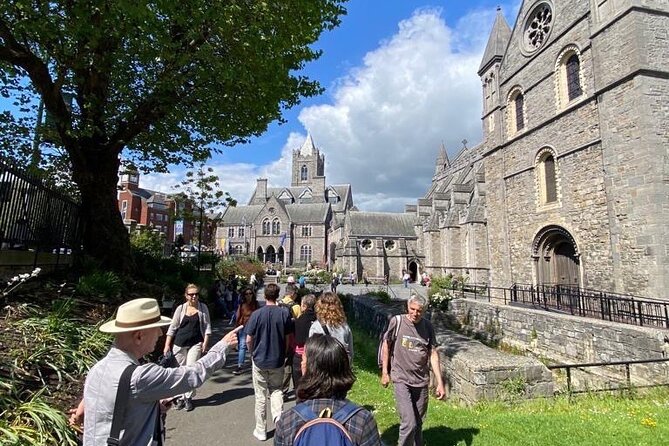
The walk continues toward Christ Church Cathedral, one of the key markers of old Dublin. You hear about the Catholic Church in Ireland and the long religious story tied to the city.
The cathedral is also linked to music history. From outside, Damian points out the venue connected with the first performance of Handel’s Messiah. That small detail gives the building a place in both religious and musical history.
You also return to the city’s Viking beginnings here. The value of this section is the connection between the early settlement and the streets you are walking through now. Dublin can feel like a modern European capital, but the route keeps showing you the older layers below it.
Again, this is an exterior look rather than a cathedral visit. Ten minutes is enough for an introduction and a few questions, but not for a full look at the building’s interior or collections.
Temple Bar, the Ha’penny Bridge, and the River Liffey
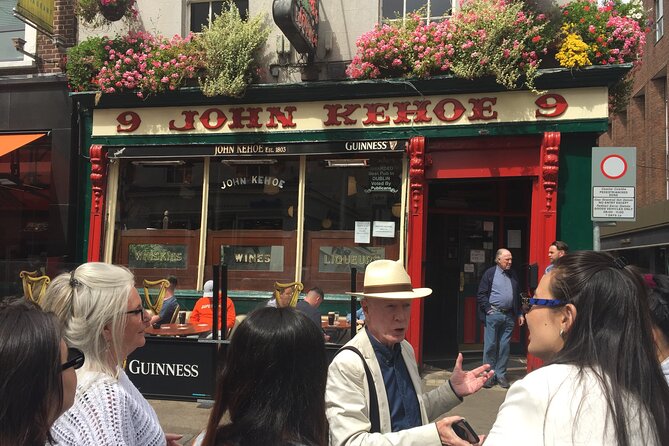
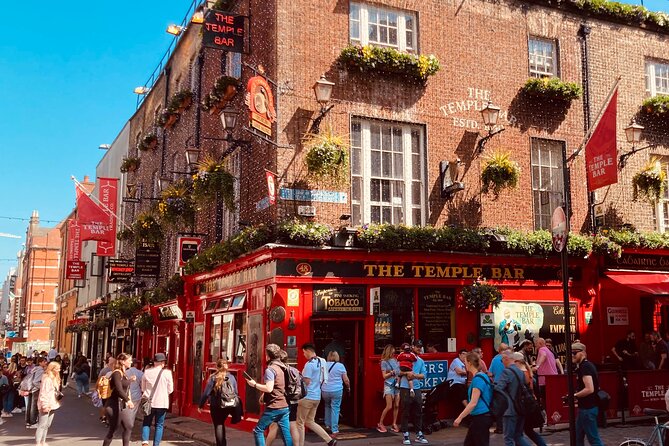
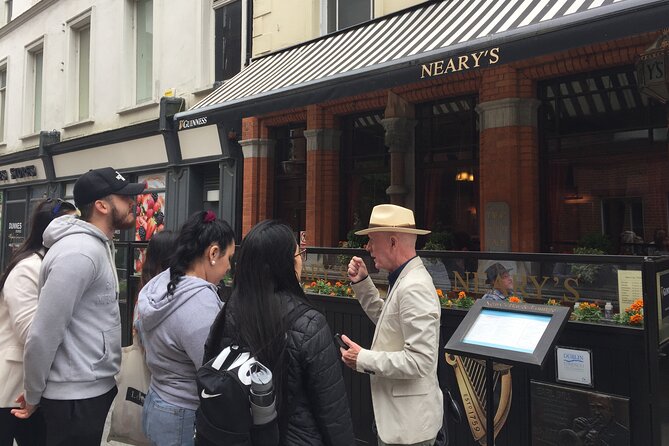
Temple Bar is the liveliest part of the route. Its pubs, music, and nightlife make it one of Dublin’s best-known areas, though it can also be crowded and more expensive than other parts of town.
The tour treats Temple Bar as a piece of the city’s social life, not simply as a place to take a pub photo. Damian discusses how the area developed and how it became a main meeting point for people looking for a pint, music, and conversation.
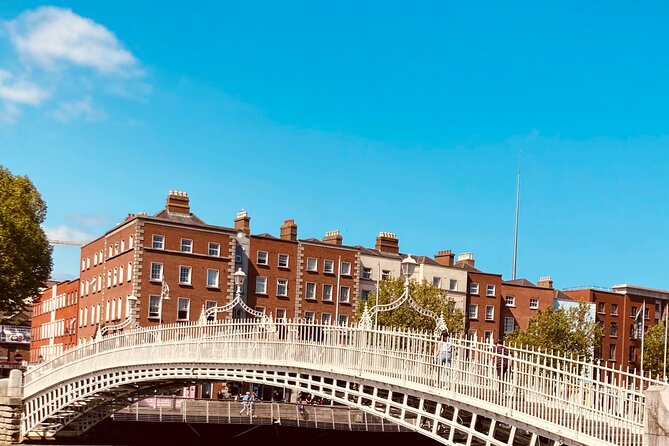
You then cross the Ha’penny Bridge, one of Dublin’s most recognizable crossings. From here, the discussion shifts toward trade, travel, and the way the River Liffey helped shape the city center.
This is one of the more scenic parts of the walk, but it is also one of the places where foot traffic can slow you down. Stay aware of the group and expect a city street experience rather than a quiet bridge crossing.
A few more Dublin half-days to weigh up
- Dublin to Cliffs of Moher, including Wild Atlantic Way and Galway
★ 5.0 · 23,331 reviews - From Dublin: Cliffs of Moher, Burren & Galway City Day Tour
★ 4.8 · 18,888 reviews - Dublin: Guinness Storehouse Entry Ticket
★ 4.6 · 16,863 reviews - Dublin to Cliffs of Moher, Burren, Wild Atlantic Way, Galway Tour
★ 5.0 · 12,924 reviews
O’Connell Bridge and the story of 1916
At O’Connell Bridge, Damian brings the story forward to Ireland’s political struggles. You see the statue of Daniel O’Connell, the Irish parliamentarian whose name is attached to the bridge and the broad avenue beyond it.
The Liffey becomes the focus again, including the famous Liffey Swim. This section connects the river to ordinary Dublin life, not only to grand political events.
You are also approaching the area associated with the 1916 Easter Rising. The tour does not turn this into a full military history lesson, but it gives you a useful starting point for understanding why the surrounding streets matter so much in modern Irish history.
Trinity College and Parliament House

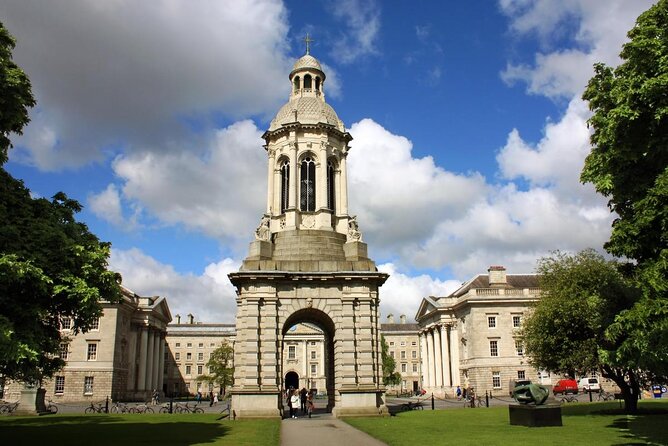
Trinity College offers a change of mood. You pause outside one of the world’s best-known universities and can enter the courtyard for a short look at its original architecture.
Damian discusses notable people who studied there and points out the relationship between the college and the city around it. If you hope to see the Book of Kells, this walk does not include that admission. You would need to arrange a separate visit.
The short Trinity stop is still useful because it helps you decide if you want to return. You can see the setting, get the basic story, and then spend more time there later if the college interests you.
The route also gives you a view of Parliament House, now known as the House of Lords, along Dame Street. The name can be confusing, so the explanation helps connect the building to Ireland’s political past.
Bram Stoker, Dawson Street, and Bewley’s
At St Anne’s Church on Dawson Street, the focus turns to Bram Stoker, the Irish writer best known for Dracula. Damian explains that Stoker married at this church.
That literary connection makes the stop feel more personal than simply pointing out another old building. You then head toward Bewley’s Café on Grafton Street, one of the city center’s familiar meeting places.
This stretch is good for travelers who enjoy the small stories attached to ordinary streets. You are not only seeing major landmarks. You are also learning where writers lived, married, worked, and moved through Dublin.
The route passes through a busy commercial part of the city, so this is not the quietest section. It is, however, practical. You get a first look at Grafton Street and can return later for shopping, coffee, or a closer look at the architecture.
Leinster House and Dublin’s Georgian streets
Kildare Street brings you to Leinster House, the home of Ireland’s parliament. Damian explains its connection with the White House in Washington, DC, along with some of its political history.
The route also passes the original home of Bram Stoker and the National Museum of Archaeology. These are quick exterior references, not extended visits, but they add useful options to your Dublin plan.
This part of the walk shows how many different parts of the city fit close together. Government buildings, museums, writers’ homes, churches, shops, and parks all sit within an easy central walking area.
If you like architecture, pay attention to the Georgian-era buildings along the way. The tour gives you a broad introduction rather than a specialist architectural lecture, but it helps you notice the formal streets and older facades that can be easy to miss when you are focused on getting from one attraction to the next.
St Stephen’s Green and Grafton Street
St Stephen’s Green gives the tour its most restful pause. Before reaching the park, you pass along Grafton Street, Dublin’s main high-end shopping district, and see the Royal College of Surgeons.
You also get a look at Georgian architecture and the city park itself. The 15-minute stop is slightly longer than several earlier stops, which helps you take in the setting without feeling rushed.
I like this section because it balances the packed urban streets with open space. It also gives you a clear sense of Dublin’s layout: the shopping district, civic buildings, medical institutions, and park are all part of the same central walk.
Do not expect a long park visit. The tour still has one final stop, and the route is designed to keep moving.
Powerscourt Townhouse and the finish
The walk ends at Powerscourt Townhouse Centre on South William Street, between South William Street and Clarendon Street. This former townhouse is an architectural highlight and now holds boutique shops, upscale outlets, and a café and restaurant in its atrium.
Ending here is convenient. You are close to Grafton Street, Temple Bar, and other central areas, so you can continue exploring without retracing the entire route.
The final stop also suits different travel styles. You might browse the shops, sit down for a meal, or use the location as a point from which to continue your own sightseeing.
Because the tour ends in a commercial center, it does not finish with a grand viewpoint or a formal farewell at a major monument. Its usefulness is practical: you end in the heart of Dublin with plenty of choices for what to do next.
What the $60.47 price buys you
At $60.47 per person, this is not the cheapest way to walk around Dublin. You can pass many of these streets on your own for free.
The value comes from the structure and the guide. Damian turns separate places into one connected story, and the small group limit means you are not following a large flag through the streets. The music, humor, and short performances also give the walk a different feel from a purely factual city orientation.
The price makes the most sense if you are new to Dublin, have only a short stay, or want help deciding which places deserve a longer visit. It is less compelling if you already know central Dublin well or mainly want interior access to the castle, cathedral, Trinity College, or museum.
The tour is also a good use of the first day of a visit. You learn the basic map, spot areas you may want to revisit, and receive context before exploring alone.
Pace, footwear, and group size
Wear comfortable shoes. You will walk over cobblestones and city pavement, and the route covers a fair amount of ground in two hours.
The group maximum is eight people, which is one of the strongest practical features. A small group makes it easier to hear, ask questions, and adjust the conversation. One booking included children aged 11 and 13, and the mix of music and humor helped keep the family involved.
The pace is generally comfortable but purposeful. You are not standing around for long stretches, and you should be ready to keep moving between stops. One person with a hip problem received extra consideration, but you should still judge the walk against your own mobility needs.
The tour is offered in English. Confirmation is provided at booking, service animals are allowed, and the meeting point is near public transportation.
Who should book this walk
I would choose this for a first visit to Dublin, especially if you want a clear introduction without giving up half a day. It also works well for a family, a couple, or a small group that prefers conversation over a large organized tour.
The experience suits you best if you enjoy:
- Irish political and religious history
- Stories about writers such as Bram Stoker
- City architecture and local landmarks
- A short route with plenty of different subjects
- Music and humor alongside the facts
- Advice on what to explore after the walk
I would choose something else if you want long visits inside Dublin Castle, Christ Church Cathedral, Trinity College, or the National Museum. This is a walking overview, not an admissions-based sightseeing package.
Free cancellation is available up to 24 hours before the start time. Cancellations made less than 24 hours ahead are not refunded, and late changes are not accepted.
Should you book Damian Dublin Tours?
Book it if you want to get your bearings fast and prefer a personal guide who mixes history with music, humor, and questions. Damian’s strongest contribution is the way he links small details, such as Bram Stoker’s wedding, with larger subjects such as Viking Dublin, parliament, religion, and the 1916 Rising.
The tour is especially useful at the start of a Dublin stay. Just wear good shoes, expect an outdoor route, and treat the ten stops as an introduction rather than a series of full visits. At $60.47, it is a fair choice for that focused orientation, but not the best value if you want extensive time inside major attractions.
FAQ
Where does the Dublin walking tour start?
The tour starts at the Chester Beatty Library in Dubh Linn Garden behind Dublin Castle, at Castle Street, Dublin 2.
Where does the tour finish?
It ends at Powerscourt Townhouse Centre at 59 William Street South, Dublin 2. The center is between South William Street and Clarendon Street.
How long does the tour last?
The tour lasts approximately two hours.
How many people can join the tour?
The tour has a maximum of eight travelers.
What language is the tour offered in?
The tour is offered in English.
Does the tour include admission to Dublin Castle or Christ Church Cathedral?
The listed stops are described as exterior visits and walks around the grounds. Admission tickets are not included for these stops.
Should I wear special clothing or footwear?
You should wear comfortable shoes because the route includes cobblestone streets and considerable walking.
Is the tour suitable for most people?
Most travelers can participate. The tour is near public transportation, and service animals are allowed.
Can I cancel for a refund?
You can cancel at least 24 hours before the experience starts for a full refund. Cancellations made less than 24 hours before the start time are not refunded.
Just added around Dublin
- Women Of Ireland: Trailblazers & Pioneers★ 5.0 · 4 reviews
- Full Day Private Wicklow Tour★ 5.0 · 12 reviews
- Wicklow Mountains & Glendalough Luxury Private Day Tour★ 5.0 · 23 reviews
- Wicklow tour of Glendalough★ 4.5 · 8 reviews
- Premium Irish Whiskey Tasting Hosted by Local Dublin Expert★ 5.0 · 77 reviews
- Whiskey Tasting Tour of Dublin★ 5.0 · 117 reviews
- Dublin To Kilkenny Castle Waterford Crystal Private Car – Day Tour★ 5.0 · 8 reviews
- Historical Walking Tour of Dublin★ 5.0 · 50 reviews
Walking Tours, compared.
Dublin Highlights and Hidden Gems Guided Walking Tour
Read our review →

90 Minute Dublin Walking tour and Sightseeing tips
Read our review →

Historical 2-Hour Guided Walking Tour of Dublin
Read our review →
Dublin Traditional Irish 3 Course Meal Walking Tour with Local
Read our review →
Browse the lists this tour appears in