
Reviewed · BOYNE VALLEY & NEWGRANGE TOURS
Full-Day Irelands Ancient Boyne Valley Private Guided Tour
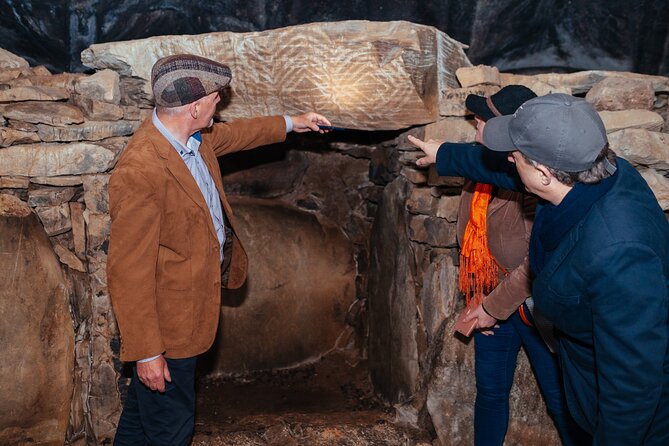
Ireland’s ancient Boyne Valley is at its best when you can pause, ask questions, and look beyond the better-known Newgrange visit. This private day takes you to four major ceremonial sites, including quiet passage tombs that many Dublin day trips skip.
I like the personal transport and the route’s strong mix of royal legend, Stone Age archaeology, and open hilltop views. I also like the flexibility of a private group, with a guide such as Michael Foxx to explain what you are seeing. The trade-off is the price: $898.70 for up to three people is much easier to justify when shared, and lunch is not included.
Key points for your Boyne Valley day
- Four ancient sites in eight hours: Visit Tara, Loughcrew, Dowth, and Fourknocks in one full day from Dublin.
- A private experience: Only your group participates, with private transportation in an air-conditioned vehicle.
- Royal Ireland at Tara: See the Iron Age Royal Enclosure and the Lia Fáil, the Stone of Destiny.
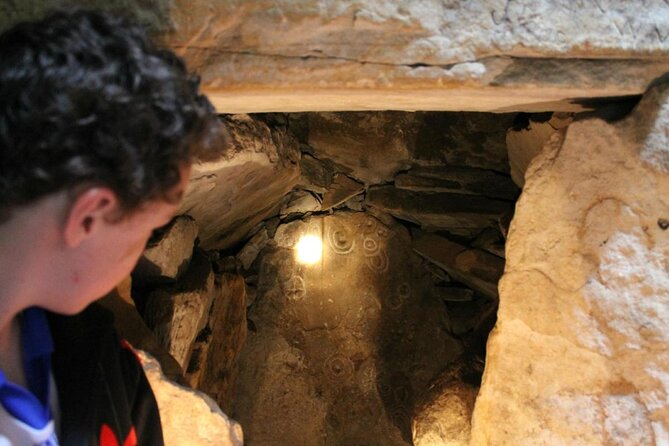
- 5,000-year-old tombs: Explore the cairns at Loughcrew and the passage tomb at Fourknocks.
- Solstice connections: Dowth is aligned with the winter solstice sunset, while Fourknocks points toward the winter solstice sunrise at Newgrange.
- Simple planning: Pickup is offered, bottled water is included, and the tour runs in English for about eight hours.
Why this route is different from a standard Newgrange day
Most people first hear about the Boyne Valley because of Newgrange. It deserves its fame, but access can be busy and tightly managed. This route takes a different approach: you spend the day moving among four important places, with time to consider how they connect rather than focusing on one headline monument.
The result is a broader look at ancient County Meath. You see Tara, a place tied to kingship and ceremony, then move into the much older world of passage tombs and stone chambers. The contrast gives the day a useful shape.
You also avoid joining a large group. Your private vehicle carries only your party, up to three people, and your guide. That matters at sites where the meaning is not obvious at first glance. You can stop to ask why a mound was built, how a passage lines up with the sun, or what a carved stone might represent.
I would not choose this tour if your only goal is to enter Newgrange. Newgrange is not listed as a stop here. I would choose it if you want a full day built around less familiar monuments and a guide who can connect the pieces.
More Private Tours in Dublin
- The Dublin Private Walking Tour
★ 5.0 · 701 reviews - Private Dublin Arrival Transfer – Airport to Hotel / Accommodation
★ 3.5 · 304 reviews - Private (Nearly!) All of Dublin in 5 hours (Walking Tour)
★ 5.0 · 281 reviews
Starting from Dublin at 8:30 in the morning
The day begins at 8:30 am, with pickup offered. If you are staying in an apartment or Airbnb, provide the full address and Eircode when booking. That detail is especially useful in Ireland, where similar street names and rural addresses can make a pickup harder to locate.
Private transportation removes the need to arrange several rural connections yourself. You ride in an air-conditioned vehicle, and bottled water is included. The tour lasts about eight hours, so the vehicle becomes an important part of the experience, not just a way to get from Dublin to Meath.
The schedule gives roughly one hour at each of the four stops. That is enough time for a guided visit, but it is not an unstructured day where you wander indefinitely. You should expect a purposeful pace, with four different sites to see before returning.
Lunch is not included. Plan for that when considering the day’s cost and timing. The supplied details do not name a lunch stop, so ask the provider about the day’s meal arrangements before setting out if that matters to you.
Hill of Tara and the story of Irish kingship
The first stop is the Hill of Tara, a Celtic ceremonial site associated with the rituals of kingship. At the summit, the Iron Age Royal Enclosure is also known as the Fort of the Kings. Even the names tell you what kind of place this was: Tara was not simply a hill with old earthworks, but a setting where power and ceremony were joined.
Inside the enclosure are two linked earthworks, Cormac’s House and the Royal Seat. In the center of the Royal Seat is the Lia Fáil, or Stone of Destiny. According to legend, the stone cried out when the true High King touched it, with a sound that could be heard across Ireland.
I like starting here because Tara gives you the political and mythical side of the Boyne Valley before the day turns to prehistoric tombs. You can look at the earthworks and then hear how later Irish tradition connected the site with high kings and rightful rule.
The attraction is primarily the setting and the story. There is no admission charge, and the visit lasts about an hour. You should be prepared for an outdoor stop on a hill, with uneven ground possible at an ancient earthwork site. A moderate level of physical fitness is recommended for the tour as a whole.
Loughcrew Cairns and the mountain of the hag
Loughcrew brings you into a much older Ireland. The cairns spread across the hills date from the Stone Age and are about 5,000 years old. Their Irish name, Slieve na Caillaigh, means mountain of the hag.
Local legend says a giant hag created the monuments while striding across the country. The stones supposedly fell from her apron as she crossed the hills. It is a memorable story, but the cairns themselves are the main reason to come: they show the scale and ambition of communities working with massive stones thousands of years ago.
The one-hour visit is guided, so you are not left to guess which mounds matter or how the site fits into the wider Boyne Valley. The high setting also gives Loughcrew a different feel from the lower passage tombs. You are dealing with ancient monuments spread across hills rather than one single, clearly defined mound.
This stop may be the most physically demanding part of the route. The tour information recommends moderate fitness, and Loughcrew is specifically described as a hill site. If walking uphill or across uneven ground is difficult for you, ask the provider for a clearer picture of the conditions before booking.
There is no separate admission charge listed for the stop. The private format helps here because you can discuss the site at your own pace within the hour, rather than being bound to a large group’s questions or schedule.
More Boyne Valley and Newgrange trips:
- Celtic Boyne Valley & Ancient Sites Day Tour From Dublin
★ 4.5 · 865 reviews - Dublin: Boyne Valley with Newgrange and Bru Na Boinne Entry
★ 4.7 · 635 reviews - From Dublin: Celtic Boyne Valley and Ancient Sites Tour
★ 4.5 · 618 reviews - Dublin to Newgrange, Monasterboice Small Group Guided Tours
★ 4.5 · 500 reviews
Dowth, a quieter solstice passage tomb
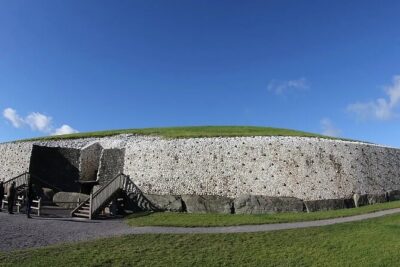
Dowth is one of the three principal tombs in the Brú na Bóinne World Heritage Site. It is less famous than Newgrange and Knowth, but its size compares with both. That makes it an important part of this route, not a minor replacement for the better-known monuments.
Dowth is aligned with the winter solstice. In December, the setting sun enters the passage and lights three stones in the central chamber. That detail gives the mound a strong sense of purpose. The builders were not simply placing stones in a pile. They were shaping a monument around the movement of the sun.
I find the solar alignment especially useful for understanding these tombs. You are not just looking at an old mound and hearing a date. You are learning how the monument interacted with the sky, the season, and the people who built it.
The timing matters. The solstice effect occurs in December, so an ordinary visit outside that period will not reproduce the illumination. Still, the alignment remains part of what makes Dowth special, and the guide can explain the relationship between the passage, chamber, and sun.
A one-hour guided stop keeps the day moving. Because the tour includes four sites, you will not spend half a day at Dowth. That is a limitation for anyone who wants a very long archaeological visit, but a benefit if you want to compare several places in one outing.
Fourknocks and its unusual star connection
Fourknocks is located just outside Ardcath in County Meath. Its name comes from the Irish Fuair Cnoic, meaning cold hills. The passage tomb dates from roughly the same period as Newgrange and Knowth, around 5,000 years ago.
The site’s appeal comes partly from what makes it different. Fourknocks is too far north for a direct solar alignment, but it follows the path of the winter solstice sunrise toward Newgrange. That creates a connection between monuments rather than a simple beam of sunlight entering its own chamber.
Fourknocks also relates to the stars. During the Stone Age, the tomb was aligned with the helical rising of the W-shaped constellation Cassiopeia. The zigzag engravings found on its stones may connect with that shape, although the supplied information presents this as a possible explanation rather than a certainty.
That uncertainty is worth keeping in mind. Ancient monuments invite bold theories, but nobody can give you a complete record of what their builders intended. A good guide should help you separate firm details, such as the tomb’s age and alignment, from interpretation.
Fourknocks is a fitting final stop because it leaves you with a question rather than a single answer. You have seen monuments tied to kingship, the sun, seasonal movements, and perhaps the stars. The day becomes less about checking off famous names and more about comparing different ideas about why these places were built.
What the private guide adds
The strongest reason to book this experience is the private guiding. At each stop, you receive a focused visit of about an hour rather than a quick photo break. The guide can give the four sites a shared story, which is hard to do when you visit them independently without background.
Michael Foxx is the guide named in the available tour information. He is described as professional and very well informed about the area. If Michael is not the guide assigned to your date, confirm who will lead the tour when you book.
Private guiding also changes the practical rhythm. If you are fascinated by the Lia Fáil, you can ask more about Tara. If the winter solstice alignment at Dowth catches your attention, you can spend more of your discussion there. The experience is still organized around a fixed day and four stops, but your questions can shape the emphasis.
The drawback is that the private format does not make the day short. Eight hours is a full commitment, and four sites require steady movement. You will get more from it if you enjoy archaeology, folklore, and outdoor historic places rather than expecting a relaxed sightseeing drive with only a few stops.
Is $898.70 good value for three people?
The listed price is $898.70 per group of up to three people. That is a serious price for a day out, but the way you use the tour matters. With three people sharing the cost, it works out to about $299.57 each before any lunch expenses.
You are paying for a private vehicle, an English-speaking guide, pickup, and a full day focused on four sites. Admission is listed as free at each stop, so the value comes from transport and guiding rather than entrance tickets.
I would compare it with the cost and hassle of arranging a rural route yourself. The Boyne Valley sites are spread out, and this itinerary includes places that are not always part of a standard sightseeing schedule. A private car and guide let you link Tara, Loughcrew, Dowth, and Fourknocks in one day.
For one person, the price is harder to defend unless private guiding is a major priority. For a couple or small group, the calculation is more reasonable, especially if you value a dedicated guide and do not want to manage the driving.
Remember to budget for lunch. Bottled water is included, but food is not. The free-cancellation policy gives you some protection if your plans change, provided you cancel at least 24 hours before the 8:30 am start. Changes or cancellations inside that window are not accepted for a refund.
Who should book this Boyne Valley tour?
I would recommend this day to a small group that wants ancient sites with context, not just a famous photo stop. It suits people who enjoy folklore, astronomy, archaeology, and the outdoor setting of old ceremonial places.
It is also a good choice if Newgrange access is not your main concern. The route offers a way to see the wider Boyne Valley through Tara, Loughcrew, Dowth, and Fourknocks, with less focus on the most publicized monument.
Families with older children may appreciate the legends of the Stone of Destiny and the giant hag. Adults interested in prehistoric engineering and solar alignments will have plenty to discuss. The private format is useful for groups with specific interests because you can ask direct questions throughout the day.
I would be cautious if you have limited mobility or dislike hill walking. The tour requires a moderate physical fitness level, and at least one stop is spread across hills. I would also hesitate if you want a long lunch, a slow pace, or a single-site visit with lots of time inside one monument.
Should you book it?
Book this tour if you want a private, guide-led day that connects Ireland’s royal legends with 5,000-year-old tombs and celestial alignments. The route is strongest for a group of two or three, when the private price is shared.
Skip it if you need Newgrange itself, want included meals, or prefer a short and easy excursion. For the right audience, the day offers a thoughtful alternative to the usual Boyne Valley checklist: four substantial sites, private transport, no admission fees, and a guide such as Michael Foxx to make sense of the stones and stories.
FAQ
How long does the Full-Day Ancient Boyne Valley tour last?
The tour lasts approximately eight hours.
What time does the tour begin?
The start time is 8:30 am.
Is pickup from Dublin available?
Pickup is offered. If you are being collected from an apartment or Airbnb, provide the full address and Eircode.
Which places does the tour visit?
The route includes the Hill of Tara, Loughcrew Cairns, Dowth Passage Tomb, and Fourknocks Passage Tomb.
What is included in the price?
The tour includes bottled water, private transportation, and an air-conditioned vehicle. Lunch is not included.
Is the tour private and what language is offered?
Yes. Only your group participates, with a maximum of three people. The tour is offered in English.
More Full-Day in Dublin
- Dublin to Glendalough, Wicklow and Kilkenny Full Day Guided Tour
★ 5.0 · 4,895 reviews - Cliffs of Moher Full-Day Tour from Dublin
★ 4.5 · 2,565 reviews - Blarney Castle Full-Day Tour from Dublin
★ 4.5 · 469 reviews - From Dublin: Connemara and Galway Full-Day Tour
★ 3.5 · 446 reviews
Just added around Dublin
- Women Of Ireland: Trailblazers & Pioneers★ 5.0 · 4 reviews
- Full Day Private Wicklow Tour★ 5.0 · 12 reviews
- Wicklow Mountains & Glendalough Luxury Private Day Tour★ 5.0 · 23 reviews
- Wicklow tour of Glendalough★ 4.5 · 8 reviews
- Premium Irish Whiskey Tasting Hosted by Local Dublin Expert★ 5.0 · 77 reviews
- Whiskey Tasting Tour of Dublin★ 5.0 · 117 reviews
- Dublin To Kilkenny Castle Waterford Crystal Private Car – Day Tour★ 5.0 · 8 reviews
- Historical Walking Tour of Dublin★ 5.0 · 50 reviews
Boyne Valley & Newgrange Tours, compared.
Celtic Boyne Valley & Ancient Sites Day Tour From Dublin
Read our review →
Boyne Valley with Newgrange and Bru Na Boinne Entry
Read our review →
Dublin to Newgrange, Monasterboice Small Group Guided Tours
Read our review →
6 hour Half-Day Award Winning Private Tour of the Boyne Valley
Read our review →
Private Tour from Dublin: Hill of Tara Trim Castle, Celtic sites
Read our review →Browse the lists this tour appears in