
Reviewed · CITY TOURS
DayTripper Dublin: A Guided City Walking Tour
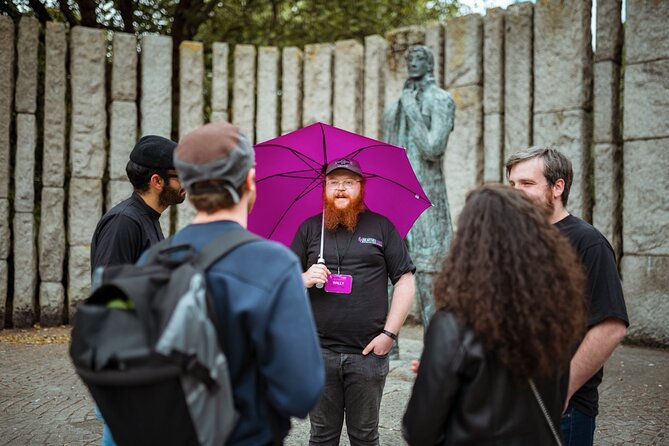
Dublin gives you a lot in a small area, and this walking tour makes good use of that. In one outing, you move from Viking Dublin and medieval cathedrals to Molly Malone, the Famine, Irish independence, music, and modern city life. It is a useful first look at the capital before you spend your remaining days exploring on your own.
I like the central start at the Wolfe Tone statue and the sensible finish near College Green. I also like the mix of major sights and street-level stories, especially the talk about Irish music, dance, working-class Dublin, and the political struggles that shaped the country. Guides named Ciaran, Ciarán, Keiron, and Kyron have been associated with this experience, and the strongest praise centers on their local insight and ability to answer questions.
The main consideration is that this is an outside tour. You see the courtyards and exteriors of St Patrick’s Cathedral, Dublin Castle, Christ Church Cathedral, and Trinity College, but admission to those buildings is not included. The route also covers a good stretch of pavement, so comfortable shoes and a moderate level of fitness matter.
Key points to know before you book
- A useful first-day orientation: The route links many central sights, helping you understand where Dublin’s main districts fit together.
- Irish history is the main subject: Expect discussion of Viking Dublin, the Famine, independence, Northern Ireland, religion, music, and city life.
- Major buildings are viewed from outside: You will not enter St Patrick’s Cathedral, Dublin Castle, Christ Church Cathedral, or Trinity College.
- Local advice is part of the experience: The guide can suggest places to eat, things to do, and less obvious spots to visit later.
- A small enough group to ask questions: The maximum group size is 25, and some bookings may be much smaller.
- Good value for a city overview: At $27.82 per person, the tour costs less than many paid Dublin attractions while covering a broad section of the center.
Why this walk works well as your Dublin introduction

I would put this tour near the start of a Dublin visit. The route gives you a mental map of the center, from St Stephen’s Green and Grafton Street to Dublin Castle, Temple Bar, O’Connell Street, and College Green. Afterward, you will know which areas deserve a closer look and which attractions you want to enter separately.
The value is not just the number of stops. Dublin’s monuments can seem disconnected when you see them one at a time. A guide helps link them: Viking settlement to medieval church, medieval power to British rule, the Famine to Irish politics, and independence to the statues and public buildings along O’Connell Street.
This is also a good choice if you want more than dates and names. The tour includes Irish dance and music, working-class Dublin, local customs, and small observations that you could easily walk past. One guide also adjusted the discussion around a guest’s interest in women’s history, which suggests that a small group can make the walk more personal.
The group limit is 25. That is not a private tour, but it is still more manageable than a large coach group. If fewer people attend, you may have plenty of time to ask questions. Several highly praised guides are described as personable, clear, and passionate about Ireland’s past and present.
More City Tours in Dublin
- From Dublin: Cliffs of Moher, Burren & Galway City Day Tour
★ 4.8 · 18,888 reviews - Dublin: Cliffs of Moher, Atlantic Edge & Galway City
★ 4.7 · 4,293 reviews - Dublin to Rock of Cashel, Cork City & Blarney Castle Guided Tour
★ 4.5 · 2,536 reviews
Starting at the Wolfe Tone statue and St Stephen’s Green
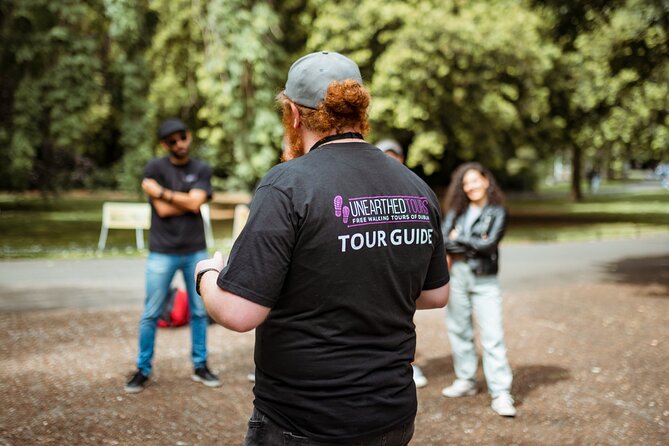
The walk begins at the Wolfe Tone sculpture at St Stephen’s Green. This is a handy meeting point in the central city, close to major streets and easy to combine with other sightseeing.
Theobald Wolfe Tone is an important figure in Irish political history, so the starting point is more than a place to gather. It gives the guide a natural way to introduce Ireland’s struggle for self-rule and the people connected with it. You begin with politics and memory before moving into the park.
At St Stephen’s Green, the pace slows for about 15 minutes. You walk through one of Dublin’s best-known public parks while the guide explains Irish history and culture. The park offers a welcome change from city streets, though the stop is an orientation rather than a long garden visit.
Do not expect a detailed botanical tour or much free time here. The point is to place the park in Dublin’s story and prepare you for the wider themes of the walk.
Grafton Street, Molly Malone, and everyday Dublin
Grafton Street gives you a look at one of Dublin’s busiest shopping streets. The stop lasts about 10 minutes, enough to discuss the street’s role in daily city life while you move through the center.
From there, the group visits the Molly Malone statue. This is one of Dublin’s most familiar public symbols, but the useful part of the stop is the wider discussion of working-class Dublin and the Molly Malone story. The statue is a quick photo stop, yet the social context gives it more meaning than a simple landmark checklist.
The route also includes a section on Irish dance and music. The exact location is not specified, so the timing may vary, but this part adds welcome balance to the political and religious subjects. Ireland’s culture is not presented only through monuments and conflict. You also get a sense of performance traditions and the role music plays in Irish identity.
Because the stops are short, you should listen closely and save detailed questions for moments when the group is gathered. This is a moving overview, not a series of long lectures.
St Patrick’s Cathedral and the origins of Dublin
At St Patrick’s Cathedral, the guide meets the group in the gardens and discusses the origins of Dublin. You do not enter the cathedral, and admission is not included.
That limitation matters if you want to see the interior. St Patrick’s is a major attraction in its own right, so you may want to return later with a separate ticket. On this walk, the focus is the setting, the cathedral’s place in Dublin’s development, and the broader story of how the city began.
The gardens provide a calmer place to hear this material than a crowded street corner. The stop is listed at about 10 minutes, so think of it as a concise introduction rather than a full architectural visit.
I like this approach for a first tour because it keeps the walking route moving. You learn why the site matters, then decide later if the interior deserves part of your own schedule.
More Walking Tours in Dublin
- Dublin Highlights and Hidden Gems Guided Walking Tour
★ 5.0 · 6,020 reviews - Dublin: Highlights and Hidden Gems Walking Tour
★ 4.9 · 2,140 reviews - 1916 Rebellion Walking Tour
★ 5.0 · 1,605 reviews - 90 Minute Dublin Walking tour and Sightseeing tips
★ 5.0 · 916 reviews
Dubh Linn Gardens and Dublin Castle

Dubh Linn Gardens is a short stop with a strong link to Dublin’s name and early history. The gardens are connected with the Viking period and offer one of the more picturesque pauses on the route.
The guide then takes you into the courtyards of Dublin Castle. You do not enter the state rooms or other interior areas, and admission is not included. Still, the courtyards allow you to see the complex at close range while hearing about power, administration, and Ireland’s political past.
The tour description also connects this stop with the history of Northern Ireland and the political struggles across the island. That is useful context, but it is a large subject for a short stop. If this part interests you, ask the guide for suggestions on places to explore later. The best guides on this walk are praised for explaining centuries of history in a clear, approachable way.
The castle is one of the places where outside commentary can be enough for a first visit, especially if you have limited time. If you want rooms, exhibitions, and a longer look, plan a separate visit.
Christ Church Cathedral and Viking Dublin
At Christ Church Cathedral, the tour stays in the courtyard and explains the cathedral’s founding and its connection with Viking Dublin. The exterior architecture gives you plenty to look at, but the cathedral interior is not part of the experience.
This stop works well beside Dubh Linn Gardens and Dublin Castle because the three sites show different layers of Dublin. You move from Viking-era roots to religious authority and then to political power. The walk does not isolate each building. It places them in a sequence.
The visit is about 10 minutes, so you will not have time for a detailed study of the structure or the cathedral’s displays. If you care about medieval architecture or church interiors, treat the stop as a preview and return on your own.
For most people, the benefit is learning why this part of Dublin matters. You are not simply photographing an old church. You are seeing one of the places where the city’s religious and Viking stories meet.
Temple Bar: a quick look rather than a long pub stop
The guide walks through the Temple Bar neighborhood for about five minutes. That is enough to introduce the district, but not enough for a full exploration of its pubs, lanes, shops, or evening atmosphere.
This short stop is a plus if you want to orient yourself without giving up too much tour time. Temple Bar is central and famous, but it can also be more expensive and crowded than other parts of Dublin. A brief guided pass lets you see where it is before deciding how much time to spend there.
Do not expect lunch or a pub visit to be included. Lunch is not part of the price, and the walk keeps moving toward the north side of the city.
O’Connell Street and the story of modern Ireland
O’Connell Street brings the tour into the political story of twentieth-century Ireland. The guide points out statues and discusses the country’s changing political life.
This is one of the most valuable sections if you want to understand Dublin beyond its postcard sights. Public monuments often carry layers of meaning, and a guide can explain the people and events represented there. The street also shows how Dublin uses its central public spaces to remember political figures and national struggles.
The subject can be emotionally and politically complex. The walk is not designed as a specialist course, but the guides are praised for making several centuries of history understandable without losing the human side. If you want to ask about independence, the Civil War, Northern Ireland, or modern Irish identity, this is a natural place to do it.
Trinity College, the Famine, and College Green
The final major stop is outside Trinity College and the Central Bank of Ireland. The guide discusses Trinity’s history and the Great Irish Hunger, also known as the Famine. You do not enter Trinity College, and admission is not included.
The ending at College Green is practical. You are close to Grafton Street and about a 15-minute walk from Tara or Pearse Station. That makes it easy to continue sightseeing, find food, or use public transport after the tour.
This final section also gives the walk a serious finish. The Famine is essential to understanding Ireland’s population, emigration, politics, and relationship with Britain. It is a weighty subject, and the short stop cannot cover every detail, but it gives you a starting point for further reading or museum visits.
The listed duration is about two hours and 30 minutes, while one part of the tour description refers to a three-hour history walk. I would allow up to three hours, especially if the guide takes questions or the group moves at a relaxed pace.
What the $27.82 price includes
At $27.82 per person, the main purchase is the guide’s time and interpretation. You are not paying for entry to Dublin’s major historic buildings, lunch, or transport.
That makes the price easy to judge. If you want an escorted introduction to the central city, it is a fair cost. The route covers enough ground and subjects to help you plan the rest of your visit. It may save you from spending the first day wandering without knowing which areas connect.
The value is lower if you want a series of paid interior visits included in one ticket. You will need to budget separately for St Patrick’s Cathedral, Dublin Castle, Christ Church Cathedral, or Trinity College if you decide to go inside.
The tour is offered in English and uses a mobile ticket. Confirmation arrives when you book. Free cancellation is available up to 24 hours before the start time, but changes or cancellations made inside that window are not refunded.
Who will get the most from this Dublin walk
I would recommend it most strongly to first-time visitors, solo travelers, couples, and anyone who wants history explained in plain language. It also suits people who enjoy asking questions and shaping a tour around a particular interest.
The experience may be especially useful for a short Dublin stay or a port day. One guide helped a guest plan the rest of the day, and the central finish gives you several ways to continue.
Families with older children may also find the route useful, provided everyone can manage a moderate amount of walking. Service animals are allowed, and the meeting area is near public transport.
You may want a different experience if you prefer long visits inside museums, a food-focused tour, or a very slow photography walk. This outing covers many places, but most stops last only 5 to 15 minutes.
My call: book it early in your Dublin visit
I would book DayTripper Dublin if you want a human introduction to the city before tackling individual attractions. The strongest reason to choose it is the guide-led connection between Viking Dublin, religion, Irish music, the Famine, independence, and modern politics.
Book it early, bring comfortable shoes, and keep the rest of that day flexible. Ask about food, music, and places to visit after the walk. At $27.82, it is a sensible buy for orientation and local context, as long as you understand that the famous buildings are viewed from outside.
FAQ
How long does the DayTripper Dublin walking tour last?
The experience is listed as approximately two hours and 30 minutes. One section describes it as a three-hour history walk, so allow some flexibility for questions and walking time.
Where does the tour start?
The meeting point is the Wolfe Tone sculpture at St Stephen’s Green in Dublin.
Where does the tour end?
The tour ends at College Green. It is about a two-minute walk from Grafton Street and around a 15-minute walk from Tara or Pearse Station.
Does the tour enter St Patrick’s Cathedral?
No. The guide meets the group in the gardens and discusses the cathedral and Dublin’s origins, but entry is not included.
Does the tour enter Dublin Castle?
No. The group visits the courtyards, but does not enter Dublin Castle. Admission is not included.
Does the tour enter Christ Church Cathedral or Trinity College?
No. The tour visits the courtyard outside Christ Church Cathedral and stops outside Trinity College. Admission to both is not included.
Is lunch included, and what language is the tour offered in?
Lunch is not included. The tour is offered in English and includes an in-person guide.
Just added around Dublin
- Women Of Ireland: Trailblazers & Pioneers★ 5.0 · 4 reviews
- Wicklow tour of Glendalough★ 4.5 · 8 reviews
- Full Day Private Wicklow Tour★ 5.0 · 12 reviews
- Wicklow Mountains & Glendalough Luxury Private Day Tour★ 5.0 · 23 reviews
- Premium Irish Whiskey Tasting Hosted by Local Dublin Expert★ 5.0 · 77 reviews
- Whiskey Tasting Tour of Dublin★ 5.0 · 117 reviews
- Dublin To Kilkenny Castle Waterford Crystal Private Car – Day Tour★ 5.0 · 8 reviews
- Historical Walking Tour of Dublin★ 5.0 · 50 reviews
City Tours, compared.

Cliffs of Moher, Burren & Galway City Day Tour
Read our review →
Dublin to Rock of Cashel, Cork City & Blarney Castle Guided Tour
Read our review →
City Sightseeing Dublin Hop-On Hop-Off Bus Tour
Read our review →
Go City: Dublin Pass | Save up to 50% – Includes 35+ Things To Do
Read our review →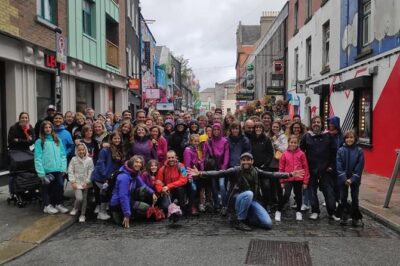

Aran Islands and Cliffs of Moher Day Cruise sailing from Galway City Docks
Read our review →Browse the lists this tour appears in