
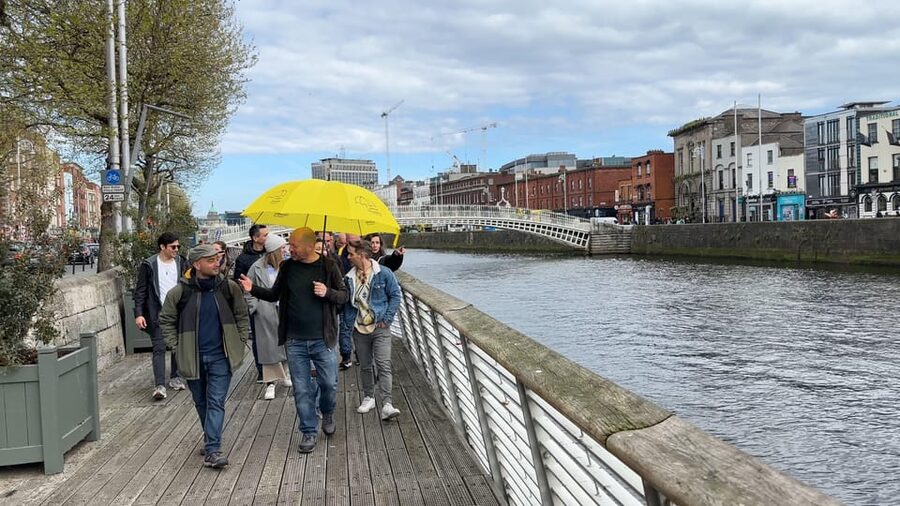
Reviewed · WALKING TOURS
Dublin: Bucket List Sights Walking Tour
Dublin’s story comes into focus on foot, from Viking boats at Christchurch to British rule at Dublin Castle and the modern Silicon Docks. This two-hour walking tour links the city’s biggest sights in a sensible route, ending outside Trinity College and the Book of Kells exhibition.
I like the way the tour joins famous landmarks with small historical connections, such as the Dubh Linn pool where the Vikings moored their longboats. I also like the guide’s personal approach. Peter adapts his English to your level, answers questions, and offers ideas for the rest of your stay.
The main drawback is that this is an overview walk, not a cathedral or castle admission tour. You see the exteriors and learn the stories, but you’ll need separate tickets and time if you want to go inside the major buildings.
Key points to know before booking
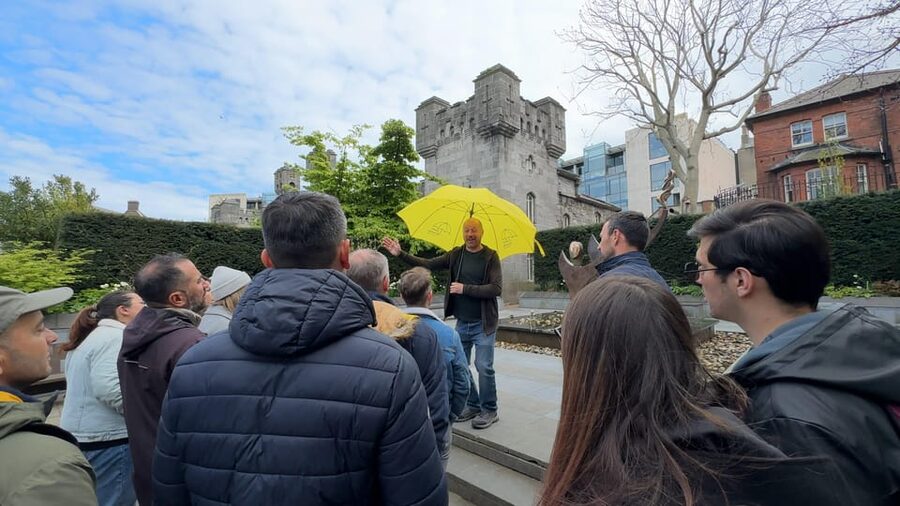
- The route connects Dublin’s essential sights: Christchurch Cathedral, St. Patrick’s Cathedral, Dublin Castle, Temple Bar, College Green, Molly Malone, and Trinity College.
- The historical arc is unusually broad: You move from Celtic settlement and Viking Dublin through Norman and English rule to independence in 1922 and the Silicon Docks.
- Peter is a particularly useful guide for many visitors: He adjusts his English and gives practical suggestions for the rest of your stay.
- The walk ends at Trinity College: This is handy if you want to visit the Book of Kells exhibition after the tour.
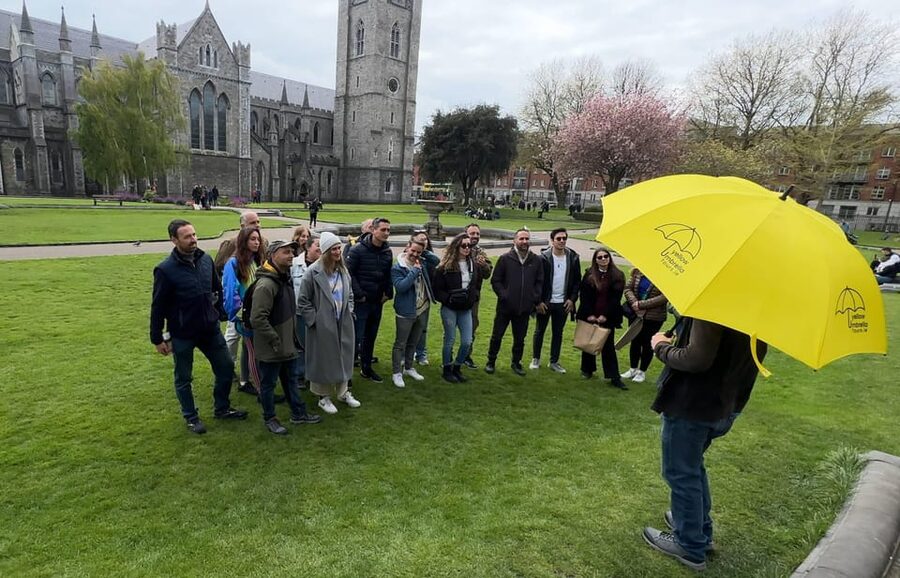
- The meeting point is easy to identify: Look for the yellow umbrella outside the Bull and Castle, across from Christchurch Cathedral.
- At $19 per person, the tour offers a low-cost first look: You pay for orientation, stories, and local guidance rather than entry tickets.
Starting at Christchurch Cathedral and Viking Dublin
Meet your guide across from Christchurch Cathedral, outside the Bull and Castle. Look for the yellow umbrella. This clear marker matters in the old center, where several historic buildings and narrow streets can make a first meeting point confusing.
Christchurch is the right place to begin. The cathedral’s story reaches back to Viking Dublin, when the first church was built in wood about a thousand years ago. The Normans later rebuilt it in stone, and the present building also carries the mark of a much later restoration funded by whiskey money from Henry Roe.
That mix of dates gives you a useful lesson in Dublin’s past. The city is not one preserved medieval set piece. It has been altered again and again by Celts, Christians, Vikings, Normans, English rulers, Irish independence, and modern industry.
You will spend part of the opening section looking at the cathedral rather than touring its interior. If you have already planned a paid visit inside, this walk helps you understand what you are seeing. If you expect cathedral entry to be included, you should know that it is not.
More Walking Tours in Dublin
- Dublin Highlights and Hidden Gems Guided Walking Tour
★ 5.0 · 6,020 reviews - Dublin: Highlights and Hidden Gems Walking Tour
★ 4.9 · 2,140 reviews - 1916 Rebellion Walking Tour
★ 5.0 · 1,605 reviews
St. Patrick’s Cathedral and the story of Jonathan Swift
The next major stop is St. Patrick’s Cathedral, named for Ireland’s beloved patron saint. The tour connects the building with the familiar story of Patrick banishing snakes from the island, then moves into more concrete Dublin history.
Jonathan Swift, author of Gulliver’s Travels, served as dean and is buried here. That gives the cathedral a strong literary link, not just a religious one. Sir Benjamin Lee Guinness helped fund a major restoration in the 1860s, another reminder that Dublin’s grand buildings often owe their present form to later money and rebuilding.
I like this stop because it gives you several ways into the city’s past. You get Irish legend, church history, literature, and nineteenth-century philanthropy in one place. A guide can also help you keep the long list of names and dates from becoming a blur.
Again, the emphasis is on the outside and the story. You will not receive admission to the cathedral as part of the $19 tour, so plan another visit if seeing Swift’s burial place or the interior is important to you.
Dubh Linn Garden and the old waterway
From St. Patrick’s, the walk continues toward Dubh Linn Garden and the Chester Beatty Library. The name Dublin comes from the dark pool associated with this area, and the tour places it in the setting of Viking arrival.
This is one of the more useful parts of the route because it connects a place name to the city’s physical beginnings. The Vikings did not arrive in an empty storybook town. They used the waterways and moored their longboats in the area about twelve hundred years ago.
The Chester Beatty Library is also pointed out here. The tour does not include a library visit, but its location gives you another good option for later in the day. You can note it as you pass rather than trying to find it from scratch.
Dublin Castle, from British government to Irish independence
At Dublin Castle, you move through the lower and upper courtyards and see a striking mix of medieval and Georgian architecture. The site served as the center of British government in Ireland for roughly 700 years.
That long period can be hard to grasp from a map or guidebook. On foot, the castle becomes part of a route through the old city, and the guide can explain why it mattered before Irish independence. In 1922, control passed to Michael Collins and the Irish Free State.
I like the castle section because it gives political history a clear setting. Christchurch shows layers of religious and urban change. Dublin Castle shows power, administration, and the transfer of government.
The tour’s wording points to both courtyards, but it does not promise a full interior visit. You should treat this as an orientation to the castle complex. If you want the full paid castle experience, check entry arrangements separately.
A few more Dublin half-days to weigh up
- Dublin to Cliffs of Moher, including Wild Atlantic Way and Galway
★ 5.0 · 23,331 reviews - From Dublin: Cliffs of Moher, Burren & Galway City Day Tour
★ 4.8 · 18,888 reviews - Dublin: Guinness Storehouse Entry Ticket
★ 4.6 · 16,863 reviews - Dublin to Cliffs of Moher, Burren, Wild Atlantic Way, Galway Tour
★ 5.0 · 12,924 reviews
Temple Bar beyond the pub signs
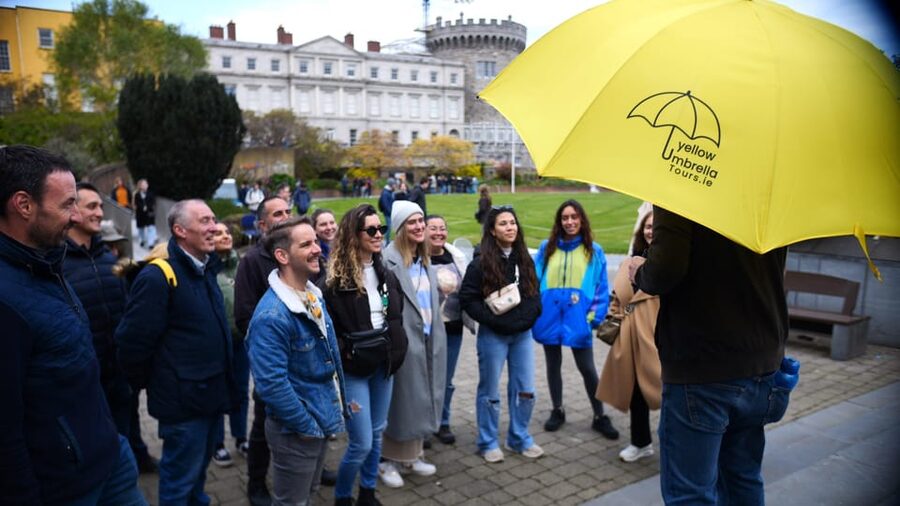
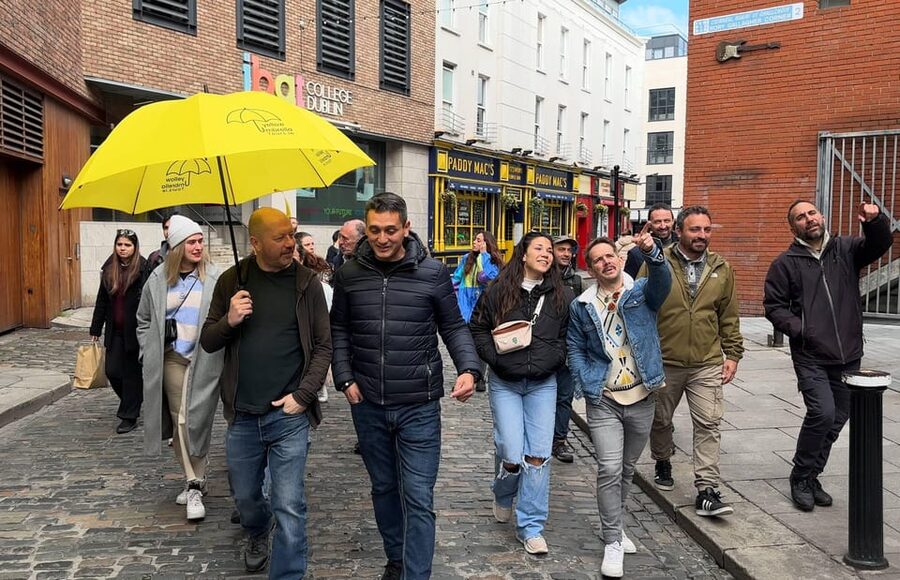
Temple Bar is Dublin’s most famous nightlife district, known for pubs, live music, and crowded streets. The walk places it in a longer story, dating the area’s older development to the Tudor Conquest in the sixteenth century.
That context is useful because Temple Bar can otherwise feel like a row of pub fronts designed only for an evening out. You will see the lively side, but the guide also places it within the old city. This makes the district easier to read as a historic quarter rather than simply a nightlife stop.
You should keep your expectations clear. This is a walking tour through Temple Bar, not a pub crawl and not a live music booking. You may get recommendations, especially if you ask, but drinks, food, and entertainment are not included.
Across the Liffey and over the Ha’Penny Bridge

The route crosses to the north side of the River Liffey for a view across Dublin’s past and present. The guide connects the original Celtic settlement from about 2,100 years ago with the modern Silicon Docks, shaped in part by American influence in the twenty-first century.
That wide time span is one of the tour’s strongest ideas. Dublin’s old center can make the city feel entirely medieval, but the city also has a modern business district and an international economy. The walk helps you see those periods as parts of one continuing story.
You then return across the iconic Ha’Penny Bridge and pass through Merchant’s Arch toward Crown Alley. The bridge is one of the walk’s most recognizable photo points, while the crossing also keeps the route moving instead of circling the same few streets.
At Central Plaza, the guide considers architect Sam Stephenson’s brutalist building. The stop adds a modern architectural note to a tour otherwise filled with churches, Georgian facades, castles, and historic pubs.
I appreciate this contrast. You do not have to like every building to benefit from looking at it closely. Central Plaza helps you notice how Dublin’s city center has been reshaped in recent decades.
College Green and the city’s Georgian power center

The walk continues to College Green, where you see some of Dublin’s finest neoclassical Georgian architecture. Banks and parliament buildings frame an area that once served as the center of government and finance.
The tour explains that this was a city that regarded itself as the second city of the Empire. That phrase opens a useful discussion about Dublin’s former political and economic position under British rule. It also helps explain why so many impressive formal buildings are packed into the old center.
This part should appeal to you if architecture interests you, even if you know little about Georgian design. You can compare the ordered facades and civic scale here with the medieval forms at the cathedrals and castle.
Because the tour moves through a busy central district, the guide’s commentary matters. You are not just being pointed toward attractive buildings. You are given a reason to understand why those buildings were placed there and what role they played.
Molly Malone and the final walk to Trinity College
Near St. Andrew’s Church, the tour pauses to say hello to Molly Malone, Dublin’s famous daughter. The statue is one of the city’s most familiar meeting points and a quick, cheerful stop on the way to College Green.
Molly Malone is also a good example of Dublin’s habit of mixing history, folklore, music, and civic identity. The stop is brief, but it adds a lighter note after the heavier subjects of conquest, government, religion, and independence.
The walk finishes outside Trinity College, home of the Book of Kells exhibition. This is a practical ending because you can continue with a paid visit if the illuminated manuscript is high on your list.
The tour does not include admission to the Book of Kells exhibition. Still, finishing at Trinity gives you a clear next step and puts you near one of Dublin’s major cultural attractions. You can also use the location to plan the rest of your afternoon.
What the $19 price really covers
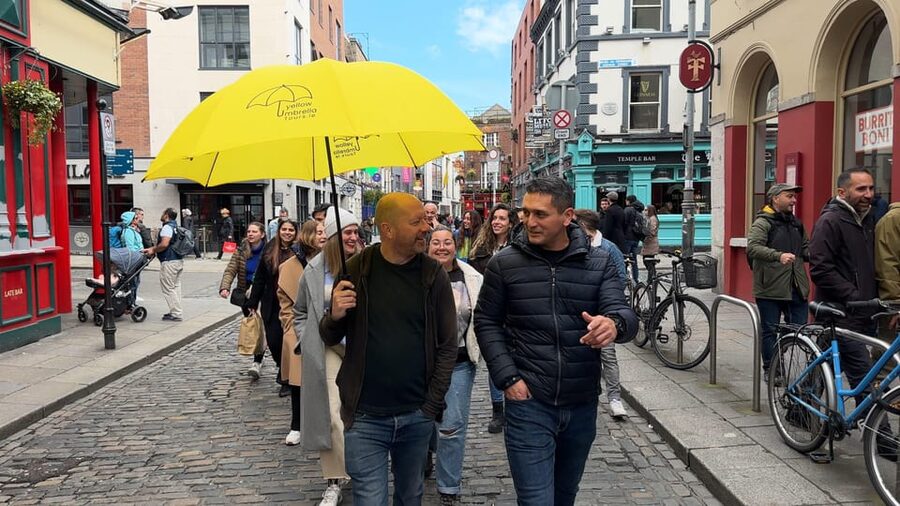
At $19 per person, this is priced as an affordable introduction rather than a full sightseeing package. You are paying for a local English-speaking guide, a planned route, historical explanation, and the chance to ask questions while you walk.
The value is strongest at the beginning of a Dublin stay. You can use the route to learn where the main sights are, then decide which interiors deserve your time and admission money. The guide’s recommendations can also help you shape the rest of your visit.
Peter’s approach is especially helpful if English is not your first language. He adjusts the tour to your level of English, and he has answered questions and offered practical ideas for what to do next. That personal attention can make a short tour far more useful than a standard speech delivered at every stop.
The tradeoff is that the price does not cover cathedral, castle, library, or Book of Kells entry. You will also be walking for two hours, with stops in streets and public areas rather than spending most of the time indoors.
Who will get the most from this walk
I would choose this tour if you want a first orientation to Dublin’s old center. The route covers the core sights without requiring you to organize them yourself, and its historical sequence gives you a framework for later visits.
It suits you particularly well if:
- You have only a short stay and want to see the main landmarks quickly.
- You enjoy history but prefer it explained in plain, manageable sections.
- You want a local guide who can answer questions and suggest what to do next.
- You are interested in the links between Viking, Norman, English, Irish, and modern Dublin.
- You want to finish near Trinity College and possibly continue to the Book of Kells exhibition.
- You need a wheelchair-accessible walking activity.
You may want something else if your priority is lengthy interior time at the cathedrals or Dublin Castle. You may also prefer a slower experience if you want to linger at every building, since the route covers a lot of ground in two hours.
Timing, meeting point, and booking details
The tour lasts two hours, with starting times depending on availability. It begins outside the Bull and Castle across from Christchurch Cathedral and ends back at the meeting point, according to the activity details.
The yellow umbrella is the key marker. I would arrive with enough time to find Christchurch Place and identify the guide before the group sets off.
The tour is offered in English and is wheelchair accessible. You can cancel up to 24 hours in advance for a full refund, and the reserve-now, pay-later option lets you hold a place without paying immediately.
These policies are useful if your Dublin schedule is still shifting. They do not change the basic nature of the experience: this is a guided city walk, with no listed transport, meals, or attraction admission.
My take on the Dublin Bucket List Sights Walk
I like this tour because it gives Dublin a clear human scale. You walk from church to castle, from pub district to bridge, and from old government buildings to Trinity College. Each stop adds another piece to the city’s story.
The strongest feature is the guide’s ability to connect history with the street in front of you. Peter’s flexibility with English and his willingness to answer questions make the experience more useful for many people than a fixed script would be.
The tour also earns its low price by covering a great deal in two hours. Just remember that seeing the sights does not mean entering every attraction. Think of the walk as your map, introduction, and decision-making tool for Dublin.
Book it if you want a friendly, affordable overview before exploring on your own. Skip it only if you already know the old center well or want a dedicated interior tour of the cathedrals, castle, or Book of Kells exhibition.
FAQ
How long does the Dublin Bucket List Sights Walking Tour last?
The tour lasts two hours. Starting times vary, so you need to check availability for the date you want.
Where does the tour begin?
Meet your guide across the road from Christchurch Cathedral, outside the Bull and Castle at Christchurch Place. Look for the yellow umbrella.
Where does the tour end?
The activity ends back at the meeting point.
Which language is the tour conducted in?
The live tour guide speaks English, and English is the listed tour language.
Is the tour wheelchair accessible?
Yes, the activity is listed as wheelchair accessible.
Does the price include entry to Christchurch Cathedral, St. Patrick’s Cathedral, Dublin Castle, or the Book of Kells exhibition?
No entry tickets are listed as included. The tour guides you past the main sights and finishes outside Trinity College, where the Book of Kells exhibition is located.
How much does the tour cost, and can I cancel?
The price is $19 per person. You can cancel up to 24 hours in advance for a full refund, and you can reserve now and pay later.
Just added around Dublin
- Women Of Ireland: Trailblazers & Pioneers★ 5.0 · 4 reviews
- Wicklow tour of Glendalough★ 4.5 · 8 reviews
- Full Day Private Wicklow Tour★ 5.0 · 12 reviews
- Wicklow Mountains & Glendalough Luxury Private Day Tour★ 5.0 · 23 reviews
- Premium Irish Whiskey Tasting Hosted by Local Dublin Expert★ 5.0 · 77 reviews
- Whiskey Tasting Tour of Dublin★ 5.0 · 117 reviews
- Dublin To Kilkenny Castle Waterford Crystal Private Car – Day Tour★ 5.0 · 8 reviews
- Historical Walking Tour of Dublin★ 5.0 · 50 reviews
Walking Tours, compared.
Dublin Highlights and Hidden Gems Guided Walking Tour
Read our review →

90 Minute Dublin Walking tour and Sightseeing tips
Read our review →

Historical 2-Hour Guided Walking Tour of Dublin
Read our review →
Dublin Traditional Irish 3 Course Meal Walking Tour with Local
Read our review →
Browse the lists this tour appears in