
Reviewed · HISTORICAL TOURS
Dublin: Macabre History Walking Tour
Dublin’s darker past is tucked into ordinary streets, beside old walls, the river, the mortuary, and a cathedral. This two-hour walk brings those places into focus with stories of mummified corpses, public executions, grave robbers, and man-eating rats, along with the doomed warrior Cuchulainn and a notorious brothel keeper.
I like the way the tour reaches parts of the old city you could easily pass without a second look. I also like its storytelling style: guides Peter and Rob use humor, drama, and clear explanations rather than simply reciting dates. The main consideration is tone. This is for adults who enjoy grim tales, and one attendee felt it could have been even darker and bloodier.
Key things to know
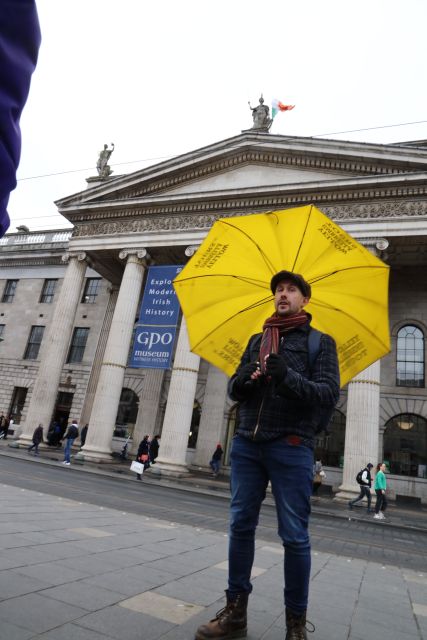
- The meeting point is easy to spot: Find the Spire, the big needle in the centre of O’Connell Street, then look for a yellow umbrella.
- The route covers both sides of the river: You walk through the old city centre and along riverside areas before returning to the meeting point.
- The stories range from myth to crime: Cuchulainn’s death, medieval quarantines, grave robbing, mummified bodies, executions, and a 19th-century serial killer all feature.
- Peter and Rob are the guides most often named: Both are praised for lively delivery, local tips, humor, and a willingness to answer questions.
- The group can feel personal: Some departures have had only three people, creating a private-tour feel without a private-tour price.
- It is an adult experience: Children under 18 are not permitted, and the walk is delivered in English.
Why Dublin’s ordinary streets make good macabre scenery
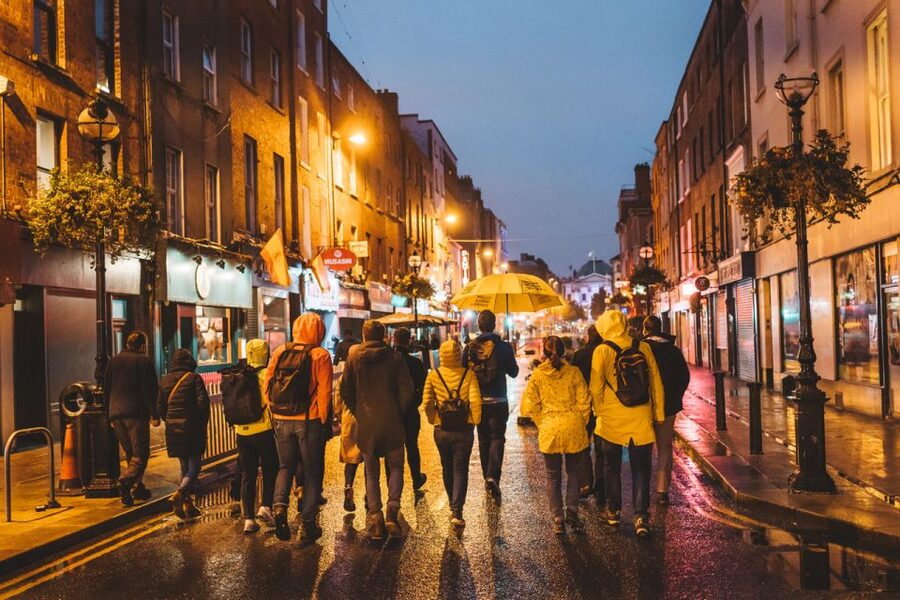
The clever idea behind this tour is that it does not depend on a haunted house, theatrical costumes, or staged scares. Instead, it uses the old city centre itself. You walk through streets and lanes that may look routine at first, then hear what once happened there.
That approach suits Dublin. The city’s past includes mythology, disease, punishment, death, crime, religion, and folklore, and the tour ties those threads to specific places. The result is less a ghost attraction and more a walking lesson with a grim sense of humor.
You should not expect every tale to be presented as hard, settled fact. The guides appear comfortable mixing documented events, old stories, and what one attendee called probably-fact and definitely-fun information. That is part of the charm, but it also means you should listen for the difference between legend and history.
The rating is 4.9 from 95 reviews, and the strongest praise centers on the guides rather than on special effects. Peter is repeatedly described as passionate, expressive, and easy to follow. Rob is praised for his humor and personal manner. If you enjoy a guide who acts out a story and makes room for questions, this format should suit you.
More Historical Tours in Dublin
- Dublin Historical Centre Food Tour with 8 Food Tastings & Drinks
★ 5.0 · 1,718 reviews - 2-Hour Historical Walking Tour from Dublin
★ 5.0 · 875 reviews - Historical 2-Hour Guided Walking Tour of Dublin
★ 4.7 · 865 reviews
Starting beneath the Spire on O’Connell Street
The walk begins beside the Spire, the tall needle in the middle of O’Connell Street. That is a useful meeting point because the landmark is hard to miss, though the instructions are still worth reading carefully: look for the yellow umbrella.
One person noted that more than one yellow umbrella may be around, so check that you have found the correct guide before setting off. The activity does not provide hotel pickup, so you need to make your own way to O’Connell Street.
Starting here places you in the middle of modern Dublin before the tour shifts toward lesser-known corners of the old city. That contrast is useful. You do not begin in an isolated attraction built to look old. You begin in a working part of the capital and then learn how much death and drama sits beneath its everyday appearance.
The tour lasts two hours and finishes back at the meeting point. That makes it easy to fit into a day of sightseeing, especially if you want an introduction to Dublin before visiting museums, churches, or historic buildings on your own.
Cuchulainn, ravens, and the oldest layer of the tour
One early story concerns Cuchulainn, the mighty warrior of Irish mythology. His death is described in vivid terms: the raven on his shoulder pecks out his eyes.
This gives the walk a strong opening idea. Dublin’s macabre past is not limited to recent murders or grim city institutions. It reaches back into Ireland’s legendary world, where heroic figures meet violent ends and stories survive through generations.
You can expect the guide to tell this part as a performance, not as a dry mythology lecture. Peter, in particular, is praised for acting out stories and using drama to keep the group involved. That style helps if you are new to Irish legends, since the names and story lines can otherwise feel hard to place.
The Cuchulainn tale also shows why this is not simply a murder walk. The subject is death, but the route covers several periods and kinds of storytelling. Myth, religious custom, public punishment, medicine, crime, and folklore all have a place.
Along the river and through lesser-known city streets
The route explores both sides of the River Liffey and includes a riverside stretch. The supplied details do not give a fixed list of every street, so you should think of this as a guided ramble rather than a tightly scripted attraction with a public stop-by-stop map.
That is a plus if you like being shown places you might otherwise overlook. Several people valued the way the guides pointed out locations that seemed ordinary until the story behind them was explained. The tour’s appeal rests on this change in perspective: a wall, lane, corner, or riverside spot becomes meaningful once you know what happened there.
It is also a practical way to get a feel for central Dublin on foot. You are not sitting on a bus behind glass. You cross the city at walking pace and get the chance to ask about the places, customs, and stories that come up.
The tradeoff is that a walking tour depends on the conditions of the day. The activity description does not promise indoor shelter, and the route moves through public streets. Wear shoes you can walk in and dress for Dublin’s changeable weather. That is ordinary city-walking advice, but it matters more when the entire experience lasts two hours outdoors.
More Walking Tours in Dublin
- Dublin Highlights and Hidden Gems Guided Walking Tour
★ 5.0 · 6,020 reviews - Dublin: Highlights and Hidden Gems Walking Tour
★ 4.9 · 2,140 reviews - 1916 Rebellion Walking Tour
★ 5.0 · 1,605 reviews - 90 Minute Dublin Walking tour and Sightseeing tips
★ 5.0 · 916 reviews
Medieval quarantines and the fear of disease
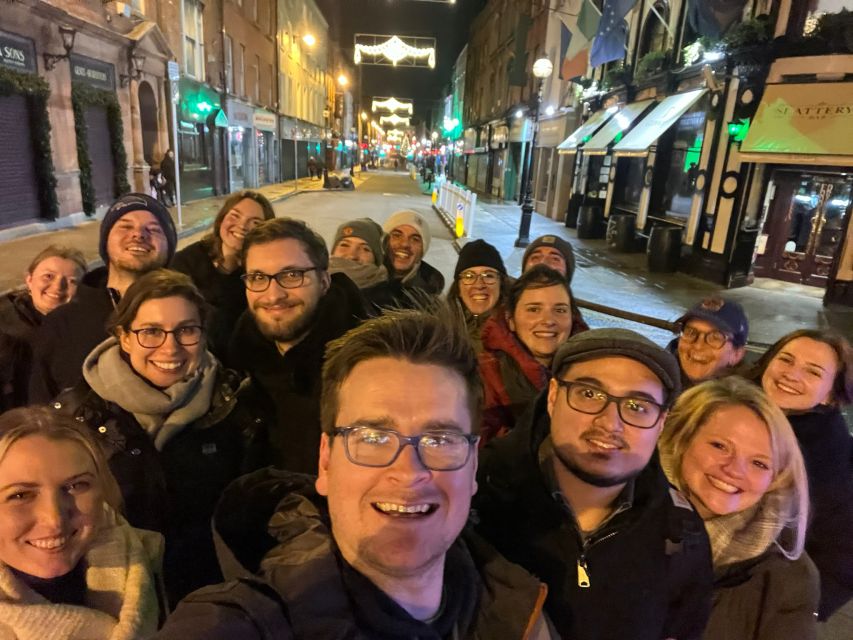
The tour includes medieval quarantines, adding a public-health chapter to the usual stories of murder and execution. This part should appeal to you if you prefer macabre history that explains how people lived, feared, and tried to control danger.
Quarantine stories can make the past feel less distant. They show that death was not only the result of a duel, crime, or punishment. Disease could reshape streets and communities, and attempts to contain it could be frightening in their own right.
The details provided do not name a particular quarantine site or explain the exact measures discussed, so the guide’s presentation will determine how much context you receive. Still, this subject broadens the tour beyond sensational tales and gives the route a social-history angle.
That balance is important. If you want nothing but grisly murder stories, the disease and mythology sections may feel less direct. If you want to understand why the old city developed the way it did, they add useful texture without turning the walk into a formal academic lecture.
Grave robbers beside the city mortuary
One of the most striking stops concerns the 19th-century business of grave robbing beside the city mortuary. This is the kind of detail that makes the tour worthwhile for me because it links a gruesome act to an actual urban trade.
The story is not presented simply as a shocking anecdote. It raises practical questions about the period: who wanted the bodies, how the trade operated, and why a mortuary could become part of the setting. Those questions connect crime to medicine, poverty, and the way cities handled the dead.
You should expect this section to be unpleasant in subject but useful in context. It is one of the stronger examples of the tour’s method: take a place near the old city walls, explain its connection to death, then show how that story fits into Dublin’s wider past.
The tour does not include entry to a mortuary or any interior attraction. It is a street-based account told by the guide, so its impact comes from narration and location rather than from displays or preserved remains.
Mummified corpses near the old city walls
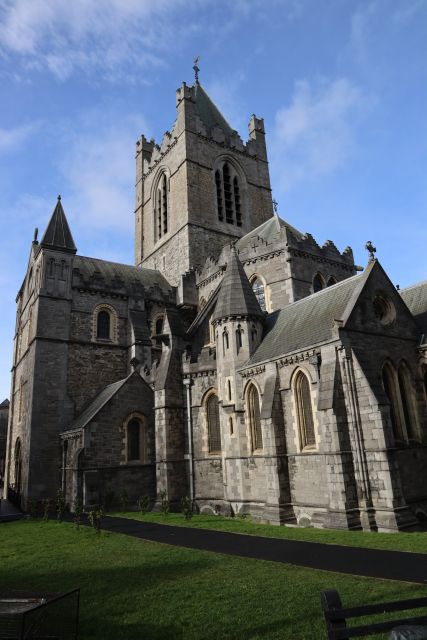
Near the old city walls, the walk turns to mummified corpses. This is another stop where the setting does much of the work. You are not being led to a generic haunted venue. You are hearing about bodies connected with Dublin’s old religious and civic spaces.
The word mummified may suggest an exotic museum display, but here it is part of the city’s own death lore. The guide explains the story in place, allowing you to connect the tale with the streets around you.
This is also where Peter’s style seems especially well matched to the material. People repeatedly praise his ability to tell a story with feeling while slowing down or rephrasing when someone needs more explanation. That matters in a group with different levels of English or different knowledge of Irish history.
Rob’s approach is described as humorous and personable, too. Both styles can make difficult material easier to absorb, though the humor may not suit everyone. The tour deals in corpses, killers, executions, and disease, but it is not meant to be relentlessly grim.
The legless serial killer and Dublin’s criminal past
The legless serial killer is one of the tour’s most unusual promised stories. Even before the details are told, the subject has the strange, memorable quality that makes a walking tour anecdote stick in your mind.
The important point is not just the oddity of the character. This stop shows how the experience uses crime stories to reveal lesser-known parts of Dublin. Instead of focusing only on famous landmarks, the guide builds a picture of the city through people and incidents that are unlikely to appear on a standard sightseeing route.
You may find this section more entertaining than historically weighty, depending on how the guide frames it. That is not a flaw, provided you come expecting storytelling rather than a formal criminal-history seminar.
I would especially recommend this tour to solo visitors and couples who like conversation. Small groups have made the walk feel almost private, and the guides are described as happy to answer questions about Irish history and everyday life. A solo visitor can join without needing a large party to make the experience work.
Public executions, rats, and the city’s hardest stories
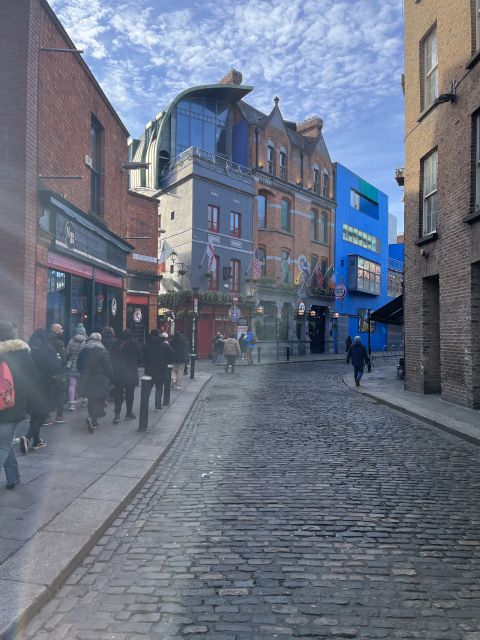
Public executions and man-eating rats bring the walk into its most sensational territory. These subjects are designed to catch your attention, but they also show how public spaces once served very different purposes from those they have today.
An execution story can change the way you see a square or street. The place may now be used for shopping, commuting, or meeting friends, yet the guide’s account reminds you that earlier Dubliners gathered there for punishment and spectacle.
The man-eating rat story is more folkloric in feel. It is an example of the tour’s willingness to include the strange and possibly exaggerated alongside the documented. If you enjoy the line between urban legend and historical record, you will likely have fun with it. If you want every detail footnoted, ask the guide how certain each part is.
The tour is not aimed at young children. Anyone under 18 is excluded, and that makes sense given the subjects. Adults who like dark humor and unsettling stories should be comfortable, but sensitive listeners may want to choose a more conventional city walk.
The brothel keeper’s final chapter beside the cathedral
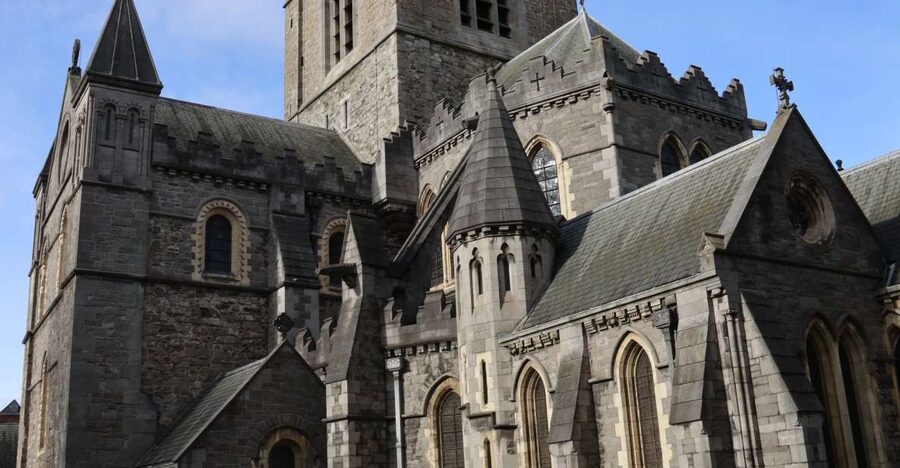
The final section takes place beside the cathedral and concerns Dublin’s most famous brothel keeper, who met an untimely death by fire at the stake. It is a dramatic way to close the route, combining crime, gender, public punishment, and religious surroundings.
This ending gives the tour a clear narrative shape. You start with an ancient warrior, move through disease, death, grave robbing, criminal stories, and public executions, then finish with a notorious figure whose life ended in spectacular fashion.
The details supplied do not name the cathedral or the brothel keeper, so do not book this expecting a full biographical profile in advance. The point is the location-based story and the way it completes the walk through Dublin’s darker traditions.
Ending back at the Spire is convenient. You are not left in an unfamiliar part of the city after hearing two hours of grim tales. You can continue exploring central Dublin, stop for food, or use the walk as a route-planning introduction to the city.
What the $19 price buys you
At $19 per person, this is a reasonable price for a two-hour guided city walk. You are paying for a live guide, a planned route, local storytelling, and access to details you may not notice on your own. There is no hotel transport, admission ticket, or performance production included, but none is needed for this format.
The value is strongest if you want specific stories tied to real streets. A general orientation walk may give you a broad view of Dublin, while this tour gives you a distinct theme and a reason to explore less obvious areas.
Small groups improve the value. Several departures have had only three people, and that can create the feel of a private walk while keeping the listed price modest. Group size can vary, so you should not assume every departure will be that intimate.
Free cancellation up to 24 hours before the start and the option to reserve now and pay later add useful flexibility. Wheelchair access is listed, though the provided details do not explain the exact street surfaces or any route adjustments, so you may want to confirm those points before booking.
Is this the right Dublin walking tour for you?
Book this if you like city history with a dark edge, informal storytelling, and places that do not appear on the usual sightseeing circuit. It is particularly well suited to adults, solo visitors, couples, and small groups who want to ask questions and hear local stories rather than follow a museum-style lecture.
Peter and Rob are the names most often associated with the tour, and the strongest praise is for their energy, clarity, humor, and storytelling. Peter is especially noted for passion and expressive delivery, while Rob is praised for his friendly manner and comic timing.
Skip it if you want a strictly factual, blood-soaked tour with no myths or playful exaggeration. One person found the walk excellent but wished it were more macabre. The content is certainly grim, but the atmosphere is lively and sometimes funny rather than frightening.
For $19, I think it is a good use of two hours in Dublin, especially early in your stay. You will get a walk through the old centre, a set of unusual stories, and a better sense of how much city history can hide behind an ordinary street corner.
FAQ
Where does the Dublin Macabre History Walking Tour start?
It starts beside the Spire, the big needle in the middle of O’Connell Street in Dublin.
How do I find the guide?
Look for the yellow umbrella beside the Spire. Since more than one yellow umbrella may be present, confirm that you have found the correct tour guide.
Where does the tour finish?
The walk ends back at the meeting point beside the Spire.
How long does the tour last?
The tour lasts two hours. Starting times vary, so check availability when you book.
What language is the tour in?
The live tour guide speaks English, and English is the listed tour language.
Is the tour suitable for children?
No. The activity is not suitable for children under 18.
Is the walking tour wheelchair accessible?
Yes, the activity is listed as wheelchair accessible.
Can I cancel the booking?
You can cancel up to 24 hours before the tour for a full refund. You can also reserve now and pay later.
Just added around Dublin
- Women Of Ireland: Trailblazers & Pioneers★ 5.0 · 4 reviews
- Full Day Private Wicklow Tour★ 5.0 · 12 reviews
- Wicklow Mountains & Glendalough Luxury Private Day Tour★ 5.0 · 23 reviews
- Wicklow tour of Glendalough★ 4.5 · 8 reviews
- Premium Irish Whiskey Tasting Hosted by Local Dublin Expert★ 5.0 · 77 reviews
- Whiskey Tasting Tour of Dublin★ 5.0 · 117 reviews
- Dublin To Kilkenny Castle Waterford Crystal Private Car – Day Tour★ 5.0 · 8 reviews
- Historical Walking Tour of Dublin★ 5.0 · 50 reviews
Historical Tours, compared.

Dublin Historical Centre Food Tour with 8 Food Tastings & Drinks
Read our review →
Historical 2-Hour Guided Walking Tour of Dublin
Read our review →
Dublin to Cork, Blarney Castle & Cóbh Heritage Centre by train
Read our review →
Jeanie Johnston Tall Ship Irish Famine History Tour
Read our review →

Deliciously Dublin: The Artisan Donut Walking & History Tour
Read our review →Browse the lists this tour appears in