
Reviewed · WALKING TOURS
Vikings In Dublin (Walking Tour)
Dublin’s Viking story comes alive best on foot, where old streets, cathedral walls, and buried foundations help explain how Norse settlers shaped the city. I like that this 1.5-hour walking tour links several central sights instead of treating Viking Dublin as a single museum display, and I like its clear focus on daily life, customs, and influence rather than simple warrior tales.
The French-speaking guide brings a thoughtful tone to the subject, with clear explanations, useful answers to questions, and lively anecdotes. A possible drawback is that French is the only listed tour language, and the meeting information is slightly unclear about the final stop, so confirm the end point before booking.
Key points at a glance

- Starts beside a Viking longboat sculpture: Meet at Báite, Viking Longboat (1988), by Betty Newman Maguire.
- Covers several central landmarks: The route includes Christ Church Cathedral, Saint Audoen’s, Fishamble Street, Dublin Castle, and Trinity College.
- Looks beyond the warrior image: You hear about Norse customs, society, daily life, and the wider influence of the Viking period.
- Includes a lesser-known stop: One part of the walk is kept as a secret stop, adding some variety to the better-known sights.
- Led in French: This is the right fit if you want a French-language explanation of Dublin’s early Norse story.
- Costs $45 for 1.5 hours: The price makes most sense if you value a focused guide and historical context more than a long sightseeing walk.
Why Viking Dublin works best as a walking story
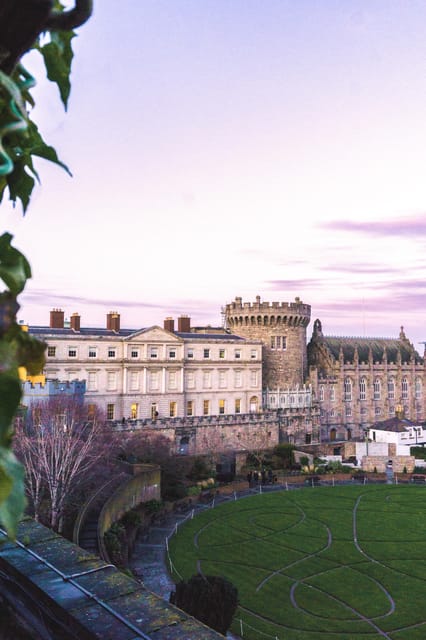
The Vikings did not leave Dublin as a single, neatly marked attraction. Their story is spread through streets, church sites, old settlement areas, and layers beneath the modern city.
That makes a guided walk useful. You are not only looking at buildings. You are being shown how separate places connect to the period when Norse sailors came along the River Liffey, settled, traded, and helped form the city known as Dubh Linn.
I like this approach because the tour gives you a city-wide frame in a short time. You move from a modern sculpture to medieval religious sites, then through streets tied to Dublin’s foundations and on toward Dublin Castle and Trinity College.
The route also promises a more balanced picture of the Vikings. The period is often reduced to raids and violence, but the guide presents their culture, customs, motives, and effect on Ireland. That distinction matters. You get a sense of a society, not just a parade of barbarian stereotypes.
The walk lasts 90 minutes, so expect a brisk historical introduction rather than an exhaustive study. You will not cover every Viking site in Dublin, but you should come away with a clearer sense of where Norse Dublin fits into the city you see today.
More Walking Tours in Dublin
- Dublin Highlights and Hidden Gems Guided Walking Tour
★ 5.0 · 6,020 reviews - Dublin: Highlights and Hidden Gems Walking Tour
★ 4.9 · 2,140 reviews - 1916 Rebellion Walking Tour
★ 5.0 · 1,605 reviews
Meeting the longboat at Báite
The tour begins beside Báite, Viking Longboat (1988), a sculpture by Betty Newman Maguire. It is a fitting meeting point. Before you hear about ancient ships, you meet a modern artistic reminder of the vessels that brought Norse sailors to Ireland.
This opening also gives the guide a natural way to set the scene. The tour can move from the image of a longboat to the practical realities of settlement, trade, belief, and city life.
For you, the meeting point should be easy to identify by name, but allow enough time to find the sculpture before the start. The supplied details do not give a street address or a precise meeting time. Starting times vary, so you need to check availability when choosing a date.
The sculpture is more than a place to gather. It helps establish the central idea of the walk: Dublin’s Viking past is tied to movement on the water, followed by permanent life on land.
Christ Church Cathedral and the shape of early Dublin
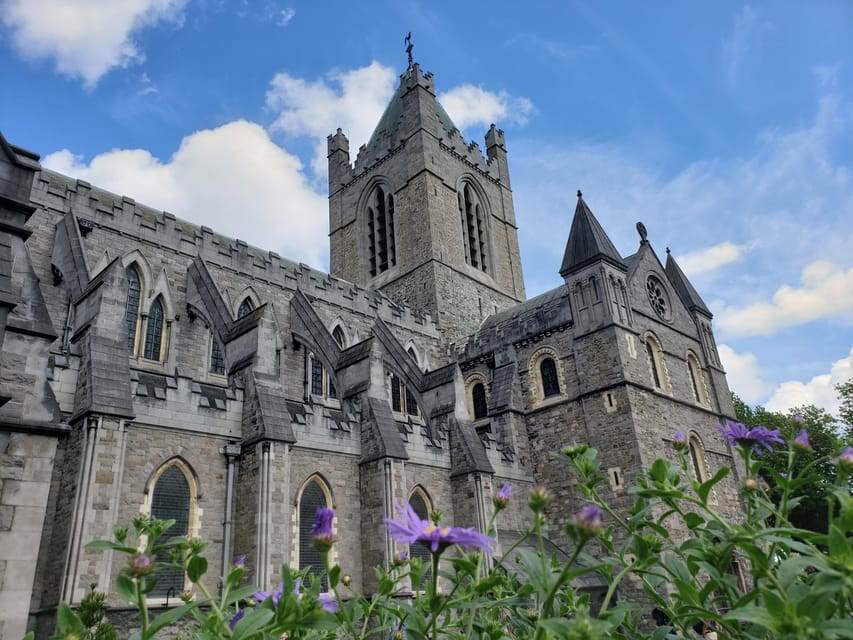
Christ Church Cathedral is one of the major stops, and it gives the tour a strong visual anchor. Its imposing presence helps show how religious and political power later took form in the same central part of Dublin where earlier communities lived and worked.
The guide uses the cathedral to explain the period rather than simply point out its exterior. You should expect historical context about Dublin at the time of the Vikings and an explanation of how the city’s Norse influence relates to the surrounding religious sites.
This stop is especially helpful if you are new to Dublin. The city’s early story can feel scattered when you explore alone. A guide can connect the cathedral to nearby streets and sites, giving you a better sense of how the old settlement developed.
The cathedral is also a reminder that Dublin’s story did not stop with the Vikings. Different eras overlap here. You are looking at a later landmark while hearing about earlier foundations, changing beliefs, and the long effects of Norse settlement.
The tour includes a guided visit around the site, but the supplied details do not say that cathedral admission is included. If entering the cathedral is important to you, check exactly what the walking tour covers before booking. The safest expectation is a guided historical stop connected with Christ Church Cathedral, not an assumed ticketed interior visit.
Saint Audoen’s and the religious side of the city
Saint Audoen’s adds another religious landmark to the route. In a Viking-focused walk, this stop helps widen the story beyond ships and markets.
The guide can use the church area to explain how Norse life fitted into a city where religious communities and secular settlement existed side by side. The tour’s focus on traditions and customs makes this an important part of the route, since beliefs and religious practice shaped how people understood their world.
I appreciate the inclusion of Saint Audoen’s because it gives the walk more texture. You are not being rushed from one famous name to another. The route uses several places to build a picture of how Dublin changed over time.
Still, this is a 90-minute tour with many stops. You should expect concise explanations rather than a long architectural study of Saint Audoen’s. If your main interest is church design, this will likely feel like a supporting stop. If you want to understand Viking Dublin as a living community, it earns its place.
A few more Dublin half-days to weigh up
- Dublin to Cliffs of Moher, including Wild Atlantic Way and Galway
★ 5.0 · 23,331 reviews - From Dublin: Cliffs of Moher, Burren & Galway City Day Tour
★ 4.8 · 18,888 reviews - Dublin: Guinness Storehouse Entry Ticket
★ 4.6 · 16,863 reviews - Dublin to Cliffs of Moher, Burren, Wild Atlantic Way, Galway Tour
★ 5.0 · 12,924 reviews
Fishamble Street and the city’s working life

Fishamble Street brings the story down to street level. This is where the tour can move away from major religious buildings and focus on the ordinary workings of the settlement.
The route description connects this area with ancient paths, dock activity, and markets. That makes Fishamble Street one of the most useful places for picturing Dublin as a practical town, not just a name in a history book.
You can expect the guide to explain how Norse settlers used the city, how trade affected its growth, and how markets helped turn a settlement into an urban center. This is also where anecdotes can make a difference. A short story about customs, goods, or everyday habits can help you imagine the people behind the dates.
The guide’s style is reported to be clear and concise, with answers that handle the complexities of the period instead of flattening them. That suits Fishamble Street well. The value here lies in interpretation, not in a dramatic monument.
Do not expect a preserved Viking market to appear in front of you. Modern Dublin surrounds these places. The reward comes from learning how to read the street as part of a much older city.
Dublin Castle and changing power
Dublin Castle adds a later layer to the walk. It is not presented as a Viking building, but its place on the route helps show how control of Dublin shifted across different periods.
A good guide can use the castle to explain continuity and change. Norse settlement, religious foundations, outside rule, and later government all belong to the city’s long story. Seeing these sites together helps you understand that Viking Dublin was an early chapter, not an isolated episode.
This stop also gives the route a useful contrast. Fishamble Street suggests trade and daily activity. Dublin Castle points toward formal authority and administration. The connection helps you think about how a town grows from settlement into a center of power.
The information provided does not specify an interior visit or castle admission. Plan on a guided historical stop at or around Dublin Castle unless the booking details clearly say otherwise.
The secret stop and lesser-known details
One stop is described only as a secret stop, followed by a separate lesser-known point later in the walk. That wording leaves the exact locations open, but it suggests the guide adds material beyond the obvious headline sights.
This can be one of the most appealing parts of a guided walk. You may find details that are easy to miss when you follow a standard sightseeing route, especially around old foundations and less visible traces of Dublin’s early settlement.
At the same time, you cannot judge the exact content in advance because the location is not named. I would treat it as an extra layer of discovery rather than the main reason to book.
The important point is that the route is not only Christ Church, Dublin Castle, and a few quick dates. It includes space for smaller stories and places that help explain how the Viking period still appears in Dublin’s foundations.
Finishing near Trinity College
The named finish is Trinity College, which gives you a central place to continue your day. You can use the end of the walk to explore more of central Dublin, plan lunch, or connect with another activity.
There is a small practical issue here. The meeting information also says the activity ends back at the meeting point, while the route details name Trinity College as the finish. Those two statements do not fully match.
I would confirm the final location before you set up transport or book another timed attraction. The difference may be minor, but it matters if you need to be somewhere immediately afterward.
Ending near Trinity College also gives the tour a sense of chronological movement. You begin with a direct symbol of the Viking age and finish in one of Dublin’s best-known later institutions. The city around you becomes the connecting thread.
What $45 buys you in 90 minutes
At $45 per person, this is not the cheapest way to take a walk through central Dublin. The value depends on what you want from the outing.
If you simply want to see the outside of several landmarks, you can walk between many of them yourself for free. In that case, the price may feel high for 90 minutes.
If you want a French-speaking guide to explain the Viking period, answer questions, and connect scattered sites into one story, the cost is easier to justify. The guide’s ability to explain Norse society in a balanced way is a key part of what you are paying for.
The short duration is both strength and limit. You can fit the walk into a busy Dublin schedule, and it should not consume half a day. On the other hand, the number of stops means each explanation must stay focused.
I would choose this tour early in a Dublin visit if you want a historical orientation. You can then return to Christ Church, Fishamble Street, or another site with better context. It is less useful if you already have a strong grasp of Dublin’s Viking period and prefer long, detailed visits at individual landmarks.
The booking terms add some flexibility. You can cancel up to 24 hours ahead for a full refund, and you can reserve now and pay later. The tour is listed as wheelchair accessible, which broadens its appeal, though you should still confirm the route details if you have specific mobility needs.
The French-language guide makes the difference
The tour is conducted in French, and that is the most important language detail to weigh before paying. If French is comfortable for you, the format should make the historical material easier to follow and discuss.
The guide is described as friendly and well-read, with a strong grasp of the subject. Explanations are clear rather than overloaded with dates, and questions receive relevant answers. Anecdotes add life without turning the walk into a string of disconnected stories.
One particularly useful quality is flexibility. The guide adapted the pace for a partner with a minor health problem. That does not guarantee a custom route for every need, but it suggests a considerate approach when someone in your group needs a little help.
No individual guide name is provided, so you cannot request a named guide from the information available. The tour is operated by MP Tour Guiding.
Who should book this Dublin walk
I would recommend it to you if you want:
- A short introduction to Dublin’s Viking period
- A French-language walking tour
- A balanced account of Norse culture and influence
- A central route linking major historic places
- A guide who can answer questions instead of reciting a script
- A compact activity that fits into a full day of sightseeing
Families and mixed-interest groups may also find the format useful because the route connects famous sights with stories about customs and daily life. The 90-minute length is easier to manage than a much longer history walk.
I would hesitate if you need an English-language tour, want guaranteed interior access to Christ Church Cathedral or Dublin Castle, or prefer a detailed archaeological tour with long stops at each site.
You should also check the start and end details carefully. The meeting point is the Viking longboat sculpture, but the finish is described both as Trinity College and as the original meeting point. That is easy to clarify before you go.
Should you book Vikings In Dublin?
Book this walk if you want Dublin’s Viking story explained in French, with a route that connects the longboat sculpture, Christ Church Cathedral, Saint Audoen’s, Fishamble Street, Dublin Castle, and Trinity College.
The strongest reason to choose it is the guide’s thoughtful treatment of the subject. You get more than raids and helmets. You get an account of customs, motives, society, trade, and the lasting effect of Norse settlement.
At $45, the tour is best value for someone who wants interpretation and conversation. It is not the right pick for a self-guided stroll or a full archaeological survey. Confirm the final meeting point, check what site access is included, and book if the French-language format suits you.
FAQ
Where does the Vikings In Dublin walking tour start?
The tour starts at Báite, Viking Longboat (1988), by Betty Newman Maguire.
Where does the tour finish?
The route names Trinity College as the finish, while the activity information also says it ends back at the meeting point. Confirm the final location before booking another timed activity.
How long does the tour last?
The walking tour lasts 1.5 hours.
What language is the tour conducted in?
The live guided tour is conducted in French. French is the only language listed for the activity.
Is the tour wheelchair accessible?
Yes. The activity is listed as wheelchair accessible.
Can I cancel the booking?
Yes. You can cancel up to 24 hours in advance for a full refund. You can also reserve now and pay later.
Just added around Dublin
- Women Of Ireland: Trailblazers & Pioneers★ 5.0 · 4 reviews
- Wicklow Mountains & Glendalough Luxury Private Day Tour★ 5.0 · 23 reviews
- Wicklow tour of Glendalough★ 4.5 · 8 reviews
- Full Day Private Wicklow Tour★ 5.0 · 12 reviews
- Premium Irish Whiskey Tasting Hosted by Local Dublin Expert★ 5.0 · 77 reviews
- Whiskey Tasting Tour of Dublin★ 5.0 · 117 reviews
- Dublin To Kilkenny Castle Waterford Crystal Private Car – Day Tour★ 5.0 · 8 reviews
- Historical Walking Tour of Dublin★ 5.0 · 50 reviews
Walking Tours, compared.
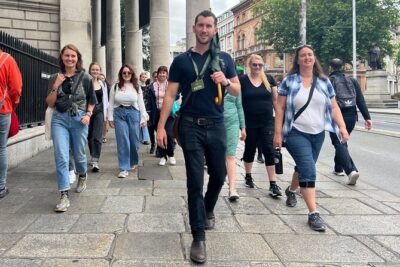
Dublin Highlights and Hidden Gems Guided Walking Tour
Read our review →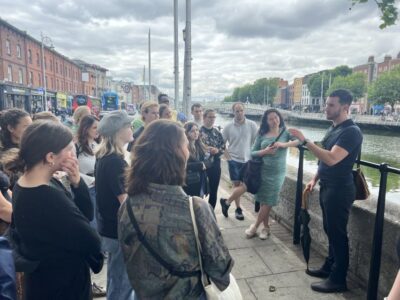
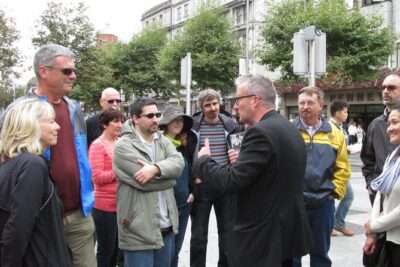

90 Minute Dublin Walking tour and Sightseeing tips
Read our review →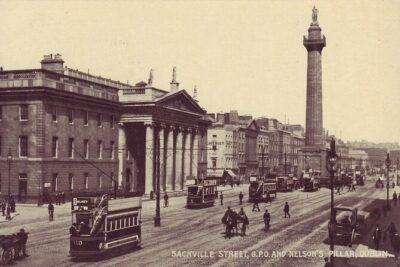

Historical 2-Hour Guided Walking Tour of Dublin
Read our review →
Dublin Traditional Irish 3 Course Meal Walking Tour with Local
Read our review →
Browse the lists this tour appears in