
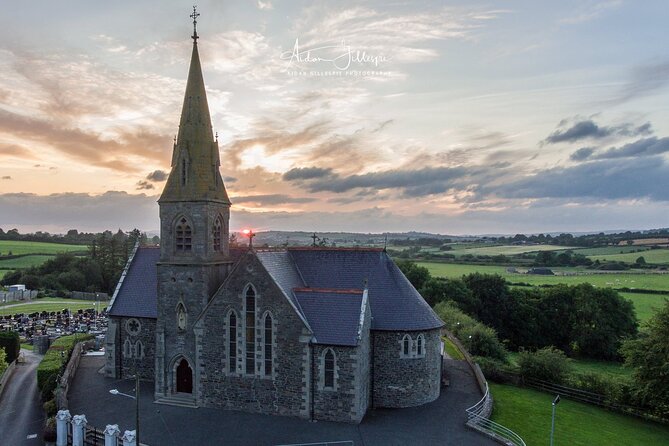
Reviewed · DONEGAL TOURS
Christian Tour of East Donegal
East Donegal’s early Christian story comes alive on this private day out, but it is not limited to churches. You move from sites linked to St. Patrick, St. Colmcille, and St. Brigid to a prehistoric stone circle, a sacred hill, an ancient Irish inscription, and an eighteenth-century courthouse. It is a broad look at Donegal’s past, from pagan ritual to monastic Ireland and later law.
I like the personal scale, with private transport for up to four people, and I like the way the route joins small, quiet sites that are easy to miss on your own. Guide Niall brings local stories to each stop, and the mix of ruined churches, Raphoe, Beltany, and Lifford keeps the day moving.
The main drawback is the packed schedule. You will spend much of the day getting in and out of the vehicle, and lunch plus the €8 to €10 courthouse admission cost extra. Some church sites are simple ruins or outdoor locations, so this suits curious history lovers more than anyone seeking polished museum displays.
Key points about the East Donegal day
- Three patron saints in one route: Visit places tied to St. Patrick, St. Colmcille, and St. Brigid.
- Beltany Stone Circle adds a prehistoric chapter: This impressive stone circle gives the tour a wider time span than a standard Christian heritage trip.
- Private transport keeps the route practical: Your group of up to four has its own vehicle, with pickup offered.
- Niall is the guide to look for: His local knowledge covers churches, monastic life, Donegal history, and the old jail at Lifford.
- The day includes unusual evidence of early Ireland: See an ogham stone, a holy well, ancient monastic sites, and Croghan Hill from the road.
- Bring a flexible appetite for history: Lunch is not included, and the schedule works best when you enjoy stories as much as sightseeing.
Why this tour feels different from a standard Donegal outing
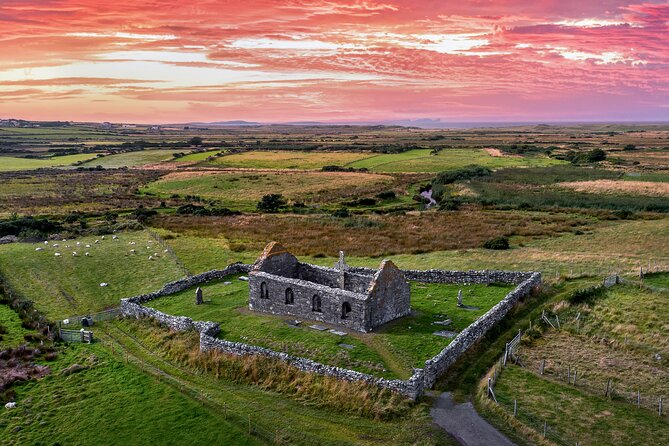
Many day tours around Donegal focus on dramatic scenery. This one takes a quieter route through East Donegal, where the main attractions are old foundations, church sites, sacred places, and traces of the people who used them.
The theme is Ireland’s early Christian age. St. Patrick is connected with Raymoghy and another ancient church near Castlefinn. St. Colmcille founded the monastic settlement at Raphoe, later developed by St. Eunan. St. Brigid is linked with the holy well visited near the end of the day.
You also get older and later chapters. Beltany Stone Circle reaches back before Christianity, while Lifford Old Courthouse shows how the county handled justice in the eighteenth, nineteenth, and early twentieth centuries. That range gives the tour shape. You are not looking at ten versions of the same ruin.
The guide matters here. The sites are not all self-explanatory, and several are small or partly ruined. Niall’s role is to explain how the monasteries may have worked, how monks related to nearby communities, and how these places fit into Ireland’s wider religious story. The strongest praise for the experience focuses on his local knowledge and the way he connects the churches, courthouse, and Beltany Stone Circle.
A few more Donegal half-days to weigh up
- Oakfield Park Day Pass and Train Ride
★ 4.5 · 104 reviews - Donegal Coast One Day Self-Guided E-Bike Tour
★ 5.0 · 66 reviews - Slieve League cliffs cruise. Donegal. Guided. 1 ¾ hours.
★ 4.5 · 61 reviews
Raymoghy Ancient Church and St. Patrick’s first foothold
The first stop is Raymoghy Ancient Church, where you spend about 30 minutes with a guide. Documentary accounts place St. Patrick’s arrival and the foundation of an abbey here in the late fifth century.
The site is connected with Brugach, identified as the first bishop of the abbey. A line of successors continued at Raymochy until at least 731 AD, giving you a useful sense of how long this religious center remained active.
This is an outdoor heritage stop, not a large visitor attraction with a full exhibition. Its value comes from the story attached to the place and from having a guide explain what the early Christian settlement meant. If you enjoy standing on the actual ground associated with a historical figure, this is a strong opening.
The 30-minute visit also helps the day start at a manageable pace. You are introduced to the Christian theme without spending too long at a single site.
Raphoe, St. Eunan’s Cathedral, and a monastic town
You then spend about an hour in Raphoe, including St. Eunan’s Cathedral and a guided look at the historic town. St. Colmcille founded a monastic settlement here in the sixth century, and St. Eunan, the patron saint of Raphoe, further developed it between 627 and 704.
This stop adds an important layer to the tour. Instead of seeing an isolated church, you get a sense of a town shaped by an early religious foundation. Your guide can explain the connection between the settlement, the saint, and the later community.
You will also see Raphoe Castle from the road. It is not accessible on foot during this tour, so keep your expectations clear. This is a passing view rather than a castle visit, but it gives the town another historical marker and helps you read Raphoe as more than a church stop.
An hour is enough for orientation and explanation, though anyone wanting a long independent visit inside every building may find the pace brisk. The tour is designed as a connected story, not as a series of lengthy standalone visits.
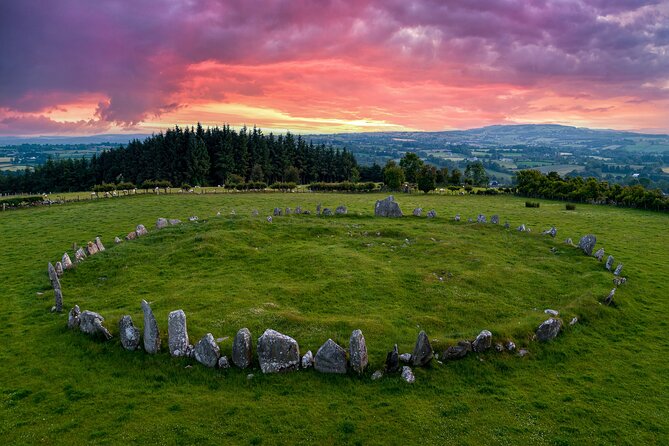
Beltany Stone Circle, where the story reaches before Christianity
Beltany Stone Circle is one of the day’s major highlights. You have about an hour here, and no admission fee is included because there is no listed entry charge for the stop.
The circle is not a Christian site, and that is exactly why it belongs on this route. It reminds you that sacred places in Ireland long predate the arrival of Christianity. After hearing about sixth-century monastic communities and early bishops, you shift to a much older setting shaped by prehistoric belief and ritual.
This stop also gives the day a change of pace. The churches require close attention to names, dates, and religious connections. Beltany gives you room to look, walk, and consider the age of the place without needing a building or display case.
The site is especially worthwhile if you want more than a saint-focused tour. If your interest is strictly in Christian heritage, you may see it as a detour. I see it as a useful reminder that Irish religious history did not begin with St. Patrick.
Same corner of Ireland, a completely different day out:
- Full-Day Shore Excursion for cruise ships to Killybegs, Donegal
★ 5.0 · 54 reviews - Inishowen Peninsula Tour
★ 5.0 · 31 reviews - Bog Safari Hike
★ 5.0 · 27 reviews - Donegal Electric Bike Tour with Local Guide: Half-Day Adventure
★ 5.0 · 26 reviews
Clonleigh and the stories attached to old monastic ground
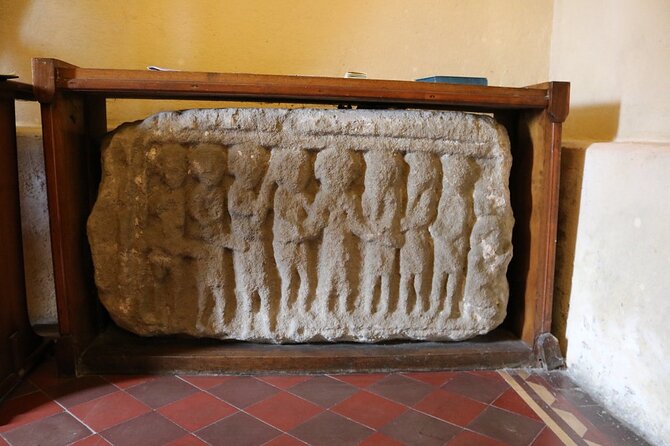
At Clonleigh Ancient Church, the guided visit lasts about 30 minutes. The monastic site was dedicated to St. Cairneach, but its story also reaches into Irish mythology.
Written accounts connect the site with the Fomorian god Ith, said to have been killed here and buried at Croghan Hill. This is the sort of layered storytelling that makes old Irish places so interesting. Christian sites often sit within much older traditions, and the guide helps you separate legend, written account, and later interpretation.
Clonleigh is another stop where context matters more than grand architecture. You are visiting ancient monastic ground, not a modern attraction built to display artifacts. The shorter visit keeps the overall itinerary from becoming too repetitive.
Lunch at Lifford Old Courthouse
Lunch takes up to an hour at a restaurant in the old Lifford Courthouse. The meal is not included, so budget separately for it.
This is a practical pause rather than a rushed roadside break. It also places you inside one of the day’s main historic settings before the formal courthouse tour. Since the overall excursion lasts 7 to 8 hours, a proper meal break helps you manage the long sequence of stops.
You should clarify the meal cost when booking or at the start of the day, since the supplied tour details identify the restaurant and duration but do not give a menu or fixed lunch price. The private format gives your group some comfort, but the route remains full.
Lifford Old Courthouse and the county jail below it
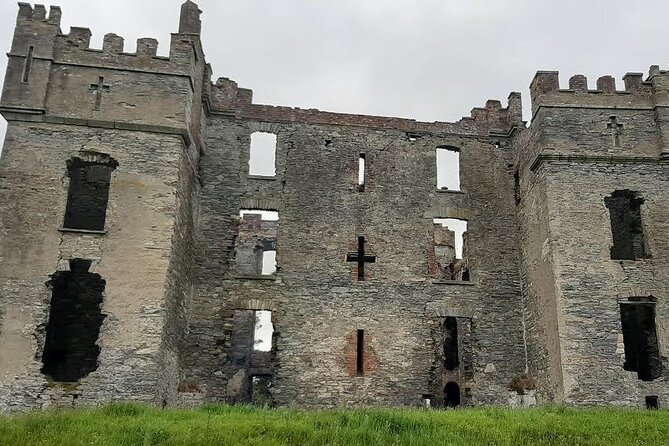
The courthouse is one of the most substantial sights on the route. A member of the courthouse staff provides a one-hour guided tour, and admission costs €8 to €10 per person.
The building was designed by local architect Michael Priestley and built in 1746. It allowed a circuit assizes judge to visit County Donegal, making Lifford an important center for county justice.
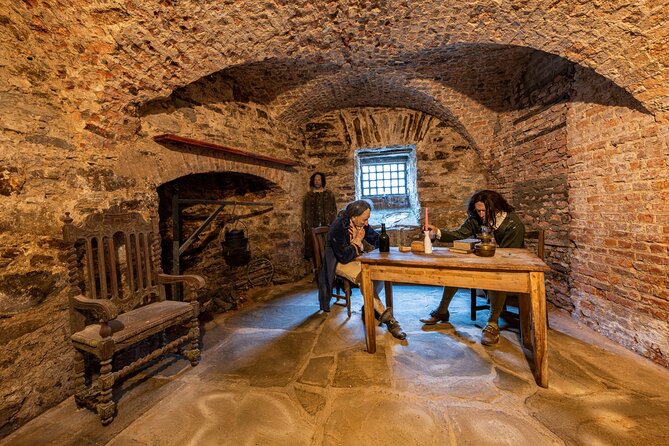
The basement once held the County Gaol. It confined debtors and felons, and later people labeled as lunatics, until a new jail was completed beside the courthouse in 1793. That larger jail processed prisoners in Lifford until it was demolished in 1907.
The courthouse itself continued to hold trials until 1938. Those dates give you a clear sense of how the building changed over time. You are not just seeing an old courtroom. You are seeing a place tied to law, confinement, local government, and the daily workings of the county.
This is likely the best stop for anyone who wants interiors and a formal guided presentation. It also breaks up the outdoor church visits. The extra fee is modest, but remember that it is not covered in the tour price.
Ballybogan Churchtown and a place of protection
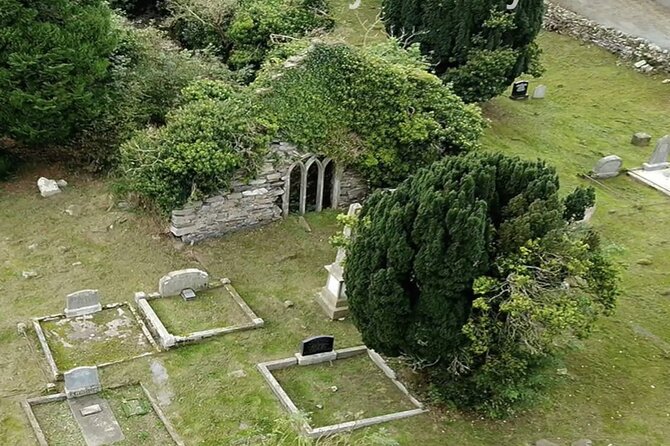
The Churchtown stop takes about 30 minutes and focuses on Ballybogan Ancient Church. The church dates to the sixth century and was known as the house of protection.
That name gives the place a human angle. It may have offered refuge to people traveling toward Inishowen, so the site connects religious practice with movement, safety, and local hospitality. Your guide can help you picture the church as part of a working community rather than a detached monument.
As with several stops, the interest is in the site’s age and meaning. You should be comfortable with a tour that asks you to use your imagination. There may not be extensive remains to inspect, but the story gives the visit purpose.
Croghan Hill from the road
Croghan Hill is not accessible on foot during this experience, but you do see the hill from the route and hear why it matters. It has been described as Donegal’s Hill of Tara, a reference to the ceremonial importance of Tara in Irish kingship.
The summit served as an inauguration site for kings of Ireland for thousands of years. A passage tomb at the top is at least 7,000 years old, and Croghan Hill has long dominated the Finn Valley scenery.
This is an important limitation to understand before booking. You do not climb the hill or visit the passage tomb. Instead, you experience it as a major landmark from the road, with the guide explaining its place in Irish history and legend.
For me, that still adds value. The hill helps connect several parts of the day: ancient burial traditions, royal power, early Christian sites, and the stories attached to Clonleigh.
St. Patrick’s Ancient Church and Castlefinn’s ogham stone
The next church stop is another site associated with St. Patrick. An existing Church of Ireland church now occupies the original location where St. Patrick founded a church.
You spend about 30 minutes here. The significance comes from continuity of place. The building you see today is not the original fifth-century structure, but the site preserves the claimed location of Patrick’s foundation.
Near Castlefinn, you then visit a recently discovered ogham stone. The stone carries writing in ogham, an early medieval alphabet used mainly for the early Irish language and later Old Irish.
The tour details identify this as the only ogham stone in Donegal with this form of ancient Irish writing. That makes it a distinctive stop, especially if you have seen Christian crosses and church ruins before but have not encountered an ogham inscription.
The visit lasts about 20 minutes, so it is brief. Still, the stone gives you a direct link to written language in early Ireland. It is a small object with a big role in understanding how people recorded names and words before the later forms of Irish writing became common.
St. Brigid’s Well and the final quiet stop
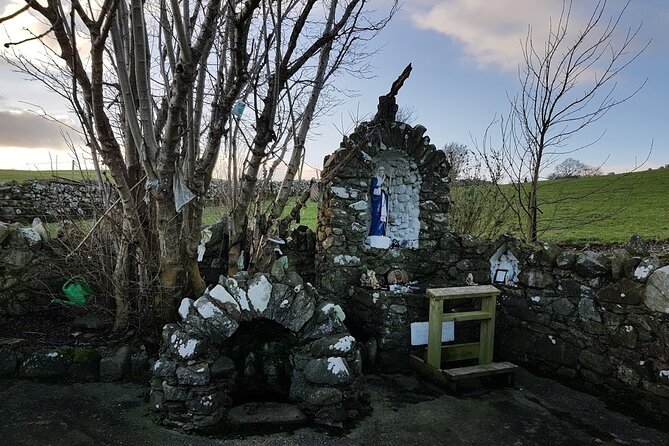
The day ends at St. Brigid’s Well, where you spend about an hour. St. Brigid is one of Ireland’s patron saints, and the well is said to have been blessed by her in the fifth century.
You can drink from the fresh spring and take holy water home with you. The well is also associated with cures and healing properties. Those beliefs are part of the living tradition around holy wells, though you should treat them as religious and cultural claims rather than medical advice.
This makes a fitting final stop because it is personal and calm. Earlier sites focus on foundations, ruins, kings, and written records. Here, the emphasis is on devotion and custom that continue at a sacred spring.
The tour includes waterproof wellington boots, but you need to provide your UK foot size the day before. That detail matters because some of the church and well sites may be damp or uneven. Sensible outdoor clothing is still a good idea, even though only the boots are specifically provided.
What the $686.50 private price really covers
The price is $686.50 per group of up to four people. At full capacity, that works out to about $171.63 per person, before lunch and the courthouse admission.
That is not a cheap casual outing, but the private format changes the calculation. You are paying for private transportation, guiding, parking fees, bottled water, pickup, and a full 7 to 8 hours on the road. For a group of four, the price is easier to justify than for one or two people.
You also avoid having a large shared group shape the day. The tour is only for your party, which is useful when the appeal depends on asking questions about local saints, monastic life, myths, and family connections to the area.
The price makes the most sense for people who would otherwise need to arrange a car and research a string of scattered sites. It makes less sense if you want a short, low-cost introduction to Donegal or prefer to spend most of the day on major attractions with standard admission included.
Who should book this East Donegal experience
I would recommend it to you if you enjoy:
- Early Irish Christianity and saint traditions
- Small historic sites that need explanation
- Prehistoric monuments and sacred places
- Irish mythology alongside documented history
- Private tours with a local guide
- A full day of varied stops rather than one major attraction
It is also a good fit for families or small groups who want their own vehicle. Most people can participate, service animals are allowed, and the tour is near public transportation, though the route itself is built around private transport and pickup.
You may want to choose another experience if you need step-free access at every stop, want a detailed castle interior visit, or prefer a slower schedule. Raphoe Castle is seen only from the road, Croghan Hill is not climbed, and several ancient church stops are outdoor locations.
Confirmation is provided at booking, and free cancellation is available up to 24 hours before the start time. Changes or cancellations inside that window are not accepted for a refund.
Should you book it?
Book this tour if you want East Donegal explained through its old religious sites, local legends, and lesser-known evidence of early Ireland. The combination of Niall’s guiding, private transport, Beltany Stone Circle, Lifford Courthouse, and St. Brigid’s Well gives you far more variety than a simple church tour.
Think twice if your priority is scenery, shopping, or a relaxed day with only two or three stops. This is a long, story-led route with several short visits and extra costs for lunch and the courthouse.
For a group of four with a serious interest in Irish history, the private price offers solid value. You get a full day, a personal guide, and places that would be difficult to connect without your own transport. Bring questions, wear practical clothes, and tell the provider your UK boot size the day before.
FAQ
How long does the Christian Tour of East Donegal last?
The experience lasts approximately 7 to 8 hours.
How much does the private tour cost?
The price is $686.50 per group, for up to four people.
Is transportation included?
Yes. Private transportation, pickup, parking fees, and bottled water are included.
Is lunch included?
No. Lunch is not included. The schedule allows up to one hour for lunch at a restaurant in the old Lifford Courthouse.
Is admission to Lifford Old Courthouse included?
No. Admission costs €8 to €10 per person.
Are waterproof boots provided?
Yes. Waterproof wellington boots are included. You must provide your UK foot size the day before the tour.
Can I walk up Croghan Hill?
No. Croghan Hill is not accessible on foot during this experience. You see the hill from the road and hear about its role as an ancient inauguration site.
Is this a private activity?
Yes. Only your group participates, with a maximum of four people.
Can I cancel for a full refund?
Yes. You can cancel at least 24 hours before the experience start time for a full refund. Cancellations or changes made less than 24 hours before the start time are not refunded or accepted.
Just added around Donegal
- 2 Hour Walking Tour in Slieve League Ireland★ 5.0 · 9 reviews
- Inishowen Peninsula Tour★ 5.0 · 31 reviews
- Mysteries of Inishowen private day tour★ 4.5 · 24 reviews
- DAY TOUR: Highlights of Derry and Donegal★ 5.0 · 8 reviews
- Electric Bike Donegal: Must-Do Half-Day Adventure!★ 5.0 · 20 reviews
- Glenveagh National Park and Gaeltacht Tour★ 5.0 · 22 reviews
- DAY TOUR: Highlights Of South Donegal★ 5.0 · 18 reviews
- DONEGAL DAY TOUR: Coast and Castles★ 5.0 · 6 reviews
Donegal Tours, compared.
Slieve League cliffs cruise. Donegal. Guided. 1 ¾ hours.
Read our review →
Full-Day Shore Excursion for cruise ships to Killybegs, Donegal
Read our review →
Donegal Electric Bike Tour with Local Guide: Half-Day Adventure
Read our review →
Browse the lists this tour appears in