
Reviewed · BLASKET ISLANDS TOURS
Dolphin & Whale Watching (4hrs) + Blasket Island Landing (3hrs)
The best part of this seven-hour trip is the mix of open-sea wildlife and solid time ashore. You are not simply circling the Blaskets from a boat. You land on Great Blasket Island, walk through its deserted village with an OPW guide, and have three hours to set your own pace.
I like the small group limit of 12 and the generous island stop. I also like that the wildlife is wild and unscripted: dolphins and whales may appear on the crossing, while seals, seabirds, puffins, and even red deer add interest around the outer islands. The main caution is the sea. Weather can cancel the trip, and rough conditions may limit how far the boat goes.
Key points to know before booking
- Great Blasket Island gets three full hours, enough for the village, loop walk, beach, seals, and tea room.
- Wildlife sightings are possible, not guaranteed, with common dolphins and Minke whales among the regular hopes.
- The boat carries no more than 12 people, giving you a more personal outing than a large ferry cruise.
- A licensed Zodiac tender brings you ashore, so landing depends on sea conditions and your comfort with a small transfer boat.
- The outer islands add the drama, including Cathedral Rocks, puffin waters near Inishvickillane, and possible views of Tearaght Lighthouse.
- You need warm, windproof clothing and moderate fitness, and children under 10 are not accepted.
Why this Blasket trip is more than a whale watch
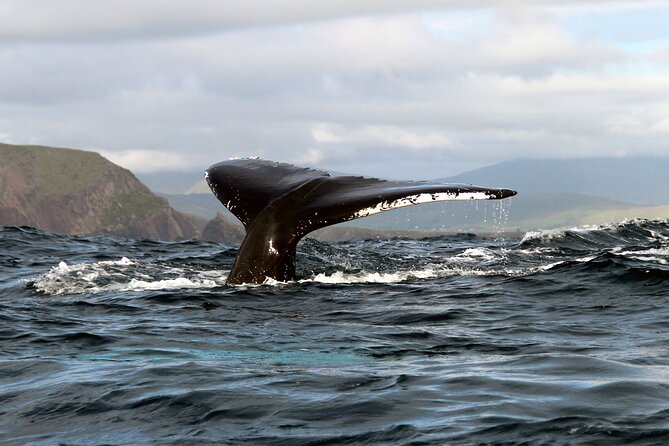
Many boat trips ask you to choose between wildlife and a destination. This one gives you both. The morning begins as a marine wildlife outing in Dingle Bay, then becomes an island visit, followed by a second stretch of coastal scenery and seabird watching.
That change of pace matters. If the whales stay out of sight, you still have Great Blasket Island and its abandoned settlement. If the sea is lively with dolphins, the island stop gives you time to settle down and take in what you have seen.
I would think of this as a full-day outdoor expedition, not a quick sightseeing cruise. The seven-hour schedule leaves room for weather, the island landing, and the slow work of looking for animals in a huge stretch of sea.
More Blasket Islands boat trips:
- Dingle Dolphin Blasket Adventures
★ 4.5 · 1,126 reviews - The Great Blasket Island Experience – Premium Tour
★ 5.0 · 597 reviews - Blasket Island Sea Life Rib Tour,
★ 5.0 · 202 reviews
Starting at Ventry Pier at 10am
The boat leaves Ventry Pier at 10am, and you should arrive 15 to 20 minutes early. That early arrival is not just polite timing. You need time to park your car on the pier, get ready, and attend the safety meeting.
The boat will not wait for late arrivals. That makes the morning simple but firm: plan your drive carefully, and do not treat the 10am departure as an approximate time.
The trip is offered in English, and confirmation comes at booking. The end point is the same Ventry meeting point, so you do not need to arrange a separate return ride.
Watching for dolphins and whales across Dingle Bay
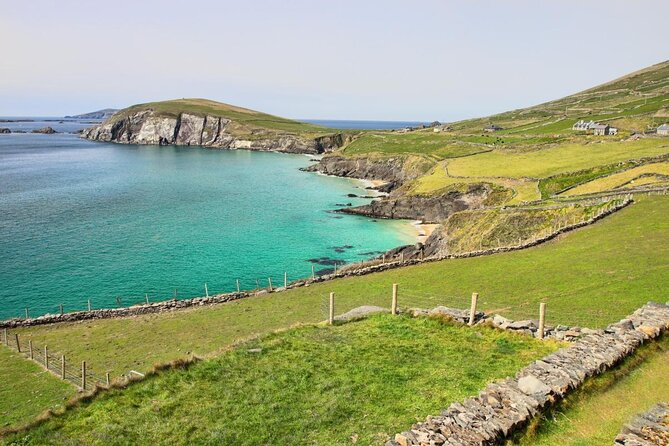
Once you leave Ventry, keep your eyes on the water. The route heads across Dingle Bay toward the Blaskets, with the crew looking for common dolphins and Minke whales.
You might also see bottlenose dolphins, Risso’s dolphins, or basking sharks when they are in season. Later in the day, the boat may encounter pods of dolphins or a migrating humpback whale near the islands.
The important point is that this is a search for wildlife, not a scheduled animal performance. No sighting can be promised. Conditions, animal movements, visibility, and luck all matter. You should book this because you enjoy the process of watching the sea, not only because you want a photograph of a whale.
A small boat can make this kind of outing feel more direct. With a maximum of 12 people, you should have a better chance of finding a useful spot along the rails and hearing the guide’s directions. It also means the group is small enough to make the island transfer more manageable.
Landing on Great Blasket Island around 11am
The boat reaches Great Blasket Island at about 11am and moors off White Strand. You do not step straight from the main boat onto a pier. A licensed Zodiac tender takes you to the island slipway.
That transfer is part of the practical side of the trip. You should be comfortable getting into a small tender and following safety instructions. The landing may also be affected by sea conditions, so keep your expectations flexible.
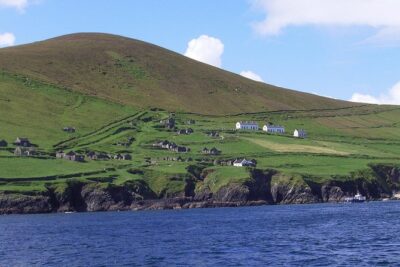
Once ashore, you have about three hours. This is the heart of the experience. The island was once home to a Gaelic-speaking community, and the deserted village gives you a clear sense of a place shaped by isolation, work, weather, and the sea.
An OPW guide leads the cultural and historical visit through the village. That guided element is valuable because the empty buildings alone can be hard to read. The guide helps connect the remains to the people who lived there, rather than leaving you with a row of roofless structures and little context.
A few more Dingle half-days to weigh up
- Exhilarating Rib experience – Dingle sea safari
★ 5.0 · 1,349 reviews - Dingle Peninsula and Slea Head Drive Group Tour
★ 5.0 · 427 reviews - Dolphin and Whale Watching Tour from Dingle
★ 4.5 · 318 reviews - Dingle Peninsula Four Hour Private Tour
★ 5.0 · 238 reviews
Choosing your three hours on the island
Three hours is a useful amount of time, but you should have a rough plan before you leave the tender. The loop walk takes about 1.5 hours, leaving time for the village, the beach, seals, and a break.
The loop is the natural choice if you want the broadest view of the island. It gives you time on foot and lets you see more than the settlement. Still, moderate physical fitness is required, and you should wear sensible clothing and shoes for an exposed island walk.
If you prefer a slower visit, the beach offers a chance to swim in the clear waters off White Strand. Swimming is not the same as having a supervised beach day, so use your own judgment and pay attention to conditions.
You can also relax near the shore and watch the seal colony from nearby rocks. Seals are one of the easier wildlife moments to enjoy because you can sit and observe instead of scanning the horizon for a brief fin or blow.
There is a small island tea room and access to toilets. Snacks are not included, so do not count on the tour price covering food. The tea room is useful, but you should bring any extra food or drink you need, within the practical limits of carrying supplies on a boat and tender.
The deserted village and the value of a guided visit
The village is not a polished open-air museum. Its appeal comes from the remains and the setting. You see a settlement left behind on an island at the western edge of Ireland, with the sea still controlling access and daily life.
I like that the visit includes a guide rather than treating the village as a quick photo stop. The OPW guide adds human detail to the buildings and helps explain why this island matters in Irish history.
Allow yourself time to look beyond the most obvious ruins. The beach, the slopes, the village, and the water around White Strand all belong to the same story. The trip works best when you give the island your attention instead of rushing through it to get back on the boat.
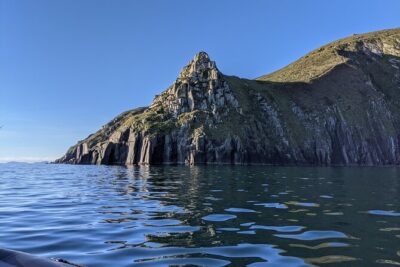
Cathedral Rocks at Inish na Bró
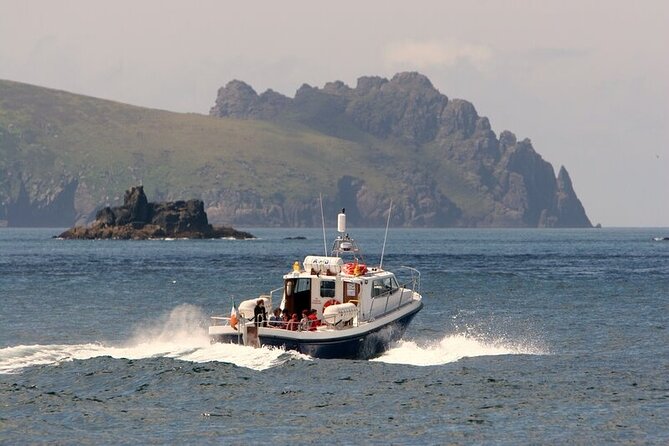
At 2pm, you return to the boat and continue around some of the outer Blasket Islands. One of the striking stops is Inish na Bró, home to Cathedral Rocks.
The rock formation sits on the island’s northeastern point. Its arches and upright sections resemble a large Gothic cathedral, with natural openings that look like windows and doors. The boat passes close underneath when conditions allow, giving you a view from sea level.
This is a good example of why the second half of the trip matters. You are not only traveling back to Ventry after the island visit. The skipper uses the route to show you the shapes cut into the islands by years of Atlantic storms.
The stop lasts about 15 minutes. That is enough to take in the formation, but not enough for a long, relaxed photo session if the boat is moving in swell. Keep your camera ready, and do not expect every angle to be available.
Puffins and red deer near Inishvickillane
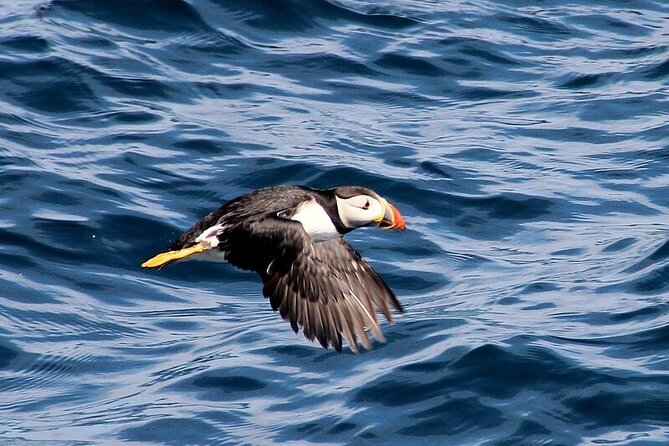
The outer islands are also the place to look for puffins. They are more likely around Inishvickillane and Inish na Bró, where there is less marine traffic than near Great Blasket Island.
Puffins often sit in groups on the water, sometimes called rafts. They are smaller than many people expect, so binoculars are useful. Their bright bills help, but you may need patience and a clear view to pick them out.
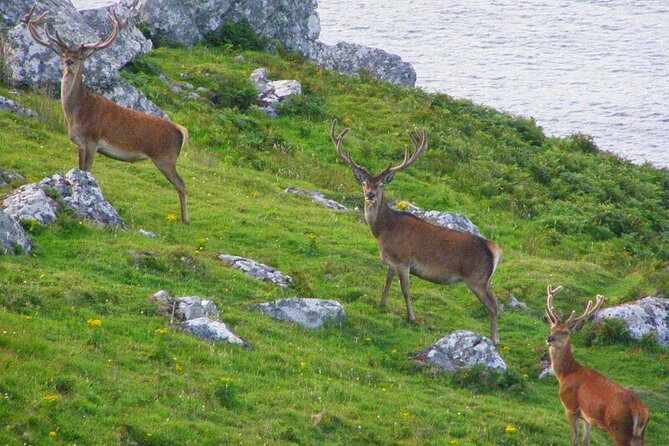
As the boat passes the cliffs of Inishvickillane, look up as well as down. Native red deer stags may appear along the cliff tops, sometimes outlined against the sky. That is a very different sight from the seabirds and marine life below.
The visit to Inishvickillane lasts about 30 minutes. Again, wildlife is never certain. The value is in reaching the right habitat and having a skipper who knows where to look, not in receiving a guaranteed puffin encounter.
The Dead Man, the Sleeping Giant, and possible Tearaght views
The exact route can change with the skipper’s judgment and the day’s conditions. The boat may head north toward Inish Tuaisceart, one of the seven Blasket Islands.
Seen from a point off Slea Head, Inish Tuaisceart has two well-known nicknames: The Dead Man and The Sleeping Giant. From a distance, its shape can suggest a reclining figure. Some people even see the outline of Abraham Lincoln.
This is a place where imagination does part of the work. The island is best viewed from offshore, and the changing angle of the boat can make the shape easier or harder to recognize.
Tearaght is the westernmost Blasket Island. It has a lighthouse on its western end, described as the most westerly lighthouse in mainland Europe. The boat only circles Tearaght in fine, settled weather with light swell, which is uncommon around the Blaskets.
That restriction is sensible. It also means you should treat Tearaght as a possible bonus, not a central promise of the day. When conditions permit, the location adds a strong sense of distance. Due west lies St. John’s in Newfoundland, Canada, at the same north latitude as the Blaskets.
What the seven-hour schedule feels like
The timetable is long but well divided:
- 10am departure from Ventry
- About 11am arrival at Great Blasket Island
- Three hours ashore
- 2pm return to the boat
- Afternoon route around the outer islands
- Return to Ventry after the marine tour
The island stop breaks up the time on the water. You get the energy of the crossing, a substantial walk or rest on land, then a quieter period of looking for birds, seals, and marine life from the boat.
Still, seven hours at sea and on an exposed island can feel tiring. Windproof clothing is essential. Bring layers, even if the weather looks mild at Ventry. Conditions can feel very different once you are away from the pier.
Price, group size, and overall value
At $155.43 per person, this is not a cheap short cruise. It is a full-day experience that combines transport to the Blaskets, a marine wildlife search, a three-hour island visit, a guided village tour, and an outer-island route.
The small group helps justify the price. A maximum of 12 people gives the outing a more personal scale and avoids the feel of a large boat transfer. The landing on Great Blasket Island also adds real value because you are not only viewing the islands from a distance.
The price does not include snacks, so plan for that. You also need to pay attention to the weather policy. You can cancel for a full refund up to 24 hours before departure. If poor weather cancels the trip, you are offered another date or a full refund.
The listed satisfaction level is strong, with a 4.8 rating from 20 reviews and 95 percent recommending it. One detailed account singled out the captain and guide, the island visit, and sightings of whales and dolphins. That matches the tour’s strongest features: good crew interaction, time on Great Blasket, and the chance to see several kinds of wildlife in one day.
Who should book this experience
I would choose this trip if you want an active, sea-focused day and you have enough time in County Kerry to accept some weather risk. It suits people who like walking, wildlife watching, exposed coastlines, and local history in equal measure.
It is especially good for anyone who wants to see Great Blasket Island without giving up the chance to search for whales and dolphins. The three hours ashore also make it a better choice than a trip that only circles the islands.
You may want a different outing if you dislike small boats, have low tolerance for wind and swell, or need a tightly controlled sightseeing schedule. Children under 10 are not accepted, and participants should have moderate physical fitness.
Service animals are allowed. Beyond that, the key question is simple: can you enjoy a day where the sea decides what appears and which islands the skipper can reach?
Should you book the Blasket Islands EcoMarineTours trip?
Book it if the combination matters to you. You get wildlife watching, a proper Great Blasket Island landing, an OPW-guided village visit, seal watching, and possible puffins, red deer, whales, and dolphins in one long outing.
I would not book it solely for a guaranteed whale sighting or a guaranteed trip around Tearaght. Those depend on nature and weather. Book it for the complete day: the small boat, the island’s deserted village, the beach and seal colony, and the chance to see the wild Blasket coast from several angles.
FAQ
Where does the tour depart?
The tour departs from Ventry Pier, Ventry Harbour, County Kerry, Ireland.
What time does the boat leave?
The boat leaves at 10am. You should arrive 15 to 20 minutes early to park on the pier and attend the safety meeting.
How long does the experience last?
The full experience lasts about seven hours and ends back at Ventry Pier.
How much time do I get on Great Blasket Island?
You have about three hours on Great Blasket Island, from approximately 11am until the 2pm pickup.
What can I do on Great Blasket Island?
You can take the 1.5-hour loop walk, swim off the beach, relax near the shore, watch the seal colony from nearby rocks, visit the deserted village with an OPW guide, and use the island tea room and toilets.
What wildlife might I see?
Possible sightings include common dolphins, Minke whales, bottlenose dolphins, Risso’s dolphins, basking sharks in season, puffins, seabirds, seals, red deer, and occasionally migrating humpback whales.
Is the tour suitable for children and people with limited fitness?
The tour is not suitable for children under 10. Participants should have a moderate physical fitness level and be prepared for a small Zodiac tender transfer, walking on the island, and exposed, changeable sea conditions.
More Whale Watching in Dingle
- County Cork: Whale & Dolphin Watching Boat Trip
★ 4.5 · 208 reviews
Just added around Dingle
- Wildlife Tour★ 5.0 · 31 reviews
- Sea Fishing 2 hour★ 5.0 · 16 reviews
- Ring of Kerry & Skellig Ring Private Day Tour★ 5.0 · 34 reviews
- Slea Head Photo & Sightseeing Tour★ 5.0 · 48 reviews
- Dingle: Hour Slea Head Drive Tour 4hr – Personal Chauffeur Guide★ 5.0 · 43 reviews
- Dingle Boat Tours RIB Adventure Private★ 5.0 · 8 reviews
- Fishing 2 hour Private★ 5.0 · 3 reviews
- Private 1-Hour Guided Boat Tour in Dingle Peninsula★ 5.0 · 39 reviews
Blasket Islands Tours, compared.
The Great Blasket Island Experience – Premium Tour
Read our review →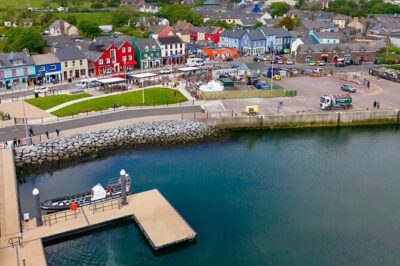
Browse the lists this tour appears in