
Reviewed · GHOST & HAUNTED TOURS
Dublin walking tour: ghosts & haunted places
Dublin’s haunted past is not tucked away in a castle dungeon. It turns up beside churches, libraries, pubs, hotels, railway stations, and busy city streets. This two-hour evening walk links those places with stories of apparitions, secretive shadows, distressing cries, dangerous spirits, and the darker corners of science and medicine.
I like the way the tour uses real Dublin landmarks rather than treating ghosts as a separate theme-park show. I also like the mix of folklore and history, from the Devil at the Black Church and Saint Audeon’s magical stone to wartime memories at Connolly Station. The main thing to consider is the French-language format, since the guide speaks French and no English tour is listed.
Key points before you book
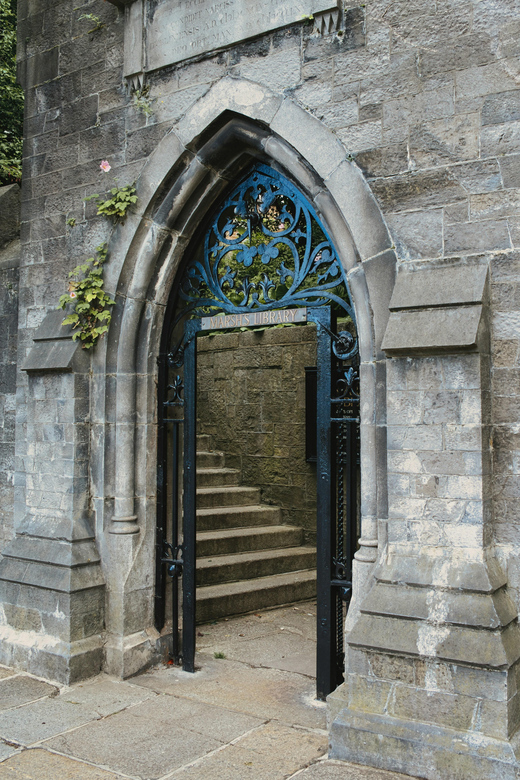
- A city walk with a dark twist: See Saint Stephen’s Green, Saint Patrick’s Cathedral, Marsh’s Library, Four Courts, Dublin Castle, and Trinity College from the outside as the stories unfold.
- Folklore meets history: The tour covers ghosts, dangerous pub legends, old love stories, medicine, science, the Hellfire Club, and war.
- Evening timing matters: The walk takes place only in the evening, which suits the subject but means you should plan your dinner or other sightseeing around it.
- No admission tickets are included: This is a guided walking tour, not an inside visit to the listed attractions.
- French is the tour language: You need enough French to follow a two-hour spoken presentation.
- A strong price if you value storytelling: At $54 per person, the cost is mainly for the guide’s narration and route, not attraction entry.
Why Dublin makes a good ghost-story city
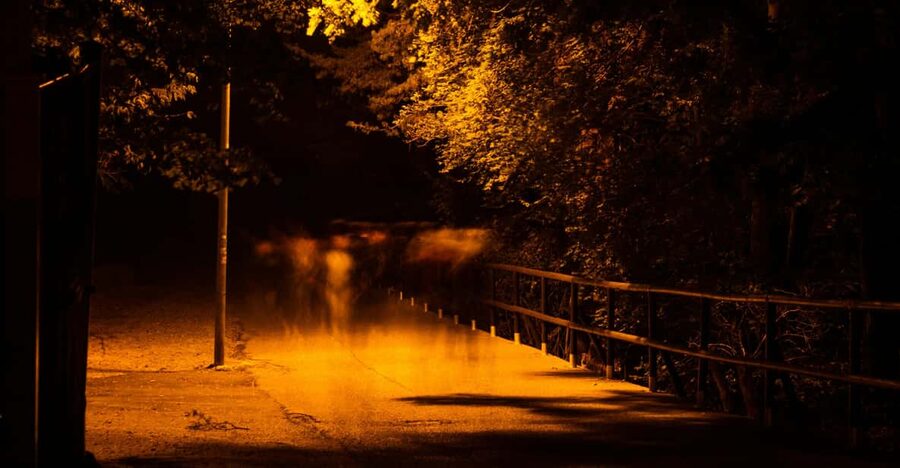
Dublin has about 2,000 years of human events behind its streets, and this tour uses that long timeline as its setting. You are not simply taken to one supposedly haunted building. Instead, the route moves across central Dublin, connecting religious sites, public buildings, cultural institutions, nightlife, transport, and military memory.
That range is important. A ghost story near a church feels different from one tied to a pub, hotel, library, or railway station. You get a sense of how legends attach themselves to ordinary city life. A doorway or public square can carry a tale about love, fear, punishment, illness, or war.
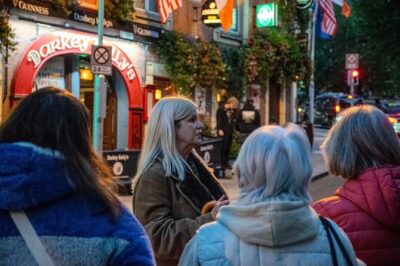
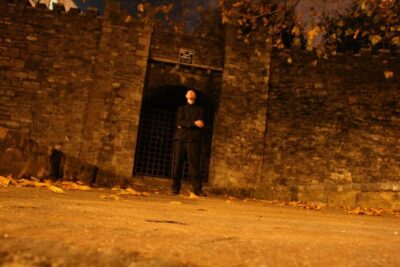
The evening setting should help the mood. Dublin’s streets are still part of a working city, so you should not expect total silence or theatrical effects. The atmosphere comes from walking after dark, listening closely, and seeing familiar places described in an unfamiliar way.
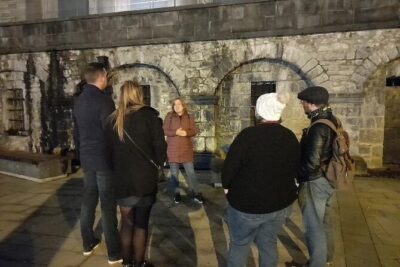
The guide uses humor as well as frightening stories. That balance matters. A completely serious ghost tour can become tiring, while a little wit lets you enjoy the storytelling without taking every supernatural claim as fact. The guide has been praised for an engaging, humorous manner and for making the tales both interesting and chilling.
More Walking Tours in Dublin
- Dublin Highlights and Hidden Gems Guided Walking Tour
★ 5.0 · 6,020 reviews - Dublin: Highlights and Hidden Gems Walking Tour
★ 4.9 · 2,140 reviews - 1916 Rebellion Walking Tour
★ 5.0 · 1,605 reviews
Meeting the guide near Saint Stephen’s Green
The walk begins at the entrance to Saint Stephen’s Green, facing The Shelbourne Hotel and close to the Wolfe Tone statue. This is a useful central meeting point, but you should allow time to identify the exact entrance and statue before the evening start.
The tour returns to the same meeting point at the end. That makes your planning easier, especially if you are meeting friends afterward or want to continue into central Dublin. You do not need to arrange a second pickup point or find your way back from an unfamiliar neighborhood.
The first stop is the Wolfe Tone Sculpture, which serves as both the start and finish. Several parts of the route are described as secret or hidden stops, but their exact locations are not provided in advance. That adds a little surprise, though it also means you cannot plan the route around a complete list of addresses.
Because the walk lasts two hours, wear shoes you can use comfortably on city streets. The tour is listed as an evening walking tour only, so check the available start times before booking. The precise hour can affect how dark it is and how easily you combine the experience with dinner or a show.
Saint Stephen’s Green and the Shelbourne Hotel
Saint Stephen’s Green is the opening setting, with the Shelbourne Hotel directly opposite the meeting area. The hotel is also linked to one of the tour’s stories, involving a little ghost. That gives the starting area a useful connection to what comes later rather than making it only a place to gather.
You will also hear about the Green Lady and her dangerous pub. The description does not identify the pub by name, so you should treat this as one of the tour’s surprises rather than a stop you can independently confirm from the route details.
The Green Lady story adds a different flavor from tales of devils or violent events. It brings in character, danger, and the social world of an old pub. That mix is one reason this tour may appeal to you if you like local legends with a human angle, not only standard haunted-house tales.
The Shelbourne Hotel story should also appeal to visitors who enjoy small, memorable details. A little ghost can be more unsettling than a grand supernatural tale because it places the strange beside an ordinary hotel setting. You may find this part less dramatic than the darkest stories, but it helps keep the evening varied.
Churches, magical stones, and the Devil
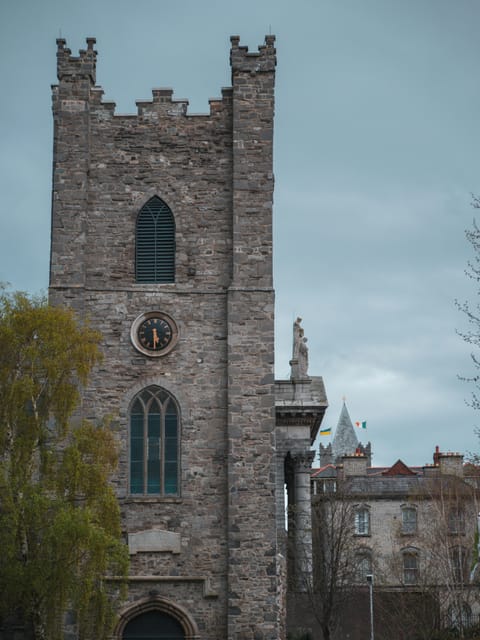
From the green, the route includes Saint Patrick’s Cathedral and Saint Audeon’s Church. These sites give the tour a religious and medieval frame, with stories about spiritual danger, unusual objects, and the ways older beliefs survive in a modern capital.
The warning about bothering the Devil at the Black Church is one of the clearest examples of the tour’s playful approach. It sounds like a direct challenge to your nerves, but the value lies in hearing the local story in the place connected with it.
Saint Audeon’s Church brings a different focus: a magical stone. Objects can carry a strong role in folklore because they give a story something physical to point toward. Instead of hearing only about an unseen presence, you get a tale connected to a specific feature of the city.
The tour includes guided commentary at Saint Patrick’s Cathedral, but no entry is included. You should expect to hear the story from outside rather than spend time inside the cathedral as part of the booked experience. That keeps the walk moving and helps explain the $54 price: you are paying for the route and live narration, not admission tickets.
More ghost walks around Dublin:
- Dublin Ghost Bus Tour with Professional Actors
★ 4.5 · 949 reviews - The Dublin Ghostbus Tour
★ 4.6 · 634 reviews - Haunted Dublin Walking Tour
★ 5.0 · 550 reviews - From Dublin: Gravedigger Ghost Bus Tour
★ 4.4 · 546 reviews
Marsh’s Library and the stories of love
Marsh’s Library is one of the more unusual stops because it shifts the mood toward old books, scholarship, and love stories. The tour invites you to revive romantic tales connected with the library, placing personal emotion beside the supernatural.
That change of tone is welcome. A two-hour walk built only from fear could feel repetitive. Love stories give the guide room to talk about longing, memory, and loss, while the library provides a fitting backdrop for stories that have survived through time.
Again, no entry is included. You should not book this expecting a library visit or a chance to browse the collection. The value is in seeing the location as part of the route and hearing why it belongs in Dublin’s darker storytelling tradition.
The library also shows how broad the tour’s idea of haunted Dublin can be. The experience is not limited to places marketed as haunted. It looks at how old institutions, emotional stories, and strange memories can give a building a lasting atmosphere.
The darker side of science and medicine
One of the more distinctive themes is the treatment of science and medicine. The tour promises an exploration of their darkest sides, though the supplied details do not identify the exact stop or explain which specific events are discussed.
That uncertainty is worth noting. If you want a tightly documented historical lecture, you may find the supernatural storytelling approach less precise than a specialist museum tour. If you like the point where medical history, fear, and folklore meet, this part could be among the most thought-provoking sections.
The route includes additional guided stops whose names are not supplied, along with more places described only as secret or hidden. You will need to accept a measure of surprise. The guide controls the sequence and reveals each location as part of the story rather than handing you a full research outline beforehand.
For you, that means the tour works best as an evening introduction to Dublin’s darker tales. It is not designed as a complete course in Irish medicine, religion, or social history. The guide’s job is to connect these subjects to mood, place, and memorable stories.
The Hellfire Club and Dublin’s reputation for fear

The Hellfire Club brings a more sinister name into the evening. Its reputation is presented as one of the darker subjects on the route, adding a sense of forbidden behavior and old fear to the walk.
The available details do not state that the tour visits the Hellfire Club site itself. They only promise that you will confront its reputation. Keep that distinction in mind when deciding what you expect to see. This is a central Dublin walking tour, and several subjects may be discussed from city locations rather than visited at their original setting.
That does not make the subject less useful. A name with such a strong reputation can reveal how stories grow around power, secrecy, and moral panic. You will hear the theme as part of a larger portrait of Dublin’s uneasy past, not as a separate excursion into the countryside.
The route’s strength is this variety. You move from church legends to pub dangers, from romance to medicine, and from supernatural tales to war. The Hellfire Club section helps the evening reach its most ominous mood without making every stop sound the same.
Four Courts, Dublin Castle, and public power
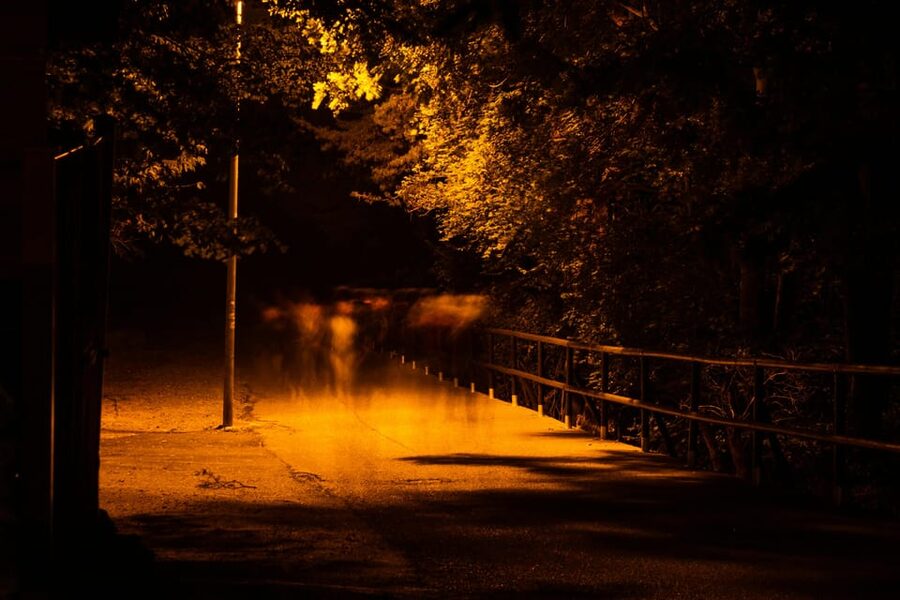
Four Courts and Dublin Castle bring the tour into places associated with public authority. Their inclusion broadens the experience beyond private hauntings and old religious tales.
The supplied information does not specify the individual stories at either location. You should therefore expect the guide to explain their connection to Dublin’s darker past rather than a fixed, published lecture with every detail listed ahead of time.
These stops matter because public buildings carry a different kind of weight. Stories attached to courts and castles often involve law, punishment, leadership, conflict, or people whose lives were shaped by decisions made inside such institutions. The tour’s central idea becomes clearer here: the city’s haunting stories are tied to how people lived and suffered, not only to supernatural appearances.
No admission is included at Dublin Castle or any other stop. You will be viewing the places as part of the walk. If you want to tour the interiors, you need to arrange that separately and allow extra time before or after the evening experience.
Trinity College and Connolly Station

The route includes Trinity College Dublin, one of the city’s best-known institutions, and finishes with war history at Connolly Station. These final themes give the walk a strong contrast.
Trinity College brings the tour back to learning, books, and old institutions. Its connection with the supernatural side of Dublin fits well after Marsh’s Library and the discussion of science and medicine. The route repeatedly asks you to consider how knowledge, memory, and fear overlap.
Connolly Station shifts the mood toward conflict and public memory. The description specifically links the stop with war history, so you can expect a more historical note rather than a purely ghostly one. This is an important part of the experience for anyone who prefers stories grounded in documented events as well as apparitions and legends.
The walk then returns to the Wolfe Tone statue. Ending where you began is practical, but it also gives the tour a neat shape. You start in the center of Dublin’s evening life, move through religious, cultural, civic, and transport landmarks, and finish back at the same familiar point.
What $54 buys you
The price is $54 per person. That is not a bargain if you are looking for a simple free walk past famous buildings, since the tour includes no entry tickets and lasts only two hours.
The value improves if you want a live storyteller to organize Dublin’s darker material for you. You are paying for the French-language guide, the route, the timing, and the connections between places that you might otherwise pass without noticing. A self-guided walk could show you many of the same buildings, but it would not provide the same flow of ghost stories and local legends.
The tour also earns some value from variety. It covers churches, a library, a hotel, a pub legend, courts, a castle, a college, and a railway station. You are not spending two hours at one site or hearing one repeated kind of tale.
Still, you should book it for the storytelling, not for access. If you want museum interiors, cathedral architecture, or a long historical lecture, spend your money elsewhere or pair this with separate visits during the day.
Who will enjoy this walk most
This tour suits you if you like city walks with a strong theme and can follow French comfortably. It is a good choice for an evening when you want something more focused than general sightseeing but less formal than a specialist history lecture.
You may especially enjoy it if you like:
- Ghost stories mixed with real Dublin places
- Religious legends and old folklore
- Stories about love, pubs, medicine, science, and war
- A humorous guide who can keep frightening material from becoming heavy
- Seeing central Dublin after dark
- A route that begins and ends in the same place
It may not suit you if you need an English-language guide, want attraction entry included, or prefer a completely factual account with little supernatural storytelling. The precise stories at several unnamed stops are also not provided, so you need to be comfortable with an element of surprise.
The access information needs care. One part of the details says the activity is wheelchair accessible, while another says it is not suitable for wheelchair users. Since those statements conflict, contact the provider before booking if access is important to you. Do not rely on the general accessibility label alone.
You can cancel up to 24 hours before the start for a full refund, and you can reserve now while paying later. Those policies are useful if your Dublin plans may change, but the main decision remains the language and storytelling style.
Should you book Dublin’s haunted walk?
Book this tour if you want a French-language evening walk built around Dublin’s ghosts, legends, and uncomfortable chapters. The strongest reasons are the range of subjects, the central route, the humorous presentation, and the chance to hear stories linked to places you can continue exploring afterward.
At $54, I would not choose it simply as a way to see landmarks. I would choose it because a guide turns those landmarks into a connected evening of fear, folklore, romance, medicine, religion, and war.
Check the start time, confirm the French format, and clarify the wheelchair policy before paying. If those points work for you, this is a lively and atmospheric way to see Dublin from its darker side.
FAQ
How much does the Dublin haunted walking tour cost?
The tour costs $54 per person.
How long does the tour last?
The walking tour lasts two hours.
What language is the tour conducted in?
The live guide speaks French.
Where does the tour start?
It starts at the entrance to Saint Stephen’s Green, facing The Shelbourne Hotel and close to the Wolfe Tone statue.
Where does the tour finish?
The tour ends back at the starting meeting point near the Wolfe Tone statue.
Are entrance tickets included?
No. The experience includes an evening walking tour only, and no entry fees are included.
Can I cancel for a refund?
Yes. You can cancel up to 24 hours in advance for a full refund.
Can I reserve now and pay later?
Yes. You can reserve your place and pay later.
Just added around Dublin
- Women Of Ireland: Trailblazers & Pioneers★ 5.0 · 4 reviews
- Full Day Private Wicklow Tour★ 5.0 · 12 reviews
- Wicklow Mountains & Glendalough Luxury Private Day Tour★ 5.0 · 23 reviews
- Wicklow tour of Glendalough★ 4.5 · 8 reviews
- Premium Irish Whiskey Tasting Hosted by Local Dublin Expert★ 5.0 · 77 reviews
- Whiskey Tasting Tour of Dublin★ 5.0 · 117 reviews
- Dublin To Kilkenny Castle Waterford Crystal Private Car – Day Tour★ 5.0 · 8 reviews
- Historical Walking Tour of Dublin★ 5.0 · 50 reviews
Ghost & Haunted Tours, compared.

Hidden Dublin: Haunted History Walking Tour v2.0 2026
Read our review →
Browse the lists this tour appears in