
Reviewed · HISTORICAL TOURS
Historical Walking Tour of Dublin
Dublin’s past comes into focus quickly on this small-group historical walk, which links the 1916 Rising at the General Post Office with Trinity College and Dublin Castle. Guide Donal brings in poetry, pub advice, jokes, and his own view of modern Dublin, so this is not just a list of dates and dead politicians.
I like the central route, with a simple meeting point at the Spire and a finish beside the Ha’penny Bridge. I also like the chance to hear about Dublin beyond the main sights, including food and pub suggestions that can help shape the rest of your stay.
The main thing to consider is the short running time. In about 1 hour and 45 minutes, you get a useful introduction, not a full visit to each attraction. Admission tickets are not included, and the stops at Trinity College and Dublin Castle may be mainly exterior explanations rather than full indoor tours.
Key points to know before booking
- The GPO gives the walk a serious starting point: Learn why the General Post Office became the headquarters of the 1916 Easter Rising.
- Trinity College is included as a history stop: The tour discusses Ireland’s oldest university, while Book of Kells admission is not included.
- Dublin Castle adds political context: Hear how the castle, City Hall, and the 1916 Rebellion connect.
- Donal’s style is personal and lively: Expect humor, poetry, questions, and practical opinions about places to eat and drink.
- The group is capped at 15 people: That is small enough for a more relaxed walk and easier conversation.
- The route is easy to fit into a Dublin day: It starts at the Spire at 1:00 pm and finishes beside the Ha’penny Bridge in Temple Bar.
A compact route through Dublin’s turning points
At $32.44 per person, this tour is priced as a short guided orientation rather than a full sightseeing package. You are paying for nearly two hours of walking and commentary, with the benefit of a small group and a local guide, but you are not paying for the admission fees at the main attractions.
That distinction matters. If you want to enter the Book of Kells exhibition, the Old Library, Dublin Castle, or the GPO museum, you need extra money for tickets. The walk can still help you decide which places deserve more of your time later, but it does not replace those visits.
The route covers a compact section of central Dublin, so you can use it early in your trip to get your bearings. It also works near the end of a sightseeing day, since it finishes close to Temple Bar and the Ha’penny Bridge.
The group limit of 15 is useful here. Dublin’s central streets can be busy, and a very large group would make it harder to hear or ask questions. With fewer people, Donal can respond to individual interests, though one review also points out that his pace and speaking style may not suit everyone.
More Historical Tours in Dublin
- Dublin Historical Centre Food Tour with 8 Food Tastings & Drinks
★ 5.0 · 1,718 reviews - 2-Hour Historical Walking Tour from Dublin
★ 5.0 · 875 reviews - Historical 2-Hour Guided Walking Tour of Dublin
★ 4.7 · 865 reviews
Meeting at the Spire on O’Connell Street
The walk begins at The Spire on O’Connell Street Upper at 1:00 pm. This is a clear urban landmark, which makes the start less stressful than searching for a small shop, hotel entrance, or unnamed street corner.
O’Connell Street is also a fitting place to begin. The GPO, the first listed stop, is nearby and is one of the most important political buildings in modern Irish history. You are starting in the middle of Dublin rather than spending the first part of the tour walking out from a distant meeting point.
The tour is offered in English and uses a mobile ticket. You should have your confirmation ready on your phone, arrive with comfortable shoes, and allow a little time to find the Spire before the 1:00 pm start.
The route is described as suitable for most people and is near public transportation. Service animals are allowed. The tour requires good weather, and poor conditions can lead to a different date or a full refund.
The GPO and the 1916 Easter Rising
The General Post Office is the first major stop, with about 10 minutes set aside for it. It served as the headquarters of the 1916 Easter Rising, when Irish republicans seized key buildings and proclaimed an independent Irish Republic.
This is more than a quick photo stop. Patrick Pearse and James Connolly were among the leaders of the rising, which aimed to break British rule in Ireland. The rebellion failed after fierce fighting, limited public support, and a stronger British military response, but its symbolic force continued long after the fighting ended.
The GPO helps you understand why 1916 matters so much in Dublin. The rising did not immediately create an independent Ireland, yet it helped set events in motion that led to the Irish Free State and, later, the Republic of Ireland.
A 10-minute stop cannot cover every detail. You will get the building’s role and its place in the wider story, but you should not expect a full museum visit at this point. The admission ticket is not included, so check the details before assuming entry to any GPO exhibition is part of the tour.
I like this opening because it gives the walk a clear subject: how political power, rebellion, and national identity shaped Dublin. Donal’s reported approach also appears to favor people and personal stories over dry dates, which can make this difficult period easier to follow.
Trinity College, College Green, and the Book of Kells
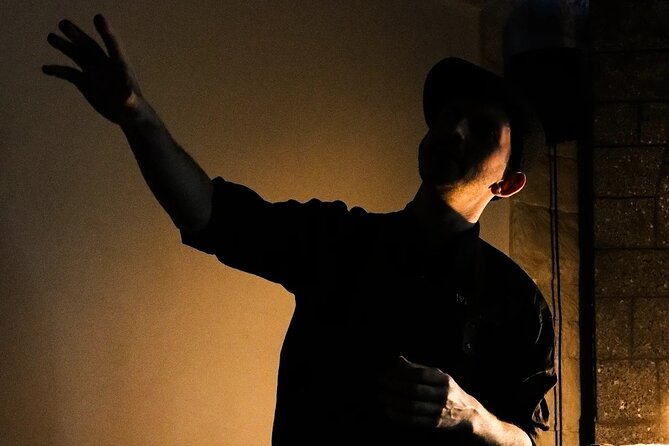
The walk then reaches Trinity College Dublin, founded in 1592. The guide stops outside at College Green to discuss the university and its place in Ireland’s academic and cultural life.
Trinity’s Georgian buildings, lawns, and long institutional history make this one of central Dublin’s most memorable settings. It is a good place to pause and connect the city’s political story with its intellectual story.
The Book of Kells and the Long Room in the Old Library are the big draws for many visitors. The tour information highlights them, but admission is not included. The stop itself is listed as about 10 minutes, so you should treat it as an introduction to Trinity rather than a visit to the exhibition.
This is one of the most important practical points in the description. If seeing the illuminated manuscript and the Long Room is high on your list, you will need to arrange that separately and budget for the ticket. The walking tour can provide context, but it does not guarantee entry.
I like the way this stop can help you make a later visit more rewarding. Instead of entering Trinity with no sense of its age or role, you will already have a framework for understanding why the campus matters.
At the same time, the wording around the Book of Kells may create confusion. You should not assume that check out the Book of Kells means you will go inside during this walk. The listed stop is outside Trinity, and its admission ticket is specifically excluded.
More Walking Tours in Dublin
- Dublin Highlights and Hidden Gems Guided Walking Tour
★ 5.0 · 6,020 reviews - Dublin: Highlights and Hidden Gems Walking Tour
★ 4.9 · 2,140 reviews - 1916 Rebellion Walking Tour
★ 5.0 · 1,605 reviews - 90 Minute Dublin Walking tour and Sightseeing tips
★ 5.0 · 916 reviews
Dublin Castle and the 1916 connection
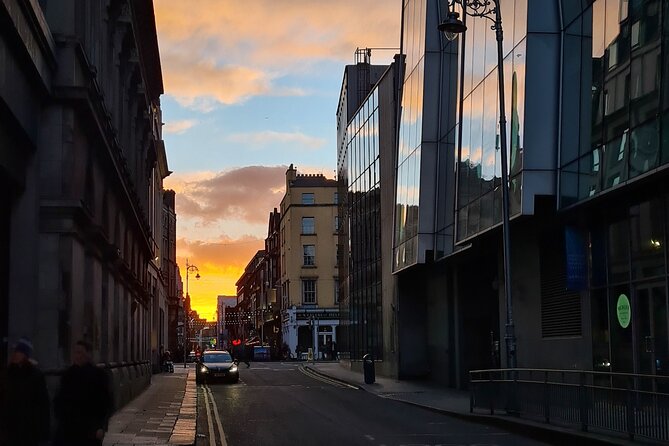
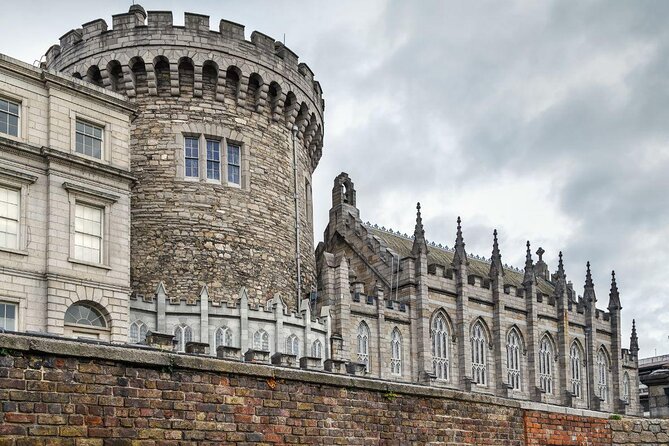
Dublin Castle is the third named stop, again with roughly 10 minutes of commentary. The guide also discusses City Hall and how these places were involved in the 1916 Rebellion.
This section gives the tour a useful change of angle. At the GPO, you see the rising from the rebels’ point of view. At Dublin Castle and City Hall, you consider the buildings linked with government and British administration.
The castle’s role in the city’s political life is central to understanding old Dublin. Even without entering, the surrounding buildings help explain who held authority and how that authority was challenged.
As with the other stops, the admission ticket is not included. The available information does not promise a full interior visit, so plan on receiving an outdoor history talk unless the guide provides different arrangements on the day.
The 10-minute stop is enough to establish the connection, but not enough for a detailed study of the castle complex. I would see it as a bridge between the main stories rather than the place where you spend most of your time.
Donal’s style: history with jokes, poetry, and pub advice
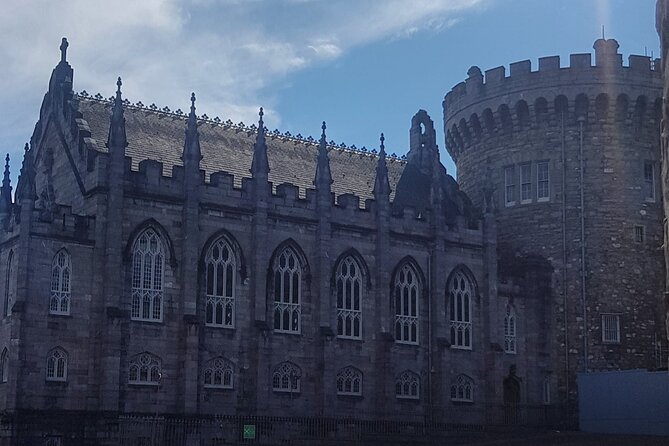
The guide named in the feedback is Donal, and his approach is a major part of the experience. He is described as funny, enthusiastic, open to questions, and willing to share personal opinions about Dublin pubs and restaurants.
That makes the walk feel less like a formal lecture. You may hear poetry along with historical explanation, and you may leave with suggestions for lunch, dinner, or a drink. One recommendation led a participant to O’Neill’s for cottage pie, while other advice included the Jeanie Johnston ship.
Some accounts also describe a stop in an old pub, learning how to pour a Guinness, and even seeing a pub basement with the kegs and cooling room. Those details are appealing, but you should treat them as possible extras or moments shaped by the day, not as guaranteed parts of the published 1-hour-45-minute route.
The pub connection is especially useful for a first visit. Dublin’s best drinking and eating choices are not always obvious from the most crowded streets, and a local’s practical view can save you from choosing a place simply because it is near a famous sight.
Donal’s personal style will not suit every listener. One piece of feedback describes fast, unclear speech and a stronger focus on people and dates than on Dublin itself. If you prefer a slow, highly structured presentation, ask questions and let the guide know what you want to cover. The small group should make that possible.
Timing, walking effort, and what the price covers
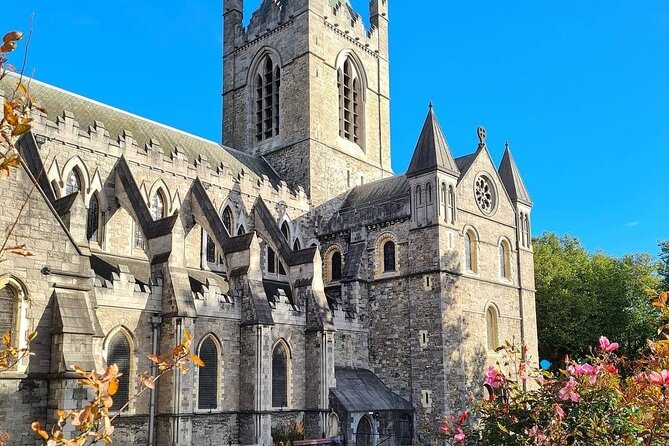
The tour lasts about 1 hour and 45 minutes and starts at 1:00 pm. That timing leaves your morning free for a museum, breakfast, or an independent visit to a major sight.
Because the route is on foot and covers several central locations, comfortable shoes are sensible. The tour is described as suitable for most participants, but the available information does not provide a detailed step-free route or a full accessibility breakdown.
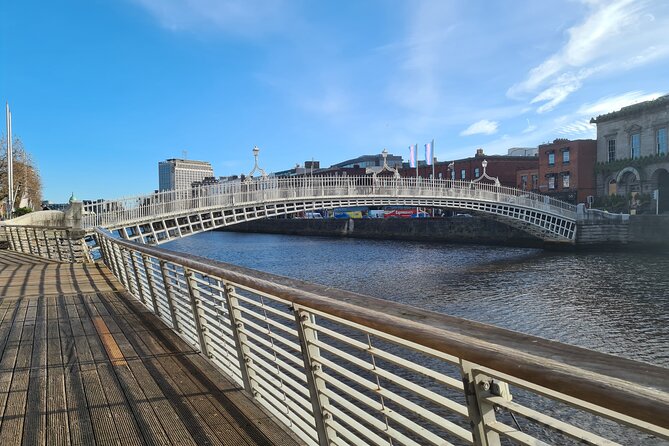
The end point is The Ha’penny Bridge Inn on Wellington Quay, right beside the famous bridge. This is convenient for continuing into Temple Bar, walking along the river, or finding a place to eat after the tour.
The $32.44 price is fair if you want a guide to connect several important sites in a short time. It is less compelling if you mainly want entry to the Book of Kells or Dublin Castle, since those costs come on top and the walk does not include a full indoor visit.
A good way to judge the value is to ask what kind of first day you prefer. If you like hearing the story of a city before exploring its museums, this tour can save you time and give your later sightseeing more meaning. If you want maximum time inside attractions, buy admission tickets and visit independently.
Who will get the most from this walk
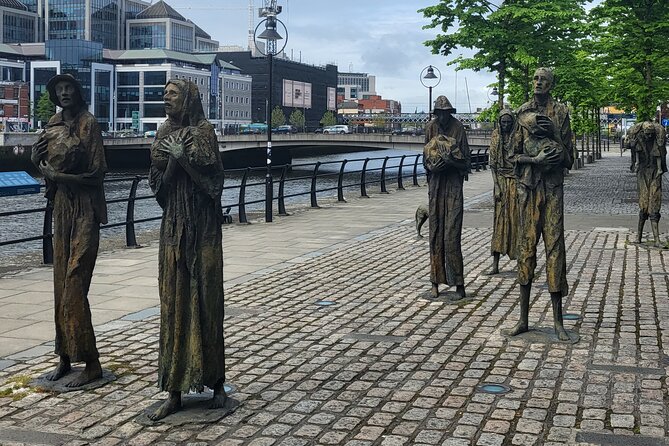
I would recommend the tour to first-time Dublin visitors who want a short introduction to the city’s political past and central sights. It also suits people who prefer a local voice, informal conversation, and practical food and pub suggestions over a formal historical lecture.
Families may find the short length helpful. One account describes Donal as patient with an active five-year-old and accommodating when a restroom was needed. That does not guarantee the same circumstances on every tour, but it suggests the guide is willing to respond to ordinary family needs.
The small maximum group size is another plus for couples and solo visitors. In a quiet period, the group could be much smaller, possibly close to a private walk. That can make it easier to shape the conversation around your questions.
I would be cautious about booking it if your main goal is a detailed academic tour of Trinity College or Dublin Castle. The published schedule gives each named stop only about 10 minutes, and the available details do not promise interior admission.
The tour also depends on weather and a minimum number of participants. If the operator cancels for either reason, you will be offered another date or experience, or a full refund.
Should you book the Historical Walking Tour of Dublin?
Book it if you want a friendly introduction to central Dublin, especially one that connects the GPO, Trinity College, Dublin Castle, and City Hall in a single route. Donal’s humor, poetry, local advice, and willingness to discuss pubs add character that a standard fact-only walk may lack.
Keep your expectations realistic. This is a short overview, not a full attraction tour, and you need extra cash for any admission tickets. The best use of the experience is to learn the city’s basic story, note the places you want to revisit, and collect a few useful local suggestions for the rest of your stay.
The 4.9 rating from 50 reviews and 98 percent recommendation rate point to a strong experience overall, but the one critical account is worth keeping in mind. Donal speaks with energy and personality, and that can mean a fast pace for some people.
For most visitors, the easy meeting point, central route, small group, and reasonable price make this a solid first look at Dublin. If you want a relaxed walk with room for humor and conversation, I would book it. If you want guaranteed entry to the Book of Kells, a museum-style lecture, or extensive time inside the castle, choose a longer or more specialized visit instead.
FAQ
Where does the Historical Walking Tour of Dublin begin?
The tour begins at The Spire on O’Connell Street Upper in North City, Dublin.
What time does the tour start?
The scheduled start time is 1:00 pm.
Where does the tour finish?
The tour ends at The Ha’penny Bridge Inn on Wellington Quay in Temple Bar, beside the Ha’penny Bridge.
How long does the walking tour last?
The experience lasts approximately 1 hour and 45 minutes.
What language is the tour offered in?
The tour is offered in English.
How many people can join the tour?
The maximum group size is 15 travelers.
Is admission to the Book of Kells included?
No. Admission tickets are not included, so you should bring extra money if you plan to enter attractions such as the Book of Kells exhibition.
Is the tour suitable for most people?
The activity information says most people can participate. It is near public transportation, and service animals are allowed.
Can I cancel for a full refund?
Yes. You can cancel at least 24 hours before the local start time for a full refund. Changes or cancellations made less than 24 hours in advance are not accepted for a refund.
Just added around Dublin
- Women Of Ireland: Trailblazers & Pioneers★ 5.0 · 4 reviews
- Wicklow tour of Glendalough★ 4.5 · 8 reviews
- Full Day Private Wicklow Tour★ 5.0 · 12 reviews
- Wicklow Mountains & Glendalough Luxury Private Day Tour★ 5.0 · 23 reviews
- Premium Irish Whiskey Tasting Hosted by Local Dublin Expert★ 5.0 · 77 reviews
- Whiskey Tasting Tour of Dublin★ 5.0 · 117 reviews
- Dublin To Kilkenny Castle Waterford Crystal Private Car – Day Tour★ 5.0 · 8 reviews
- Semi-Private (8people max) 2.5 Hr Dublin Walking Tour★ 5.0 · 69 reviews
Historical Tours, compared.

Dublin Historical Centre Food Tour with 8 Food Tastings & Drinks
Read our review →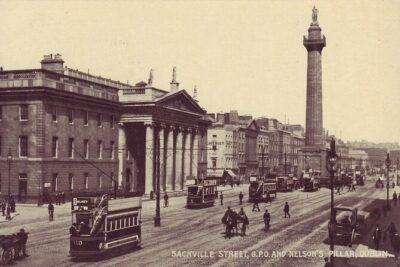

Historical 2-Hour Guided Walking Tour of Dublin
Read our review →
Dublin to Cork, Blarney Castle & Cóbh Heritage Centre by train
Read our review →
Jeanie Johnston Tall Ship Irish Famine History Tour
Read our review →

Deliciously Dublin: The Artisan Donut Walking & History Tour
Read our review →Browse the lists this tour appears in