
Reviewed · CYCLING TOURS
Private Dublin Historical and Heritage Tour by Bike
Dublin’s story makes more sense from a bicycle. In one private ride, you move from Grattan Bridge and Dublin Castle to old city walls, whiskey country, Kilmainham, the River Liffey, and Phoenix Park. The route mixes famous sights with small details you could easily pedal past alone, including the dark pool that gave Dublin its name and the street corner linked with Jonathan Swift and the suffragettes.
I like the private format, since your guide can set the pace, answer your questions, and help take photos. I also like the later souvenir video with captioned photos, a useful reminder of the route after your trip. The main consideration is physical effort and weather: you need moderate fitness, and poor weather can lead to a change of date or a refund.
Key points to know before you book
- A private route through central Dublin and beyond: Your own group rides from Capel Street through the Liberties, Kilmainham, the War Memorial Gardens, Chapelizod, and Phoenix Park.
- History is tied to places you can see: The guide connects bridges, walls, gardens, cemeteries, prisons, breweries, and government buildings to Dublin’s past.
- The route includes traffic-free sections: Parts of the ride use peaceful paths beside the River Liffey, through the War Memorial Gardens, and inside Phoenix Park.
- You get more than a ride: Local suggestions for food and things to do are part of the experience, along with help taking photos.
- The tour takes about three hours: The stated duration ranges from 2 hours 30 minutes to 3 hours 30 minutes, depending on the route and pace.
- You must plan for your own drinks: Bicycles are included, but snacks, refreshments, and drinks are not.
Starting on Capel Street and crossing Grattan Bridge
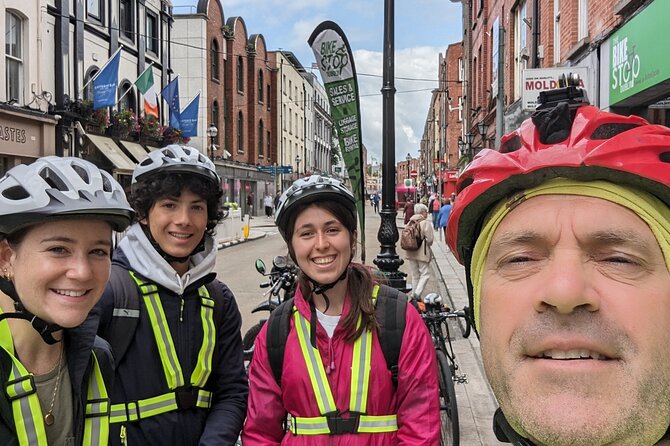
The ride begins at Bike Stop Dublin, 37 Capel Street, in North City. If you stay within 1 kilometer of the meeting point, you can arrange to meet nearby and walk with the guide to the start. Otherwise, make your own way to Capel Street, which is close to public transportation.
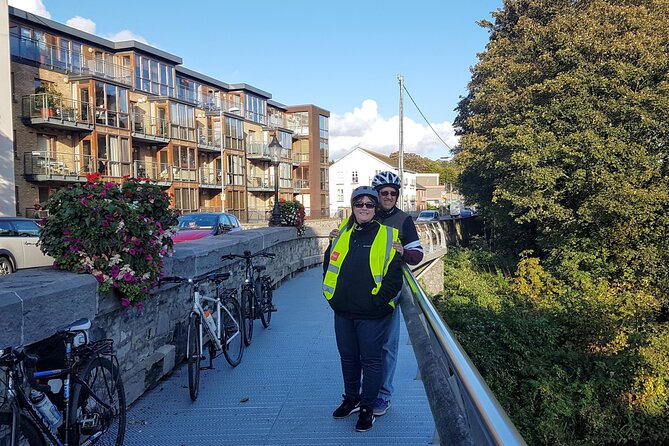
Grattan Bridge is a smart first stop because it gives you an instant sense of Dublin’s layered past. The present bridge was rebuilt in 1875 on the foundations of an earlier crossing from 1755. You stop for about 10 minutes, enough time to hear about the original custom house, a hotel associated with a famous rock band, and the meeting point of the two rivers connected with Dublin’s name.
This is not a stop where you enter a museum or spend time indoors. Its value comes from the guide’s explanation of what sits around the bridge and how the river shaped the city. I like that the tour begins with a place people often cross without a second thought.
More Bike Tours in Dublin
- Cycle Dublin – Bike & ebike Tours
★ 5.0 · 748 reviews - Dublin Panoramic e-Bike Tour with Howth Adventures
★ 5.0 · 544 reviews - Dublin: Bike & E-Bike Tour with a Local Guide
★ 4.6 · 477 reviews
Dublin Castle, Dubh Linn Gardens, and the old city edge
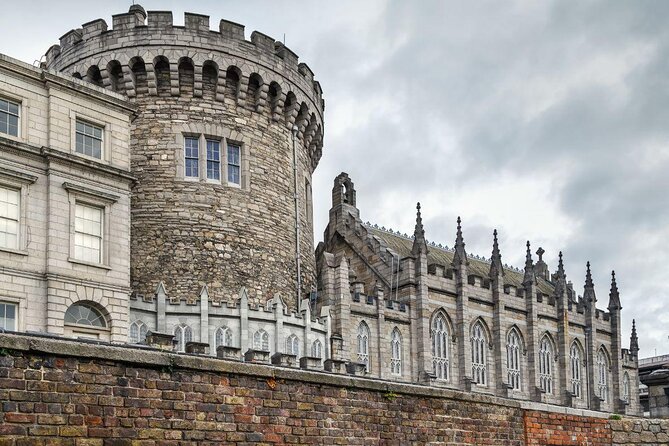
From the bridge, you pass into Dublin Castle’s courtyard. The stop is brief, about 10 minutes, and admission is not included because the tour does not take you inside. Instead, you look at the mix of 12th-century remnants and 18th-century buildings and hear about the castle’s role in government administration during British rule.
That contrast is one of the strongest visual lessons on the ride. Norman remains sit beside later government architecture, giving you a quick view of more than 700 years of political change without requiring a long indoor visit.
Just around the corner, Dubh Linn Gardens offers a quieter pause. The circular garden recalls the dark pool associated with Dublin’s name. You also see the Garda Memorial, the David and Goliath statue, a tribute to the Special Olympics, and the exterior of the Chester Beatty Museum and Library.
You have about 10 minutes here. That is enough to look around and listen, but not enough for a full visit to the Chester Beatty. If you want to see its collections, treat this stop as a preview and return on your own.
The 40 Steps is another short but unusual stop. Metal plates mark the line of the medieval city walls, while the corner connects with Jonathan Swift’s birthplace, a mistranslated street name, and the story of suffragettes arrested after throwing stones at windows. Fifteen minutes here gives the guide time to connect physical traces with social and political stories.
St. Patrick’s Cathedral and the Liberties
St. Patrick’s Cathedral appears as an exterior stop, with about five minutes to take in its scale and gardens. It is presented as a rival to Christ Church Cathedral, another reminder that Dublin’s religious story includes competition as well as devotion.
The stop is short, so do not book this tour expecting cathedral interiors or a detailed architectural visit. Instead, you get the setting, the views, and more context about Jonathan Swift and the surviving Norman walls nearby.
The route then heads into the Liberties, one of Dublin’s oldest residential districts. This is where the bicycle becomes especially useful. You can cover more ground than on foot while still moving slowly enough to notice the older homes, working-class character, and changing streets.
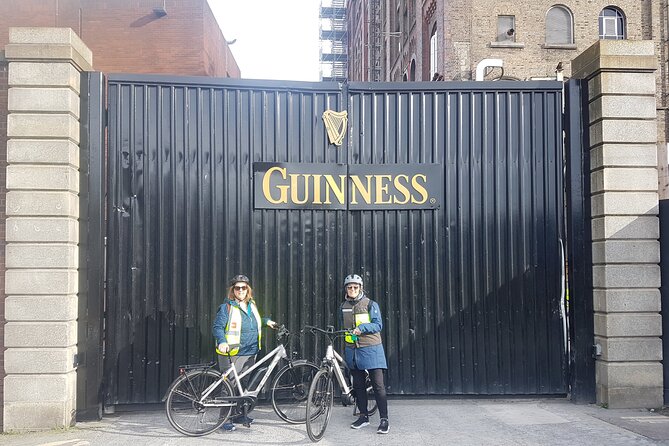
At Teeling Whiskey Distillery, you stop for roughly five minutes. The guide tells the story of Dublin’s great whiskey fire in the 19th century. You do not receive a tasting or a distillery tour as part of the package, so whiskey fans should plan a separate visit if they want to go inside.
The Liberties stop also explains the district’s name and its close connection with the Guinness business. I like this part because it shifts attention away from grand civic buildings and toward the people, trades, and businesses that shaped everyday Dublin.
Kilmainham’s hospitals, gardens, and prison walls
The Royal Hospital Kilmainham was built in the 17th century and now houses the Irish Museum of Modern Art. You pause for about 15 minutes beside the building and gardens, which overlook the city. The tour does not include museum entry, but the grounds and exterior give you a good sense of the site’s scale.
From there, the ride continues along a traffic-free path and stops at Dublin’s oldest cemetery. The supplied route information does not give the cemetery’s name, so you should think of this as an atmospheric pause rather than a formal cemetery tour.
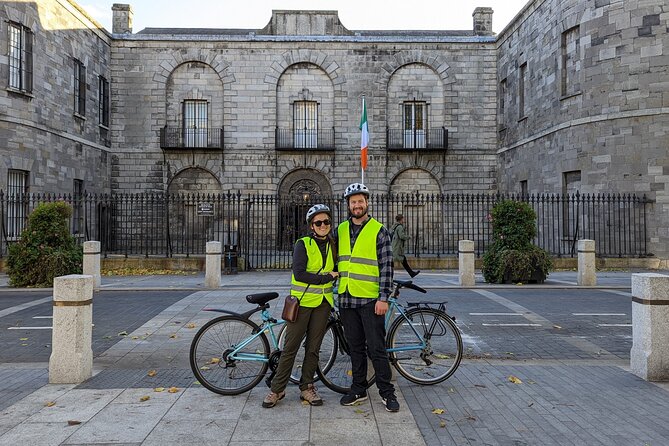
Kilmainham Gaol follows, with about five minutes outside the entrance. The prison is now a major museum, but entry is not part of this bike experience. You hear about its troubled past and the public executions once held outside.
This is an important distinction for booking. If Kilmainham Gaol is high on your Dublin list, the bike tour helps you find it and adds context, but you will need separate time and admission for the interior. The short exterior stop works well for a first orientation, especially if you are still deciding how to organize your Dublin sightseeing.
More Historical Tours in Dublin
- Dublin Historical Centre Food Tour with 8 Food Tastings & Drinks
★ 5.0 · 1,718 reviews - 2-Hour Historical Walking Tour from Dublin
★ 5.0 · 875 reviews - Historical 2-Hour Guided Walking Tour of Dublin
★ 4.7 · 865 reviews - Dublin to Cork, Blarney Castle & Cóbh Heritage Centre by train
★ 4.5 · 510 reviews
The Liffey, War Memorial Gardens, and Chapelizod
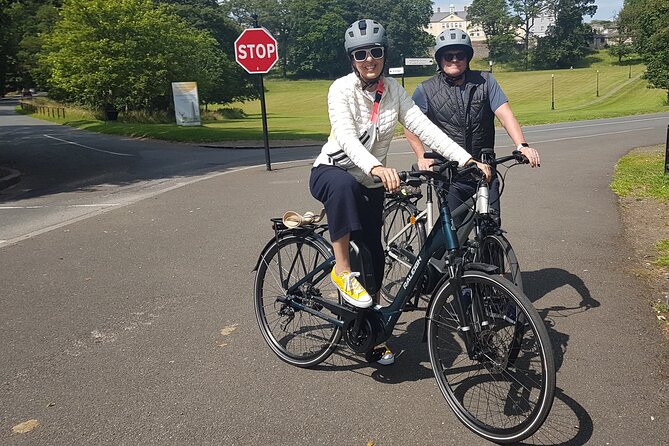
After Kilmainham, the route becomes quieter and more open. You pedal through the War Memorial Gardens, built to remember those who lost their lives in the First World War. The path is traffic-free, and the setting provides a calmer change after the city streets and prison walls.
The ride then follows a purpose-built cycleway along the River Liffey toward the historic village of Chapelizod. This part is one of the tour’s practical strengths. You are not simply stopping at monuments. You are seeing how Dublin connects its central districts with river paths and outlying neighborhoods.
Chapelizod marks a change in mood and scenery, though the supplied details do not specify a formal stop length or a list of sights there. The guide’s role matters here, since a private ride can pause for questions or adjust its pace more easily than a large group excursion.
You should still bring water. Drinks and snacks are not included, and the route can last up to 3 hours 30 minutes. The duration depends on the selected route and pace, so allow enough space in your day rather than scheduling another fixed activity immediately afterward.
Into Phoenix Park by bicycle
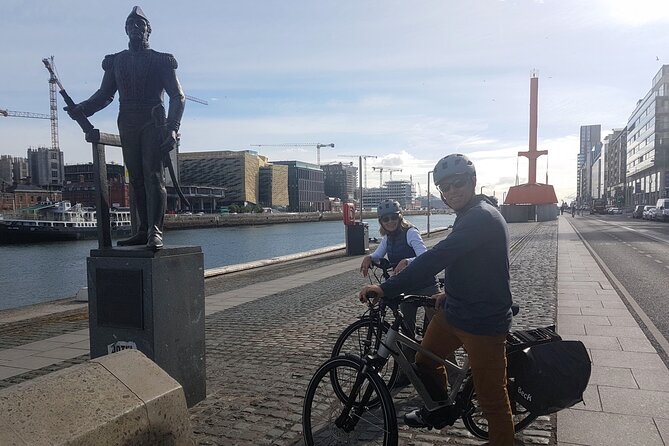
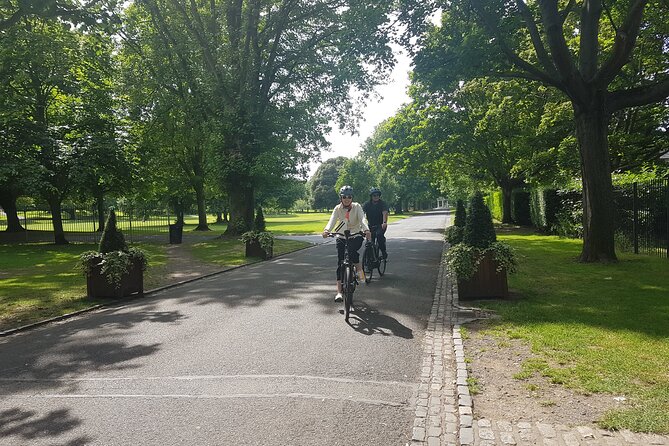
Leaving Chapelizod, you enter Phoenix Park through a gate in its 17th-century walls. The park is one of Europe’s largest urban parks, and the ride uses dedicated cycle paths. With luck, you may see wild deer along the way.
This is a good reason to choose a bicycle tour over a strictly central walking tour. You can reach a much larger area while avoiding the fatigue of covering the same distance on foot. The park also gives you a chance to enjoy Dublin’s open spaces after several hours of architecture and political history.
The deer are a possibility, not a promise, so do not book this part solely for wildlife. The park’s size, paths, and natural setting are the dependable attractions. Your guide can also help with photos, which is useful when you want a picture of your whole group rather than a quick self-timer shot.
Croppies Acre and the route back
Croppies Acre Memorial Park is the final named stop. Folklore links the site with a mass burial grave for victims of the 1798 rebellion. You also view Collins Barracks, home of the National Museum of Decorative Arts and History, and see the Guinness Brewery across the River Liffey.
The stop lasts about five minutes, so expect an introduction rather than a long visit. Its position makes it a fitting final note because the view brings together rebellion, military history, museums, industry, and the river routes that connect them.
The tour ends back at the meeting point on Capel Street. That makes the experience easy to fit into a morning or afternoon, and you do not need to arrange a separate return transfer.
What the private format is worth at $120.14
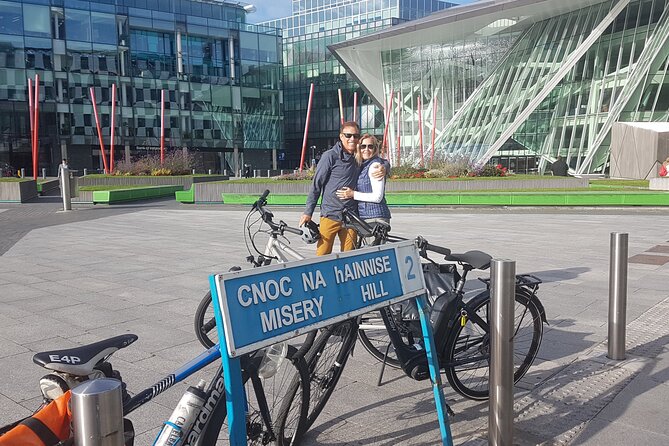
The price is listed at $120.14 per person. That is not the cheapest way to see Dublin, but the comparison changes if you are traveling as a small private group. You are paying for a dedicated guide, bicycle use, route planning, local recommendations, photo help, and a later souvenir video with captioned photos.
The video is a useful extra rather than a reason alone to book. It gives you a record of the route and can help you remember the smaller stops that blur together after a busy day. The stronger value is the guide’s ability to explain why a location matters and to adapt the experience to your group.
Admission tickets are not included, though most listed stops are exterior visits with free admission. You should budget separately if you want to enter Kilmainham Gaol, the Chester Beatty, the Irish Museum of Modern Art, Teeling Whiskey Distillery, or other attractions along the way.
Group discounts are offered, but the exact discount is not provided. If you are traveling with several people, check the final price carefully before booking. A private tour can become better value when divided among a group, especially if you prefer not to follow a fixed public departure.
Who will enjoy this bike tour most
I would choose this for someone visiting Dublin for the first time who wants a broad orientation in a single outing. It covers central landmarks, working-class districts, major historic sites, and larger parks, so you can decide what deserves a longer return visit.
It also suits repeat visitors who want to see a less polished side of the city. The Liberties, old walls, river paths, Chapelizod, Croppies Acre, and the working connections between Guinness and Dublin offer a wider picture than a short central sightseeing circuit.
You need moderate physical fitness. The ride includes city streets and longer stretches on cycle paths, and the full route can last several hours. The tour is offered in English, and it is private, so the pace is limited to your group rather than a large mixed party.
I would not pick it if your main goal is to spend a long time inside Dublin Castle, St. Patrick’s Cathedral, Kilmainham Gaol, or a museum. Those places appear as short exterior stops. This is a moving overview, not a series of interior visits.
The tour also depends on good weather. Dublin’s rain can change plans, so keep some flexibility in your schedule. If poor weather cancels the experience, you are offered another date or a full refund.
Booking advice and cancellation terms
Confirmation arrives at booking, and the experience is near public transportation. It is commonly booked well ahead, with an average of 59 days in advance, so reserve early if your Dublin dates are fixed.
Free cancellation is available up to 24 hours before the start time for a full refund. Changes or cancellations made inside that 24-hour window are not accepted for a refund. The same local-time cut-off applies to the activity date.
Only your group takes part, which is the biggest comfort advantage here. You can ask for more explanation at a stop, move on when you have seen enough, or slow down for photographs without worrying about a coach full of people.
Should you book the Dublin historical bike tour?
Book it if you want a lively introduction to Dublin’s past, prefer seeing a city from a bicycle, and value a private guide over long indoor visits. The route gives you a useful map of Dublin, from Grattan Bridge and the castle to the Liberties, Kilmainham, the Liffey, Chapelizod, Phoenix Park, and Croppies Acre.
Skip it if you want tastings, museum admissions, cathedral interiors, or a relaxed ride with almost no physical effort. Bring water, allow up to 3 hours 30 minutes, and keep your schedule flexible for weather.
The strongest praise attached to the experience names guide Ben and points to his clear grasp of Dublin’s story. With a perfect 5 rating from 30 reviews and 100 percent recommendation, the tour has a strong record, but its real appeal is practical: you cover a lot of ground, hear local stories, and finish with a better idea of where to spend the rest of your time in Dublin.
FAQ
Where does the Dublin bike tour start and finish?
It starts at Bike Stop Dublin, 37 Capel Street, North City, Dublin, D01 X2E5. The tour ends back at the same meeting point.
Is pickup available?
If you are staying within 1 kilometer of the designated meeting location, you can be met there and walk with the guide to the start point. Pickup details outside that area are not provided.
How long does the experience last?
The approximate duration is between 2 hours 30 minutes and 3 hours 30 minutes.
Is bicycle use included?
Yes. Use of a bicycle is included in the tour price.
Are food and drinks included?
No. Snacks, refreshments, and drinks are not included, so plan to bring or buy your own.
What happens if the weather is poor?
The experience requires good weather. If it is canceled because of poor weather, you are offered a different date or a full refund.
More Private Tours in Dublin
- The Dublin Private Walking Tour
★ 5.0 · 701 reviews - Private Dublin Arrival Transfer – Airport to Hotel / Accommodation
★ 3.5 · 304 reviews - Private (Nearly!) All of Dublin in 5 hours (Walking Tour)
★ 5.0 · 281 reviews - Cliffs of Moher Private Award Winning Luxury Mercedes Car Tour
★ 5.0 · 176 reviews
Just added around Dublin
- Women Of Ireland: Trailblazers & Pioneers★ 5.0 · 4 reviews
- Wicklow tour of Glendalough★ 4.5 · 8 reviews
- Full Day Private Wicklow Tour★ 5.0 · 12 reviews
- Wicklow Mountains & Glendalough Luxury Private Day Tour★ 5.0 · 23 reviews
- Premium Irish Whiskey Tasting Hosted by Local Dublin Expert★ 5.0 · 77 reviews
- Whiskey Tasting Tour of Dublin★ 5.0 · 117 reviews
- Dublin To Kilkenny Castle Waterford Crystal Private Car – Day Tour★ 5.0 · 8 reviews
- Historical Walking Tour of Dublin★ 5.0 · 50 reviews
Cycling Tours, compared.
Dublin Panoramic e-Bike Tour with Howth Adventures
Read our review →

E-Bike & Bike Tour with a Local Guide in Dublin
Read our review →


Self-Guided Bike Tour of Killarney National Park, Muckross Gardens & Waterfall
Read our review →Browse the lists this tour appears in