
Reviewed · WALKING TOURS
Secret and unusual Dublin: guided walking tour
Dublin’s best stories are not always found inside its grandest buildings. This French-language walking tour links familiar sights with overlooked corners, old rebellion traces, Viking connections, Celtic symbols, street art, music, and literature. You get a quick introduction to the famous Dublin, then spend more time looking past the obvious.
I like the two-hour length, which gives you useful bearings without swallowing half a day. I also like the relaxed style described in the feedback: humor, practical information, and a few legendary tales make this feel more like a lively city walk than a formal lecture. The main catch is that it is entirely on foot, entrance fees are extra, and it is not suitable for wheelchair users.
Key points to know before booking
- A French-speaking guide leads the entire walk, making this a useful choice for French-speaking visitors.
- The route begins at the O’Connell Monument and covers Temple Bar, Dublin Castle, Powerscourt Townhouse, and Trinity College.
- The focus is on lesser-known details, including rebellion remnants, Viking heritage, Celtic symbols, street art, music, and literature.
- The tour lasts two hours, so it works well as an introduction early in your Dublin stay.
- No attraction admissions are included, and the activity is outdoors, so bring clothing suited to Irish weather.
- The strongest praise is for the guide’s friendly tone, humor, useful facts, and unusual stories.
Starting beneath O’Connell’s monument
Meet in front of the O’Connell Monument at the bottom of O’Connell Street. This is a practical starting place because O’Connell Street is one of the city’s main north-south routes, and the monument gives you an easy landmark to spot.
The opening section provides a quick introduction to Dublin’s major sights. Do not expect a long stop at every famous building. The point is to give you enough context to understand the city before the walk turns toward its less obvious corners.
Daniel O’Connell’s name is tied to Irish political history, so beginning here fits the theme of rebellion, independence, and public memory. You will likely hear how Dublin’s streets carry layers of political meaning, rather than serving only as routes between attractions.
Wear comfortable shoes. Two hours may sound short, but Dublin’s central streets can be hard on your feet, and the value of this experience comes from moving through several parts of the city rather than sitting in one place.
More Walking Tours in Dublin
- Dublin Highlights and Hidden Gems Guided Walking Tour
★ 5.0 · 6,020 reviews - Dublin: Highlights and Hidden Gems Walking Tour
★ 4.9 · 2,140 reviews - 1916 Rebellion Walking Tour
★ 5.0 · 1,605 reviews
Temple Bar beyond the pub signs
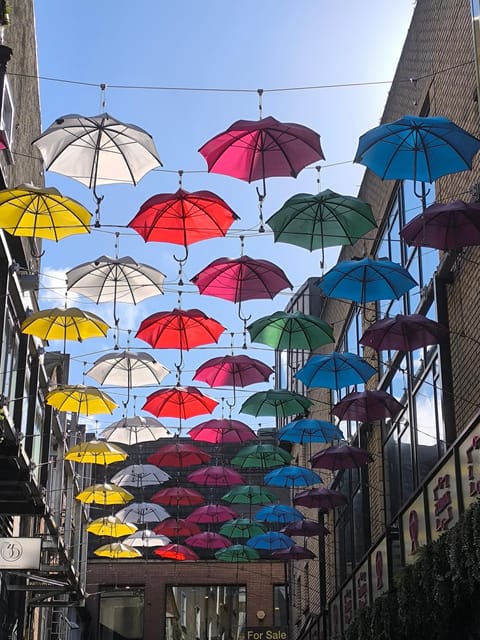
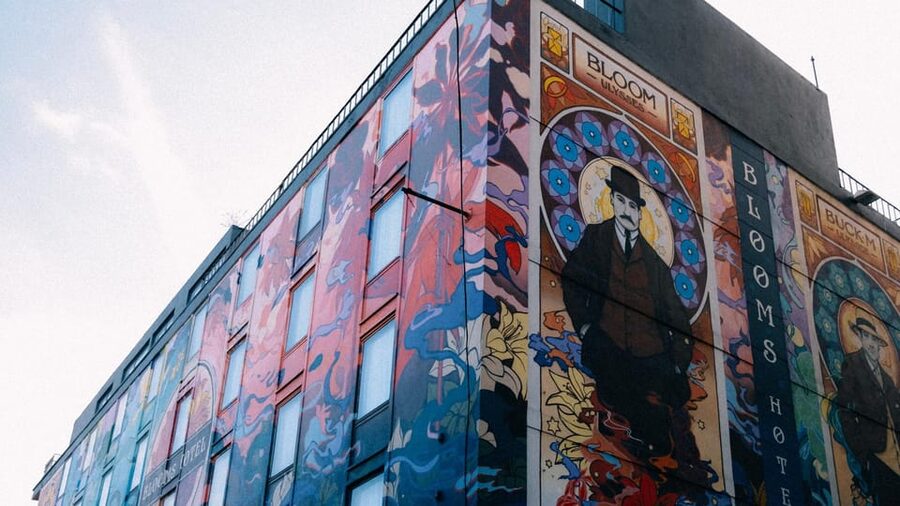
Temple Bar is Dublin’s best-known visitor district, famous for its pubs, narrow streets, cultural venues, and heavy foot traffic. Many walking tours simply point out the familiar landmarks and move on. This one uses Temple Bar as a place to look for street art, local culture, and less obvious details.
That change in focus matters. Temple Bar can feel overly packaged if you only see it as a line of pubs, but its lanes and walls also show how Dublin presents its creative side. The guide may connect the area with music and cultural life, giving you a more useful way to read the district.
You should keep your expectations measured. The tour does not promise entry to cultural venues, galleries, or other sites, and entrance costs are not included. Temple Bar is also one of the city’s busiest areas, so the group may need to pause at the edge of a lane or adjust its pace.
I like this part because it turns a familiar stop into a lesson in how Dublin’s public spaces change meaning. You are not simply collecting another photo. You are learning to notice the city’s visual details and cultural references.
Rebellion traces in ordinary streets
Dublin’s independence story is not confined to museums. Remnants of earlier rebellions can appear in streets, buildings, plaques, and public spaces that are easy to pass without a guide.
This section is likely to appeal to you if you prefer political history with a physical connection. Instead of hearing a long list of dates, you can connect events with the places where memories of conflict remain visible. The guide’s role is especially useful here because these traces may not explain themselves.
The tour’s theme is not a full account of Irish independence. In two hours, you will receive selected stories and landmarks rather than a complete political timeline. That is a fair trade if you want a lively introduction, but history enthusiasts seeking detailed military or political analysis will need a longer specialist tour or museum visit afterward.
The strongest feedback about the experience points to a friendly, informed guide who adds humor and separates useful information from more legendary stories. That balance is important in Dublin, where history and storytelling often travel together.
Viking Dublin and the city beneath the city
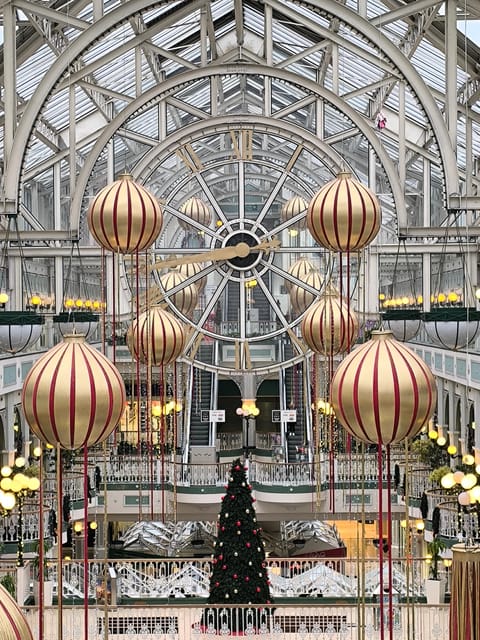
The tour also follows Dublin’s Viking past. The Viking period is one of the city’s oldest layers, and it helps explain why Dublin developed as a settlement and trading center long before the modern capital took shape.
You may find this portion especially useful because it gives older context to streets and districts that otherwise seem thoroughly modern. A reference to Viking heritage can make the city feel less like a collection of later Georgian, Victorian, and modern buildings and more like a place built up over many centuries.
The information provided does not specify an admission visit to a Viking museum or archaeological site. Treat this as an outdoor introduction, not a museum tour. If a particular Viking attraction interests you, you should plan and pay for that separately.
This is one reason the walk offers good value at $57 per person. You are paying for a guide who connects several themes across the city, not for a ticket bundle. The price makes the most sense if you appreciate interpretation and local stories more than included admissions.
A few more Dublin half-days to weigh up
- Dublin to Cliffs of Moher, including Wild Atlantic Way and Galway
★ 5.0 · 23,331 reviews - From Dublin: Cliffs of Moher, Burren & Galway City Day Tour
★ 4.8 · 18,888 reviews - Dublin: Guinness Storehouse Entry Ticket
★ 4.6 · 16,863 reviews - Dublin to Cliffs of Moher, Burren, Wild Atlantic Way, Galway Tour
★ 5.0 · 12,924 reviews
Secret corners, Celtic symbols, and unusual details
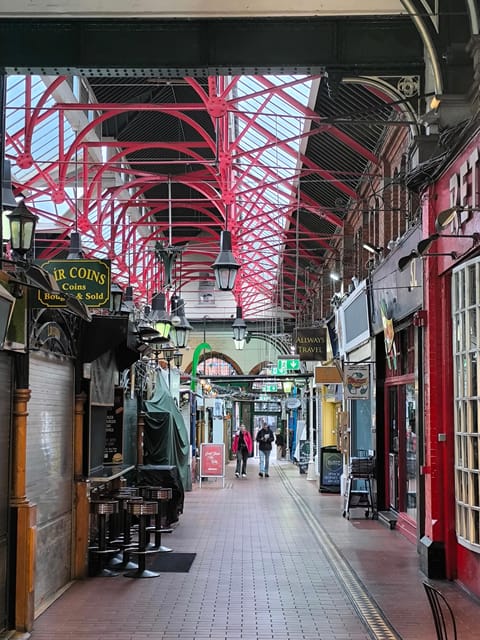
The heart of the experience is its attention to corners you might not notice alone. The route includes unusual places, atypical details, Celtic symbols, and explanations of what those symbols mean.
This is where the tour earns its title. You should not expect a dramatic secret entrance or a private attraction. The appeal is subtler: a sign, carving, building detail, street feature, or small remnant can become interesting once someone explains its background.
Celtic symbols are particularly well suited to this kind of walk. You may see familiar shapes without knowing how they are used or understood. A guide can provide the cultural context, while you gain a better eye for details on later walks through Ireland.
The supplied information does not identify every secret stop in advance. That is useful if you want some surprise, but less useful if you are choosing a tour based on a fixed list of named attractions. Think of the route as a guided way of seeing rather than a checklist of guaranteed interior visits.
Dublin Castle and the architecture of power
Dublin Castle is one of the clearest points on the route. The guide takes you through the area and explains its place in the city’s history and architecture.
The castle matters because it represents a different side of Dublin from the music, pubs, and street art found elsewhere on the walk. Its buildings connect the city with earlier centuries and with political authority. Even a brief outdoor explanation can help you understand why this area carries such weight.
No entrance fee is included, so you should not assume that the walking tour provides access to the castle interiors. The experience is best understood as a guided look at the site and its surrounding context.
I like the contrast here. After the looser atmosphere of Temple Bar and the smaller city details, Dublin Castle gives the walk a firm architectural and political anchor. You can see how the city’s past is expressed both through grand buildings and through quiet remnants in ordinary streets.
Music and literature in the city streets
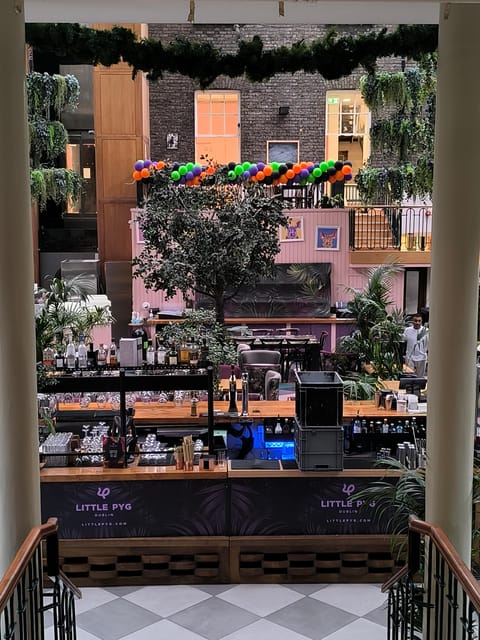
Dublin’s cultural identity is closely tied to songs, writers, performers, and storytelling. This walk includes places connected with music and literature, although the supplied route does not name particular artists or venues.
That lack of a fixed list means your guide’s emphasis may shape the experience. You might hear a story connected with a building, a street, or a local cultural tradition. The goal is not a concert or a literary lecture. It is a short set of connections that shows how Dublin’s creative life is woven into its streets.
The feedback describes the visit as pleasant and relaxed, with humor alongside useful information and legendary tales. That tone should suit you if you want culture presented in an approachable way. It may be less suitable if you want a serious literary seminar or a performance-centered tour.
I would use this portion as a prompt for further exploring Dublin. If a name, song, or writer catches your interest, note it down and return to the relevant area later. A good city walk should leave you with a few threads to follow.
Powerscourt Townhouse and a change of scale
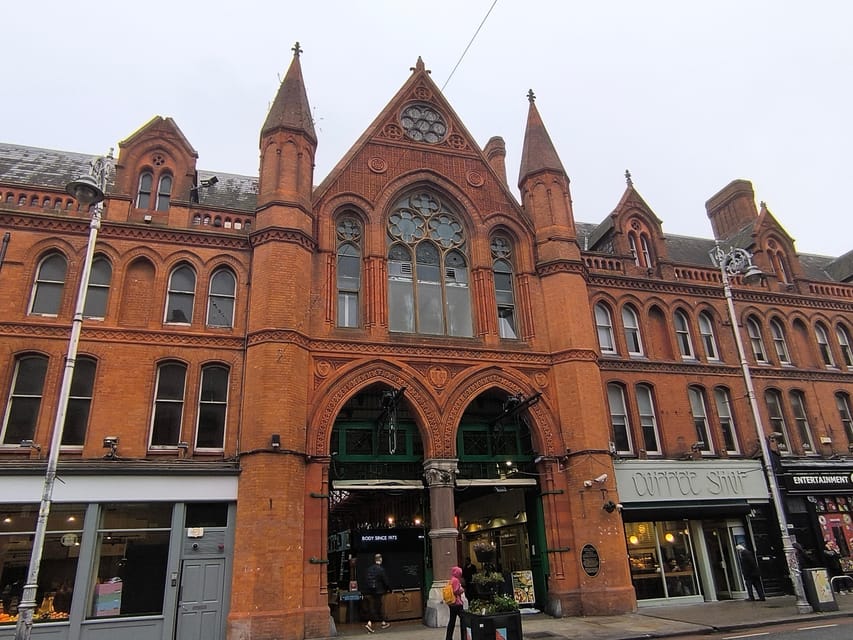
Powerscourt Townhouse is another named stop. Its architecture adds a more refined, historic character to the route and gives you a chance to compare one of Dublin’s emblematic buildings with the smaller corners visited earlier.
The building helps show that Dublin’s story is not only about rebellion and medieval origins. Social life, architecture, design, and the city’s changing wealthy districts also form part of the picture.
Again, this is a guided outdoor visit rather than an included admission. You should check the plan carefully if you want to go inside. The tour price covers the French guided walk, not entry to sites along the way.
This stop works well near the later part of a two-hour route because it shifts your attention back to architecture. By then, you have heard about symbols, street culture, Vikings, political history, music, and literature. Powerscourt Townhouse helps pull those themes into a broader view of how Dublin’s center developed.
Ending near Trinity College, with one detail to clarify
Trinity College is listed as the finish point, giving the walk a useful landmark near the center of Dublin. It is an excellent place to continue sightseeing after the tour, though this experience does not include entrance to the college or its attractions.
There is one practical detail to check before booking: the route information names Trinity College as the finish, while the meeting-point information says the activity ends back at the meeting point. Check the current meeting instructions and confirm the final drop-off point when you reserve.
That small inconsistency is worth noting, especially if you have a timed reservation afterward. It should not be difficult to manage, but you will want to know where the guide actually finishes the walk.
Is $57 fair for two hours?
At $57 per person, this is not a bargain city orientation if you are looking only for a basic map and a list of landmarks. Dublin has many free streets to explore.
The price makes more sense if you want a French-language guide who can connect scattered details into a story. You are paying for the guide’s explanations, pacing, local anecdotes, and ability to point out things you might miss on your own. The tour also covers several themes in a compact period: Vikings, rebellions, architecture, street culture, Celtic symbols, music, and literature.
Because admissions are not included, budget separately if you want to enter Dublin Castle, Trinity College, or another attraction. That separation can be useful because you are free to choose which places deserve extra time rather than paying for entrances you may not use.
The rating is a perfect 5 from three pieces of feedback, with particular praise for the guide’s friendly manner, humor, useful information, and unusual stories. That is encouraging, though the small number of ratings means you should treat it as a positive signal rather than a guarantee of every future outing.
Who will get the most from this walk?
I would recommend this tour to you if you speak French and want an easy first look at central Dublin with more character than a standard landmark circuit. It suits curious visitors who enjoy stories, symbols, architecture, and small surprises.
It is also a good fit if you have only two hours available. You can use it at the start of a trip to get your bearings, then return to the areas or subjects that interest you most.
You may want something else if you need a wheelchair-accessible route, want to spend time inside attractions, or prefer a tightly documented academic history tour. The activity is not suitable for wheelchair users, and the supplied information does not give a detailed accessibility plan for other mobility needs.
The weather matters, too. Bring clothing suitable for Irish conditions, including protection from rain and wind. This is a walking tour, and the experience depends on being comfortable outdoors.
You can cancel up to 24 hours before the activity for a full refund, and the reserve-now, pay-later option keeps your plans flexible. Those terms are helpful if your Dublin schedule may change, but you should still check the available start times before committing.
Should you book Secret and Unusual Dublin?
Book it if you want Dublin explained through its lesser-seen details, not just its headline attractions. The French guide, relaxed pace, humor, and mix of Viking, political, architectural, musical, literary, and Celtic themes give the walk a clear personality.
Skip it if you mainly want included admissions or a long visit inside Dublin Castle or Trinity College. For most French-speaking visitors who enjoy walking and want a fresh way to read the city, $57 is reasonable, provided you arrive ready for the weather and accept that the real product is interpretation, not entry tickets.
FAQ
Where does the tour begin?
It begins in front of the O’Connell Monument at the bottom of O’Connell Street.
Where does the tour end?
The route information lists Trinity College as the finish, while the meeting-point information says the activity ends back at the meeting point. Check the final meeting instructions when booking.
What language is the tour in?
The live guided tour is in French.
How long does the tour last?
The walking tour lasts two hours. Starting times vary, so check availability for the date you want.
Are entrance fees included?
No. Entrance to visited sites is not included in the tour price.
Is the tour suitable for wheelchair users?
No. The activity is listed as not suitable for wheelchair users.
Just added around Dublin
- Women Of Ireland: Trailblazers & Pioneers★ 5.0 · 4 reviews
- Full Day Private Wicklow Tour★ 5.0 · 12 reviews
- Wicklow Mountains & Glendalough Luxury Private Day Tour★ 5.0 · 23 reviews
- Wicklow tour of Glendalough★ 4.5 · 8 reviews
- Premium Irish Whiskey Tasting Hosted by Local Dublin Expert★ 5.0 · 77 reviews
- Whiskey Tasting Tour of Dublin★ 5.0 · 117 reviews
- Dublin To Kilkenny Castle Waterford Crystal Private Car – Day Tour★ 5.0 · 8 reviews
- Semi-Private (8people max) 2.5 Hr Dublin Walking Tour★ 5.0 · 69 reviews
Walking Tours, compared.
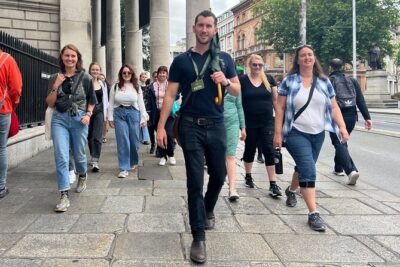
Dublin Highlights and Hidden Gems Guided Walking Tour
Read our review →

90 Minute Dublin Walking tour and Sightseeing tips
Read our review →

Historical 2-Hour Guided Walking Tour of Dublin
Read our review →
Dublin Traditional Irish 3 Course Meal Walking Tour with Local
Read our review →
Browse the lists this tour appears in