
Reviewed · WALKING TOURS
90 Minute Dublin Walking tour and Sightseeing tips
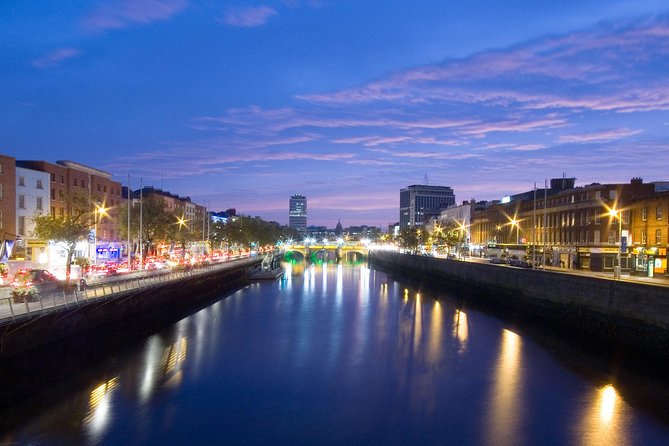
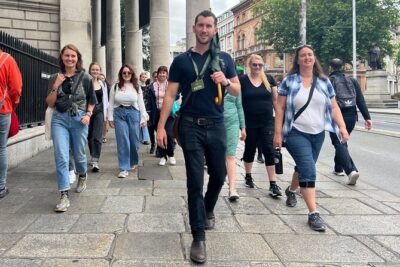
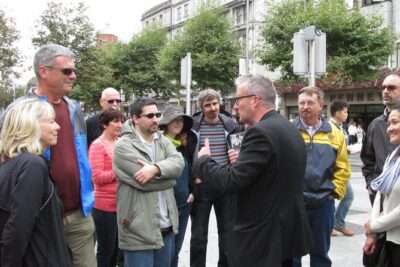
Dublin’s story comes at you quickly on this compact walk: Viking settlement, rebellion, independence, music, politics, and pub culture, all packed between the River Liffey and Christ Church Cathedral. Guides such as Alex and Sam turn streets and statues into stories, with plenty of time for questions.
I like the smart route, which links O’Connell Street, the General Post Office, Trinity College, Temple Bar, Dublin Castle, and Christ Church without wasting time on distant sights. I also like the practical local advice, especially around Guinness, Irish music, restaurants, and places worth returning to after the walk.
The main caution is that this is a history-heavy tour with city traffic, changing weather, and some brisk walking. One guest found the commentary too focused on architecture and dates, while another felt the tour ran long, so this may not suit you if you want a quiet, tightly timed stroll with little narration.
Key points at a glance
- Dublin in one strong orientation walk: Cover the city center from Aston Quay to Christ Church Cathedral in about 1 hour 45 minutes.
- History you can see: Examine bullet damage at the General Post Office, hear about the 1916 Rising, and trace the Viking settlement of Dubhlinn.
- Guides who adjust the conversation: Alex is especially praised for clear storytelling and tailoring the walk to questions and interests. Sam also leads tours.
- A useful first-day activity: The route gives you ideas for museums, pubs, music, restaurants, architecture, and further sightseeing.
- Small-group potential: The maximum is 25 people, and some departures can be much smaller, even private-feeling.
- A modest price for city orientation: At $21.77 per person, the walk costs less than many ticketed Dublin attractions and can help you plan the rest of your stay.
A fast, story-filled introduction to Dublin
This is best understood as a city orientation rather than a full sightseeing tour. You are not going inside every major building or spending half an hour at one monument. Instead, you move from place to place while your guide explains how Dublin grew from a Viking settlement into the capital you see today.
The route is designed to spark ideas. You will finish knowing where Trinity College, Temple Bar, Dublin Castle, and Christ Church Cathedral are located, along with a better sense of how the north and south sides of the city fit together. That matters on a first visit, when Dublin’s compact center can still feel confusing.
The tour is offered in English and includes a local professional guide. There is no food, drink, or lunch included, so think of it as a walking introduction with recommendations attached.
At $21.77, the value is good if you want context and a useful first look at central Dublin. The tour earns a 4.9 rating from 917 reviews, with 97 percent of customers recommending it, but the experience depends heavily on the guide’s delivery and your interest in history. Alex receives especially warm praise for his humor, clear explanations, and ability to shape the discussion around the group.
More Walking Tours in Dublin
- Dublin Highlights and Hidden Gems Guided Walking Tour
★ 5.0 · 6,020 reviews - Dublin: Highlights and Hidden Gems Walking Tour
★ 4.9 · 2,140 reviews - 1916 Rebellion Walking Tour
★ 5.0 · 1,605 reviews
Starting at Aston Quay and crossing Dublin’s story
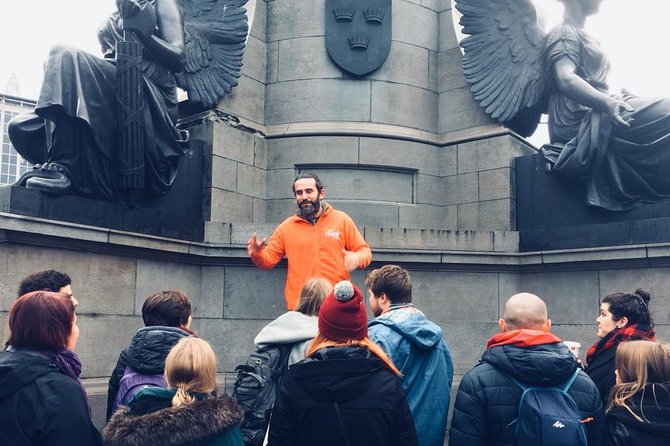
Meet at 12 Aston Quay, near Temple Bar and the River Liffey. The opening introduction takes about five minutes, giving you a chance to say hello, ask about your interests, and settle into the group before the walking begins.
That short welcome is more useful than it sounds. If you care about Irish independence, literature, pubs, architecture, food, or local neighborhoods, tell the guide early. Alex is described as someone who asks what the group wants to learn and adjusts the tour accordingly. On some departures, the group has been as small as two people, which allows for a more conversational walk.
From Aston Quay, the route heads toward O’Connell Street. You cross from the south side toward the north side, a simple movement that helps you understand Dublin’s layout. Keep your phone handy for directions, but expect to listen while walking rather than stop at every corner for a formal presentation.
The city center can be noisy. Traffic and street sounds sometimes compete with the guide, and one person felt an individual audio system would have helped. Guides may need to project their voices, so stay close if you have difficulty hearing in outdoor settings.
O’Connell Street and the General Post Office
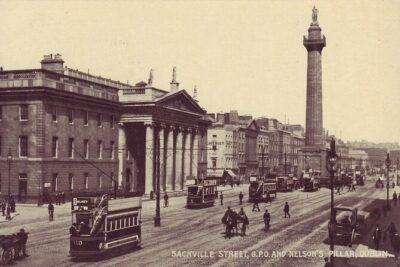
O’Connell Street provides the tour’s first major history lesson. It is one of Ireland’s main thoroughfares and is described as the widest street in the country. Along the way, you hear how it received its present name after being renamed twice, then meet statues and places tied to Irish political history.
The guide explains how the Irish War of Independence began in this area and how the Civil War followed independence. You also hear what happened to Nelson’s Pillar and why windows along the street were broken at the same time. These details give the grand boulevard a human scale. You are not simply looking at statues. You are learning how ordinary Dublin streets became places of conflict.
The General Post Office, or GPO, is the most important stop on O’Connell Street. Your guide covers the 1916 fighting, the rebels’ occupation, the British gunboat Helga sailing up the Liffey, and the bombardment of the city center.
Look closely at the building’s exterior for bullet damage from the fighting more than a century ago. You might also get a chance to step inside beneath the high ceiling, although interior access is not promised. The stop remains worthwhile from outside because the GPO connects the physical city to the story of Irish independence.
Near the post office is Oliver Sheppard’s 1935 statue, The Death of Cú Chulainn. It introduces one of the central figures of Irish mythology and adds an older layer to a stop otherwise focused on modern rebellion. This mix of legend and politics is one of the tour’s strengths.
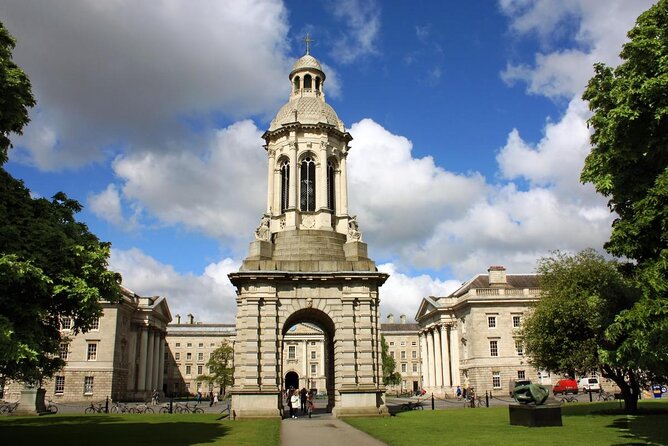
Trinity College and College Green
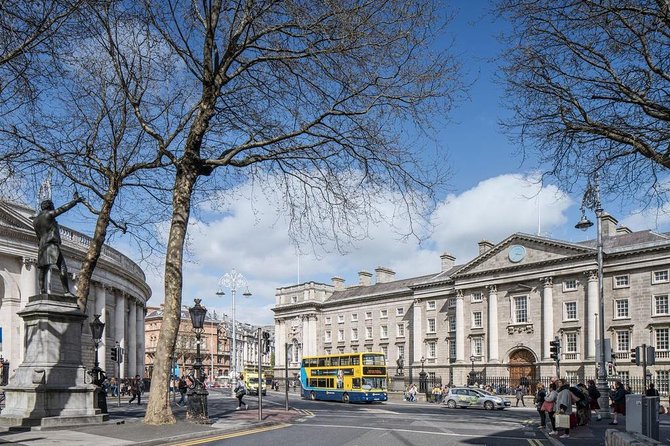
The walk then returns toward Westmoreland Street and College Green, the area around Trinity College Dublin. This section shifts from rebellion and street battles to religion, education, and changing city life.
The site once held a monastery associated with St Patrick’s conversion of some early pagan Celts. Your guide traces the area from Celtic and early Christian practices through the founding of Trinity and the habits of modern students. You get a sense of how the same patch of Dublin has changed purpose over many centuries.
The tour does not include a guaranteed visit inside Trinity College or access to the Book of Kells. That is important when comparing this experience with a dedicated Trinity tour. Here, the value comes from seeing the college’s position within the city and learning how College Green connects the north and south sides.
This is also a useful place to note the tour’s pace. The listed stops are short, usually five or ten minutes, so you will hear a focused explanation before moving on. If you want long periods for photographs or detailed architectural study, you may feel rushed. If you want a lively introduction that keeps moving, the timing works well.
A few more Dublin half-days to weigh up
- Dublin to Cliffs of Moher, including Wild Atlantic Way and Galway
★ 5.0 · 23,331 reviews - From Dublin: Cliffs of Moher, Burren & Galway City Day Tour
★ 4.8 · 18,888 reviews - Dublin: Guinness Storehouse Entry Ticket
★ 4.6 · 16,863 reviews - Dublin to Cliffs of Moher, Burren, Wild Atlantic Way, Galway Tour
★ 5.0 · 12,924 reviews
Temple Bar without the tourist fog
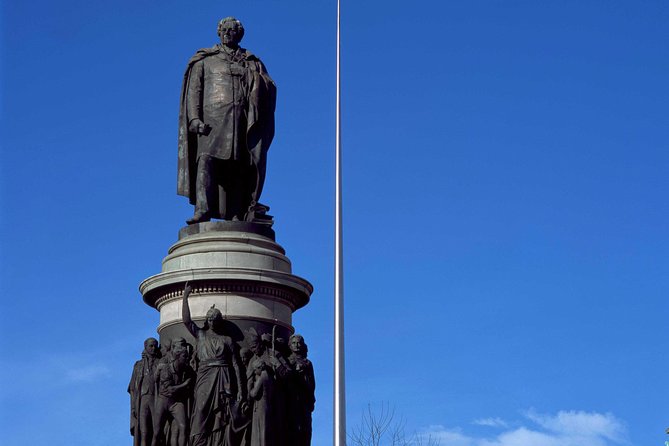
Temple Bar is familiar to almost everyone who has researched Dublin, but this walk gives you a chance to consider the district beyond its famous pub sign. The group pauses at Meeting House Square, where the guide explains what local people think of Temple Bar and how to approach it.
This is where the practical tips become especially useful. Ask about finding a good pint of Guinness or hearing Irish music, but do not expect a guaranteed pub stop or included drink. The advice is intended to help you make better choices later, after the tour.
Temple Bar has history, nightlife, crowds, and high prices in a very small area. A guide can help you treat it as one part of Dublin rather than the whole city. You will also hear about nearby connections to Shakespeare’s Hamlet, Handel’s Messiah, and old soap factories, details that make the district less predictable than its party reputation suggests.
I would pay attention here if you are planning an evening out. The tour does not sell itself as a food or pub crawl, but the local suggestions can save you from choosing a place simply because it is the most visible one.
City Hall, Dubhlinn, and the Viking beginning
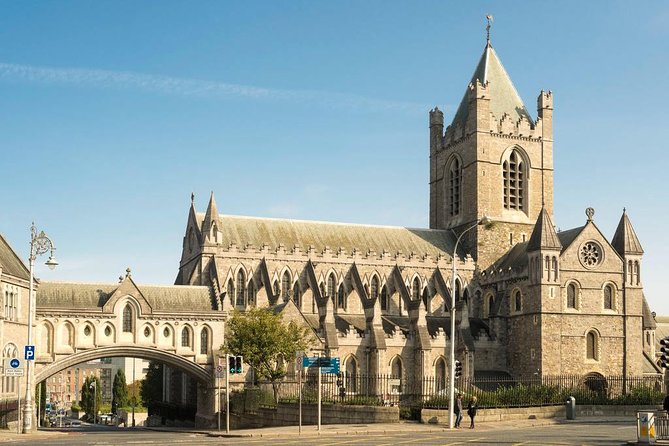
From Temple Bar, the route continues toward City Hall and Dublin Castle, passing the place where the Viking settlement of Dubhlinn was established. The name eventually became Dublin, and the guide explains how the settlement was lost, rediscovered, buried, and built over.
That story helps you read the streets beneath your feet. Dublin’s Viking past is not presented as a distant museum subject. It is tied to the modern city center, where layers of construction have covered much of the original settlement.
This section also brings in several unexpected cultural references, including sailing Vikings, Shakespeare, Handel, and former soap factories. The variety keeps the walk from becoming a straight march through dates and kings.
Still, the storytelling style may not suit everyone. One critical account found the commentary more like an architecture lecture than a fun city walk and felt the tour had no clear ending. If you prefer short facts and plenty of photo breaks, stay aware of the pace and ask the guide when the tour is expected to finish.
Dublin Castle and the old center of power
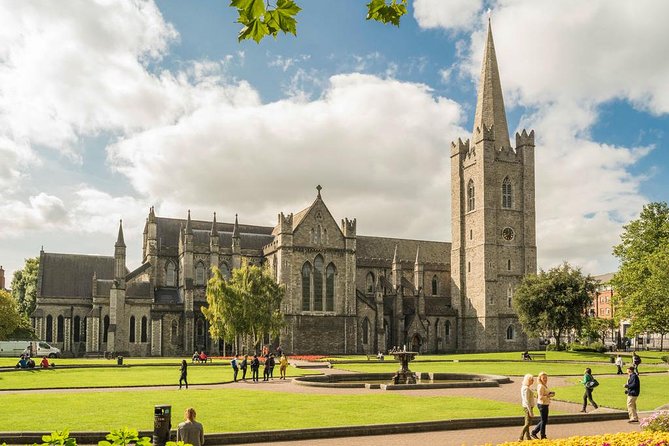
Dublin Castle was once the main seat of authority in Ireland. It was home to the Lord Lieutenants until 1922, and its construction was completed around 1230 under King John of England, son of Richard the Lionheart.
The guide uses the castle to give you a quick lesson in Irish architecture and government. You hear about the kings, officials, soldiers, and rebels linked to the site, then see how the castle area includes quieter places as well.
The Dubh Linn Gardens offer a calmer contrast to the city streets. The Chester Beatty Library, known for its spiritual texts, is also behind the castle walls. The walking tour does not include admission to either attraction, but knowing they are there helps you decide how to spend another hour or two in Dublin.
This is a good example of the tour’s practical value. You may not have time to enter everything during the walk, but you leave with a short list of places to return to. The castle stop is less about a full castle visit and more about understanding why this location mattered.
Christ Church Cathedral and the finish
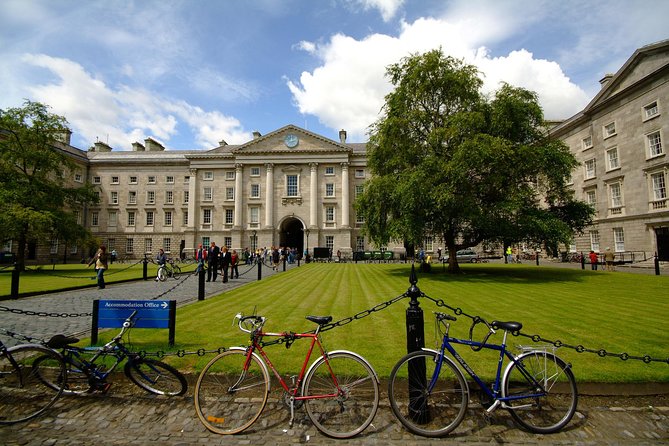
The final stop is Christ Church Cathedral, reached after the walk through the castle district. Christ Church was founded by Sigtrygg Silkbeard, a Viking king who ruled for more than 40 years before his defeat at the Battle of Clontarf.
The cathedral’s story reaches from the period of Viking longships on the Liffey through later commercial traffic, including Guinness barges headed toward Dublin Harbour. You finish outside the cathedral at Christchurch Place, Wood Quay, rather than with a guaranteed interior visit.
This ending works well because it leaves you near a major sight and gives you a chance to ask final questions. Ask what to see next, where to eat, which places suit your interests, or how to find music and a good pub.
The end point is also practical. You are not returned to Aston Quay, so plan your next move before the tour begins. The tour finishes in central Dublin, close to more sightseeing, but your guide may offer suggestions based on what you want to do afterward.
Pace, weather, and group size
The advertised duration is about 1 hour 45 minutes, despite the shorter 90-minute wording in the title. The listed stop times total less than the full duration because walking between locations and questions fill the gaps. Allow the full 1 hour 45 minutes, and a little flexibility if the group is engaged.
You need a moderate level of physical fitness. This is a city walk with no transport, and the route includes ordinary urban streets, crossings, and standing at outdoor sights. Wear comfortable shoes and bring rain protection. Dublin weather can change quickly, and one group completed the walk in cold wind while another dealt with heavy rain.
Poor weather can cause cancellation, with a different date or full refund offered. If you are arriving by cruise ship, do not assume the operator will refund a missed tour caused by a late or absent ship. The activity requires a minimum number of participants, and a cancellation for that reason comes with the option of another date, another experience, or a refund.
The maximum group size is 25 people, although the booking information also refers to a maximum of 40 per booking. The practical operating limit is listed as 25 travelers, so expect a group walk rather than a private tour unless attendance is light.
Who will get the most from this Dublin walk
I would book this early in a Dublin visit, especially if you have only just arrived. It gives you a map in your head, a basic political timeline, and a list of places to explore on your own.
It suits:
- First-time Dublin visitors who want a city overview
- Solo visitors who prefer a guided introduction
- Families with older children who can manage the walking pace
- History fans interested in Viking Dublin, rebellion, and government
- People who want local suggestions for pubs, music, restaurants, and later sightseeing
- Anyone with a short stay who needs several major landmarks in one outing
You may want something else if you want interior access to Trinity College, Dublin Castle, or Christ Church Cathedral. You may also prefer a different format if you dislike extended historical explanations, outdoor noise, or a guide who keeps the group moving.
The strongest guides make the difference. Alex is repeatedly described as clear, funny, enthusiastic, and able to connect Irish events with familiar American history. He also tailors the tour for very small groups. Sam is described as warm, enthusiastic, and attentive to the group. Since guide assignment can vary, you should expect the company’s general approach rather than a guaranteed individual guide unless your booking confirms one.
Should you book it?
Book this tour if you want a well-priced first look at central Dublin and enjoy learning through stories. At $21.77, the route covers a lot of ground and gives you useful ideas for the rest of your visit. The combination of Viking origins, the GPO, Trinity, Temple Bar, Dublin Castle, and Christ Church is a strong return for a modest fee.
Skip it if you want a slow architectural walk, extensive time inside attractions, or a tour with almost no political history. For most first-time visitors, though, this is a sensible way to begin. Arrive ready for weather, stay close enough to hear the guide, and ask for specific local advice before you leave.
FAQ
Where does the Dublin walking tour start?
The tour starts at ThingsToDoDublin, 12 Aston Quay, Temple Bar, Dublin, D02 TE81, Ireland.
Where does the tour end?
The tour ends at Christ Church Cathedral, Christchurch Place, Wood Quay, Dublin, D08 TF98, Ireland.
How long does the tour last?
The experience lasts approximately 1 hour 45 minutes. The title refers to a 90-minute walking tour, but you should allow the longer stated duration.
What sights are included?
The route includes O’Connell Street, the General Post Office, Trinity College Dublin, Temple Bar, City Hall, Dublin Castle, and Christ Church Cathedral. The tour provides outside commentary and does not list admission to these attractions.
Is food or drink included?
No. Food, drinks, and lunch are not included in the price.
Can I cancel for a refund?
Yes. You can cancel at least 24 hours before the local start time for a full refund. Cancellations or changes made less than 24 hours before the start time are not refunded. If poor weather or insufficient bookings cancels the experience, you will be offered another date or experience, or a full refund.
Just added around Dublin
- Women Of Ireland: Trailblazers & Pioneers★ 5.0 · 4 reviews
- Wicklow Mountains & Glendalough Luxury Private Day Tour★ 5.0 · 23 reviews
- Wicklow tour of Glendalough★ 4.5 · 8 reviews
- Full Day Private Wicklow Tour★ 5.0 · 12 reviews
- Premium Irish Whiskey Tasting Hosted by Local Dublin Expert★ 5.0 · 77 reviews
- Whiskey Tasting Tour of Dublin★ 5.0 · 117 reviews
- Dublin To Kilkenny Castle Waterford Crystal Private Car – Day Tour★ 5.0 · 8 reviews
- Historical Walking Tour of Dublin★ 5.0 · 50 reviews
Walking Tours, compared.
Dublin Highlights and Hidden Gems Guided Walking Tour
Read our review →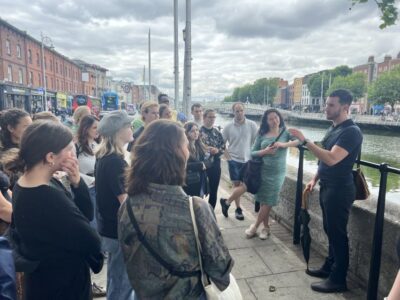

Historical 2-Hour Guided Walking Tour of Dublin
Read our review →
Dublin Traditional Irish 3 Course Meal Walking Tour with Local
Read our review →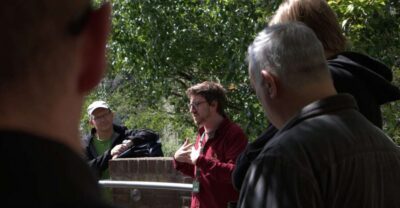
Browse the lists this tour appears in