
Reviewed · WATERFORD TOURS
Osprey Viking Cruises
Waterford’s story makes more sense from the water. On this small-boat cruise along the River Suir, Captain Andy and guides such as Jonathan or Johnny connect Viking foundations, Norman conquest, castle politics, wartime tales, and garden estates as the river scenery slides by. It is history with fresh air, not a lecture in a room.
I like two things here: the personal scale, often with only one group aboard, and the warm extras such as tea, coffee, biscuits, sweets, blankets, and, on one festive outing, Irish whiskey and Christmas cake. I also like how close the departure point is to central Waterford, so you can pair the cruise with the Viking Triangle. The main thing to weigh is timing: the basic outing may last only about an hour, even though longer trips of up to three hours can be arranged.
Key points to know before boarding
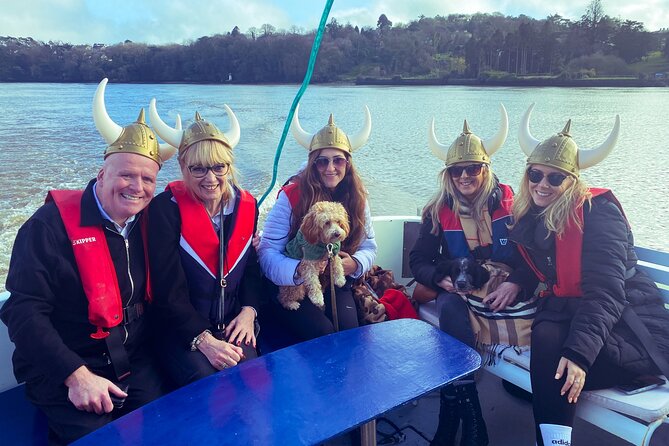
- A small Viking-style boat: The boat carries a small group, with one account describing room for roughly seven or eight people. That creates a friendly setting, but space can feel tight.
- History told by local guides: Jonathan, Johnny, Andy, Mike, and Steve are named in the tour’s feedback, with stories ranging from Vikings and medieval castles to U-boats and the world wars.
- A flexible one to three hours: The usual cruise can be about an hour, while longer river journeys are available by arrangement.
- A convenient Waterford departure: Meet at Clyde Wharf Car Park on The Quay, close to the city center and the Viking Triangle.
- Simple hospitality included: Tea, coffee, water, biscuits, sweets, and blankets have all featured on trips.
- Weather matters: The cruise requires good conditions, and poor weather can lead to a new date or a full refund.
Why the River Suir is the right place to learn Waterford’s story
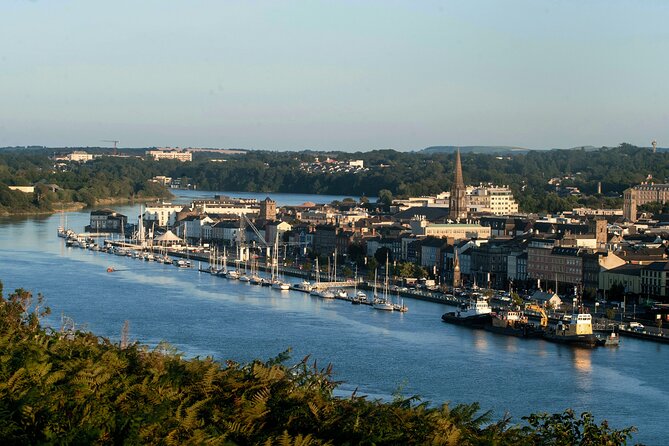
Waterford is easiest to understand when you see its river. The Suir carried Viking settlers, Norman invaders, aristocratic families, merchants, and military forces. From the boat, the city and its surrounding castles are not separate sights on a map. They become part of one connected route.
This is not a fast sightseeing ride. The boat moves at an easy pace, giving you time to look toward the banks and take photographs. The trip also leaves room for conversation. Guides answer questions, add personal details, and adjust the talk to the group. Jonathan and Johnny are especially associated with lively historical storytelling, while Captain Andy is frequently praised for his welcome and hospitality.
The boat is small, and that shapes the experience. You are not tucked into a large sightseeing vessel with a fixed script and dozens of people around you. A private group can make the cruise feel almost like an outing with a local friend. The tradeoff is that seats and sightlines may be limited, especially when the boat is full. Dress warmly. The river air can feel cold even when Waterford itself seems mild.
A few more Waterford half-days to weigh up
- House of Waterford Crystal Guided Factory Tour
★ 4.5 · 2,303 reviews - Skip the Line: Hook Lighthouse Entrance Ticket and Guided Tour
★ 5.0 · 470 reviews - Waterford: House of Waterford Factory Tour
★ 4.8 · 256 reviews
Reginald’s Tower and the Viking Triangle
Reginald’s Tower is the natural starting point for Waterford’s story. Built by the Vikings more than a thousand years ago, it is Ireland’s oldest civic building and sits at the top of the Viking Triangle.
The tower has witnessed a remarkable list of turning points. Strongbow, Cromwell, Perkin Warbeck, and King James II all belong to its story. That list matters because it shows how long Waterford remained important. The city was not simply a Viking outpost that faded away. It continued to attract rulers, soldiers, claimants, and invaders.
From the river, Reginald’s Tower gives the cruise a useful anchor. You can picture the old city as a defended river settlement, then follow the thread through Norman rule and later political struggles. If you plan to visit the Viking Triangle on foot, take the cruise near the beginning of your Waterford sightseeing. The boat provides the broad setting, and the museums and streets can fill in the smaller details afterward.
The commentary is in English, so you need a good command of the language to get the most from the historical talk. The Spanish-language feedback makes this point clearly. This is not a silent scenic cruise with occasional place names. The stories are a central part of the outing.
Little Island and the FitzGerald connection
Little Island gives the guide a chance to move beyond the city itself. A monastic settlement existed there from the sixth to the eighth century. A carving of a monk’s head from that period still decorates the castle entrance, linking the present site to its early religious past.
The Vikings later arrived in the ninth century and built two fortifications on the island, which they called Island Vryk, or Dane’s Island. The Normans followed in 1170. During that conquest, Maurice Fitzgerald, a cousin of Strongbow, was held prisoner on Little Island by the Ossermen.
His story did not end badly. After the conquest, he received extensive land, and Little Island became home to the Earls of Kildare for eight centuries. That is the kind of tale that works well from a boat. You see the place while hearing about the people who fought over it, occupied it, and turned it into a family seat.
The island also adds variety to the cruise. Reginald’s Tower represents Waterford’s urban center. Little Island brings in monastic settlement, Viking defense, Norman expansion, and aristocratic power. If you enjoy history that follows families and places over many centuries, this part of the trip will likely be one of your highlights.
Mount Congreve Gardens from the Suir
Mount Congreve brings a very different mood. The estate belongs to Ireland’s Ancient East and is known for its extensive gardens beside the River Suir. The house was built in 1760 by local architect John Roberts, who also designed Waterford’s two cathedrals.
The gardens cover about 70 acres of woodland, include a four-acre walled garden, and have roughly 16 kilometers of walkways. The planting collection is unusually broad: about 3,000 trees and shrubs, 2,000 rhododendrons, 600 camellias, 300 Acer cultivars, 600 conifers, 250 climbers, and 1,500 herbaceous plants.
You will not see every part of a garden this large from the boat. That is important when setting expectations. The cruise gives you a river-level view and a sense of the estate’s scale. It does not replace a full visit on foot. If gardens are a major reason for your trip, allow separate time to explore Mount Congreve.
Ambrose Congreve inherited the estate in 1963 and developed it into a world-class garden, importing plants from around the globe through his private dock on the Suir. His approach was to group plants together rather than scatter them across the grounds. That detail helps explain why the garden feels planned as a collection of rooms and displays, rather than a random planting.
The riverside setting also explains why Mount Congreve fits naturally into this cruise. The Suir is not just a transport route and a defensive line. It is part of the estate’s identity, too.
Same corner of Ireland, a completely different day out:
- Waterford Treasures: Epic Walking Tour
★ 4.5 · 152 reviews - Waterford Treasures: Medieval Museum Admission Ticket
★ 4.5 · 132 reviews - Irish Wake Museum Tour Rituals of Death and Celebration of Life
★ 5.0 · 115 reviews - Waterford Treasures: Bishop’s Palace
★ 4.5 · 53 reviews
Grannagh Castle and a stormy castle tale
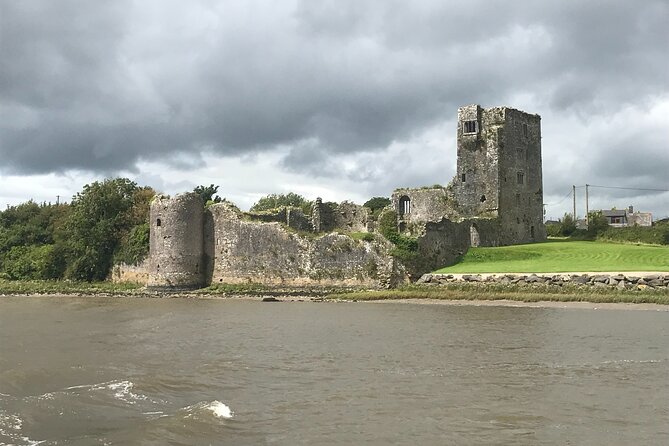
Grannagh Castle is one of the more dramatic sights along the river. The 14th-century castle has a large square enclosure and cylindrical towers, placed on the foreshore of the Suir. James Butler, the third Earl of Ormonde, built it.
The Butlers lost the castle to Cromwell in 1649, adding another turn to the political story of the river. The site also comes with a wonderfully odd legend. Margaret, wife of the eighth Earl, was said to be a witch. From a castle window, she saw her chief rival, another witch, approaching downriver. Margaret called up a storm, but her rival responded by causing horns to grow from Margaret’s head. Margaret could not pull away from the window.
Strange noises are said to come from the ruins during stormy weather. You do not need to accept the tale as fact to enjoy it. It gives the guide a chance to shift from military history to local folklore, which keeps the talk from becoming a list of dates and names.
Grannagh is also a good example of why a river cruise adds something to a land tour. The castle’s position on the water is part of its meaning. From a road, you may see a ruin. From the Suir, you can better understand its defensive position and its relationship to river traffic.
What the onboard experience is really like
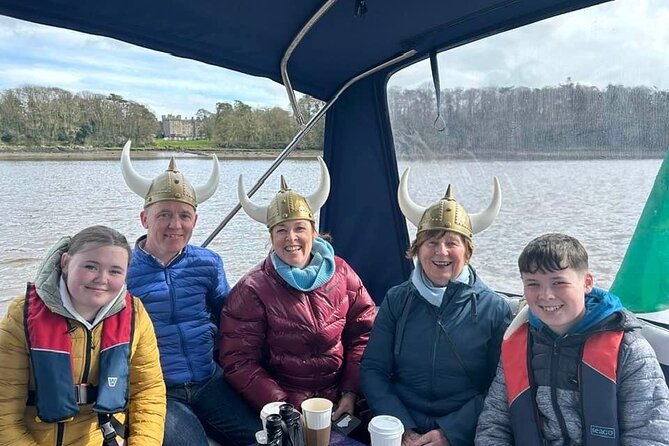
The atmosphere is one of the strongest reasons to book. Captain Andy and his crew offer a warm welcome, and several guides are praised for combining solid historical knowledge with humor. The tone is educational but not heavy. One guide made links between Waterford and Canada, showing how the talk can shift toward the interests of the group.
Tea and biscuits are common features, along with coffee, water, sweets, and other small snacks. On a cold Christmas outing, the boat had blankets, children’s treats, Christmas cake, tea, juice, and a little Irish whiskey for the adults. You should not assume every item appears on every departure, but the general approach is clear: this is meant to feel hospitable rather than bare-bones.
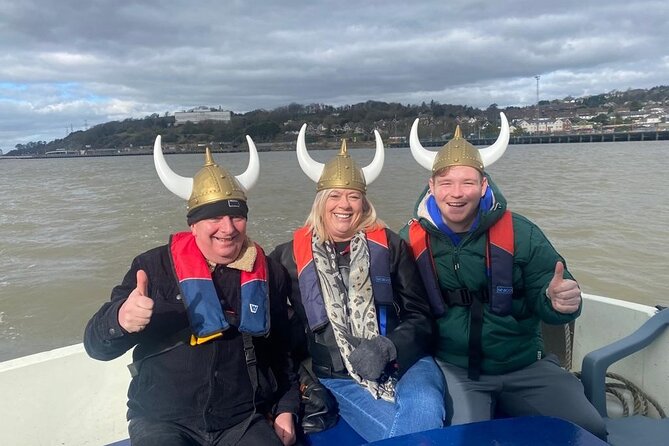
Families can find plenty to enjoy. Children may respond to the Viking helmets, castle stories, and the chance to spot wildlife. One outing even encountered a pod of dolphins, though that is an unexpected bonus rather than a promised part of the cruise. Life jackets are provided, and blankets have been available on cold trips.
The boat can be cramped. One passenger found the sights hard to see and felt the one-hour outing was too short. That is the most useful criticism to keep in mind. If you want broad, unobstructed views or a long river journey, ask about the extended option before booking. If you prefer a small group and direct conversation, the same boat may feel just right.
Duration, meeting point, and value at $62.75
The listed price is $62.75 per person. For a private activity with a small group, a captain, a history guide, and refreshments, that can be fair value, especially if you care about personal attention rather than a large shared boat. The cruise also begins near Waterford’s center, so you are not spending extra time or money reaching a distant marina.
The catch is the uncertain length. The experience is described as lasting from one to three hours, but the standard trip may be around one hour. Longer journeys farther downriver can be arranged, and those may last up to three hours. I would not pay the price assuming a three-hour cruise unless the longer route has been confirmed.
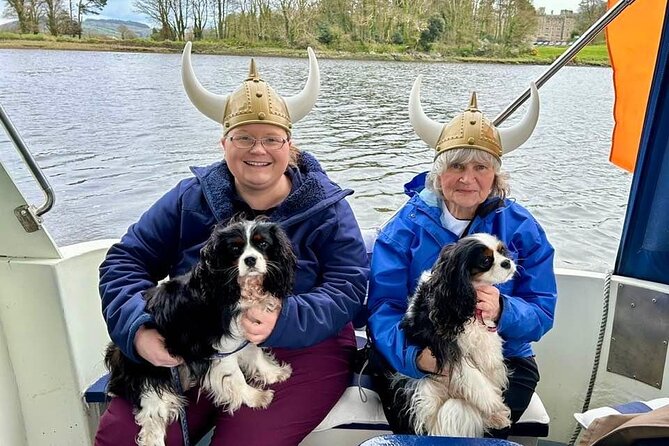
The meeting point is Clyde Wharf Car Park, R680 The Quay, Waterford. The activity returns there. It is near public transportation, and most people can take part. Service animals are allowed. Confirmation arrives when you book, and the experience is offered in English by mobile ticket.
Free cancellation is available if you cancel at least 24 hours before the start time. Changes or cancellations inside that window are not accepted for a refund. Since the trip depends on good weather, the operator may offer another date or a full refund if conditions force a cancellation. A minimum number of participants is also required, with the same choice of another date, another experience, or a refund if that minimum is not met.
Who will enjoy this Waterford cruise most
I would choose this trip if you want a gentle introduction to Waterford before exploring on foot. It suits couples, families, small groups, and anyone who likes local stories delivered in a relaxed setting. It is also a good fit for cruise passengers, since the short format can fit around time in port.
History fans will appreciate the range. In one outing, you can hear about Vikings, early monastic life, Norman conquest, the Earls of Kildare, the Butlers, Cromwell, Waterford Castle, U-boats, and the two world wars. The subject matter reaches well beyond the city’s Viking label.
You should think twice if you need a guaranteed three-hour activity, dislike small boats, or want commentary in a language other than English. You should also bring warm clothing. The river is open, and even a calm afternoon can feel brisk on the water.
The cruise can pair well with other nearby sights. Afterward, you might visit the Viking Triangle or use one of the guide’s suggested outings, such as the Dunmore Coastal Path. That walk is not part of the cruise, but it has been recommended as a follow-on activity.
Should you book Osprey Viking Cruises?
Book it if you value friendly guiding, local history, and a small private-group setting more than a long, polished sightseeing production. The best parts are the human ones: Captain Andy’s welcome, the lively stories from Jonathan or Johnny, the river views, and the simple kindness of hot tea and snacks.
Before paying, confirm the expected duration and route. If you are promised the basic one-hour trip, see it as a compact introduction to the Suir and Waterford. If you want the full three-hour outing, arrange the longer journey in advance.
For $62.75, this is a sensible choice for a relaxed Waterford experience with real local character. It is not perfect for anyone seeking lots of space or a guaranteed extended cruise, but for a small group that wants castles, Vikings, folklore, and river scenery in one sitting, I would book it.
FAQ
Where does the cruise begin?
The meeting point is Clyde Wharf Car Park, R680 The Quay, Waterford, Ireland.
Where does the activity end?
The cruise ends back at the meeting point at Clyde Wharf.
How long does the cruise last?
The experience is described as lasting approximately one to three hours. The standard trip may be about one hour, while longer journeys farther downriver can last up to three hours by arrangement.
What language is the tour offered in?
The cruise is offered in English. You need a good knowledge of English to follow the historical explanations.
Is this a private activity?
Yes. Only your group participates in the private tour or activity.
What sights and places are covered?
The experience includes stories and views connected with Reginald’s Tower, Little Island, Mount Congreve Gardens, and Grannagh Castle. Commentary can also cover Waterford Castle, U-boats, and the first and second world wars.
Is the cruise suitable for most people?
Most people can participate. The experience is near public transportation, and service animals are allowed. The boat may feel cramped for some people.
What happens if the weather is poor?
The cruise requires good weather. If it is canceled because of poor conditions, you will be offered a different date or a full refund.
Just added around Waterford
- Waterford Treasures: Medieval Museum Entry Ticket★ 4.5 · 20 reviews
- Waterford: The Irish Wake Museum Guided Tour★ 4.8 · 6 reviews
- Waterford Treasures: Walking Tour of the Viking Triangle★ 4.7 · 43 reviews
- Waterford: Mount Congreve Gardens Entry Ticket★ 5.0 · 7 reviews
- Waterford, Kilkenny and House of Waterford Crystal★ 4.0 · 12 reviews
- Irish Wake Museum Tour Rituals of Death and Celebration of Life★ 5.0 · 115 reviews
- Waterford Treasures: Medieval Museum Admission Ticket★ 4.5 · 132 reviews
- Irelands Ancient East Waterford Greenway Cycle Tours & Bike Hire★ 3.5 · 16 reviews
Waterford Tours, compared.

House of Waterford Crystal Guided Factory Tour
Read our review →
Skip the Line: Hook Lighthouse Entrance Ticket and Guided Tour
Read our review →
Waterford Treasures: Medieval Museum Admission Ticket
Read our review →
Irish Wake Museum Tour Rituals of Death and Celebration of Life
Read our review →

Waterford Treasures: Walking Tour of the Viking Triangle
Read our review →Browse the lists this tour appears in