
Reviewed · MUSEUMS
Waterford: The Irish Wake Museum Guided Tour
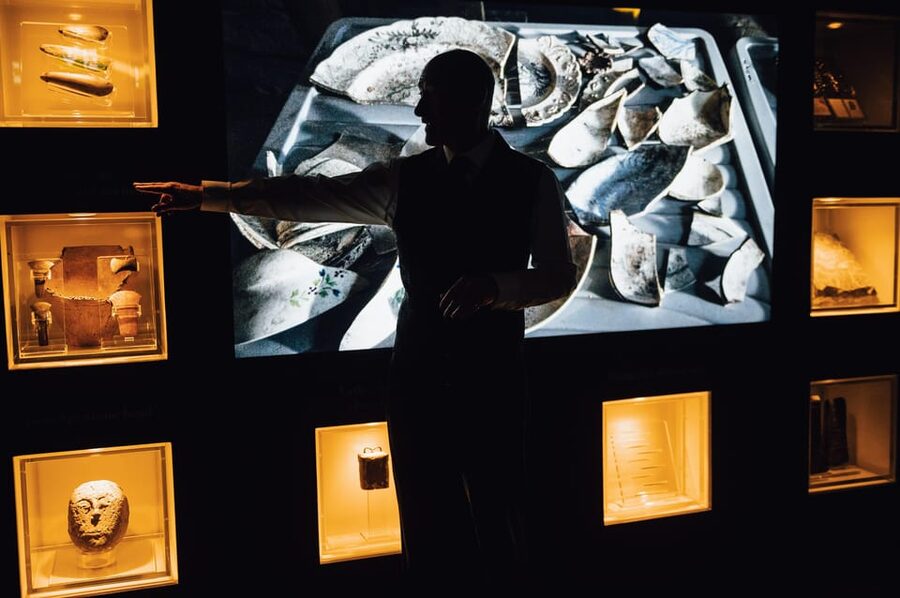
The Irish Wake Museum takes you into a part of Irish life rarely covered by standard sightseeing: how families marked death, remembered the dead, and followed customs shaped by faith, folklore, injury, and illness. Inside a beautifully conserved 15th-century almshouse, a reenactor-led guide connects everyday life with the traditions of the Irish wake.
I like the museum’s unusual subject and its small scale. I also like that the tour reaches from early Christian times into the 20th century, giving you more than a collection of spooky objects. The possible drawback is clear: realistic depictions of the recently deceased and frank discussion of death may be upsetting, and the building is not suitable for wheelchair users or people with limited mobility.
Key points to know before you book
- A 15th-century almshouse is the setting: The building itself links Waterford’s past with the customs explained inside.
- Ireland’s oldest death mask is on display: It gives the museum a memorable physical object around which to consider older funeral practices.
- The tour is led by a reenactor: You receive a spoken interpretation rather than simply walking through display cases.
- The subject reaches beyond superstition: Customs are explained alongside illness, injury, faith, and the social role of the wake.
- The tour lasts about 40 minutes: Allow up to an hour around the listed time, depending on the schedule and pace.
- One euro from each admission supports Waterford Hospice Movement: Your ticket also makes a small contribution to local hospice work.
Entering Waterford’s former almshouse
The Irish Wake Museum sits in the heart of Waterford’s Viking Triangle, so it fits neatly into a day spent exploring the city’s historic center. You begin and end at the museum, with no transport included or needed during the experience.
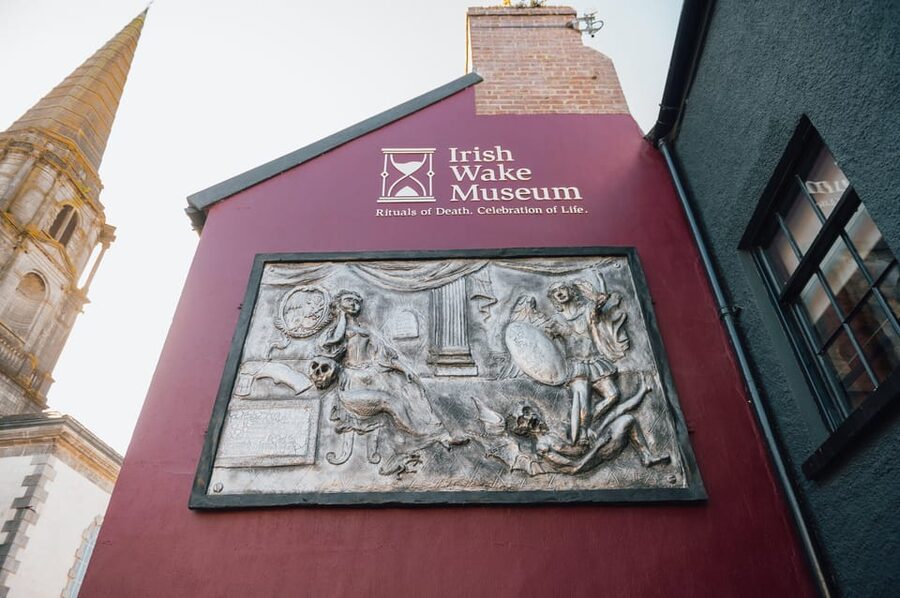
The setting matters. This is not a modern gallery designed to create an artificial atmosphere. The museum occupies a conserved building from the 15th century, an almshouse associated with life and death in Waterford across six centuries. That gives the tour a strong sense of place before the guide even begins.
An almshouse was connected with care and hardship, which makes it a fitting home for a museum about mourning and community customs. You are looking at death practices in a building shaped by the needs of people who lived with poverty, sickness, and uncertain medical care.
The space is intimate. That can be an advantage if you prefer a focused experience over a large museum with many rooms and signs to read. It also means the subject is close at hand. If you want a light, casual stop with little emotional weight, this may not be the right choice.
A few more Waterford half-days to weigh up
- House of Waterford Crystal Guided Factory Tour
★ 4.5 · 2,303 reviews - Skip the Line: Hook Lighthouse Entrance Ticket and Guided Tour
★ 5.0 · 470 reviews - Waterford: House of Waterford Factory Tour
★ 4.8 · 256 reviews
What the reenactor-led tour covers
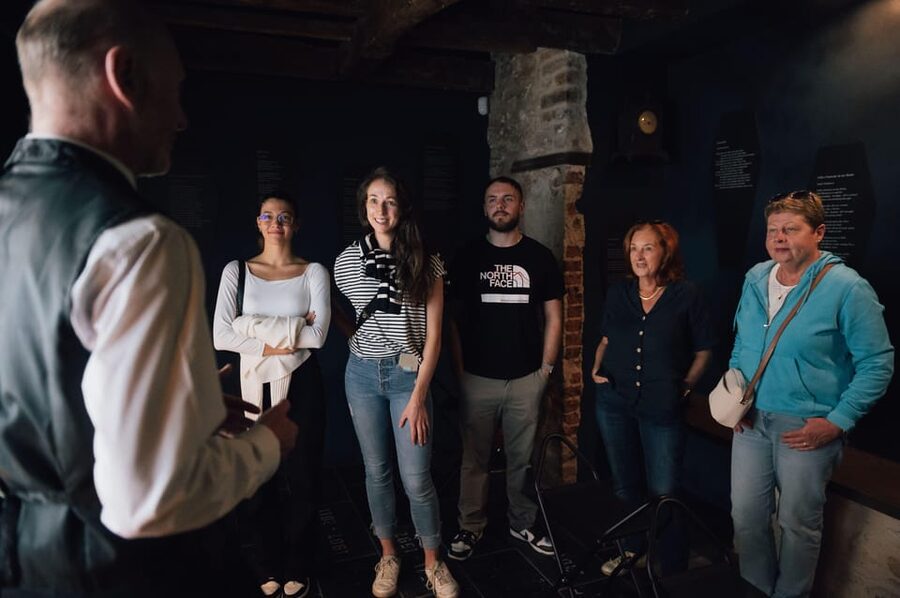
Your ticket includes entry and a guided tour led by a reenactor. The guide presents the museum’s material through the customs of the Irish wake, helping you understand why the event developed such a distinctive form.
The tour traces traditions and superstitions from early Christian times through the 20th century. That long time span helps you see change. Funeral practices did not remain fixed, and the wake was shaped by religion, local belief, family duty, fear, grief, and practical concerns surrounding the body.
You will hear about the origins of customs associated with the wake and how they fit into Irish culture. The point is not simply to list old superstitions. The guide uses death and funeral practices to explain how communities faced mortality before modern medicine and today’s funeral systems.
The format should suit you if you learn best from a person rather than from labels. A live English-speaking guide can explain the meaning behind an object, respond to the mood of the group, and adjust the pace. Clare is the guide specifically praised for making the experience work well, so her name is worth noting when you are considering the tour. Guide availability is not guaranteed, but the positive mention gives you a useful sense of the human side of the visit.
The tour is listed at 40 minutes, with the booking schedule allowing for a duration of 40 minutes to one hour. That makes it easy to fit between other Waterford sights. It is long enough to develop the subject, but short enough that you do not need to give up half a day.
The death mask and the museum’s strongest object
One of the clearest highlights is Ireland’s oldest death mask. A death mask may sound like a small display item, but it gives the subject a direct, physical focus. Instead of thinking about funeral customs as distant folklore, you are confronted with an object made from the face of a deceased person.
The mask also opens a wider discussion about memory. Before photography became common, a likeness of the dead could preserve an image for family or community. The museum uses this kind of object to connect personal grief with wider social practice.
The information provided does not identify the person represented by the mask or give technical details about how it was made, so you should not expect a full biography from the booking description alone. Its importance here is its age and its place within the story of Irish death customs.
The museum also includes realistic depictions of the recently deceased. This is not a mild warning added as an afterthought. You should take it seriously if you are sensitive to images of death, illness, or injury. The museum wants you to understand the subject honestly, and that means the presentation may be more direct than a typical cultural attraction.
Why the Irish wake matters beyond folklore
The Irish wake was not only a funeral ritual. It was also a period when relatives, friends, and neighbors gathered around the dead and supported the family. The customs surrounding the body helped people face a difficult transition together.
That social role is one reason this museum can be valuable. You are not simply studying an old ceremony. You are looking at how a community organized grief, passed on beliefs, and gave structure to death.
The tour’s time range, from early Christian traditions to the 20th century, also helps place the wake in changing conditions. Religious beliefs influenced funeral practice, while illness and injury made death a familiar part of ordinary life. Customs could offer comfort, protection, or a way to explain events that medicine could not yet explain.
The word superstition can make these traditions sound silly. The museum’s subject is more serious than that. A belief may have helped a family cope, encouraged a community to gather, or made an unpredictable world feel slightly more ordered.
You will also gain a better sense of why the wake has such a strong place in Irish culture. The experience treats it as a living part of social history, not as a novelty invented for visitors.
More museums and heritage sites in Waterford:
- Waterford Treasures: Medieval Museum Admission Ticket
★ 4.5 · 132 reviews - Irish Wake Museum Tour Rituals of Death and Celebration of Life
★ 5.0 · 115 reviews - Waterford Treasures: Medieval Museum Entry Ticket
★ 4.5 · 20 reviews - Irish Rock ‘N’ Roll Museum Experience Dublin
★ 5.0 · 6,112 reviews
The short itinerary and what it means for your day
The itinerary is simple. You meet at the Irish Wake Museum, take the guided tour inside, and finish back at the same location.
That simplicity is useful. You do not need to arrange a transfer, find a second meeting point, or allow time to return to your hotel. The museum’s Viking Triangle location makes it practical to pair with other Waterford Treasures attractions, though the tour price covers only the Irish Wake Museum.
The 40-minute guided portion is the main event. Depending on the start time and how the visit runs, you may spend closer to an hour in total. Check the available times before building a tightly timed schedule.
There is no food or drink included, and this is not a meal stop. You also receive no transportation, which is not a serious issue for a compact city-center attraction. You are paying for entry, interpretation, and access to a very specific museum rather than for a full-day excursion.
Is $15 a fair price?
At $15 per person, the museum is priced like a modest cultural stop, not a major day tour. I think the value depends on your interest in Irish customs and on your willingness to engage with a serious subject.
You are paying for a guided experience in a historic building, not just admission to a room of exhibits. The reenactor-led format adds context that you could miss if the museum were self-guided. The death mask and the building provide memorable anchors, while the guide explains how the pieces connect to wider traditions.
The tour is especially good value if you are already spending time in Waterford’s Viking Triangle. Its short duration lets you add a distinctive subject without reshaping your entire day. You might find it less worthwhile if you want broad coverage of Waterford’s past, because this museum focuses closely on death, wakes, and funeral practice.
One euro from each admission ticket goes to the Waterford Hospice Movement. That does not change the price dramatically, but it gives the admission a local charitable purpose connected to the museum’s subject.
Who should book this experience?
I would recommend the tour to adults and older children who enjoy cultural history, folklore, social customs, and unusual museums. It should also suit you if you prefer a guide who explains meaning and context instead of leaving you to read a few short labels.
It is a good choice for a rainy day in Waterford, since the full activity takes place indoors. It also works well for a short visit between larger attractions. The subject can prompt thoughtful conversation, especially if you are interested in how different societies have handled grief and remembrance.
Families should think carefully before booking. The experience is not recommended for children under eight, and older children may still find the realistic depictions upsetting. The museum includes discussion of death, injury, and illness, so age alone is not the only factor. Consider the temperament of everyone in your group.
You should also check the physical demands before reserving. Because of the historic building, the tour is not suitable for visitors with limited mobility or wheelchair users. The information provided does not describe step-free access or seating, so contact the provider if you need details beyond that clear restriction.
Practical tips for a better visit
Book a time that leaves a little space before your next activity. The guided portion is about 40 minutes, but the stated duration can reach one hour, and you will enjoy the tour more if you are not watching the clock.
Read the subject description carefully before paying. This is not a haunted attraction, but it does deal directly with death and includes realistic depictions of recently deceased people. If someone in your party is grieving, very young, or uncomfortable with medical and funeral imagery, choose another Waterford activity.
Use the tour as a focused cultural stop rather than expecting a general museum of Irish life. Its strength is the close look at wakes and the beliefs around them. You will get more from it if you arrive ready to think about why customs existed, not just what they looked like.
The live tour is in English. If you need another language, this experience may not suit your group, since no other language is listed.
The cancellation policy gives you some flexibility: you can cancel up to 24 hours in advance for a full refund. You can also reserve now and pay later, which helps if your Waterford schedule is still changing.
Should you book the Irish Wake Museum?
Book it if you want an unusual, compact museum experience with a strong local focus. The 15th-century almshouse, Ireland’s oldest death mask, and reenactor-led presentation give the visit more character than a standard display of funeral objects.
I would make this a priority for adults interested in Irish folklore, religion, family customs, and social history. I would skip it if your group wants cheerful sightseeing, if realistic death imagery would cause distress, or if anyone has limited mobility or uses a wheelchair.
At $15, the tour offers fair value for a 40-minute guided visit in a historic setting, with a small donation to Waterford Hospice Movement included in each admission. It will not appeal to everyone, but for the right visitor it explains an important Irish tradition with unusual honesty and very little wasted time.
FAQ
Where is the Irish Wake Museum located?
The museum is in the heart of Waterford’s Viking Triangle in County Waterford, Ireland.
How long does the guided tour last?
The guided tour lasts about 40 minutes. The activity may take between 40 minutes and one hour, depending on the available schedule.
What language is the tour in?
The live guided tour is conducted in English.
Is transportation included?
No. Transportation, food, and drink are not included. The activity starts and ends at the Irish Wake Museum.
Is the museum suitable for children?
The experience is not recommended for children under eight. It includes discussion of death, injury, and illness, along with realistic depictions of recently deceased people.
Is the tour accessible for wheelchair users?
No. Due to the nature of the historic building, the tour is not suitable for wheelchair users or people with limited mobility.
Just added around Waterford
- Waterford Treasures: Medieval Museum Entry Ticket★ 4.5 · 20 reviews
- Waterford Treasures: Walking Tour of the Viking Triangle★ 4.7 · 43 reviews
- Waterford: Mount Congreve Gardens Entry Ticket★ 5.0 · 7 reviews
- Waterford, Kilkenny and House of Waterford Crystal★ 4.0 · 12 reviews
- Irish Wake Museum Tour Rituals of Death and Celebration of Life★ 5.0 · 115 reviews
- Waterford Treasures: Medieval Museum Admission Ticket★ 4.5 · 132 reviews
- Semi Private tour Rock of Cashel – Cahir castle & Kilkenny★ 3.5 · 9 reviews
- Osprey Viking Cruises★ 5.0 · 56 reviews
Museums, compared.

The Little Museum of Dublin Famous Guided Tour
Read our review →

Giant’s Causeway with the Titanic Exhibition and the best of Northern Ireland
Read our review →


Irish Whiskey Museum: Whiskey Blending Experience
Read our review →
Irish Whiskey Museum Blending Tour with Tastings
Read our review →Browse the lists this tour appears in