
Reviewed · WALKING TOURS
1916 Rebellion Walking Tour
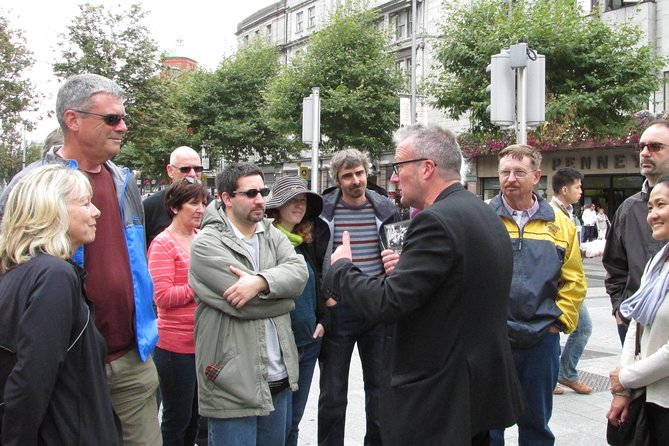
The most powerful part of this Dublin walk is its use of the city itself as the classroom. Bullet holes remain visible on Daniel O’Connell’s monument, the GPO still anchors the story, and bridges, streets, and public buildings help you picture the fighting of Easter Week. I like the clear political background and the way guides such as Lorcan Collins, Phelim, Liz, and Donal turn dates into human stories. I also like that you need no prior study to follow it.
The main caution is timing. It is sold as roughly two hours, but one group took close to three hours, and a group of up to 30 can feel large at busy stops. Still, at about $27.81 per person, this is a strong buy for anyone who wants more than a quick monument checklist.
Key points to know before booking

- The International Bar is both meeting point and classroom: Arrive early for a drink and introductory reading before the short opening talk.
- The GPO gets the longest stop: Expect about 30 minutes on the building where Pádraig Pearse read the Proclamation.
- You cover more than 1916: City Hall, the Four Courts, Dublin Castle, and the Bank of Ireland connect the Rising with the War of Independence and Civil War.
- Guides use more than dates: Poetry, rebel songs, humor, and personal stories help give the events an emotional shape.
- The route can change: Moore Street and the Old Parliament may be included depending on the day and the guide’s route.
- Plan for an outdoor walk: The tour needs good weather, and sensible shoes matter more than polished sightseeing clothes.
Why the 1916 Rising makes sense on foot
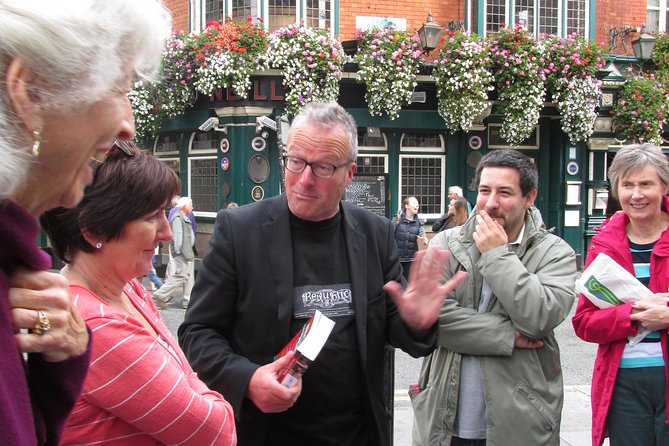
The Easter Rising can seem confusing when reduced to names, dates, and political factions. This walk gives you a useful starting frame, beginning with the Great Hunger of the 1840s and moving through the pressures that led to revolution in 1916.
That opening matters. You hear about the social and political conditions before you begin crossing central Dublin, so each stop has a reason. You are not simply told that a building was occupied. You learn who used it, what they hoped to achieve, and how the events of 1916 fed into the War of Independence and the Irish Civil War.
I especially like the decision to begin with questions and conversation. The guide introduces the period, explains the route, and gives you a chance to ask for clarification before the walk gathers pace. If your knowledge of Irish politics is limited, this helps. If you already know the main story, you can use the opening to ask about people, factions, or events that interest you.
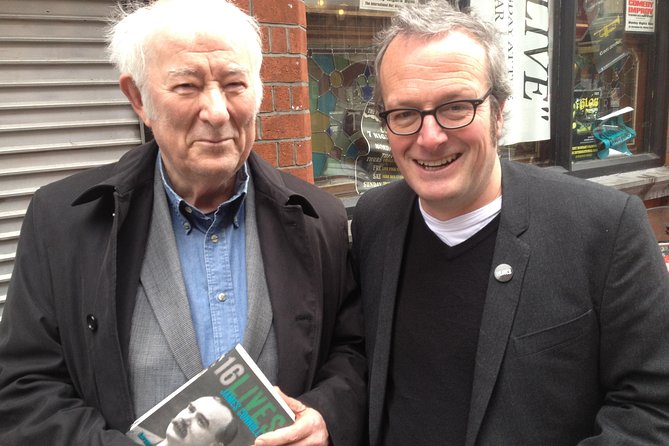
Lorcan Collins has led the 1916 tour since 1996, and the experience carries a strong sense of purpose. Other guides named by visitors include Liz, Phelim, Phil, Donal, Elaina, Adam, Fallon, and Phalim. Their styles vary, but the common thread is lively delivery, clear speech, and a willingness to answer questions.
More Walking Tours in Dublin
- Dublin Highlights and Hidden Gems Guided Walking Tour
★ 5.0 · 6,020 reviews - Dublin: Highlights and Hidden Gems Walking Tour
★ 4.9 · 2,140 reviews - 90 Minute Dublin Walking tour and Sightseeing tips
★ 5.0 · 916 reviews
Starting at the International Bar on Wicklow Street
The meeting point is the International Bar at 23 Wicklow Street. The pub gives the tour an appealingly local beginning rather than sending you straight to a standard sightseeing plaza.
You can arrive early, buy an alcoholic drink, and read the introductory material supplied by the guide. The drink is not included in the $27.81 price, so consider the pub stop an optional warm-up rather than part of the ticket.
The opening talk covers the build-up to the revolutionary period. It starts with the Great Hunger, moves through the political and social changes that followed, and reaches the 1916 Rising. This section is short, but it helps you place the rebellion in a much longer story.
The pub setting also seems to encourage a conversational style. Guides answer questions, tell stories, and sometimes use poetry or songs to make a point. That can be a welcome change from a walk that simply recites information while you hurry from one plaque to the next.
City Hall and Dublin Castle: power in the old center
City Hall is an early stop and a useful place to discuss the Irish Citizen Army. The building was occupied during the Rising, and the guide explains that part of Easter Week rather than treating the rebellion as a single operation centered only on the GPO.
This is one of the tour’s strengths. You begin to see that different groups had different roles and aims. The Irish Citizen Army, associated with James Connolly and the Dublin working class, forms an important part of the story.
The walk then continues to Dublin Castle, the center of British administration in Ireland. Its importance is not limited to 1916. The guide connects the castle to both the Rising and the War of Independence, helping you understand why it carried such political weight.
You might recognize the location from the film Michael Collins, but the real value here is the explanation of how administration, intelligence, and revolutionary action intersected. Dublin Castle helps turn the Rising from an isolated street battle into a challenge to the system governing Ireland.
The listed schedule allows about 15 minutes at each of these stops. That is enough for a focused explanation, though the actual pace depends on the group and the guide. With up to 30 people, finding a good listening position can matter, so staying near the guide is wise.
The Four Courts and the road to civil war
The Four Courts adds an important second act to the tour. Revolutionaries occupied it in 1916, and it became important again during the events leading to the Irish Civil War in 1922.
Rather than walking all the way to the building, the group usually views it from a bridge over the River Liffey. That choice keeps the route moving and gives you a broader view of the site, though it means you will not examine the courthouse at close range.
This is where the guide explains the difficult transition from rebellion to independence and then to internal conflict. The split over the Anglo-Irish Treaty can be hard to follow, especially if you are new to Irish political history. The Four Courts discussion gives the conflict a physical setting and shows how the same city could become a battlefield again only a few years later.
For me, this is one of the most useful stops for anyone who knows the Rising but not what followed. The tour does not end with a heroic 1916 story. It shows that independence brought disagreement, division, and another war.
A few more Dublin half-days to weigh up
- Dublin to Cliffs of Moher, including Wild Atlantic Way and Galway
★ 5.0 · 23,331 reviews - From Dublin: Cliffs of Moher, Burren & Galway City Day Tour
★ 4.8 · 18,888 reviews - Dublin: Guinness Storehouse Entry Ticket
★ 4.6 · 16,863 reviews - Dublin to Cliffs of Moher, Burren, Wild Atlantic Way, Galway Tour
★ 5.0 · 12,924 reviews
Daniel O’Connell’s monument and the marks of Easter Week
At Daniel O’Connell’s monument, the guide points out bullet holes left from the Rising. This is a small detail, but it can be more arresting than a large formal memorial.
O’Connell was a major figure in Irish political life, and his monument gives the guide a chance to explain the positions held by British forces and Irish rebels in 1916. You can look at the stone and connect the larger political story with the damage caused during the fighting.
I like stops such as this because they reward careful looking. You are not just hearing about events that happened elsewhere. You are being shown physical traces still present in the city.
The stop is short, usually around 15 minutes, so do not expect a long memorial talk. The guide’s job is to point out the marks, explain the action around them, and connect the monument to the wider route.
Jim Larkin, James Connolly, and the working class
The Jim Larkin statue brings the social side of the revolutionary period into sharper focus. Larkin, a union leader from Liverpool, was a major figure in Dublin labor politics and an ally of James Connolly.
This stop explains Larkin’s role and his connection with the Dublin working class. It is a reminder that the events of 1916 were not only about constitutional politics or national identity. Labor rights, poverty, organization, and the experience of ordinary workers also shaped the period.
The guide’s storytelling is especially useful here. A short explanation of Larkin’s contribution can help you understand why Connolly became such a central revolutionary figure and why the Irish Citizen Army mattered.
This part of the tour also suits visitors who want more than military detail. Elaina, one of the named guides, was praised for bringing social history and the role of women into the discussion. The exact emphasis may depend on who leads your walk, but the format allows the story to include more than the best-known male leaders.
The GPO: the emotional center of the walk
The General Post Office is the key stop. It served as headquarters for the revolutionaries in Dublin, and it was where Pádraig Pearse read the Proclamation of the Irish Republic.
The group spends about 30 minutes here, longer than at most other locations. That extra time is justified. The GPO lets the guide explain the opening of the Rising, the occupation of the building, the fighting around O’Connell Street, and the eventual decision to surrender.
You will also hear why the building holds such a powerful place in Irish national memory. It is not simply an attractive public building or a convenient central landmark. It represents the public declaration of a new republic, the cost of the fighting, and the defeat that later became a foundation myth for the state.
The guides use different tools to bring the scene alive. Some sing old rebel songs or quote poetry. Phil was particularly noted for singing and speaking clearly, while Phelim’s delivery combined humor with strong command of the material. Used well, music gives you a sense of how memory was carried through popular culture, not just books.
The tone remains serious, but it is not grim from start to finish. Good guides use humor at suitable moments and then return to the human cost of the events. That balance helps the walk stay engaging without making light of the subject.
Moore Street and the final stand
Depending on time and route, the tour may continue to Moore Street. This is where the GPO garrison made its last stand during Easter Week.
Moore Street adds a more intimate scale to the story. The GPO is a grand civic building, while Moore Street helps you picture the exhausted final phase of the Rising and the movement of the rebels through the city.
Because the route changes, you should not treat Moore Street as guaranteed. The guide may need to adjust the walk for timing, group movement, or the chosen sequence of stops.
That flexibility is both a benefit and a limitation. Repeat visitors can return and hear the story from a different angle, but anyone hoping to check off every listed site should allow for variation.
The Bank of Ireland and the Old Parliament
The Bank of Ireland is also included depending on the route. The building is commonly called the Old Parliament, and its place beside Trinity College opens another line of discussion about Irish political history.
This stop helps widen the time frame beyond the Rising. The building connects to earlier debates about Irish government and the political relationship between Ireland and Britain. It can also give you a better sense of how close major institutions were to the streets where the revolution unfolded.
Again, the route is not fixed. Some days may include the building, while others may focus more heavily on the core 1916 sites. That is worth knowing before you book if you want a rigid itinerary.
Guide style: history with songs, questions, and humor
The strongest feature of this walk is the guide’s delivery. The material is serious, but the presentation is lively and personal.
Lorcan Collins is described as passionate and deeply connected to the subject. Phelim and Phil use songs and poetry. Liz is praised for fitting a large amount of material into a short time, while Donal brings warmth and a human focus to the story. One guide took special care to keep an eye on a person using a walker, which suggests attentiveness to the needs of the group.
You can expect clear explanations rather than academic jargon. Prior study is not required, and the guides make room for questions. I would still recommend reading a short overview of the Easter Rising before you go if you have the time. Even a basic grasp of Pearse, Connolly, the GPO, and the Treaty will help you get more from the walk.
The singing will not suit every style of visitor. Some people will find rebel songs memorable and moving. Others may prefer a strictly factual tour. Here, music is part of the experience, so book this walk if you like history presented as storytelling rather than as a lecture.
Price, pace, group size, and practical value
At about $27.81 per person, the tour offers good value for a two-hour history walk that covers several central sites. Almost every stop is viewed from public streets, so your payment is mainly for the guide’s interpretation, organization, and ability to connect the places.
There are no admission tickets included because the tour does not rely on paid entry to the buildings. Alcoholic drinks at the International Bar cost extra. The value is strongest if you want context, questions answered, and a clear narrative rather than a series of free photo stops.
The official duration is approximately two hours. Allow extra time in your schedule. One group reported a three-hour experience, and a longer walk may result from questions, singing, crowd movement, or adding Moore Street and the Bank of Ireland.
The maximum group size is 30. That is not a tiny private walk, and a large group can make it harder to hear or see the guide at crowded sites. Guides generally keep watch over the group, but I would stand near the front and avoid drifting behind at crossings.
The tour starts and ends at 23 Wicklow Street. It is near public transportation, and most people can take part. Children must be accompanied by an adult. Wear shoes suitable for walking and check the forecast, since poor weather can lead to a new date or a full refund.
Free cancellation is available up to 24 hours before the start time. A cancellation made inside that window is not refunded, and changes are not accepted within 24 hours.
Who should book this Dublin walk?
I would choose this tour for a first visit to Dublin if you want to understand how the city’s political story shaped modern Ireland. It is also a good fit for history buffs, people interested in labor movements, and anyone curious about the connection between Irish nationalism and the Irish American experience.
You do not need prior knowledge. The opening explanation gives you the basic framework, and the walk builds from there. The format also works well for visitors who learn better from places and stories than from reading long museum panels.
You may want a different experience if you prefer a small private group, a fixed route, indoor exhibits, or a short photo-focused stroll. The changing itinerary and possible three-hour duration require some flexibility.
Should you book the 1916 Rebellion Walking Tour?
Book it if you want a serious but approachable account of Easter Week, told in the places where the events unfolded. The GPO, bullet-scarred O’Connell monument, Four Courts, and Dublin Castle give the story physical weight, while songs and personal stories keep it from becoming a list of dates.
I would book early, since the experience is often reserved about 22 days ahead. Arrive early if you want a drink and some reading at the International Bar, stand close enough to hear clearly, and leave room in your day beyond the advertised two hours.
At $27.81, this is a sensible choice for an authentic introduction to Ireland’s revolutionary period. It gives you a stronger grasp of Dublin, and it may leave you with more questions than you started with. That is a good result from a history walk.
FAQ
Where does the 1916 Rebellion Walking Tour start?
The tour starts at the International Bar, 23 Wicklow Street, Dublin, D02 VH59, Ireland.
Where does the tour end?
The activity ends back at the meeting point on Wicklow Street.
How long does the tour last?
The stated duration is approximately two hours. You should allow extra time because one reported experience lasted close to three hours.
How much does the tour cost?
The listed price is $27.81 per person.
Is the tour offered in English?
Yes. The tour is offered in English and includes a professional guide.
Is a drink included?
No. Alcoholic drinks are available to purchase at the meeting point, but they are not included in the tour price.
Do I need prior knowledge of Irish history?
No. The guide begins with background on the Great Hunger of the 1840s and the events leading up to the 1916 Rising, and you can ask questions during the introduction and walk.
Can the tour be canceled for bad weather?
Yes. The experience requires good weather. If it is canceled because of poor weather, you will be offered another date or a full refund. Free cancellation for personal reasons is available up to 24 hours before the start time.
Just added around Dublin
- Women Of Ireland: Trailblazers & Pioneers★ 5.0 · 4 reviews
- Full Day Private Wicklow Tour★ 5.0 · 12 reviews
- Wicklow Mountains & Glendalough Luxury Private Day Tour★ 5.0 · 23 reviews
- Wicklow tour of Glendalough★ 4.5 · 8 reviews
- Premium Irish Whiskey Tasting Hosted by Local Dublin Expert★ 5.0 · 77 reviews
- Whiskey Tasting Tour of Dublin★ 5.0 · 117 reviews
- Dublin To Kilkenny Castle Waterford Crystal Private Car – Day Tour★ 5.0 · 8 reviews
- Historical Walking Tour of Dublin★ 5.0 · 50 reviews
Walking Tours, compared.
Dublin Highlights and Hidden Gems Guided Walking Tour
Read our review →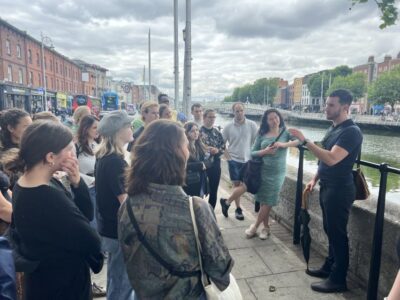
90 Minute Dublin Walking tour and Sightseeing tips
Read our review →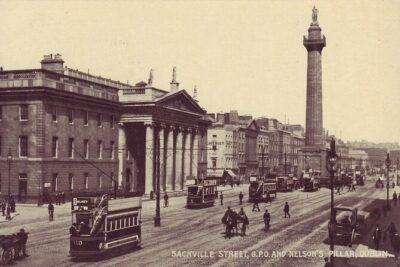
Historical 2-Hour Guided Walking Tour of Dublin
Read our review →
Dublin Traditional Irish 3 Course Meal Walking Tour with Local
Read our review →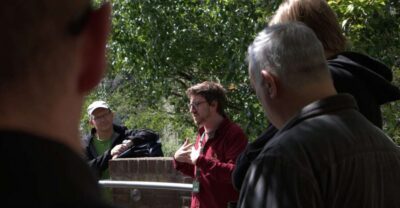
Browse the lists this tour appears in